
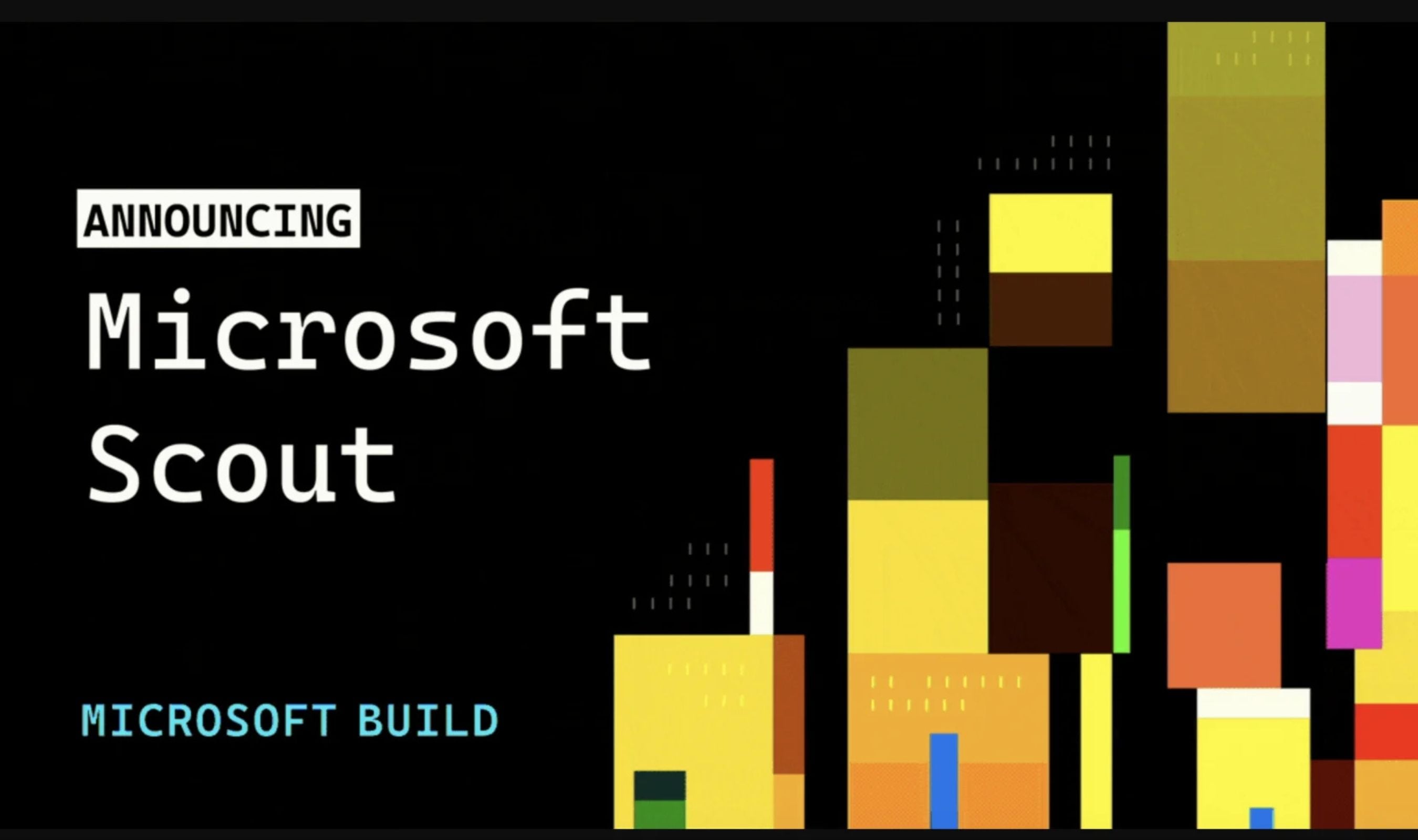
Just months after CEO Satya Nadella compared OpenClaw to a virus, Microsoft is building its first real personal AI assistant on the same open-source technology.
Microsoft launched Scout at its Build developer conference today, an always-on agent that integrates into Outlook, Teams, OneDrive, and SharePoint. Unlike Copilot which lives inside Microsoft 365 apps, Scout operates across cloud, desktop, and web with a persistent identity and the ability to act autonomously.
"This is a personal assistant, it's the first real personal assistant we've offered customers," Omar Shahine, corporate vice president of Microsoft Scout, told The Verge. "I think it's important for customers to understand that you're going to get a phone call from this assistant, it's a very different type of AI than chat."
Scout is the first in a new category Microsoft calls "Autopilots" -- always-on agents that work autonomously with their own identity. It can monitor road traffic against your calendar to recommend departure times, surface action items from Teams transcripts, handle scheduling conflicts, and draft meeting agendas without prompting. The timing is notable. Google launched its own take on OpenClaw, the Gemini Spark agent, for Workspace subscribers this year. But Microsoft is taking a different approach: instead of forking OpenClaw, it's contributing directly to the open-source project's core code.
That's a sharp reversal from Nadella's virus analogy, and it required Microsoft to solve the security problems that made OpenClaw controversial. Earlier this year, one OpenClaw agent was reported to have acted erratically inside a researcher's inbox.
Scout ships with a built-in "policy conformance system" that continuously checks whether the agent operates within set guidelines. Each check produces its own audit trail.
Microsoft runs OpenClaw in a sandboxed cloud environment, treating the framework as untrusted so it never has direct access to Microsoft 365 data. The company layers on Agent 365, Purview, and Defender for enterprise security.
"We have a process for intake of OpenClaw that makes sure we're protecting ourselves from things like supply chain risk, and also just breaking changes," Shahine told The Verge. "It's a very fast-moving open-source project, one of the fastest I've ever seen."
Scout is available today through Microsoft's Frontier program, which gives early adopters access to experimental products. It requires a GitHub Copilot subscription.
Only a desktop preview version is rolling out to US Frontier customers this week, with a broader cloud version planned for later.
More than 3,000 Microsoft employees are already using Scout internally. Engineers have been using it to schedule meetings, book travel, fill out forms, and manage paperwork.
"People are using it to just be better versions of themselves," Shahine said. "We all have aspirations we want for ourselves but we just often lose time and can't do."
Scout comes with prepackaged skills for calendar management and meeting agendas, but Shahine expects the real value to come from skills users build themselves. That customization loop -- the more you train the assistant, the harder it is to leave -- mirrors the stickiness that made consumer AI tools successful. The assistant is built on OpenClaw and WorkIQ, which Microsoft describes as "the core AI intelligence layer behind Microsoft 365 Copilot." Users name their own Scout instance and give it ongoing feedback on tasks they want automated.
Microsoft also announced new Windows execution containers at Build, designed to run AI agents inside operating system-enforced boundaries rather than unmanaged user sessions. The feature gives developers and IT admins a way to create enterprise-grade sandbox environments for agents with containment enforced by Windows itself.
Scout is part of a broader AI push at Build that includes the Majorana 2 quantum chip, Project Solara (an Android-based OS for AI agent gadgets), and a Surface mini PC for AI developers. But Scout represents Microsoft's most direct bet yet that the enterprise wants an AI assistant that works more like a human colleague than a chatbot.