
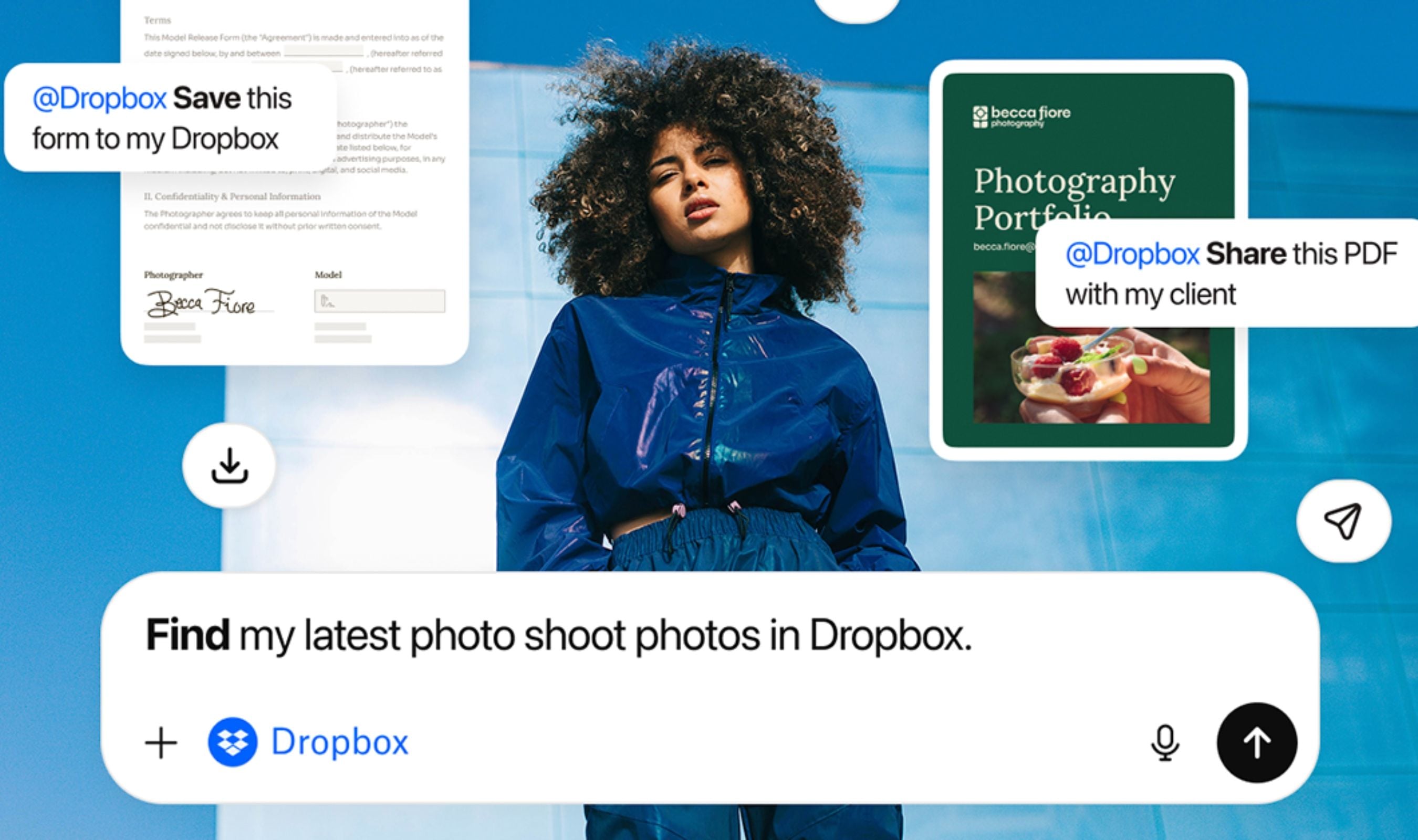
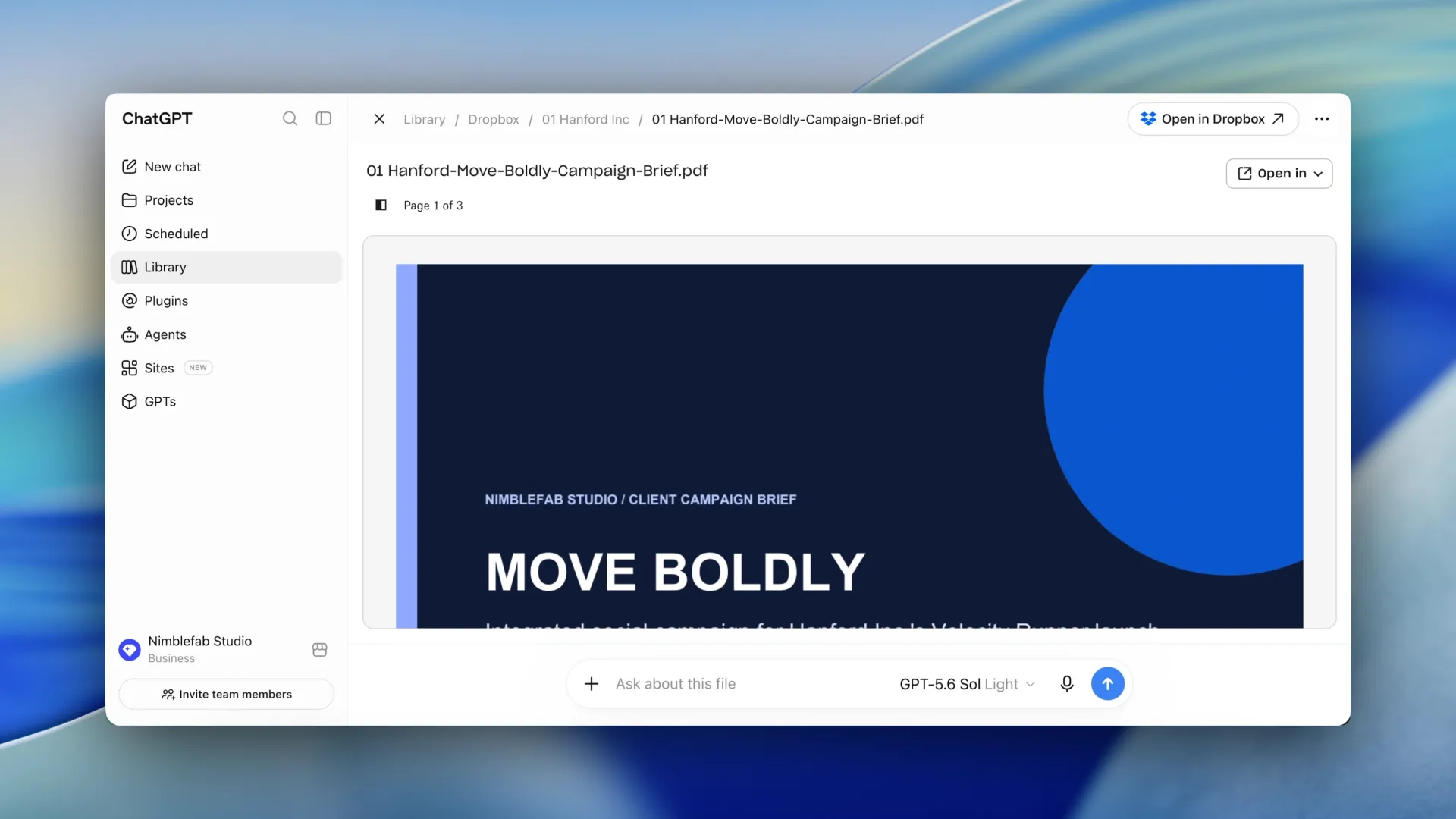
Dropbox files now live natively inside the ChatGPT file experience, so users no longer have to summon the Dropbox app with an @mention to locate their work. They can search for a file, pick something recent, browse the Library, or simply mention a file by name. The change applies to how files are found and opened, not to who can see them: existing Dropbox permissions still decide what each person can discover and reach.
The practical gain is context. Several project sources can be gathered into a single conversation, and the original file preview opens beside the chat rather than replacing it. From that preview, users can ask ChatGPT to summarize, explain, compare, or synthesize the material. Dropbox says the underlying source material stays stored in Dropbox throughout.
Read more: Remitly Launches Cross-Border Money Transfer App Inside ChatGPT
Video gets its own treatment. Dropbox says it is among the first platforms to preview video inside the ChatGPT file experience, and clips play next to the chat without a download or a re-upload. Work produced in the conversation can be saved back into Dropbox folders, and users can generate shareable links to that new output.
Dropbox has been building toward this for months. It was an inaugural partner in OpenAI's Small Business collection, which bundled 16 tools aimed at small business owners. In a July post, the company said usage of its partner AI integrations had more than doubled over the prior month, and that people were already saving AI-generated content back to Dropbox to share and organize it. Earlier Dropbox apps for ChatGPT landed in April 2026, and a Claude integration followed in June 2026.
Sondra Batbold, Product Lead, Personalization and Context at OpenAI, framed the update as a way to shorten the distance between finding information and acting on it, saying the aim is to make ChatGPT "a more connected place to get work done, while respecting the permissions and controls people already have in place".
What the announcement does not say matters as much as what it does. Dropbox disclosed no pricing or paid tier details, no regional availability limits, no rollout date or general availability timeline, no supported file types or size limits, and no ChatGPT plan requirements. Readers who want to know when they can use it, or whether their plan covers it, will not find an answer in the post.
The September 10 announcement positions Dropbox content as a context layer for AI workflows rather than a destination users leave to work in. For teams already juggling files across both services, the removal of the @mention step is the concrete change today.