
Apple is putting a single readiness number on the wrist. The Health Sensing System arriving on Apple Watch Series 12 and Apple Watch Ultra 4 scores each user from 0 to 10 and pairs that score with one of four recommendations: Recover, Pace Yourself, Ready, or Go For It. The score keeps moving through the day as fresh data comes in, rather than freezing at a morning reading.
The sensing behind it is the concrete change. New optical and electrical heart sensors sit on both watches, heart rate is now sampled every five seconds throughout the day, and heart rate variability readings can arrive as frequently as once every five minutes, which Apple says is 24 times more often than before. Two HRV variants are tracked, one for recovery and one overall. Overnight vitals now compare Recovery HRV against a personal baseline, a daytime vitals view toggles between overnight and daytime metrics, and the Vitals overview picks up HRV as well. Apple also updated the Heart Rate app and added watch face complications for the new readings. The readiness algorithm was built on the Apple Heart and Movement Study.
Read more: macOS 26.7 Code Suggests HomePad Could Work Like a Giant Apple Watch
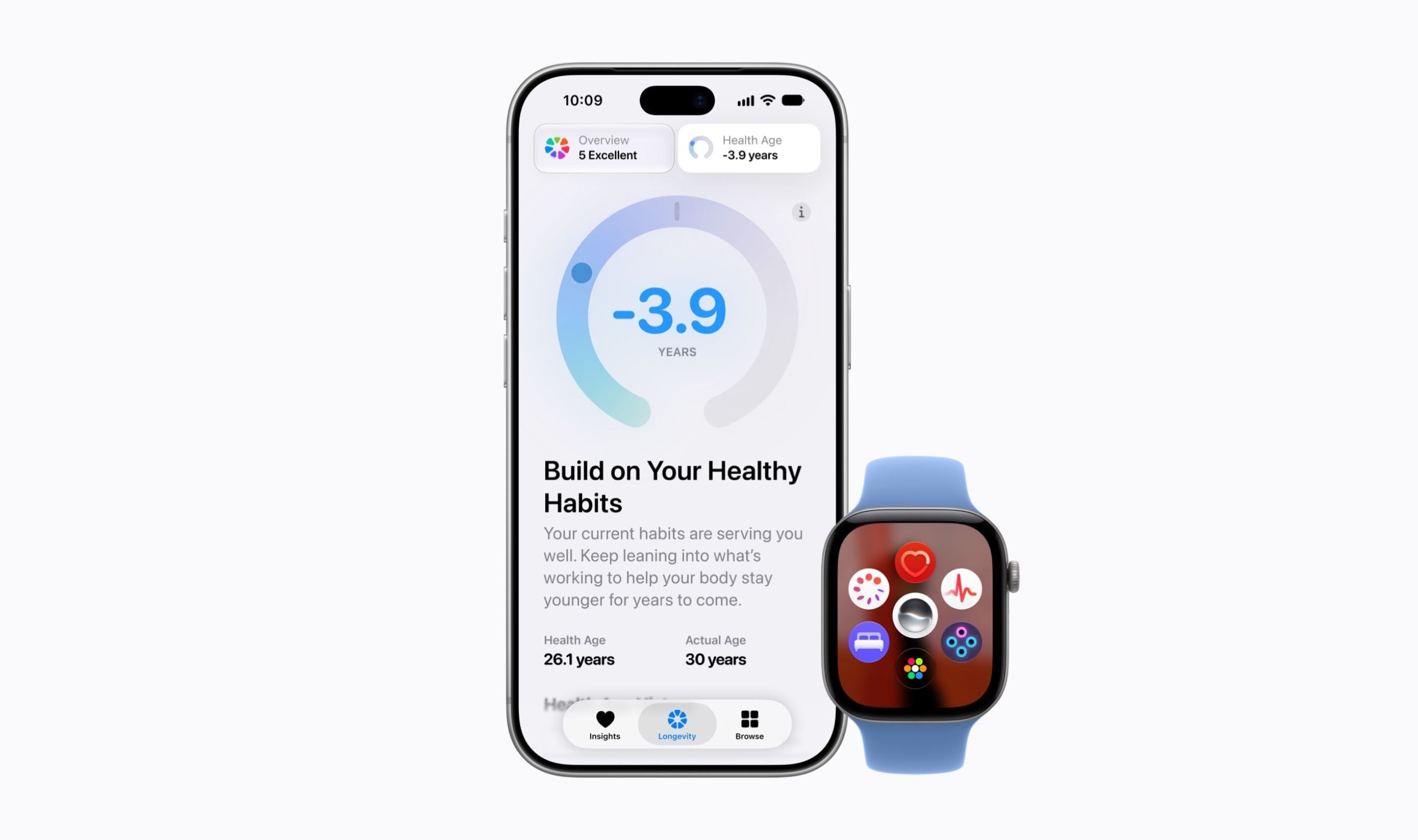
The Health app is where most of this lands, and it is being redesigned later this year on iPhone. It expands to iPad alongside iOS 27 and iPadOS 27, starting in U.S. English with more languages to follow. A new Insights tab pulls together heart, sleep, readiness, fitness, vitals, and cycle data, while a For You section serves personalized recommendations and articles.
The headline addition is a Longevity tab that analyzes health data collected over time. Inside it, Health Age compares Apple Watch data against a user's chronological age, weighing VO2 max, resting heart rate, sleep, and HRV. The tab draws on iPhone, Apple Watch, AirPods, and clinical records, and users can enter lab results such as A1c and LDL.
Apple is also moving into lab work. The company says panels covering more than 50 biomarkers will cost $119 and be sold at roughly 2,000 Quest Diagnostics locations in the U.S., with scheduling and purchase handled inside the Health app. Separately, movement assessments measure flexibility, strength, balance, mechanics, and VO2 max, running on device through the iPhone camera and Apple Watch. Apple says no video is recorded, stored, or shared, and that vision-based AI models return real-time audio and visual feedback. Exercise plans and clinician-made videos and articles follow the assessments.
Apple points to a study of more than 1,000 participants in which Apple Watch recorded the highest heart rate accuracy. Sumbul Desai, M.D., Apple's vice president of Health and Fitness, said the company aims to "translate complex biometric data into clear guidance for users" by pairing watch sensing with Apple Intelligence in the Health app.
The watches themselves were announced alongside this push. Series 12 pre-orders opened on announcement day with units available September 18, offered in aluminum, titanium, and ceramic finishes. Ultra 4 also opened pre-orders that day for September 18, in natural and black titanium.
This continues a health-focused stretch for Apple. A report in August said the company was planning smart glasses as a future health and fitness platform, and the Health Sensing System reaches Series 12 and Ultra 4 buyers on September 18, ahead of the Health app redesign later this year. Apple has not said what the lab panels or Health Age will cost outside the U.S., or when the redesigned Health app reaches other languages.