
WhatsApp is rolling out optional parental controls for teenagers aged 13 to 17, giving parents a six-digit PIN to protect privacy settings and restrict features, according to Bitdefender. Parents can receive activity alerts, but cannot read personal messages or hear calls. Availability is expanding gradually across accounts and countries, so some families may not yet see the controls.
Setup requires agreement from both the teenager and parent, whose age must be at least 18. Both phones must have the latest WhatsApp version installed and be available during linking. Teenagers retain the ability to change privacy settings themselves, although weakening a protected setting requires approval through the parent's PIN.
Read more: Meta Rolls Out Primary Device Support for WhatsApp on iPad
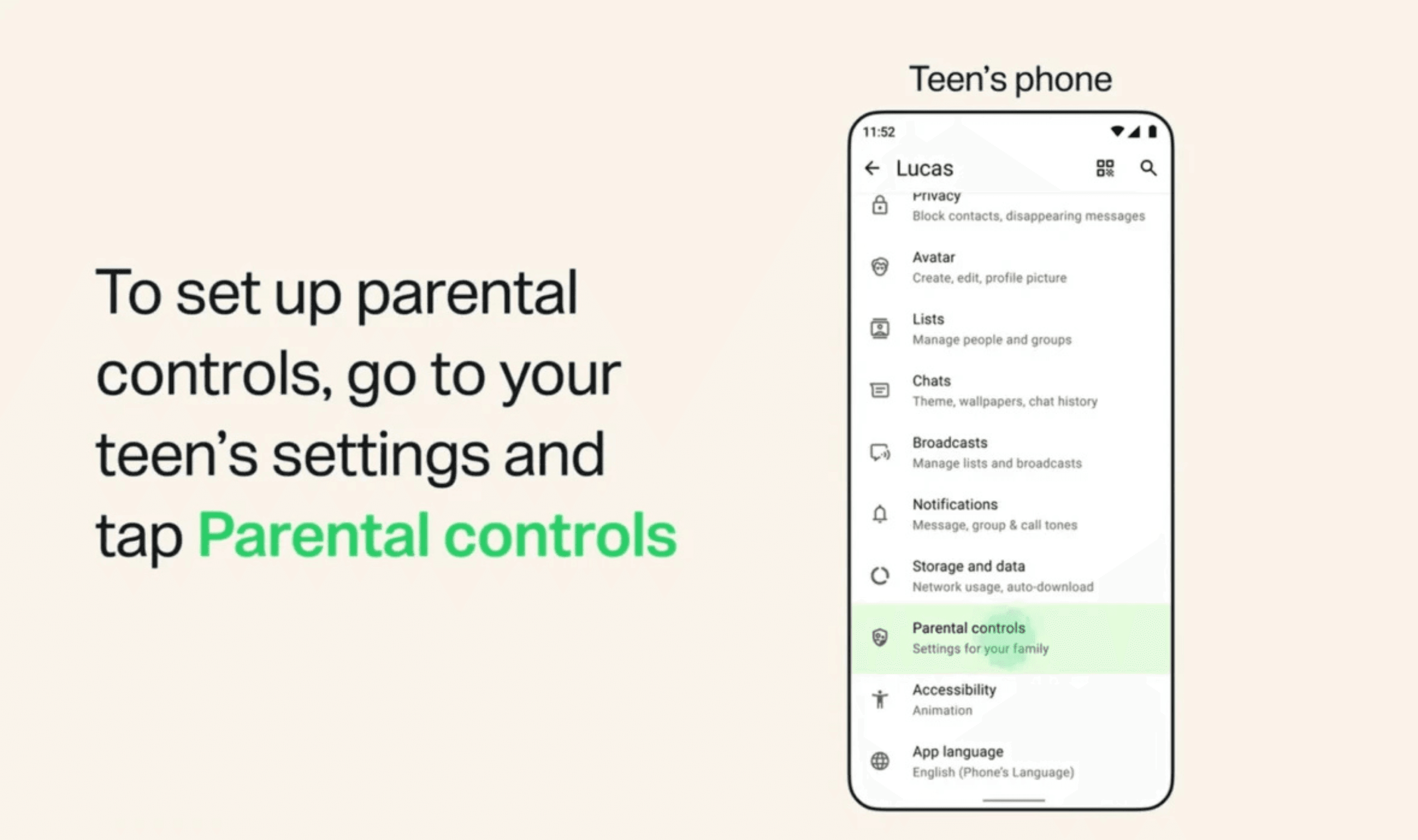
Begin on the teenager's phone by opening Settings, selecting Parental controls and tapping Continue. Enter the teenager's birthday, confirm their age and tap Continue again to display the QR code used for linking. On the parent's phone, use the camera to scan that code, follow its link into WhatsApp and proceed through Continue to adult verification.
The parent then creates and confirms a six-digit PIN, which protects access to settings and changes. Back on the teenager's phone, enter that PIN, check the privacy and feature options, then select Continue followed by Done. After linking, parents change protected settings on the teenager's device through Parental controls in Settings; on their own device, they select the teenager's account in that menu to review activity.
For Meta AI, parents can select Limited, which is designed to narrow the topics the teenager can discuss, instead of the standard 13+ experience. Channels can be blocked entirely or confined to those approved by a parent, and parents can prevent teenagers from creating a Channel. Status controls determine whose updates teenagers see and who sees theirs, while privacy options cover profile visibility and permission to add them to groups.
Parents choose which notifications they receive, including alerts about new contacts, profile picture changes and joining groups. The controls can later be removed, and WhatsApp says conversations retain end-to-end encryption. That puts limits on parental oversight: someone already chatting with a teenager can still send malicious links or inappropriate requests without the parent seeing the conversation.
The rollout follows July's WhatsApp updates, which included at least one addition accessible through its website and desktop app. Those features also reached users in stages, with Meta emphasizing everyday messaging habits and more personal Status updates.