
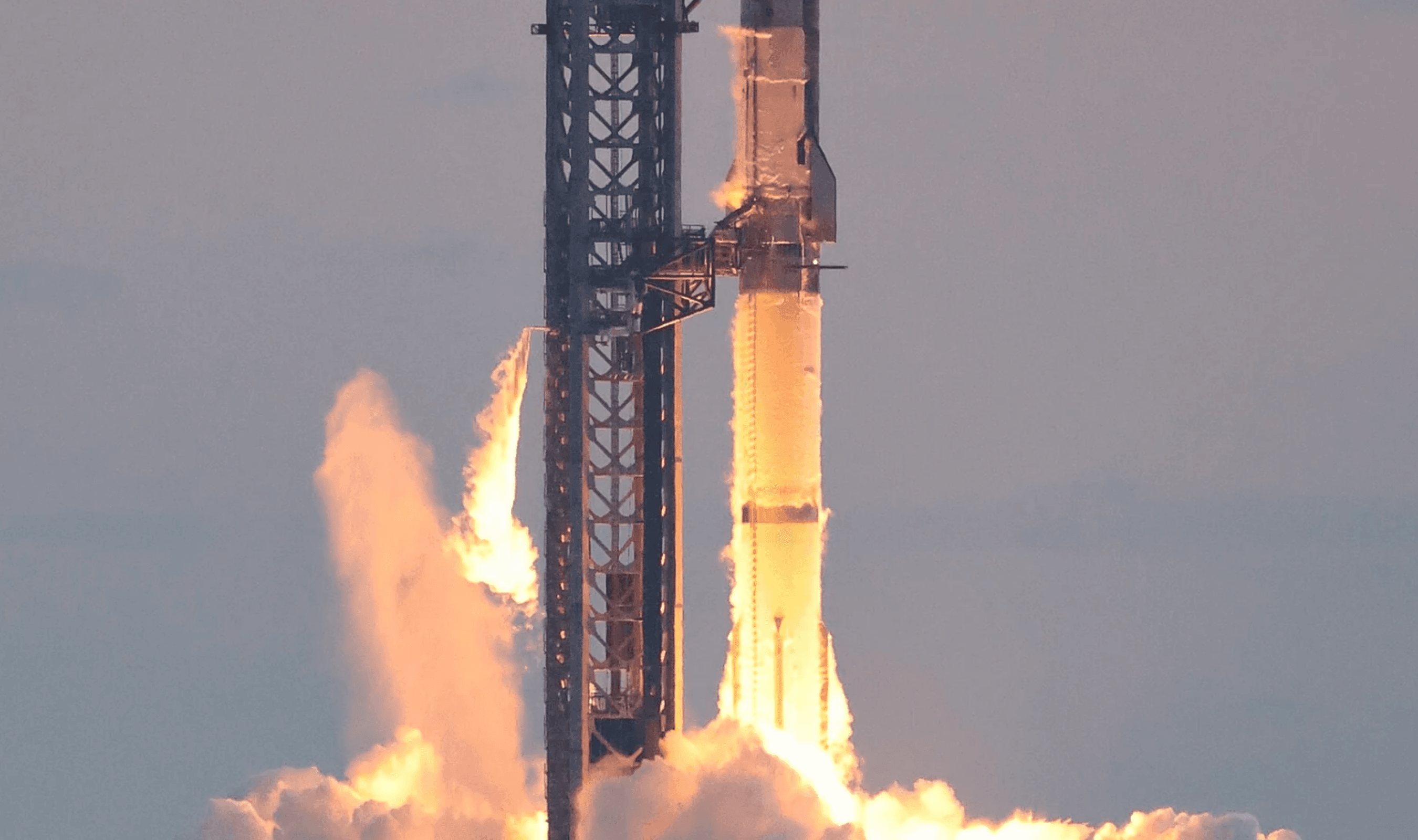
SpaceX caught its Starship spacecraft returning from orbit for the first time on November 14, securing it with mechanical arms at its launch tower in Starbase, Texas, CNN reported. The spacecraft completed 14 circuits of Earth during a 22-hour mission, but the failed recovery of its Super Heavy booster prevented the planned double catch.
The mission began on November 13 at 5:47 p.m. ET and marked the 15th test flight of the complete Starship system. Its upper stage carried 26 advanced Starlink satellites into orbit before returning to the tower where the flight began.
A Catch After Reentry
The 171-foot spacecraft descended upright until the tower's two metal arms could hold it. SpaceX had previously caught Super Heavy three times, but had never attempted that maneuver with the upper stage, which travels higher, farther and faster than the booster.
This was only Starship's second mission to reach orbit; the first was Flight 14 on September 28. Some of the newly deployed Starlink satellites photographed and filmed Ship 42's heat shield, helping assess its condition before the landing attempt alongside observations from cameras on the ground.
SpaceX said the spacecraft's systems, including the heat shield, appeared to perform well. Elon Musk shared a video on X showing an inspection of the recovered vehicle, while NASA welcomed the successful catch.
The Booster Still Needs Work
Super Heavy was diverted toward the Gulf of Mexico after its attempted return to the tower failed. SpaceX's Kate Tice said the returning booster's engines shut down prematurely. Its guidance system then registered that the booster was out of position and automatically triggered the diversion and self-destruction.
Engineers are investigating what caused the booster failure. SpaceX says catching both stages would allow faster checks, refurbishment and subsequent flights, making the recovery technique central to its plans for frequent launches.
For Starlink internet customers, the mission also expanded the satellite network that provides their service. SpaceX says a single Starship can transport up to 60 Starlink v3 satellites, CNBC reported, compared with the 26 carried on this flight.
Engineers have begun collecting data from the recovered spacecraft and can physically examine its engines, nose cone and heat shield, which protected it against temperatures above 2,000 degrees Fahrenheit. They also need to establish how quickly a returned Starship can be prepared for another orbital launch.
SpaceX expects Starship launches from Kennedy Space Center in Florida to begin within the coming months. NASA's next Artemis mission will remain in Earth orbit for lunar lander practice, with Artemis III's four astronauts attempting to dock their capsule with Starship and Blue Origin's Blue Moon.