

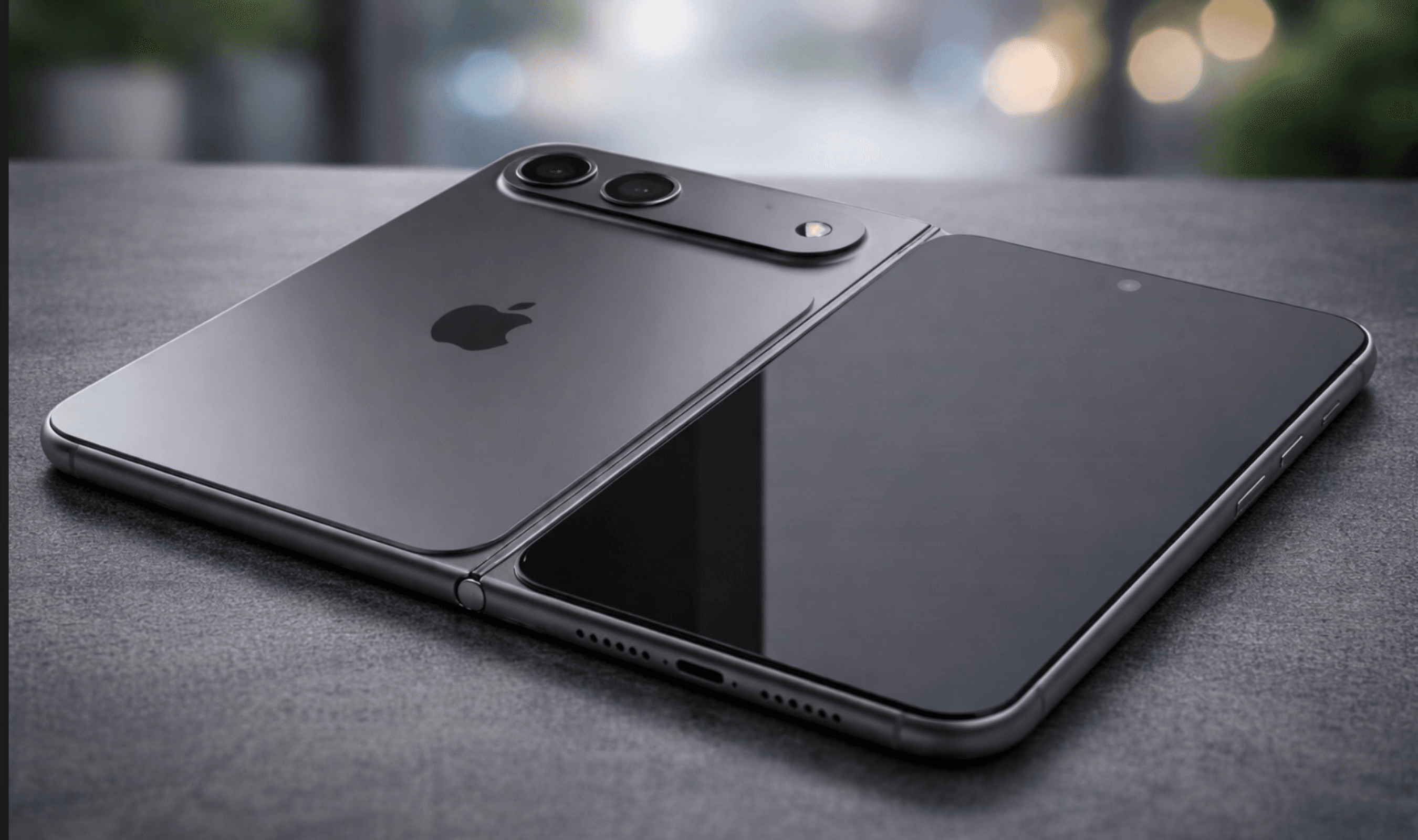
Apple's first foldable iPhone will launch this year with the company's largest-ever battery, according to multiple leaks and analyst reports. The device, expected in September 2026, will feature a 5,500mAh battery that surpasses both current iPhone models and competing foldables from Samsung and Google.
Bloomberg's Mark Gurman reports Apple is developing two foldable designs: a book-style model launching this year and a clamshell flip variant under consideration. The primary foldable will adopt a 7.8-inch inner display with a 5.5-inch outer screen, making the cover display the smallest on any modern iPhone.
The 5,500mAh battery represents a significant engineering achievement for foldable devices, which typically require dual-battery systems to accommodate hinge mechanisms. Apple's implementation reportedly uses advanced solid-state technology and proprietary power management to optimize space while maintaining a slim profile.
Tipster Instant Digital (also known as Fixed Focus Digital) claims the battery capacity could exceed 5,500mAh, which would surpass Samsung's Galaxy Z Fold 7 (4,400mAh) and Google's Pixel Fold offerings. The device's charging specifications remain unconfirmed, though Apple has introduced 60W charging for recent iPhone models.
Apple will power the foldable with its A20 Pro chipset paired with 12GB RAM across all iPhone 18 series models, according to News18 reports. The company will use its Apple C2 modem for improved connectivity and data speeds, with the N2 neural engine handling AI processing and Siri enhancements.
Design leaks from Mashable India reveal an all-black camera plateau similar to the iPhone Air, housing two horizontally aligned cameras. Button placement shifts to the top edge for volume controls, while the Touch ID-integrated power button remains on the right side. Face ID will reportedly be omitted to reduce device thickness.
The foldable iPhone will launch alongside the iPhone 18 Pro lineup in September 2026, with pricing estimated between $2,000 and $2,400. This positions Apple's entry above Samsung's $2,000 Galaxy Z Fold 7 but within the premium foldable segment where devices typically exceed $1,500.
Apple's delayed entry into the foldable market comes as Samsung dominates the segment, controlling nearly two-thirds of the market according to recent reports. The company has refined its Galaxy Z Fold and Z Flip series through multiple generations since 2020, while Chinese manufacturers including Huawei, Oppo, and Xiaomi have introduced competitive alternatives.
Gurman notes the clamshell flip variant remains in early development with no fixed timeline. This square, foldable design would compete directly with Samsung's Z Flip 7 and Motorola's Razr, offering a more compact alternative to the book-style foldable.
The iPhone Air, launched in September 2025, served as a precursor to Apple's foldable technology. Its sleek design and component layout informed the foldable's engineering, particularly the top-mounted hardware arrangement that accommodates larger batteries.
Apple's battery strategy represents a major shift in mobile power engineering, according to published analysis. The company's tight integration between custom silicon, iOS optimization, and power management algorithms could deliver competitive battery life despite smaller capacity numbers compared to some Android flagships.
Supply chain partners including Amperex Technology Limited and LG Energy Solution are developing custom battery solutions meeting Apple's specifications for energy density and durability. Production volumes could drive industry-wide innovations in foldable battery technology.
The foldable iPhone's success will depend heavily on battery performance and durability, critical factors for premium devices expected to maintain performance over three to five years. Apple's battery health management systems will need to address the additional stress of folding mechanisms and dual-cell architectures.
Apple's entry could accelerate mainstream adoption of foldable devices, which currently represent a niche segment despite years of Android availability. The company's track record of refining emerging technologies for broader audiences positions it to reshape market dynamics.
Tim Cook's Q1 2026 earnings statement referenced "innovations that have never been seen before," potentially teasing the foldable iPhone alongside redesigned MacBook Pros and other upcoming products. The CEO emphasized opportunities to deliver new experiences across Apple's product lineup.
Developers will play a crucial role in optimizing apps for the foldable form factor, with iOS providing intelligent power management based on usage patterns and screen configuration. Apple's strict app review processes enable enforcement of power efficiency standards for the new device category.
The foldable iPhone establishes Apple's position in a market where competitors have operated for years. While the book-style format follows established designs, Apple's implementation focuses on battery endurance, software optimization, and premium construction rather than radical innovation.
Market reception will determine Apple's expansion into additional foldable form factors, including potential larger models or the clamshell flip variant. The company typically observes initial product performance before committing to broader category development.
Apple's September 2026 launch aligns with its traditional iPhone release schedule, though Bloomberg reports suggest the company may shift to staggered releases across the year. This would reduce pressure on manufacturing and provide steadier revenue distribution.
The foldable iPhone represents Apple's most significant hardware innovation since the iPhone X's edge-to-edge display in 2017. Its success could validate foldable technology for mainstream consumers while establishing new standards for battery performance in flexible devices.