Smart toasters have moved beyond gimmicks to become genuinely useful kitchen tools. The top pick combines four extra-wide slots with controls that let you check browning and add time mid-cycle. This list is for anyone tired of burnt edges or pale bread who wants reliable results without guesswork.
Technobezz is supported by its audience. We may get a commission from retail offers.
6 Best Smart Toasters for 2026
We tested smart toasters for even browning and real features. The Breville Die-Cast leads, with picks from $100 to $400 for every budget.
T
Technobezz
Editorial Team
Updated October 1, 2026Oct 1, 2026
•6 min read

Get Deals Like These in Your Inbox
The best prices, reviewed weekly.
At a Glance
| Category | Product | Why We Picked It |
|---|---|---|
| Best overall | Breville BTA840XL Die-Cast 4-Slice Smart Toaster | Lift & Look and A Bit More controls with extra-wide 4-slice slots |
| Best value | Kalorik Vivid Touch Toaster | Touchscreen controls at a more reasonable price point |
| Best for tech enthusiasts | Revolution R180 Connect Plus Smart Toaster | Maximum features including weather display and picture frame mode |
| Best digital basic | Cuisinart CPT-525 2-Slice Motorized Digital Toaster | Four saved settings, six bread presets, and motorized lift |
| Also recommended | Zwilling Enfinigy 2-Slot Toaster | Stylish but inconsistent browning |
| Also recommended | Ninja Air Fryer Toaster Oven Combo | Versatile but takes up more space |
How we chose
We evaluated smart toasters based on consistent performance across multiple toast cycles, ease of use, and feature value. Our assessment covers performance with various bread types from white to sourdough, checking for even browning and reliability. We considered both high-end models with advanced sensors and more affordable digital options that still deliver on the smart promise.
The best digital smart toasters right now
Breville BTA840XL Die-Cast 4-Slice Smart Toaster - Best overall
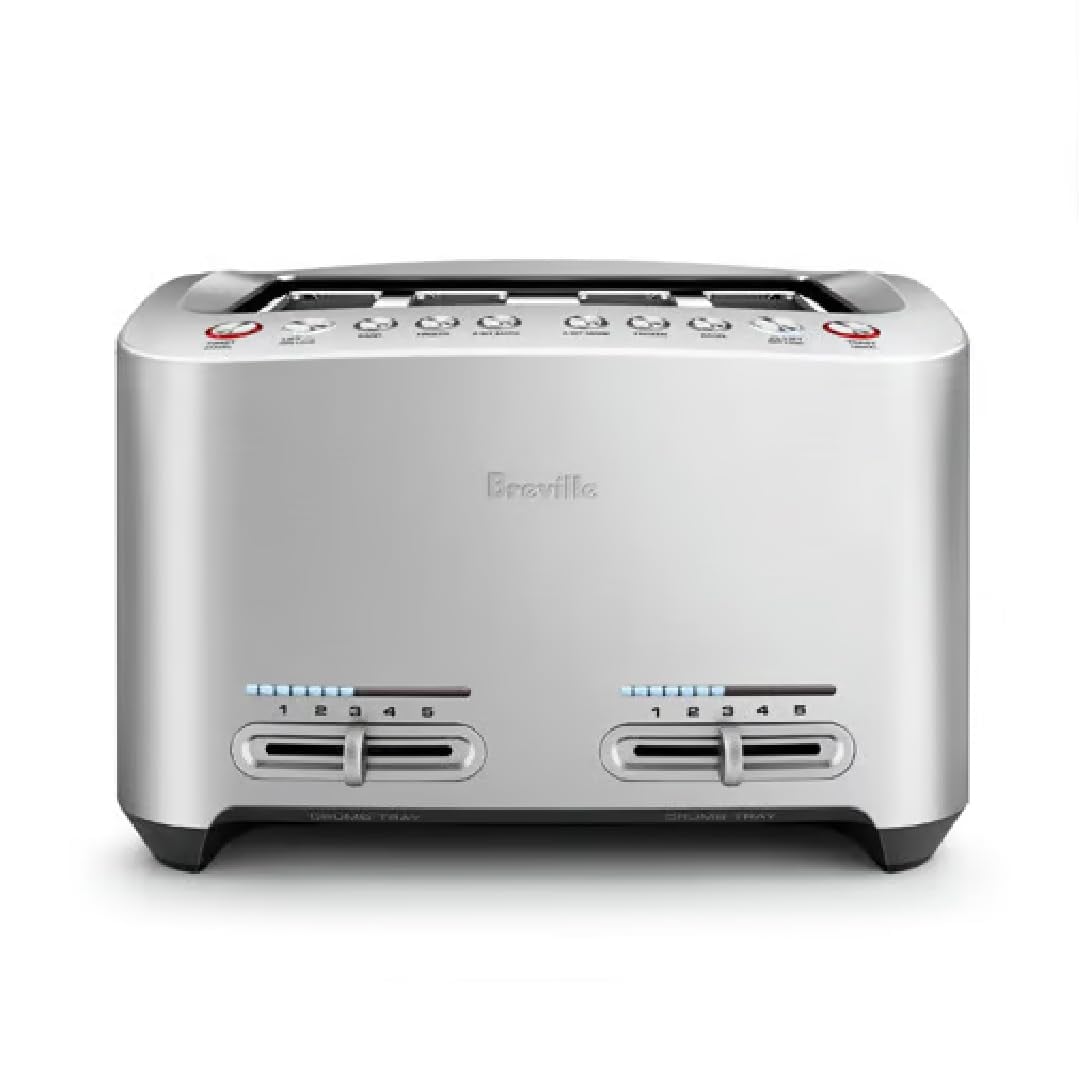
This toaster pairs extra-wide 4-slice capacity with Breville's Lift & Look and A Bit More controls, so you can check on toast or add time mid-cycle without restarting.
Key highlights
- Lift & Look lets you check toast without interrupting the cycle, and A Bit More adds time
- Four-slot capacity for family use or entertaining
- Die-cast construction for durability
- Bagel and frozen settings
- Variable browning control with an LED indicator showing time remaining
Pros
- Extremely consistent results across different bread types
- Lift & Look raises toast for mid-cycle browning checks
- High-quality construction feels substantial
- Can handle larger or artisan bread slices
Cons
- Premium price point may not fit all budgets
- Takes up more counter space than two-slice models
- Some users report reliability concerns over time
Who it is for: Families or serious toast enthusiasts who want set-and-forget perfection and have counter space to spare.
Skip if
You have a small kitchen or rarely make toast for more than two people at once.
Kalorik Vivid Touch Toaster - Best value
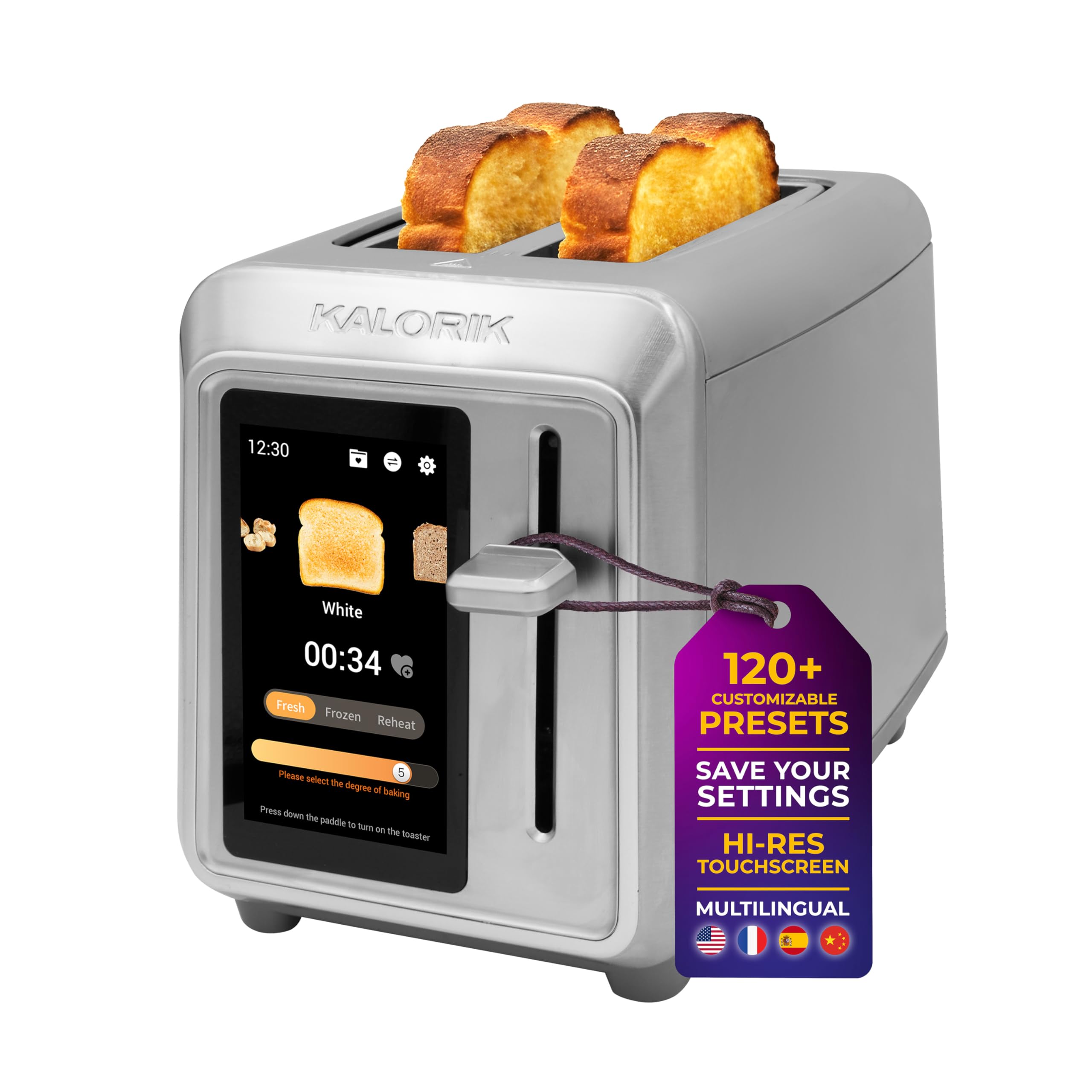
This touchscreen toaster offers smart features at a more accessible price, proving you don't need to spend $400 for digital convenience.
Key highlights
- Color touchscreen interface for easy navigation
- Traditional lever design alongside smart controls
- Multiple bread type presets
- More compact footprint than premium models
- Quick selection options for common toast preferences
Pros
- Touchscreen feels modern and responsive
- Lower price than high-end competitors
- Includes manual lever for traditionalists
- Good toast consistency for the price
Cons
- Build quality doesn't match premium models
- Fewer advanced features than top-tier options
- Touchscreen may require more cleaning
- Some users find navigation less intuitive
Who it is for: Budget-conscious buyers who want smart features without the luxury price tag.
Skip if
You prioritize premium construction or need the most advanced sensor technology.
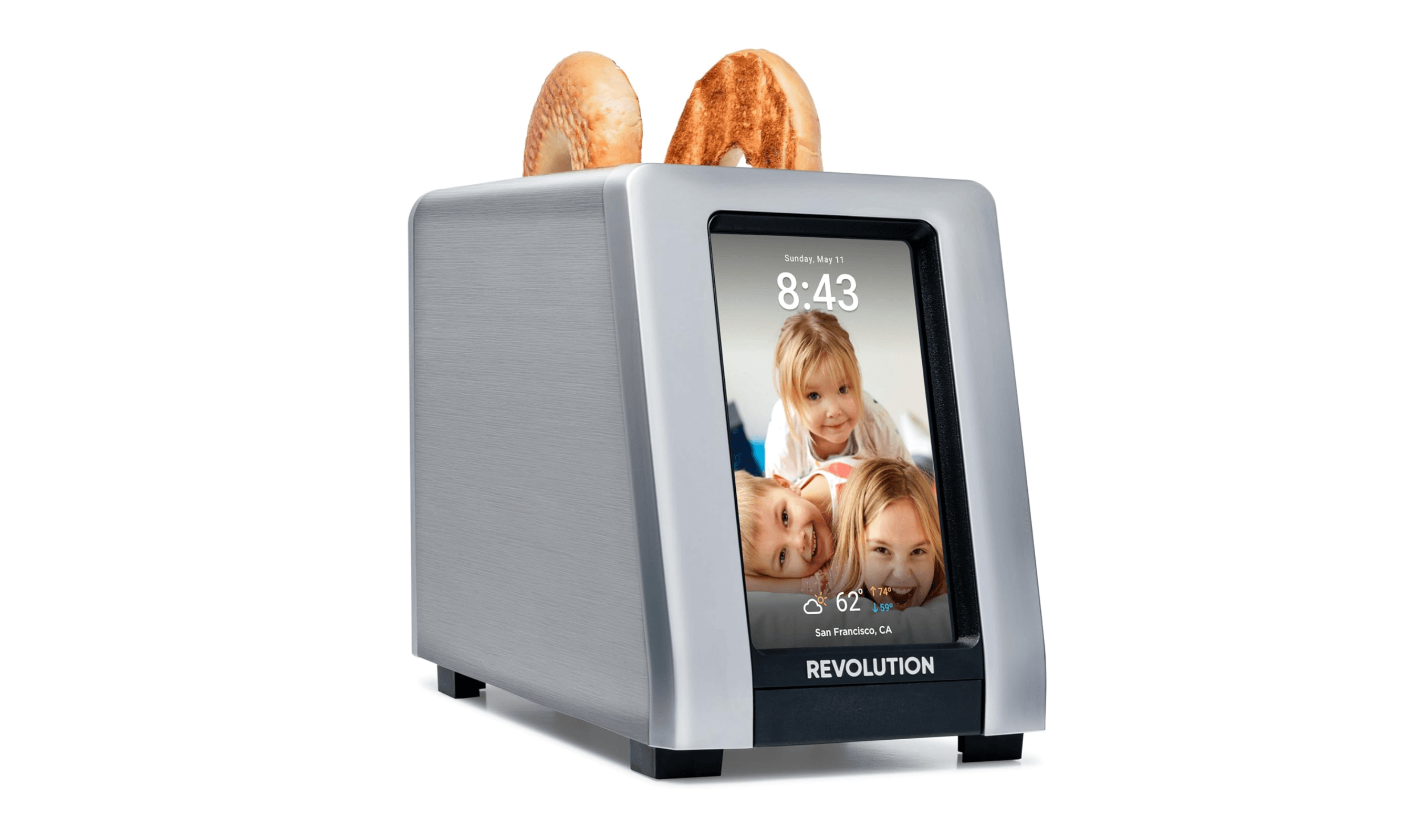
Revolution R180 Connect Plus Smart Toaster - Best for tech enthusiasts
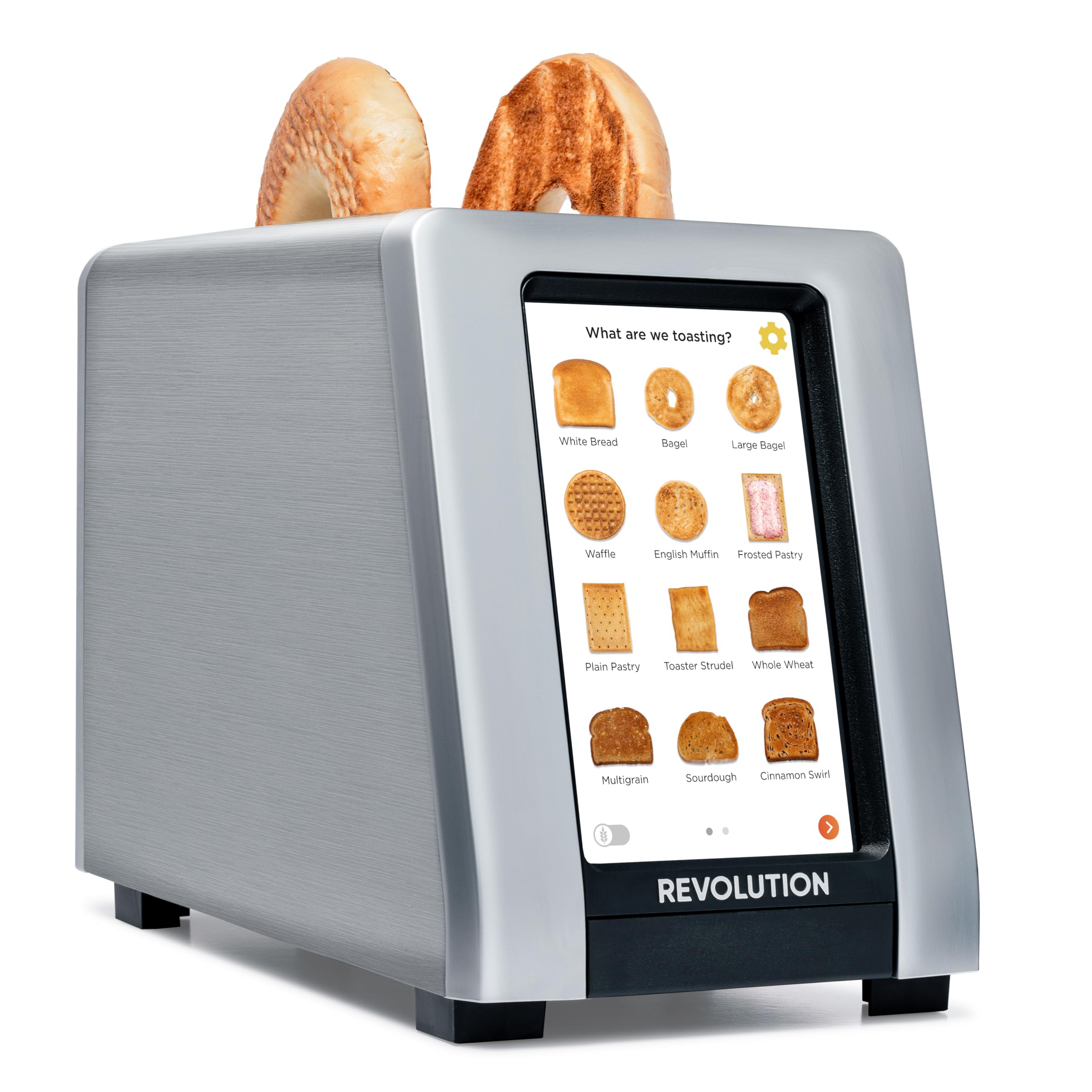
With features like weather display and picture frame mode, this toaster pushes smart appliance boundaries while delivering excellent toast.
Key highlights
- Features a Weather Widget and Clock
- Functions as a built-in digital photo frame for your favorite images
- Maximum toasting options and customization
- Extremely sleek, modern design
- Advanced connectivity features
Pros
- Unique features beyond basic toasting
- Excellent build quality and design
- Highly customizable settings
- Consistent performance across tests
Cons
- Premium price
- Features may feel gimmicky to some users
- Takes up significant counter space
- Overkill for basic toast needs
Who it is for: Tech enthusiasts who appreciate cutting-edge kitchen gadgets and don't mind paying for premium features.
Skip if
You just want reliable toast without extra bells and whistles, or have strict budget constraints.
Cuisinart CPT-525 2-Slice Motorized Digital Toaster - Best digital basic
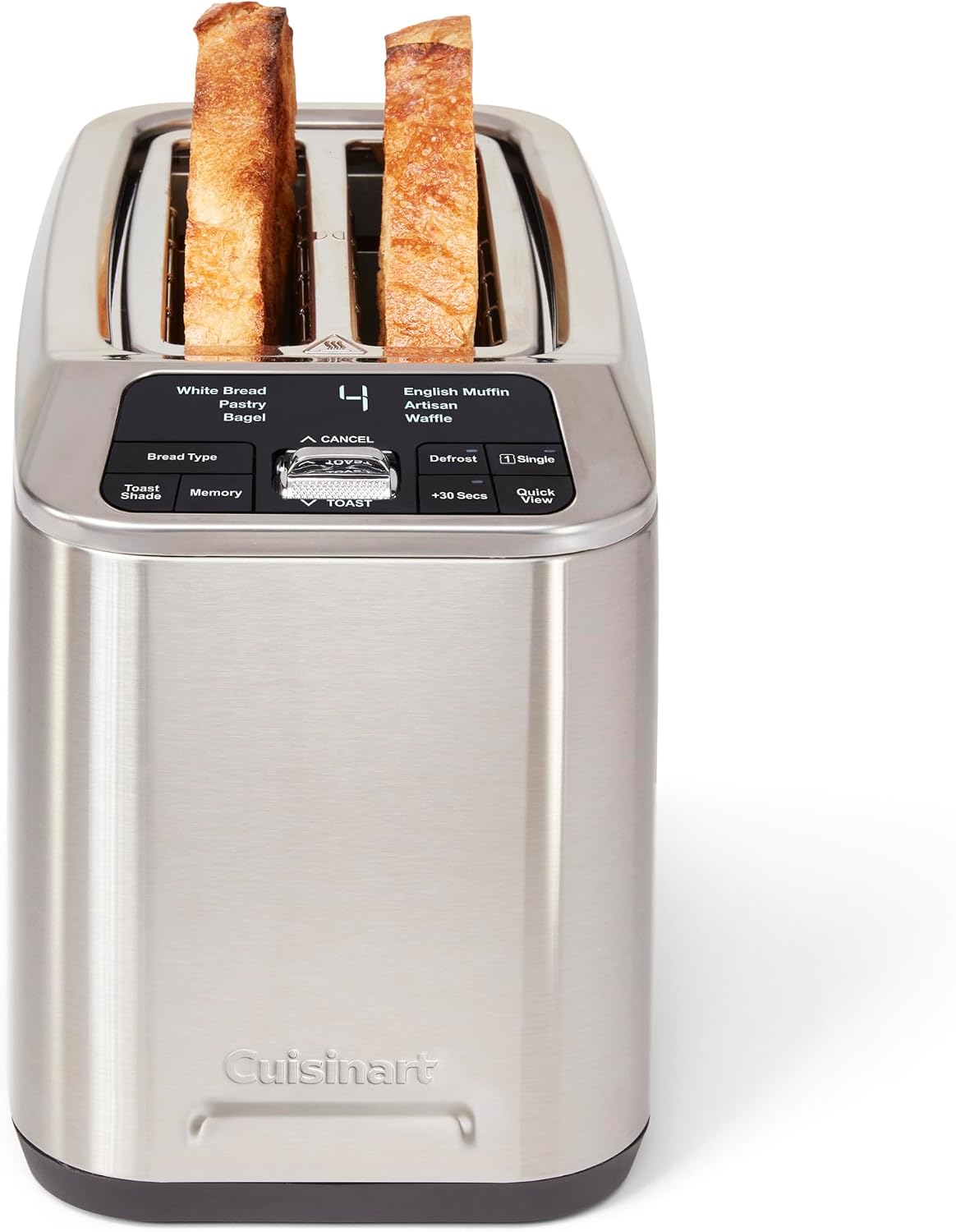
The CPT-525 pairs four saved settings with six bread presets and motorized lift, making repeat breakfast orders easy to select.
Key highlights
- Saves up to four personalized settings
- Six bread presets and seven shade levels
- Motorized lift lowers and raises bread without a lever
- QuickView checks progress mid-cycle; +30 Seconds adds browning time
- Single Slice and Defrost options, plus a slide-out crumb tray
Pros
- Recalls favorite bread and shade settings
- Extra-long slots accommodate artisan bread
- True Bagel mode crisps the cut side while warming the crust
- Motorized operation removes the need for a manual lever
Cons
- Two-slice capacity means additional batches for larger households
- Memory storage is limited to four personalized settings
Who it is for: Everyday users who want saved toast preferences and automatic bread lowering and lifting.
Skip if
You need to toast more than two slices at once.
Also Good
- Zwilling Enfinigy 2-Slot Toaster - stylish but inconsistent browning.
- Ninja Air Fryer Toaster Oven Combo- versatile but takes up more space.
How to Choose
Consider these factors when selecting a smart toaster:
- 1.Controls and sensors: Digital controls, saved preferences, and sensor-based heat adjustment are separate capabilities, so check for each one you want.
- 2.Capacity: Two-slice models save space, while four-slice versions better serve families or entertaining needs.
- 3.Budget: Prices range from around $100 for basic digital models to $400+ for feature-packed premium units.
- 4.Features: Decide which smart features matter - basic memory settings, touchscreens, connectivity, or extra functions like weather display.
- 5.Counter space: Measure your available space, as some smart toasters have larger footprints than traditional models.
FAQ
Do smart toasters really make better toast?
Yes, the best models consistently produce evenly browned toast by monitoring cooking in real time, eliminating the guesswork of traditional dials.
Are smart toasters worth the higher price?
For frequent toast eaters who value consistency, yes. For occasional users, a basic digital model may offer better value.
Do I need WiFi connectivity in a toaster?
Most people don't. While some high-end models offer app control, basic smart features like sensors or memory settings provide most practical benefits.
How do sensor toasters work?
Sensor systems vary by model. The Revolution R180 Connect Plus uses temperature sensors and toasting algorithms to adjust heat during the cycle.
Can smart toasters handle different bread types?
Yes, most offer presets for various breads from white to sourdough to bagels, with some learning your preferences over time.
Published February 18, 2026 Last updated October 1, 2026
Share this article
More in News

7 Best Digital Photo Frames for 2026
We tested the best digital photo frames for 2026. The Aura Aspen wins overall, the Lexar Pexar is the value pick under $200, plus budget options under $100.
3 min read
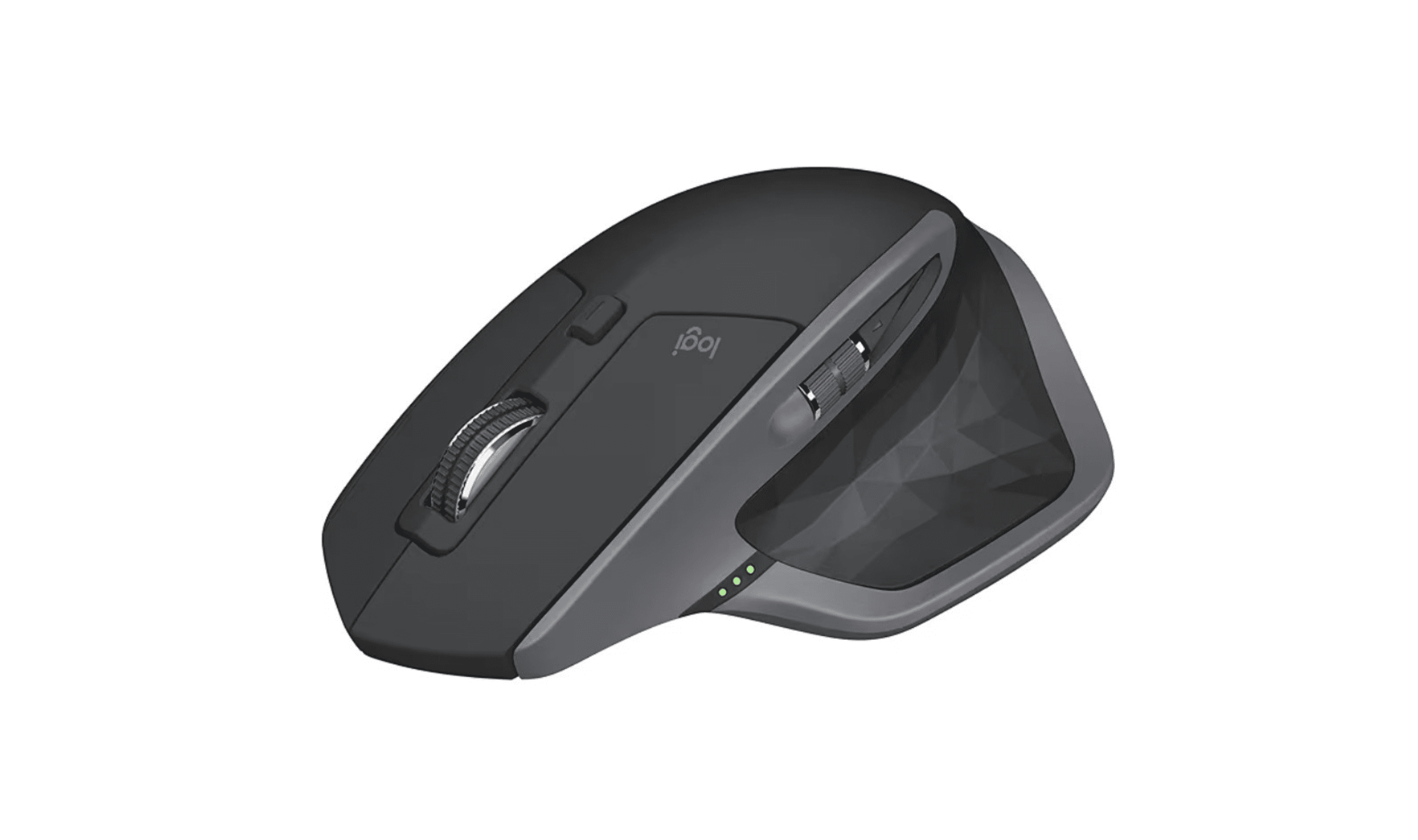
7 Best Mice for Photo Editing in 2026
Discover the best mice for 2026, led by the Logitech MX Master 3S. Our top picks enhance comfort and precision for photo editing and productivity.
3 min read
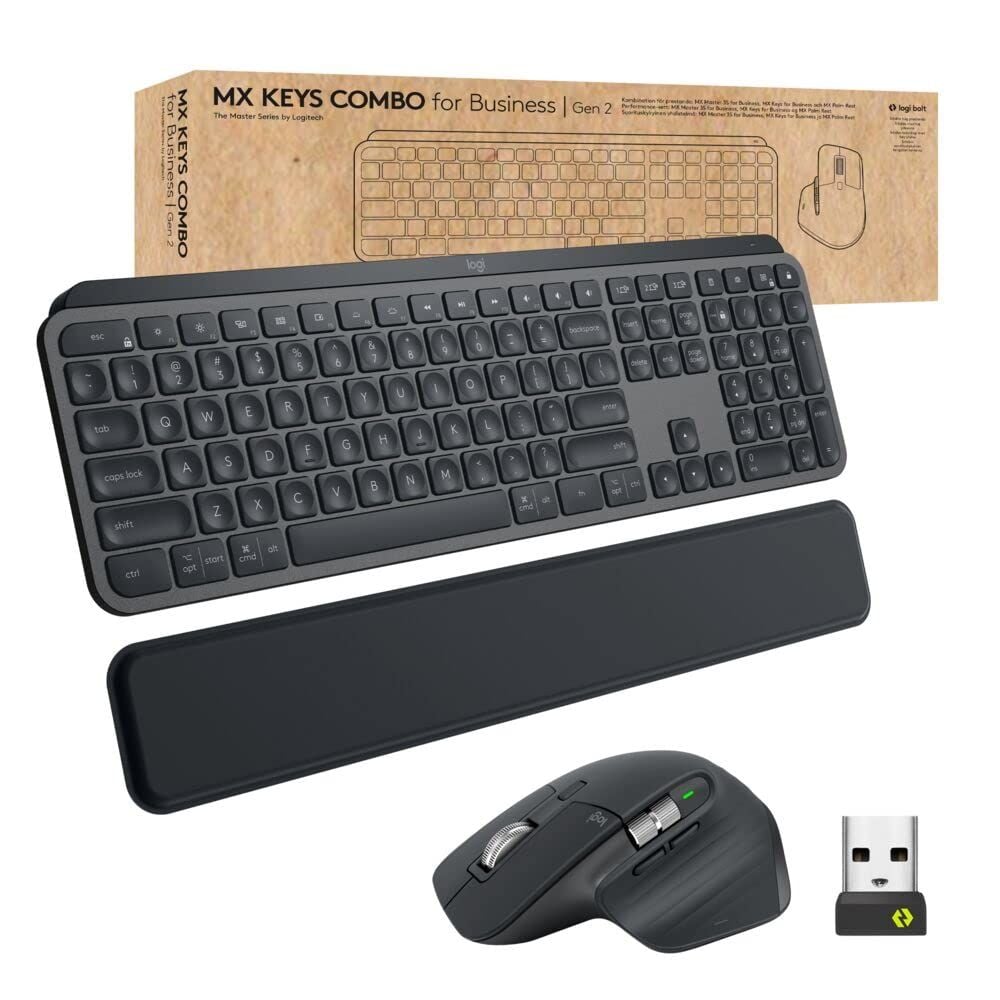
8 Best Keyboards From Top Brands in 2026
Logitech MX Keys S Full-Size is our top pick for quiet typing, smart backlighting, and broad platform support.
3 min read
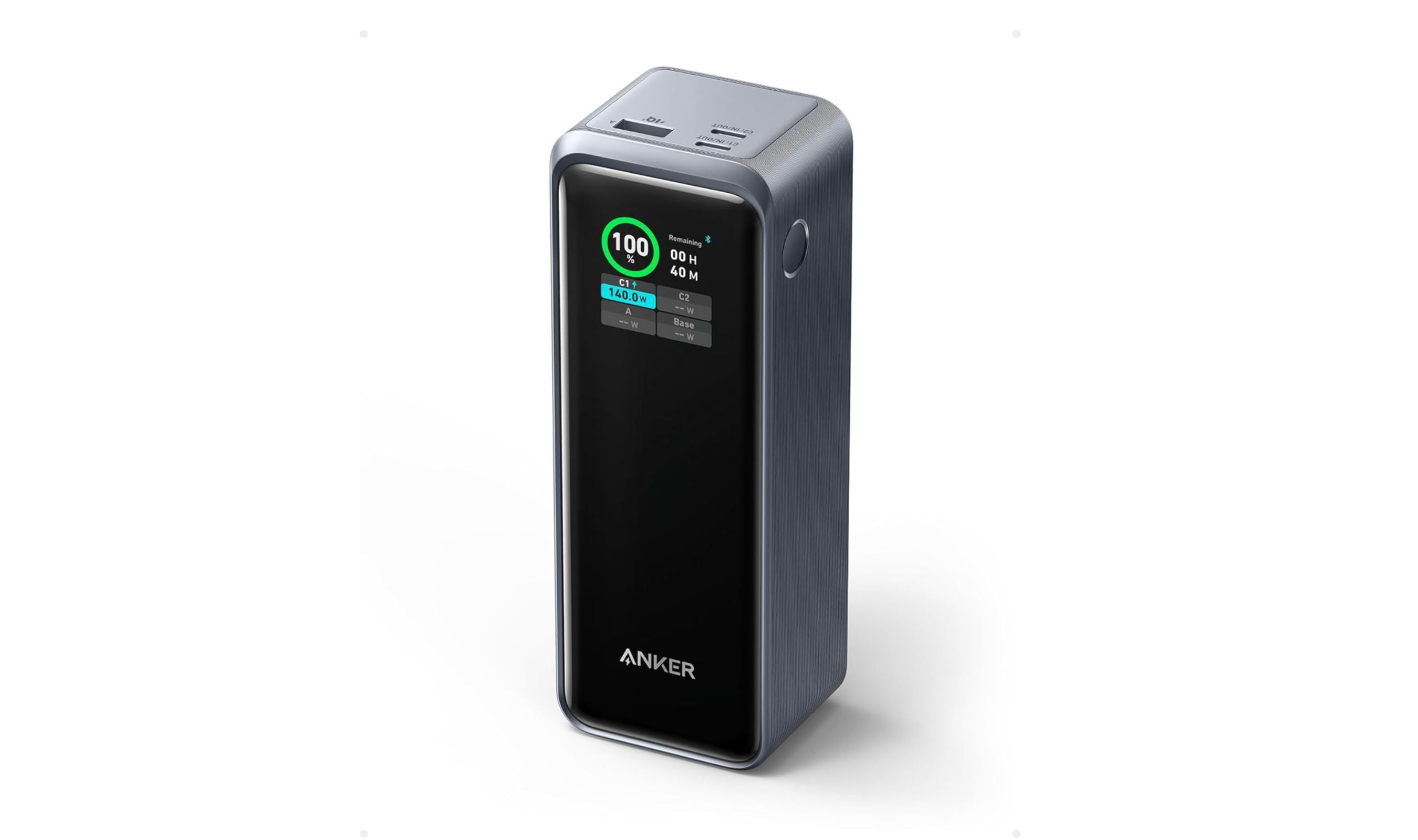
8 Best High Capacity Power Banks for 2026
The Anker Prime 27,650mAh tops our list of the 3 best high capacity power banks in 2026, with 250W output for laptops and travel.
5 min read
Best microSD Cards for Nintendo Switch in 2026
4 min read
Two headphone price drops worth checking, from $79.99
3 min read
Best Digital Notebooks for 2026
4 min read
8 Best 75-Inch TVs in 2026
5 min read
6 Best SSDs for PS5 in 2026
4 min read
7 Best USB Flash Drives to Buy in 2026
5 min read
7 Best Electric Screwdrivers of 2026
4 min read
TP-Link Archer BE24000 Quad-Band WiFi 7 Router discounted to $599.99
5 min read