If you need reliable power away from outlets, a solar power station is your answer. The EcoFlow Delta 3 Plus stands out as the best overall for its balance of capacity, charging speed, and portability. This list helps you choose between compact camping units and heavy-duty home backup systems.
Technobezz is supported by its audience. We may get a commission from retail offers.
5 Best Solar Power Stations for 2026
The best solar power stations for 2026, led by the EcoFlow Delta 3 Plus (around $649). Six tested picks from $450 budget units to 2,000Wh+ home backup.
T
Technobezz
Senior Editor
Updated September 5, 2026Sep 5, 2026
•7 min read

Get Deals Like These in Your Inbox
The best prices, reviewed weekly.
At a Glance
| Category | Product | Why We Picked It |
|---|---|---|
| Best overall | EcoFlow Delta 3 Plus | Excellent balance of capacity and charging speed |
| Best value | Anker Solix C1000 Gen 2 | Strong performance at a competitive price |
| Best for high capacity | Jackery Explorer 2000 v2 | Huge 2,042Wh capacity in a light 39.5 lb body |
| Best for dust and splash resistance | Bluetti AC60P | Rugged and weather-resistant design |
| Also recommended | Anker Solix F2600 | 2,560Wh LFP capacity, 2,400W continuous output and up to 1,000W solar input |
How we chose and tested
We evaluated solar power stations based on real-world performance metrics including usable capacity, charging speed, portability, and solar input compatibility. Our assessment considers each unit's ability to handle common devices from phones to small appliances, along with recharge speed from both wall outlets and solar panels. Battery chemistry, durability, and practical features like port variety and display clarity were also considered.
The best solar power stations right now
EcoFlow Delta 3 Plus - Best overall
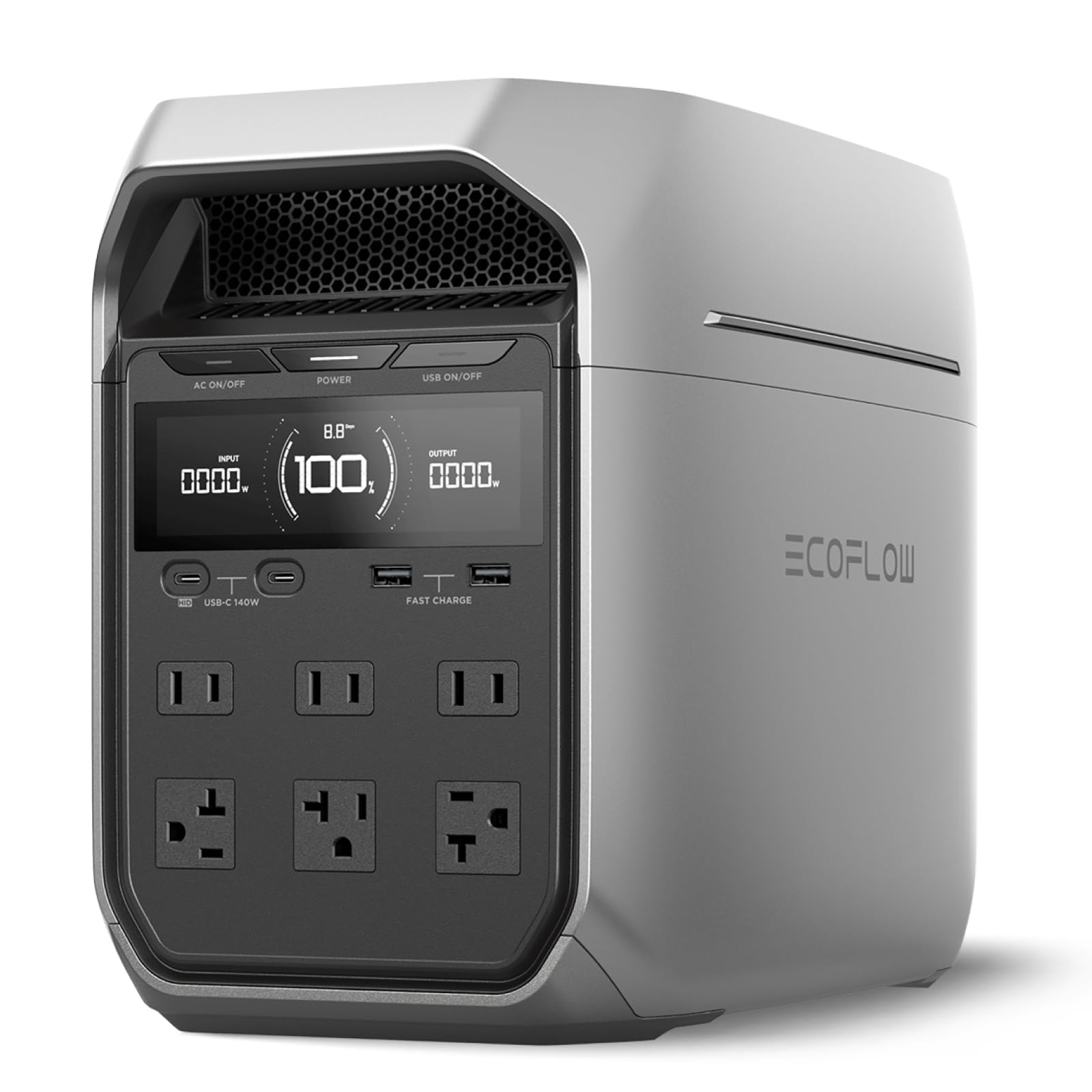
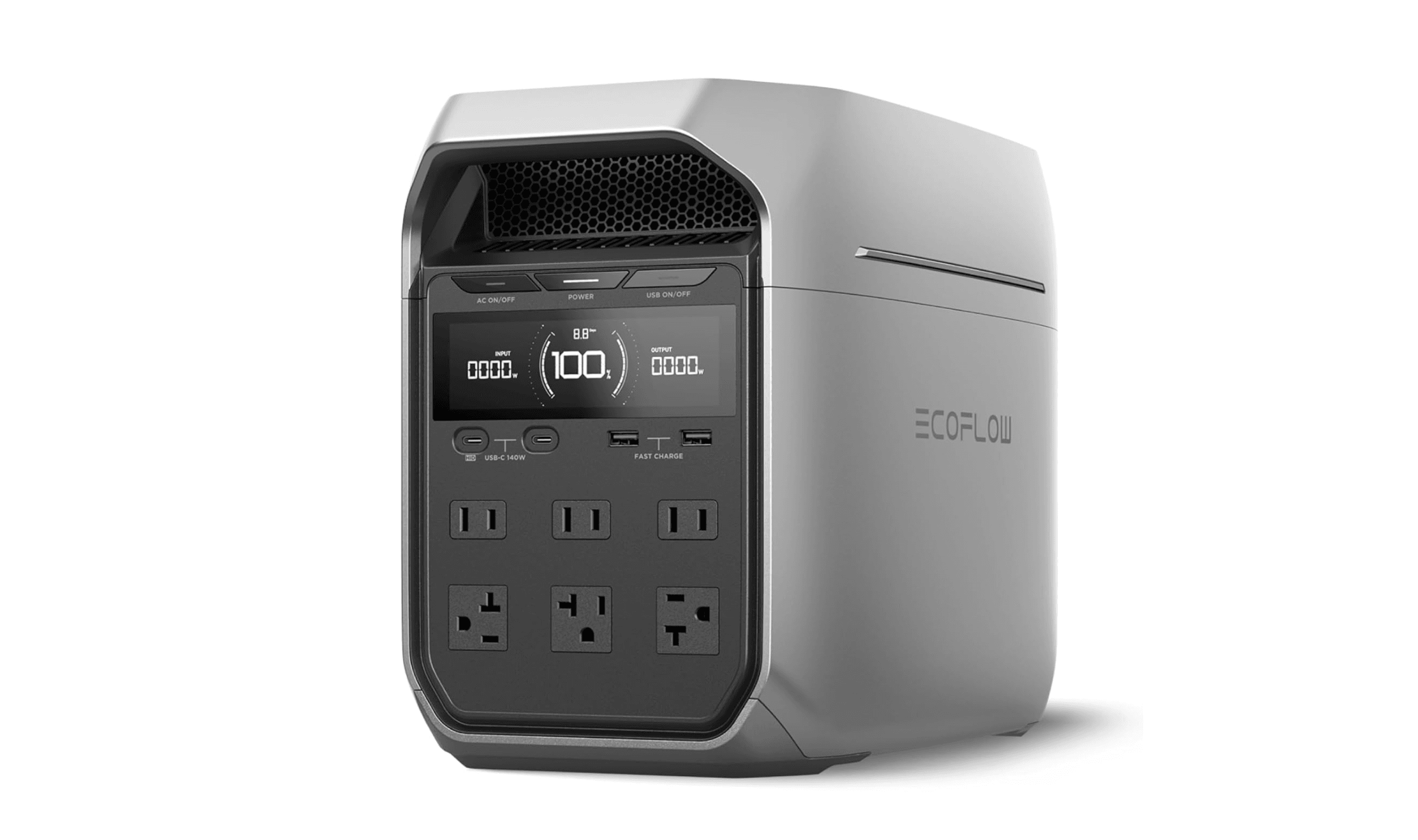
This power station hits the sweet spot for most users with its 1024Wh LiFePO4 (LFP) battery capacity that handles everything from weekend camping to home backup needs. With 1500W AC input, it charges to 80% in 40 minutes and to 100% in 70 minutes with solar.
Key highlights
- 1024Wh LiFePO4 (LFP) battery capacity powers most devices for extended periods
- With 1500W AC input, it charges to 80% in 40 mins and to 100% in 70 mins with solar
- Solar charging reaches 80% in 1 hr, 100% in 70 mins
- Six AC outlets plus multiple USB options
- Pure sine wave inverter protects sensitive electronics
Pros
- Excellent balance of capacity and portability
- Fast charging from both AC and solar sources
- Clear display shows remaining power and input/output status
- Multiple charging options for various devices
Cons
- At about 27.6 pounds, it's portable but still hefty for one hand
- No built-in wheels for easier transport
- Higher price point than entry-level models
Who it is for: Campers, RV owners, and homeowners wanting reliable backup power that handles most common needs.
Skip if
You need something ultra-portable for backpacking or have very basic power requirements.
Anker Solix C1000 Gen 2 - Best value
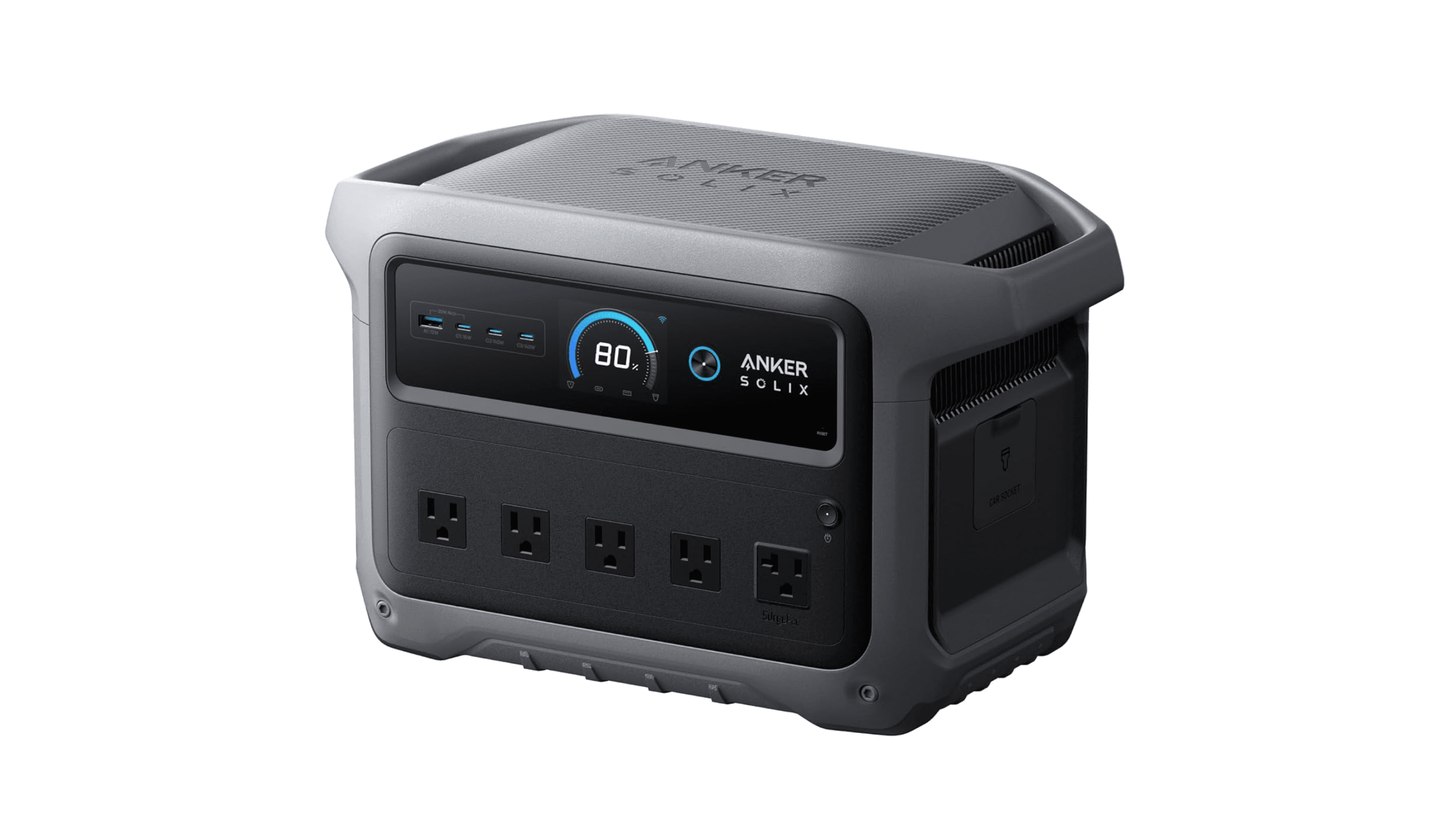
The Anker Solix C1000 Gen 2 delivers 1,024Wh capacity and 2,000W output. Anker specifies a full recharge in 49 minutes with UltraFast charging enabled in the app, or 1.8 hours with 600W solar input.
Key highlights
- 1,024 watt-hour capacity suitable for weekend trips
- Charges quickly from AC or solar power
- 2,000W output with connections for up to 10 devices
- LiFePO4 battery chemistry for longer lifespan
- Compact design relative to its capacity
Pros
- Good value for the power output
- Fast charging capabilities
- Durable LiFePO4 battery chemistry
- Clear interface with useful status information
Cons
- Not water resistant
- Limited expansion options compared to modular systems
- Fewer ports than some competitors
Who it is for: Budget-conscious buyers who want reliable power for camping or emergency backup without premium features.
Skip if
You need weather resistance or plan to expand your system with additional batteries.
Jackery Explorer 2000 v2 - Best for high capacity
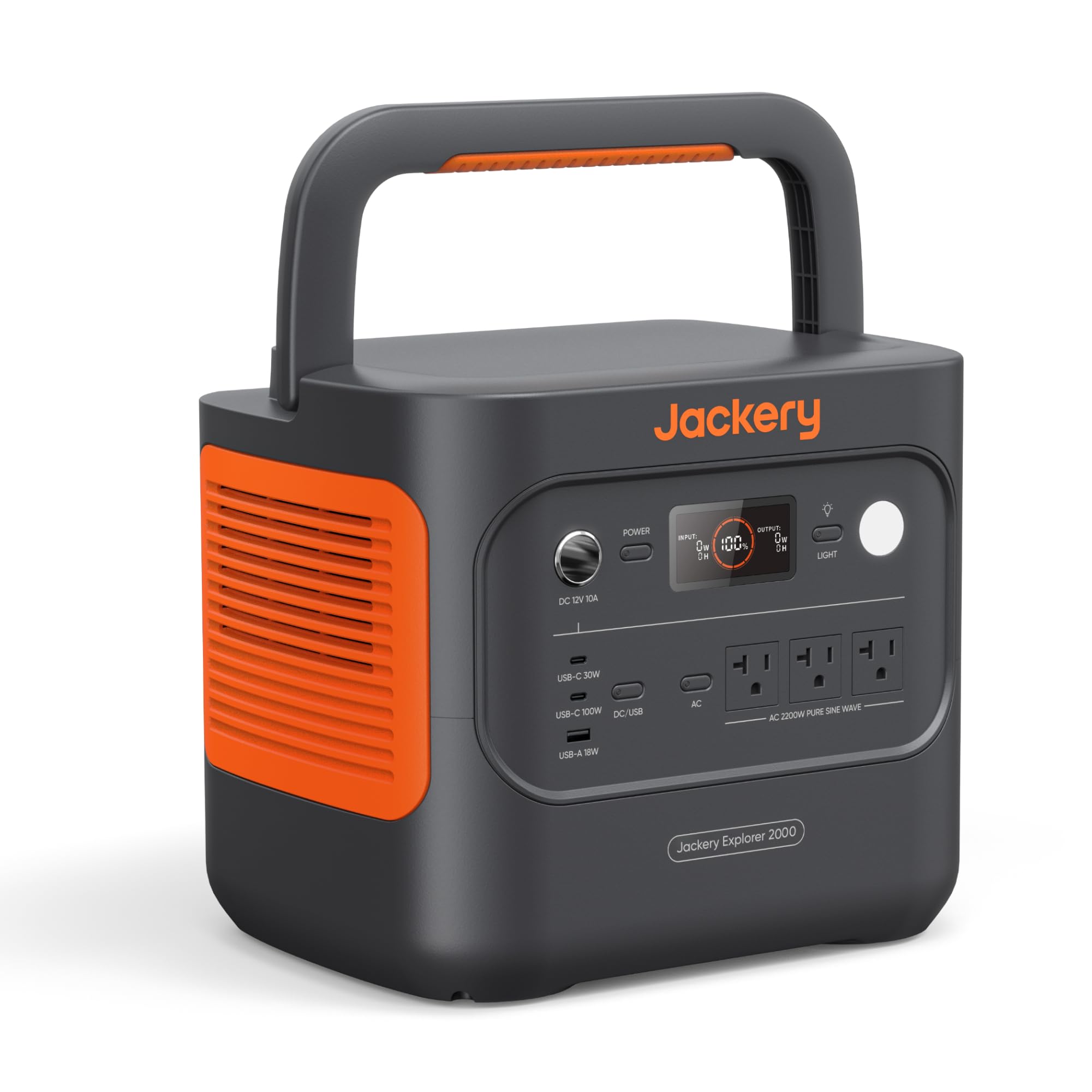
What sets this unit apart is its huge 2,042Wh LiFePO4 capacity and 2,200W output packed into a body that weighs just 39.5 lbs, which Jackery says is 41% lighter and 34% smaller than typical 2kWh stations.
Key highlights
- 2042Wh LiFePO4 Home Backup Battery capacity
- USB-C PD 100W port plus 3 AC ports for fast device charging
- Solar charges in as few as 6 hours with 400W of panels
- Often available at discounted prices
- Established brand with good customer support
Pros
- Large 2,042Wh capacity for extended off-grid use
- Strong performance for extended off-grid use
- Good compatibility with solar panels
- Frequently discounted from MSRP
Cons
- Still over 39 lbs, so two-handed to carry
- Solar panels sold separately
- Fewer outlets than some similarly priced competitors
Who it is for: Users who want maximum 2kWh capacity in the lightest, most portable package for camping or home backup.
Skip if
You only need modest capacity or want the absolute smallest, lightest unit for backpacking.
Bluetti AC60P - Best for dust and splash resistance
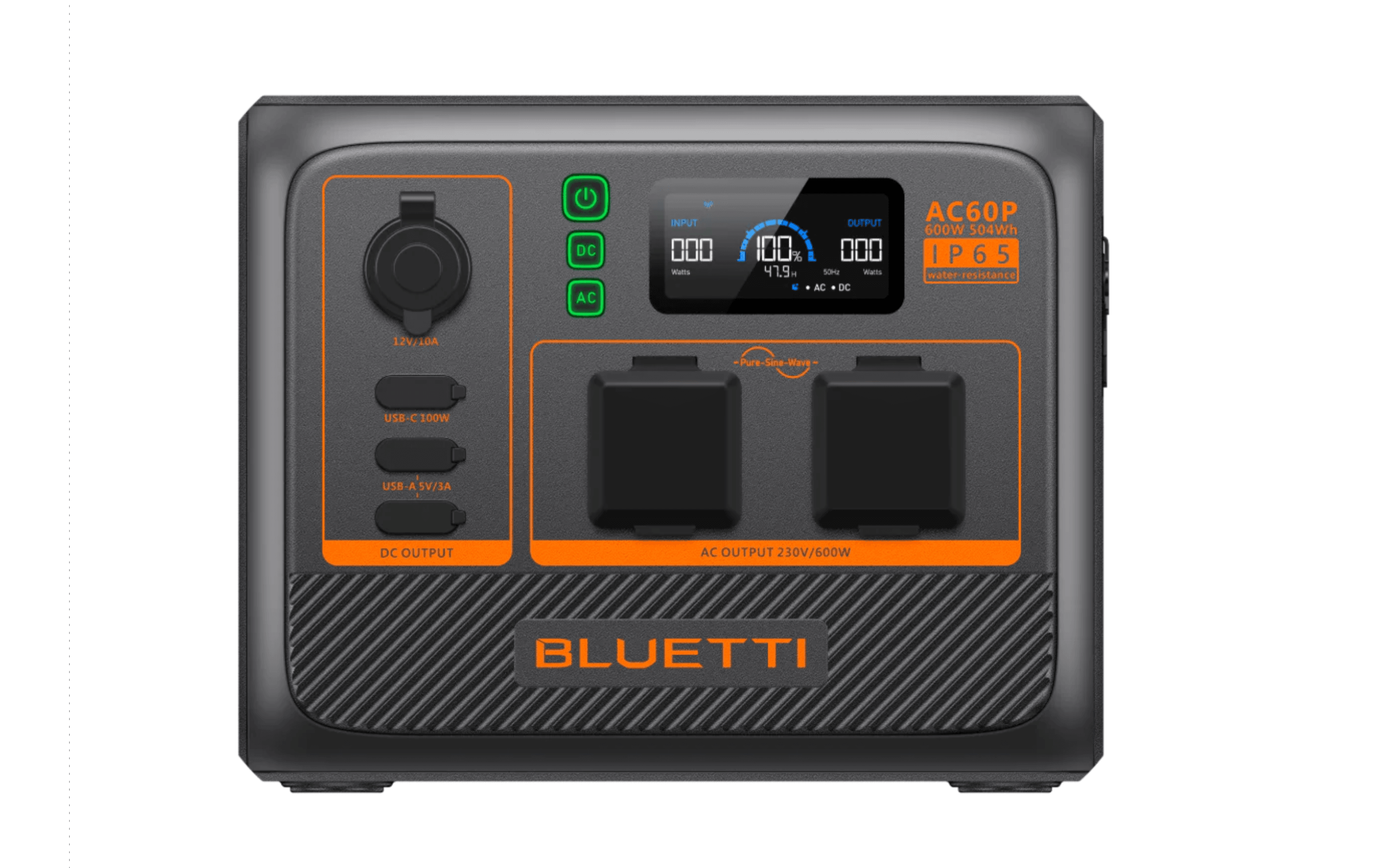
The Bluetti AC60P combines a 504Wh LiFePO4 battery with IP65 dust and water resistance. That protection does not permit operation in rain: Bluetti's manual says not to use the unit in adverse weather, including rain, snow or lightning.
Key highlights
- IP65 rating for water and dust resistance
- 504Wh battery capacity with 600W AC output
- Operate under shelter and follow the manual's weather restrictions
- Reliable brand known for durable products
- Suitable for outdoor work sites and camping
Pros
- Excellent weather resistance
- Rugged construction
- Good portability for its capacity
- Reliable performance in challenging conditions
Cons
- Lower capacity than similarly priced units
- Currently experiencing stock shortages
- Fewer advanced features than some competitors
Who it is for: Campers and outdoor workers wanting dust and splash resistance while operating the station in a sheltered location.
Skip if
You need maximum capacity or mostly use power stations indoors.
Also Good
- Anker Solix F2600 - a 2,560Wh LiFePO4 station with 2,400W continuous output and app control over Wi-Fi or Bluetooth. Check Price on Anker
How to Choose
- Calculate your watt-hour needs first. Add up the wattage of devices you'll run and how many hours you'll use them. A common mistake is focusing on inverter watts instead of battery capacity. A "2000W" unit with only 800Wh will run a 1000W microwave for less than an hour.
- Consider charging speed and options. Units vary dramatically in how quickly they recharge. Some take 13+ hours to fully charge, while others manage it in 90 minutes. Solar input capacity matters too, higher wattage solar input means faster solar charging.
- Think about portability versus capacity. Larger capacity means more weight. Under 30 pounds is manageable for carrying, while 60+ pound units need wheels or permanent placement. Also consider whether you'll expand your system later, modular units cost more initially but offer flexibility.
- Check the inverter type. Always choose pure sine wave inverters in 2026. Modified sine wave can damage laptop power bricks, void CPAP warranties, and reduce efficiency of motors. The small price difference isn't worth the risk.
- Evaluate battery chemistry. LiFePO4 (lithium iron phosphate) batteries last longer, typically 3,000+ cycles to 80% capacity versus 500 for standard lithium-ion. They're worth the premium if you'll use the station frequently over several years.
FAQ
How long will a solar power station run my devices?
Divide the station's watt-hour rating by your device's wattage. A 1,000Wh station runs a constant 100W load for roughly 8.5-9 hours if overall system efficiency is 85-90%. Remember that devices like refrigerators cycle on and off, using less than their rated wattage on average.
Can I leave my power station plugged in all the time?
Most modern units have battery management systems that prevent overcharging, but consult your specific model's manual. For long-term storage, follow your model's specified charge level and maintenance schedule, and keep it in a cool, dry place.
What size solar panel do I need?
Check the station's permitted solar voltage, current and connector requirements before choosing panels. Panel wattage alone does not establish compatibility. For example, the Bluetti AC60P accepts up to 200W at 12-28V DC, and its manual prohibits panels with an open-circuit voltage above 28V.
Are solar power stations safe for indoor use?
Yes, they produce no emissions unlike fuel generators. Ensure adequate ventilation if running high-wattage devices that generate heat through the station's inverter. All units on this list have safety certifications for indoor use.
How long do these batteries last?
LiFePO4 batteries typically last 3,000+ charge cycles to 80% capacity, while standard lithium-ion lasts about 500 cycles. With daily use, expect 3-5 years from LiFePO4 and 1-2 years from lithium-ion before noticeable capacity reduction.
Published February 24, 2026 Last updated September 5, 2026
Share this article
More in News
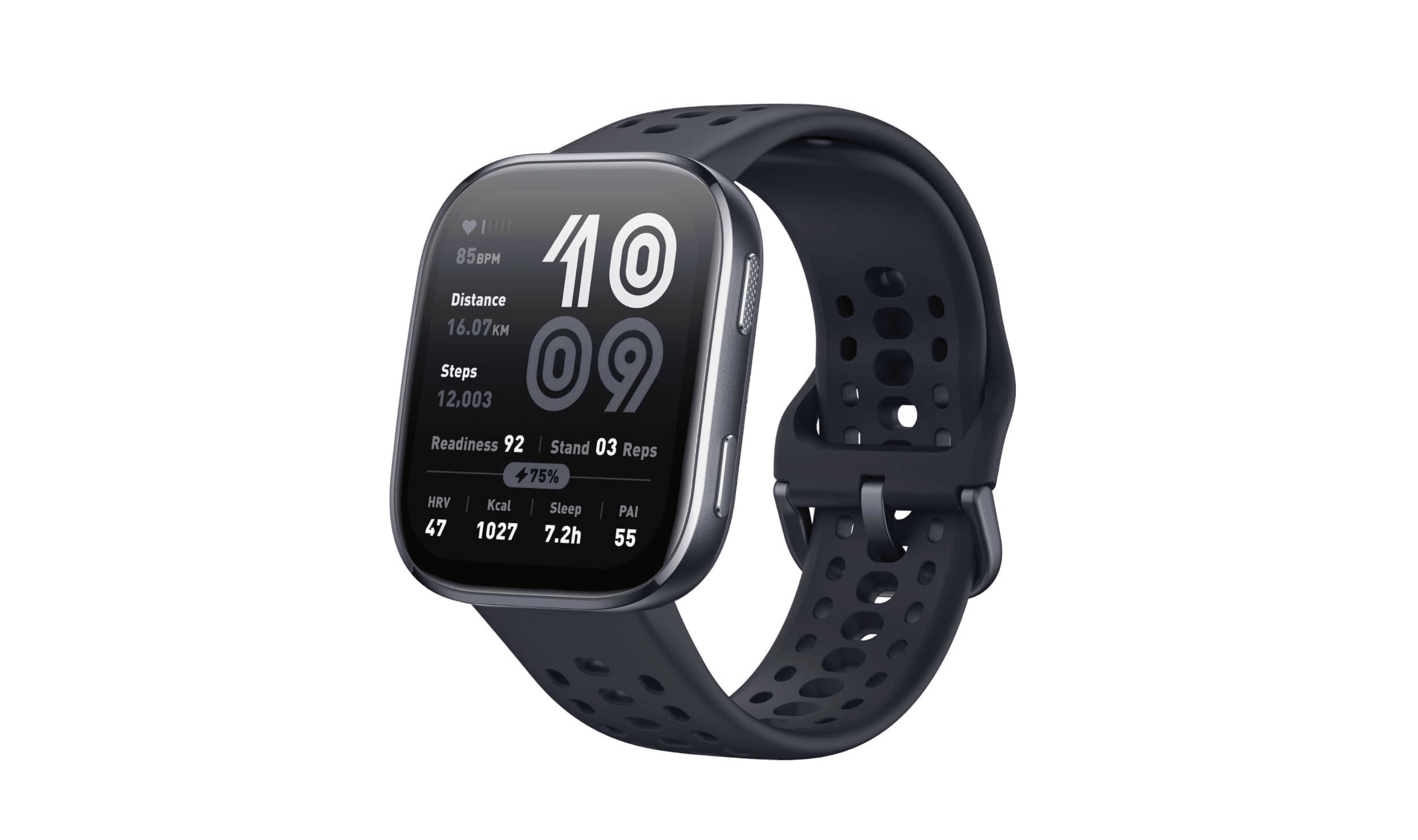
6 Best Cheap Smartwatches for 2026
Discover the best affordable smartwatches for 2026. Our top pick, the Amazfit Active 2, delivers premium features under $100. Find your perfect budget-friendly watch.
4 min read
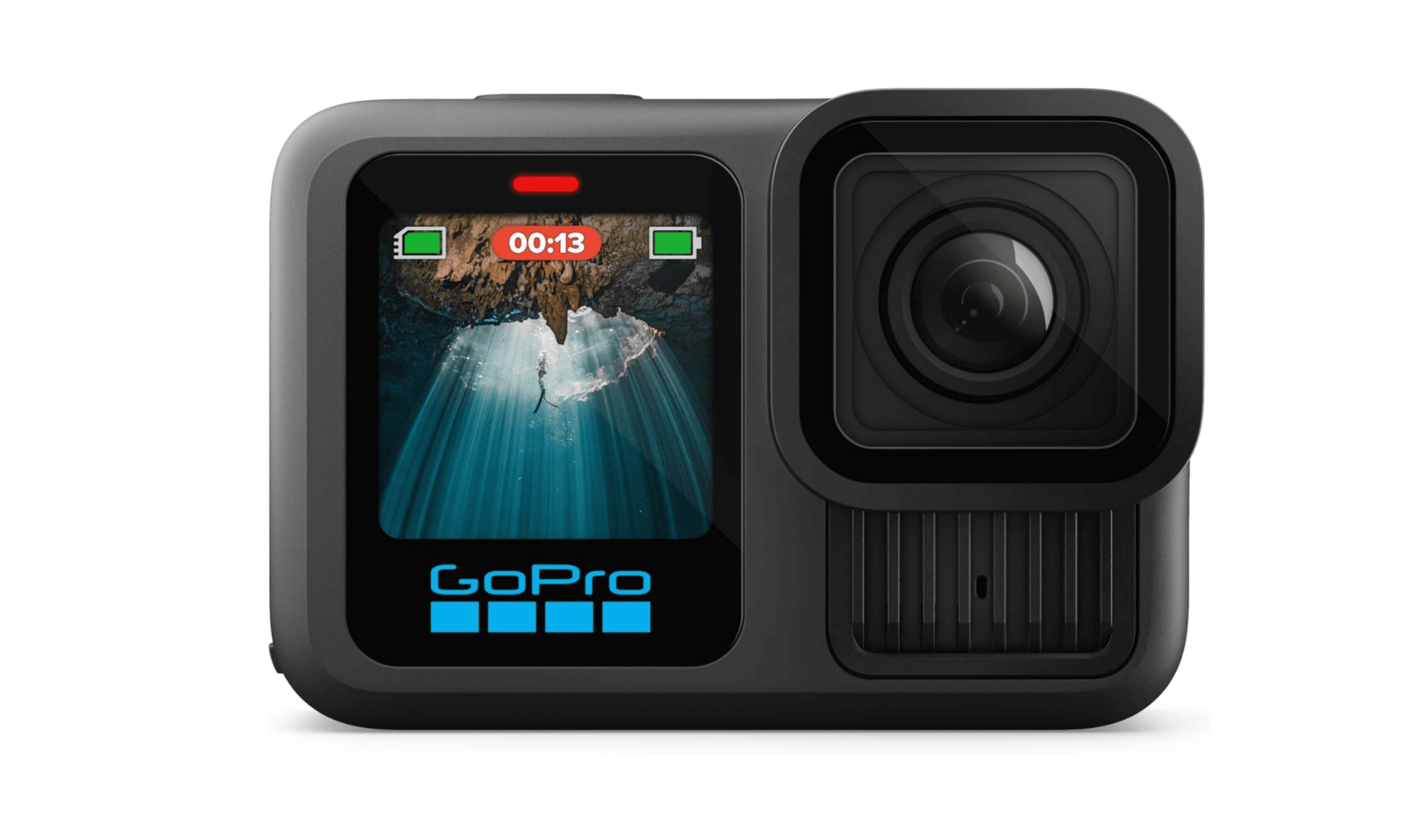
8 Best Action Cameras for 2026
GoPro Hero13 Black leads our picks for 2026. Compare top action cameras from DJI and Insta360 for low light, value, and 360 video.
3 min read
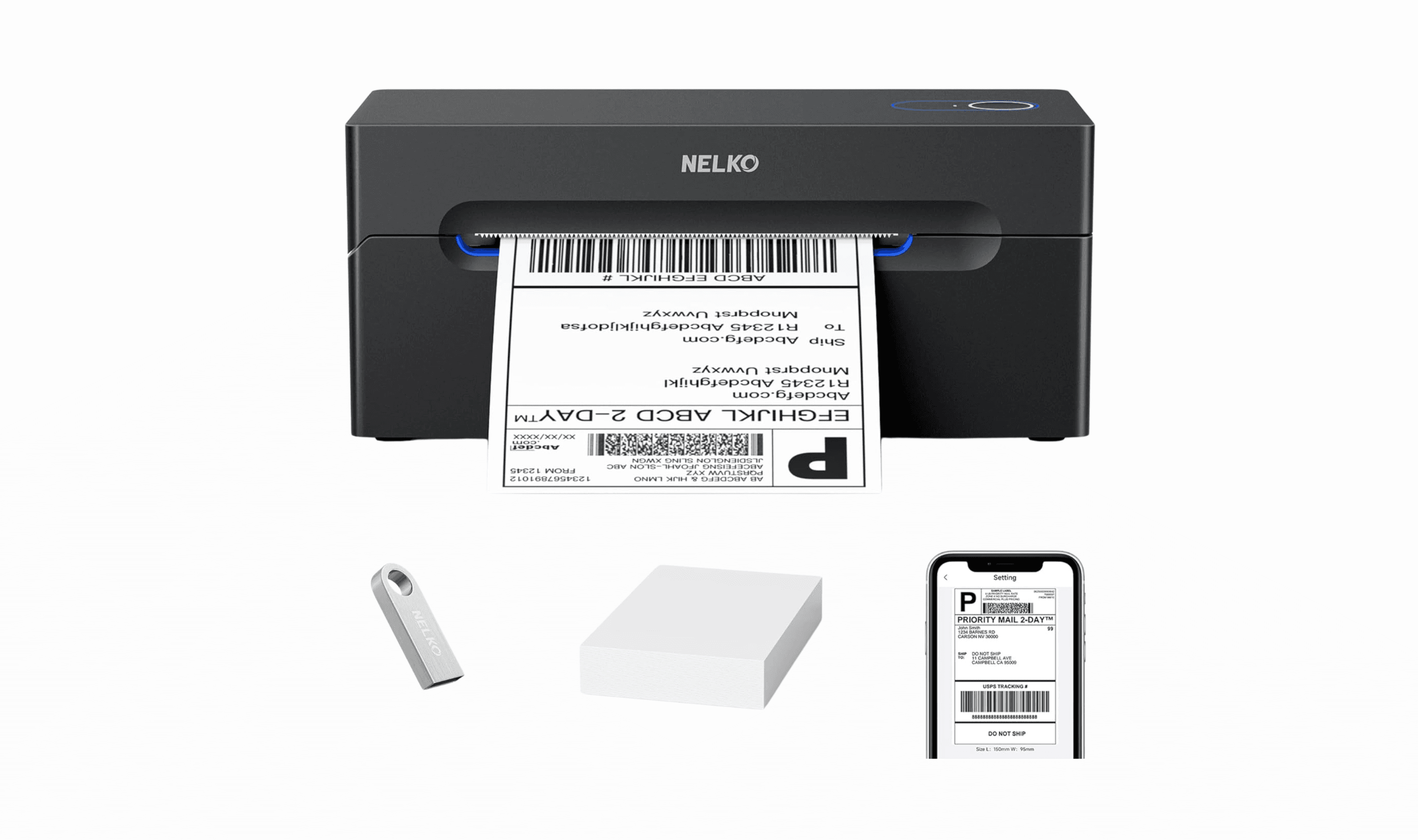
10 Best Thermal Printers for 2026
The best thermal printers for shipping and labels in 2026, led by the wireless Nelko around $70, plus picks from Rollo, KNAON, Brother and more.
4 min read
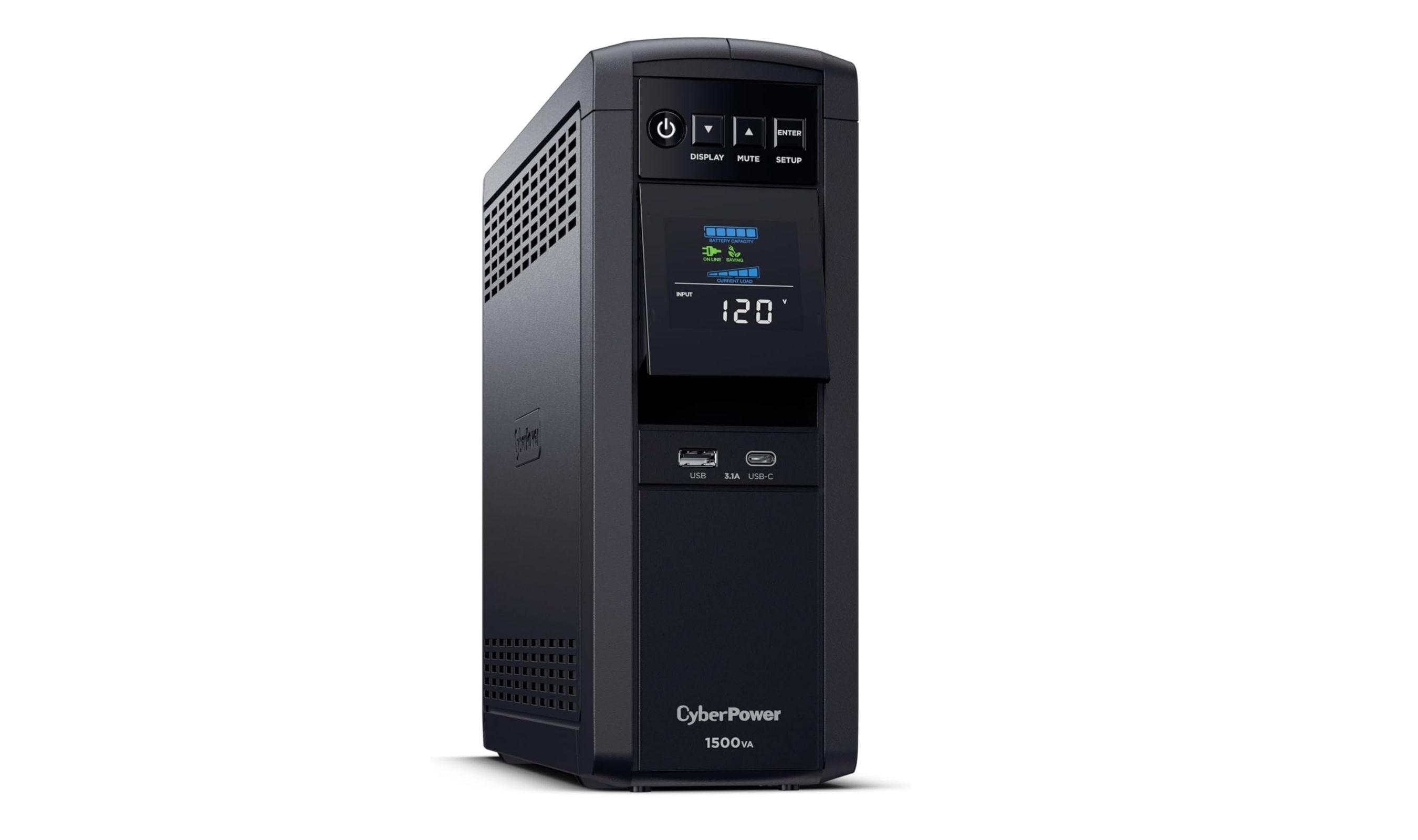
7 Best UPS Battery Backups for Home Use in 2026
We tested 7 UPS battery backups for home offices. The CyberPower CP1500PFCLCD leads with pure sine wave power, with budget picks starting near $90.
4 min read
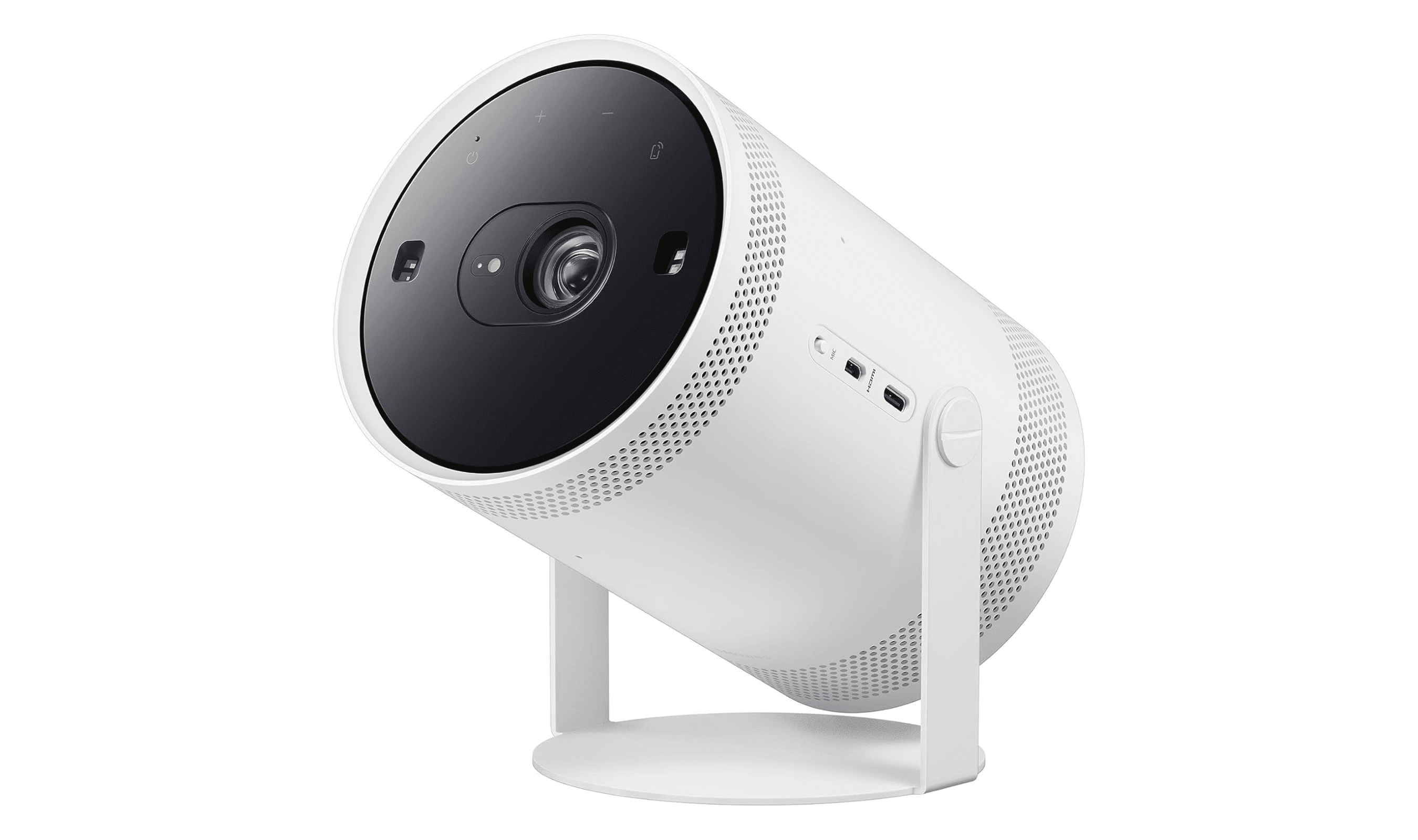
7 Best Portable Projectors for 2026
5 min read
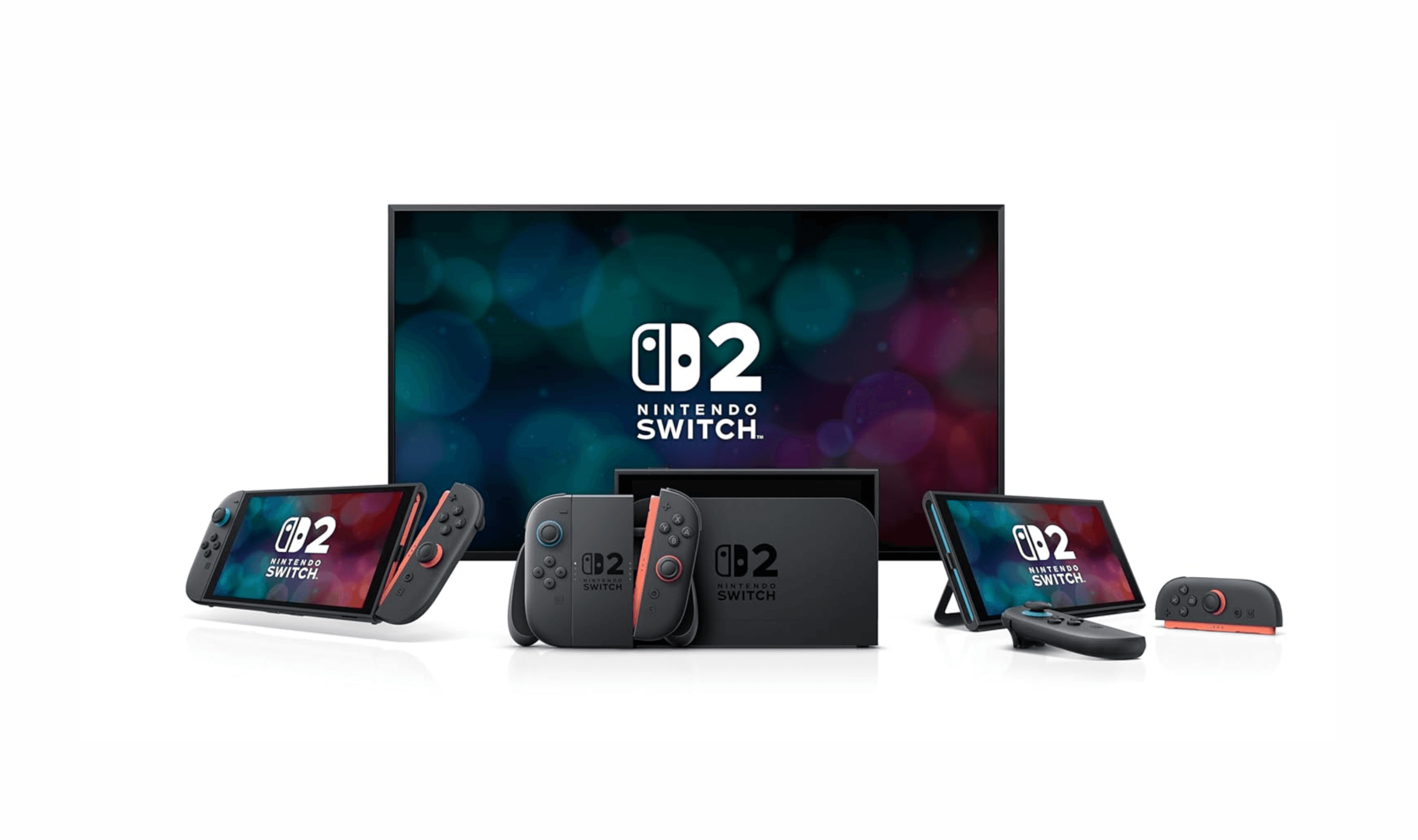
7 Best Handheld Gaming Consoles for 2026
5 min read
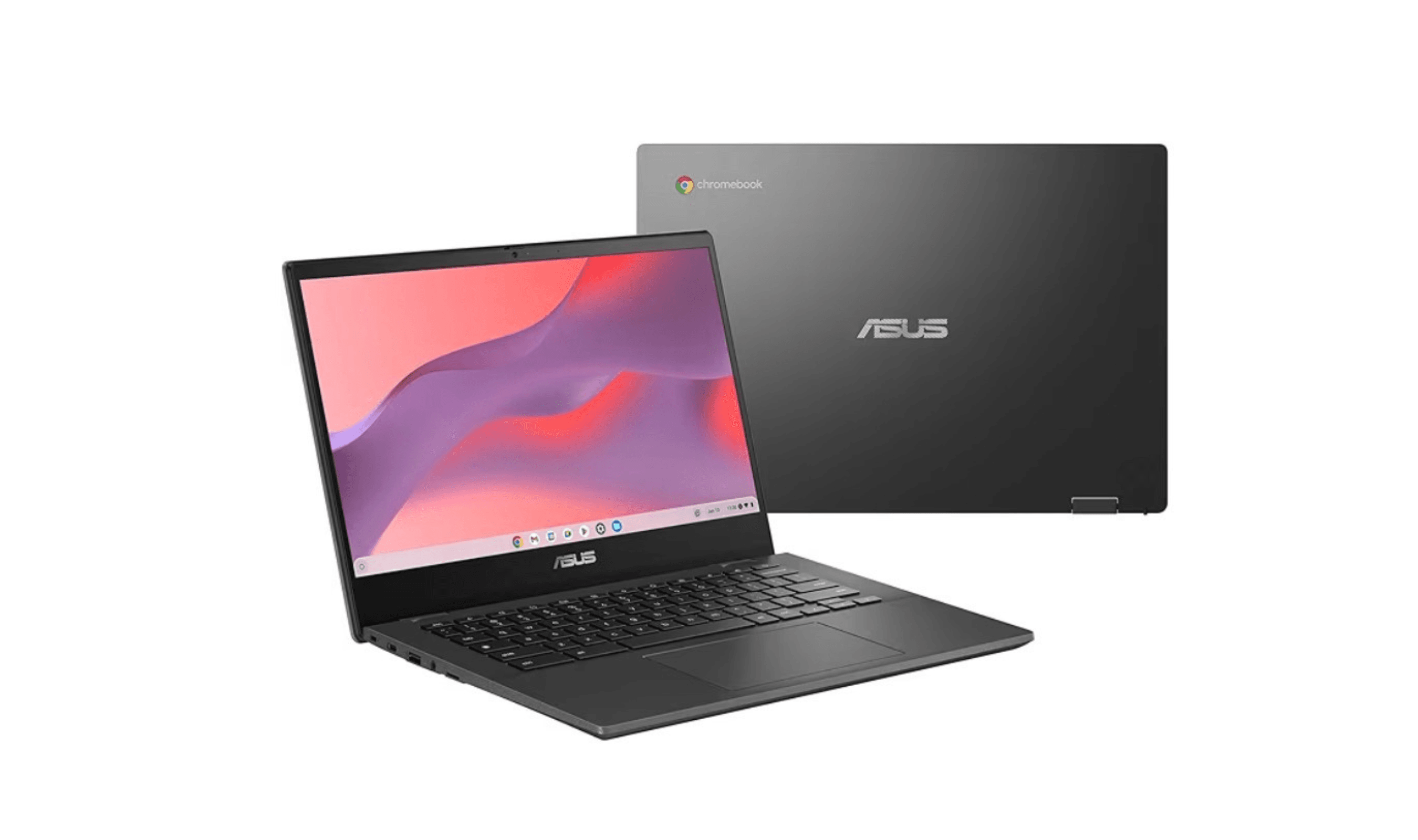
8 Best Chromebooks for Students in 2026
3 min read
Top 8 Laptops for Writers for 2026
3 min read
Best Gaming Keyboards for 2026
5 min read
6 Best Monitor Light Bars for 2026
4 min read
6 Spy Cameras for Home and Portable Monitoring (2026)
5 min read

Best Mobile Workstations for 2026
4 min read