
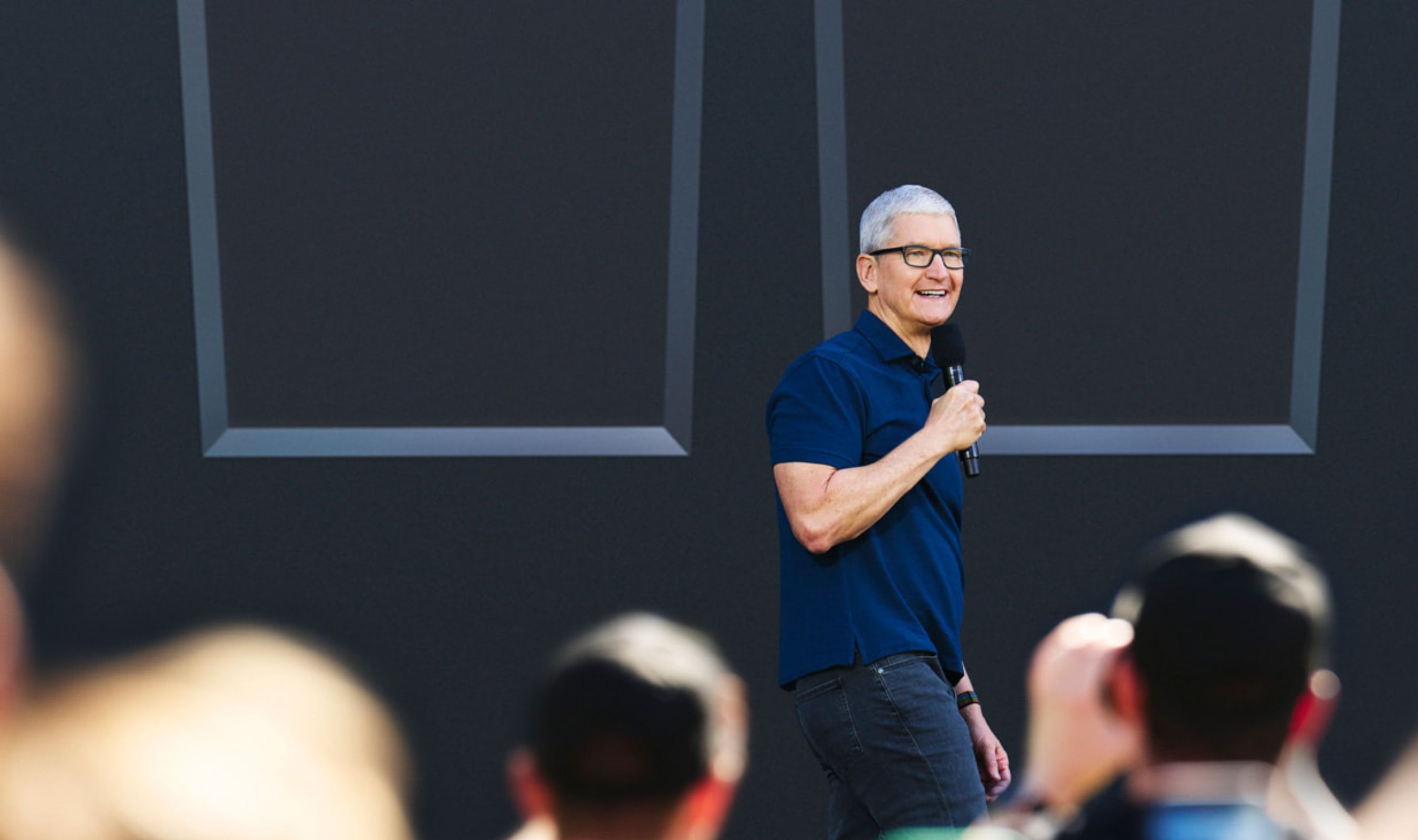
Days after his final WWDC, Tim Cook is spending his last months as Apple CEO delivering an unusually blunt warning to customers: prices are going up, and there's no stopping it.
"I've never seen anything like it in any area in over 40 years," Cook told the Wall Street Journal, calling the memory chip crunch a "hundred-year flood" that has pushed Apple past its breaking point. The company has been absorbing higher component costs throughout 2026, but the CEO said that strategy has collapsed.
"The situation has become unsustainable," Cook said. "Unfortunately, price increases are unavoidable."
Apple is one of the world's largest purchasers of memory and storage, but AI companies have flooded the market, buying up the same DRAM and NAND chips that go into iPhones, iPads, and Macs. Chip makers like Samsung, SK Hynix, and Micron are adding production capacity, but most of it is earmarked for server chips.
Consumer-device supply is expected to keep falling short. The iPhone 18 Pro lineup, expected in September, will bear the brunt first.
Research firm TechInsights calculated that memory and storage components alone will cost Apple roughly $150 more per iPhone 18 Pro compared to the iPhone 17. To maintain its current profit margins, the firm estimates Apple would need to raise the Pro's price by around $270.
Cook declined to specify which products will get increases or by how much. But the math is hard to escape.
Apple already bumped the Mac mini from $599 to $799 by killing its entry-level configuration. It also discontinued the Mac Pro and trimmed higher-end Mac Studio and MacBook Pro options earlier this year.
The iPhone 18 Pro and Pro Max are expected to launch in September alongside Apple's first folding phone, the iPhone Ultra, which reports suggest could cost more than $2,000. The standard iPhone 18 isn't expected until spring 2027.
Cook compared the shortage to a natural disaster, telling the Journal that demand for chips "at a time when consumers want devices and the memory guys are passing along huge price increases" has created conditions he hasn't seen in a single product category in over four decades. Apple has no plans to build its own memory factories. "We can't do everything," Cook said.
"We know what we're good at." The price pressure extends well beyond Apple. Samsung, Microsoft, Sony, and Nintendo have all raised prices amid the same memory crunch.
RAM prices reportedly doubled earlier this year, and analysts expect those costs to persist well into 2028.
Cook said Apple will use its cash reserves to try to increase memory supply, but he offered no specifics on how. With John Ternus set to take over as CEO on September 1, the pricing decisions for the iPhone 18 and beyond will land on his desk.