
Keeping your iPad (11th generation) on the latest iPadOS version is the best way to ensure it runs smoothly and securely. Apple typically releases major updates annually and smaller security patches throughout the year. The process is straightforward, whether you update wirelessly or with a computer.
Check for Updates Over Wi-Fi
Open the Settings app on your iPad and tap General. From there, select Software Update. Your iPad will automatically check for available updates. If one is found, you'll see details about the new version and an option to Download and Install.
Make sure your iPad is connected to a stable Wi-Fi network and has at least 50% battery life, or better yet, plug it into power using the USB-C port. Major iPadOS updates can be several gigabytes, so the download might take a while depending on your internet speed. The installation process will require a restart.
Enable Automatic Updates
To have your iPad handle updates for you, go to Settings > General > Software Update > Automatic Updates. Here, you can toggle on Download iPadOS Updates and Install iPadOS Updates. With these enabled, your iPad will download updates in the background and install them overnight when it's connected to power and Wi-Fi.
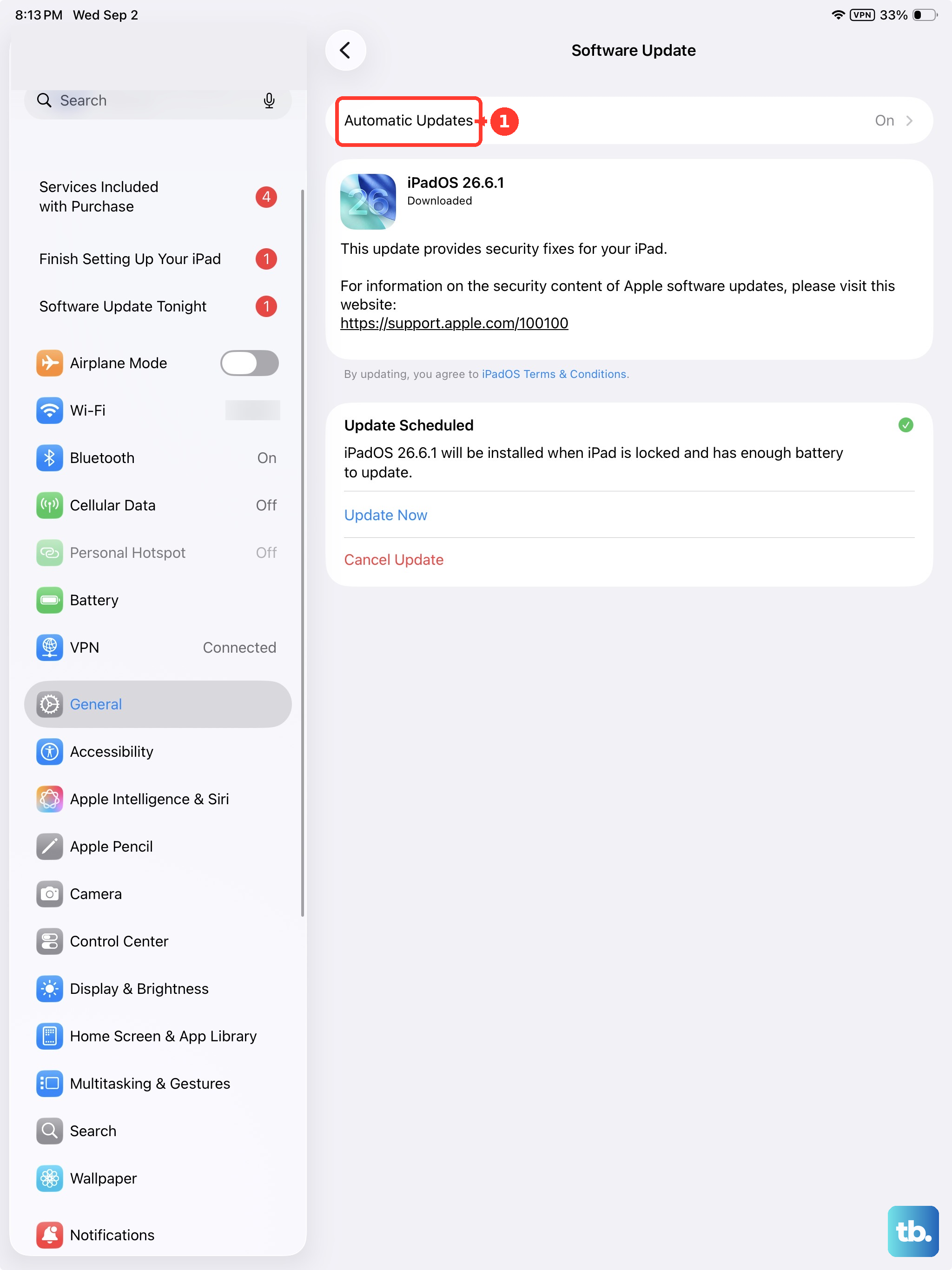
You'll still get a notification before an installation happens, giving you a chance to delay it if you need to. This is a great set-it-and-forget-it option for the 11th generation iPad.
Update Using a Mac or PC
If an over-the-air update fails or your iPad doesn't have enough free storage, updating via a computer is a reliable alternative. Connect your iPad to your Mac or Windows PC using a USB-C cable. On a Mac with macOS Catalina or later, open Finder and select your iPad from the sidebar. On a Windows PC or older Mac, open iTunes.
Click on Check for Update in the device summary page. If an update is available, click Download and Update. This method is particularly useful because the computer handles the download, bypassing any storage limitations on the iPad itself.
If an Update Gets Stuck or Fails
A stuck update, often shown by a frozen progress bar or the Apple logo, can usually be resolved with a force restart. On your iPad (11th generation), quickly press and release the Volume Up button, then quickly press and release the Volume Down button. Finally, press and hold the Top button until you see the Apple logo appear.
If you see an error like "Unable to Verify Update," check your internet connection first. Sometimes switching to a different Wi-Fi network helps. You can also try deleting the downloaded update file by going to Settings > General > iPad Storage, finding the update in the list, and tapping to delete it. Then attempt the download again.
Verify Your Current iPadOS Version
It's helpful to know what version you're currently running. To check, go to Settings > General > About. Look for the Software Version entry near the top of the list. This information is useful for confirming an update installed successfully or for troubleshooting app compatibility issues.
Prepare Your iPad Before Updating
Before starting any update, especially a major version jump, I'd strongly recommend creating a fresh backup. You can do this wirelessly by going to Settings > [Your Name] > iCloud > iCloud Backup > Back Up Now. Alternatively, you can create a local backup on your computer using Finder or iTunes during the update process.
Also, ensure you have enough free space on your iPad for the update to download and unpack. A quick check in Settings > General > iPad Storage can save you from an interruption mid-process.
Regular updates bring critical security patches that protect your personal data, along with performance improvements and new features designed for your iPad's hardware. Staying current is one of the simplest ways to maintain your device's health and functionality over time.