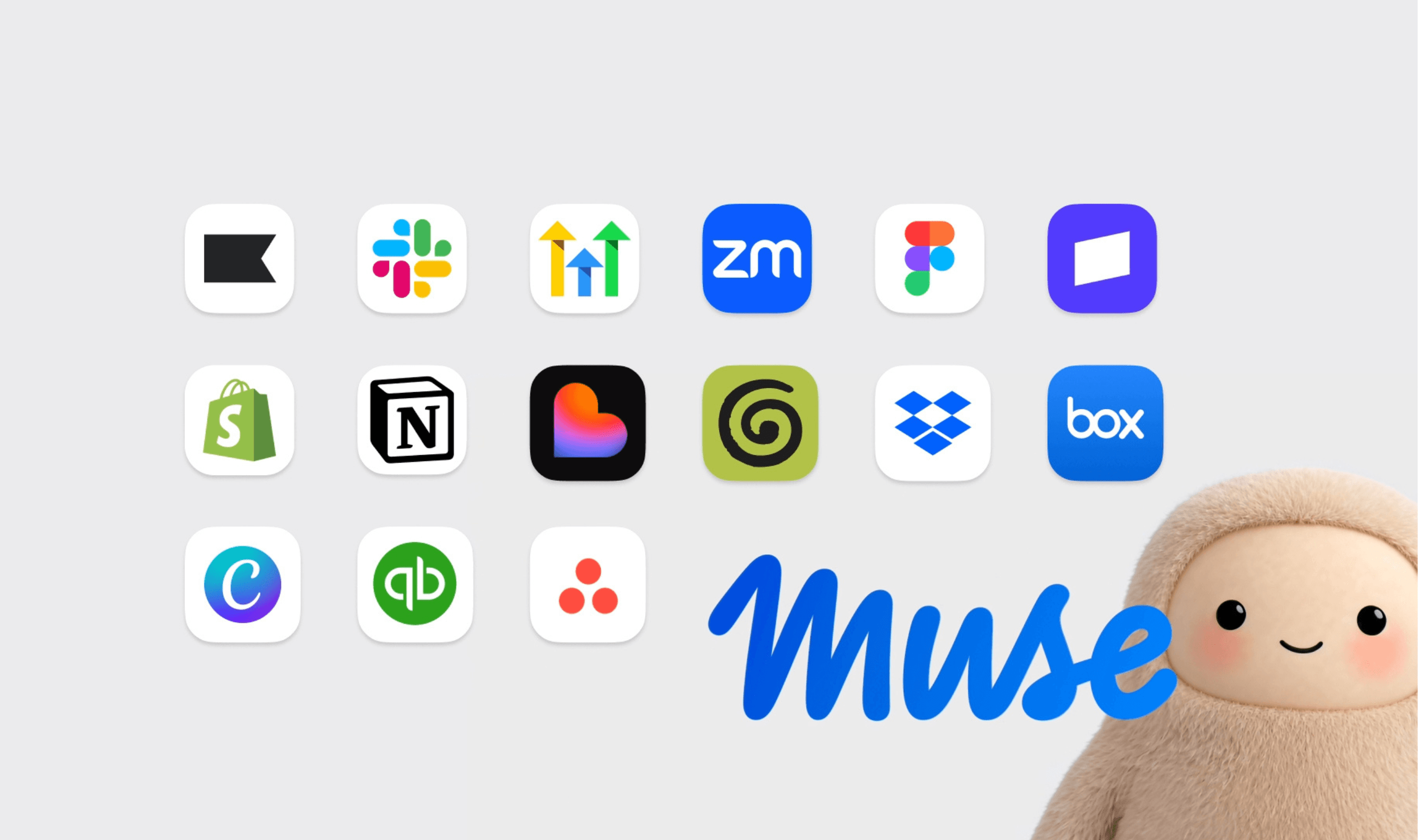

Zoom says its meeting intelligence now works inside Muse, from Meta, so people can pull up what was said in a call and act on it without switching apps. The connection runs through Zoom's MCP server, which the company points developers to at developers.zoom.us. Muse can fetch Zoom summaries and the main points from a session, and it can also reach the content a user keeps in Zoom Meetings and My Notes.
Scheduling is part of the deal too: Muse can set up a new Zoom meeting, and it can carry out follow-up actions on next steps from inside Muse itself. Zoom is aiming the integration at small business owners, listing service professionals, real estate agents, consultants and small agencies among the people it expects to use it.
Read more: Meta Launches Muse Glimmer Open-Weight AI Model That Runs on a Single GPU
Zoom did not disclose pricing for the integration or say which platforms and devices it supports.
The move lands days after Meta said Muse would reach its AI glasses in the coming months, a push Mark Zuckerberg previewed at Connect 2026. That earlier round of news also covered payments through Shop Pay and PayPal, grocery stocking with Instacart, travel planning with Expedia on the way, and work tools from Notion, Granola, GitHub and Box. Meta said Muse would get its own email address and teased a pocket device called Muse Charm, with more details promised later this year.
Muse itself arrived earlier in September with dozens of partners and the whole Shopify catalogue behind it. On the glasses side, Meta has been expanding Meta Ray-Ban Display to the UK, Canada, France, Italy and Germany, and online orders are now open. The company has said it plans more than 100 AI glasses options by the end of 2026.
Zoom's news also follows scrutiny of Muse on the security side. Researcher Patrick Wardle said the assistant has a zero-day flaw that could turn a Mac into a backdoor, a warning published by Malwarebytes Labs. His advice to users was blunt: "Please don’t install."
Meta has been shipping Muse updates at a steady clip. Muse Spark 1.3, the current release, handles coding and agentic tasks, and it was rolled out in Muse Code and the Meta Model API. The release asks clarifying questions and confirms consequential actions before taking them, according to Meta. A max reasoning mode has been held back pending safety testing, with no date set, and API pricing for the model has not been disclosed.