LED strip lights can transform any room from functional to fabulous, whether you need task lighting for your kitchen or ambient glow for your living room. The Govee Strip Light 2 Pro stands out as our top pick with its exceptional brightness and color accuracy, but the right choice depends on your specific needs and budget. This list helps you find the perfect balance of features, from smart home integration to simple plug-and-play options.
Technobezz is supported by its audience. We may get a commission from retail offers.
7 Best LED Strip Lights for 2026
We tested the best LED strip lights for 2026. The Govee Light Strip Pro 2 (~$75) leads on brightness and color, with smart and budget picks from $19.
T
Technobezz
Editorial Team
Updated October 1, 2026Oct 1, 2026
•9 min read

Get Deals Like These in Your Inbox
The best prices, reviewed weekly.
At a Glance
| Category | Product | Why We Picked It |
|---|---|---|
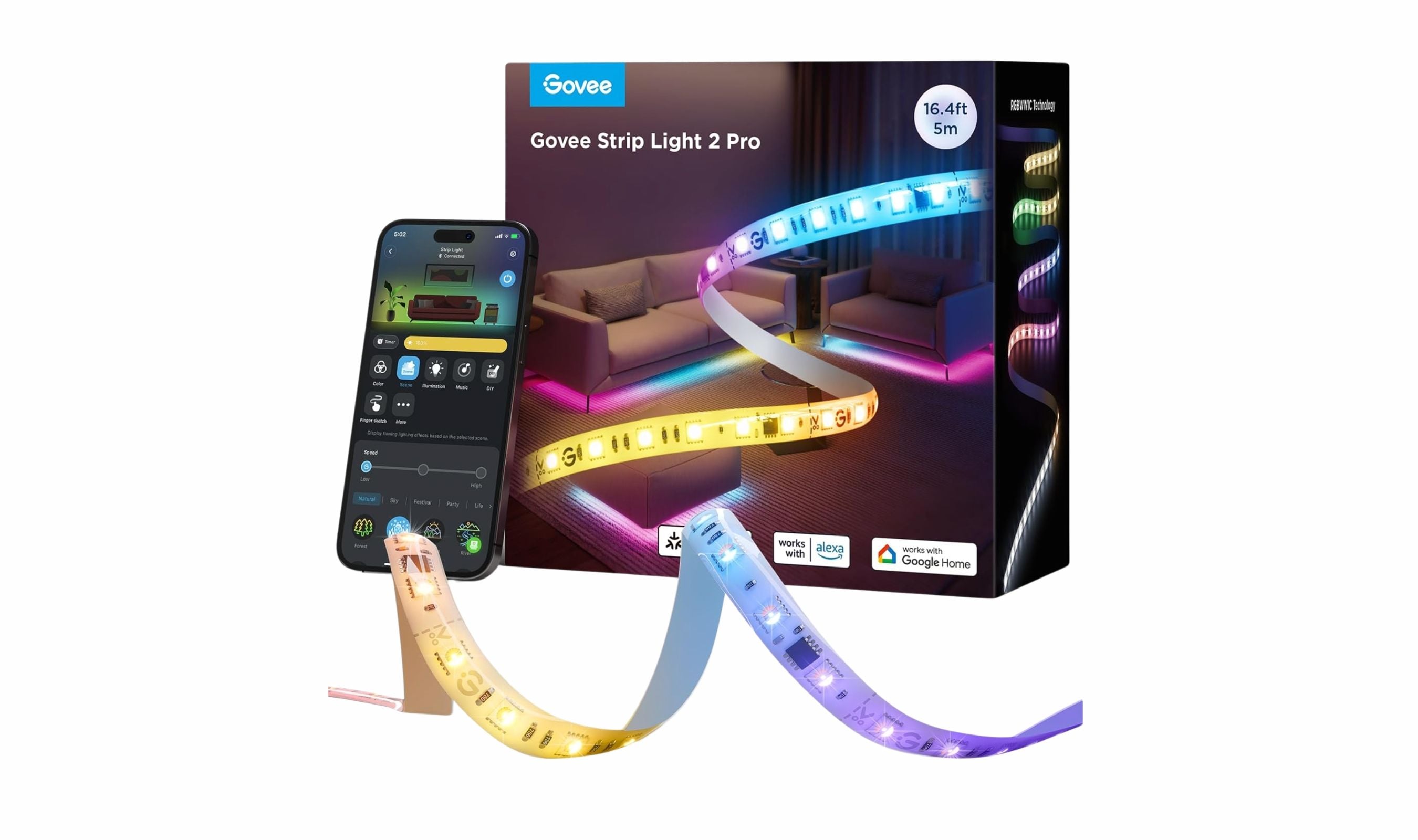
| Best overall | Govee Strip Light 2 Pro | Tunable white light and segmented color control |
| Best value | TP-Link Tapo Smart Wi-Fi Light Strip | Affordable with reliable performance |
| Best for smart home integration | Philips Hue Flux Strip Light 16ft | Gradient colors and Hue Bridge integration |
| Best for diffused lighting | Govee COB Strip Light Pro | Smooth light without visible dots |
| Best budget option | WiZ Smart RGBIC LED Light Strip | Basic features at low cost |
| Also recommended | Daybetter LED Strip Lights | Reliable budget option with good brightness and simple remote control, perfect for basic accent lighting. |
| Also recommended | Nanoleaf Essentials Matter Lightstrip | 300 addressable color zones, music effects and Matter over Wi-Fi for multicolor accent lighting. |
How we chose
We evaluated LED strip lights against the specifications and installation realities that decide whether a run looks right once it is up. Our assessment considers brightness, color accuracy, smart home compatibility, ease of installation, and overall value. We prioritize products that deliver consistent performance across different use cases, from task lighting to ambient decoration. The evaluation weighs technical specifications, installation constraints, and practical application scenarios to ensure the recommendations hold up in real rooms.
The best LED strip lights right now
Govee Strip Light 2 Pro - Best overall
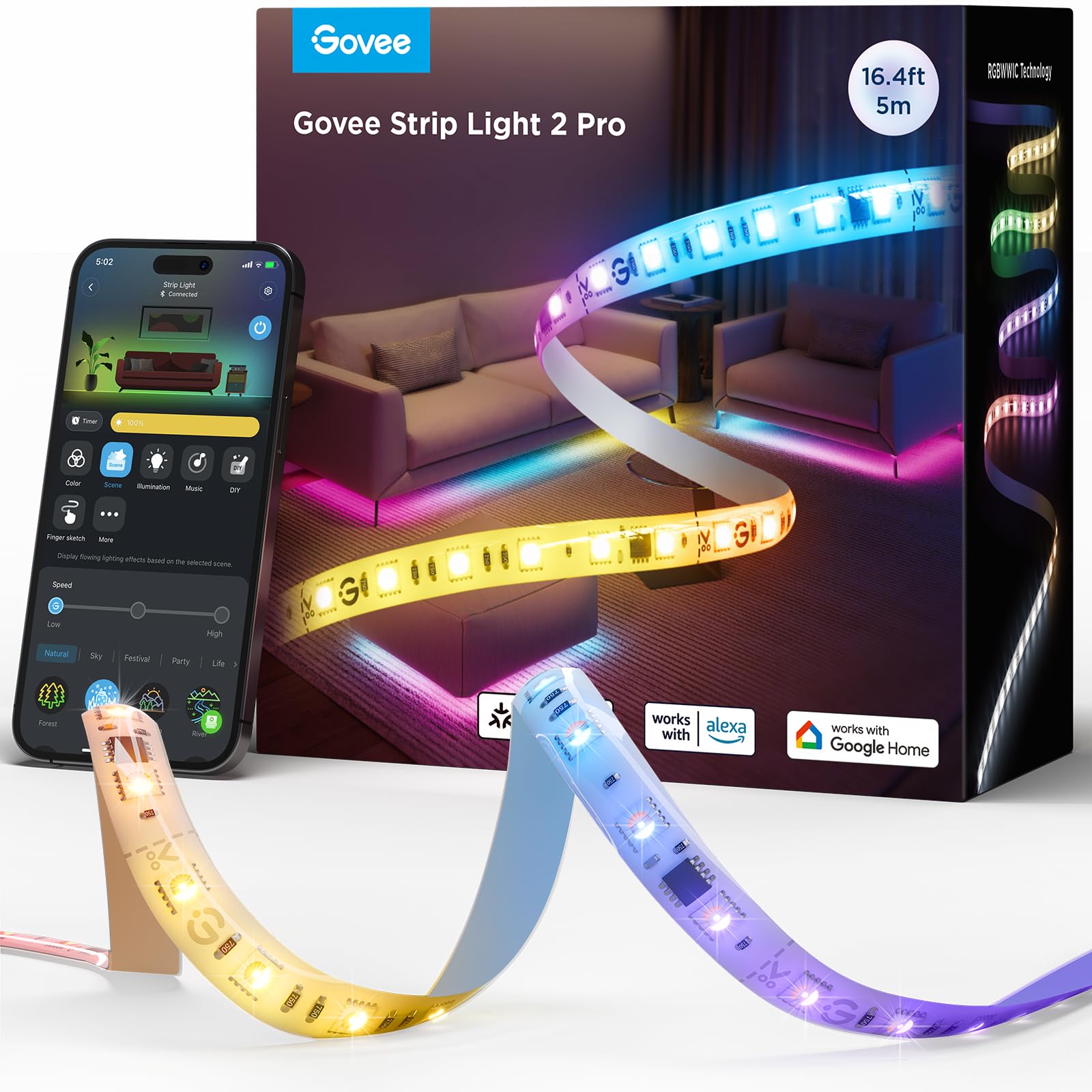
This strip delivers exceptional brightness and color accuracy with more LEDs per foot than most competitors, making it versatile enough for both task lighting and ambient effects. It comes in multiple lengths including 6.56ft, 16.4ft, and 32.8ft options.
Key highlights
- 60 LEDs per meter for superior brightness and color saturation
- Dedicated warm and cool white LEDs for accurate white tones
- Works with Alexa and Google Assistant via Matter for cross-platform smart home compatibility
- Built-in microphone in the control box for music synchronization
- Clear cut markings every four inches for precise installation
Pros
- Exceptionally bright with excellent color reproduction
- Smooth color transitions thanks to upgraded 16-bit processor
- Works with all major smart home platforms via Matter
- Strong adhesive backing stays securely in place
Cons
- Companion app can feel cluttered with unnecessary features
- Premium pricing compared to basic options
- Some advanced features require using the Govee app
Who it is for: Anyone wanting tunable white light, segmented color effects and Matter smart home integration.
Skip if
You prefer a simpler app interface or need basic accent lighting without advanced effects.
TP-Link Tapo Smart Wi-Fi Light Strip - Best value
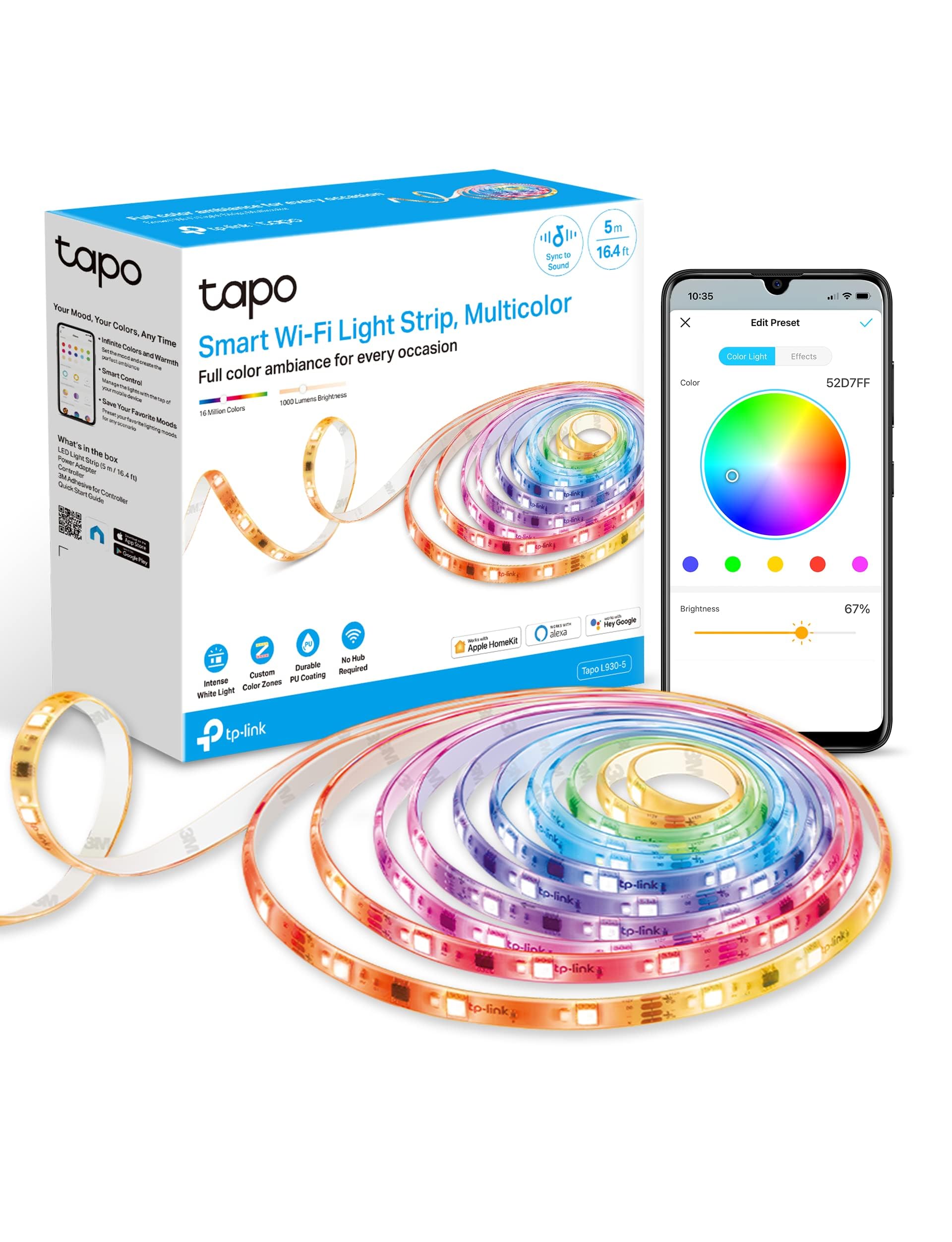
This affordable strip offers reliable smart features and accurate colors without the complexity or cost of premium options.
Key highlights
- Works with Apple HomeKit, Amazon Alexa, and Google Assistant
- Simple, intuitive app without learning curve
- Accurate colors and brightness competitive with more expensive strips
- Includes preset scenes and animations for quick setup
- Away mode for security when you're not home
Pros
- Excellent value for money with solid performance
- Easy setup and straightforward controls
- Reliable smart home integration across platforms
- Consistent color quality across the strip length
Cons
- Not as bright as premium options with fewer LEDs per foot
- Adhesive may need surface preparation for optimal hold
- Fewer special effects compared to Govee's offerings
Who it is for: Budget-conscious shoppers who want reliable smart lighting without premium features they won't use.
Skip if
You need maximum brightness for task lighting or want extensive customization options.
Philips Hue Flux Strip Light 16ft - Best for smart home integration
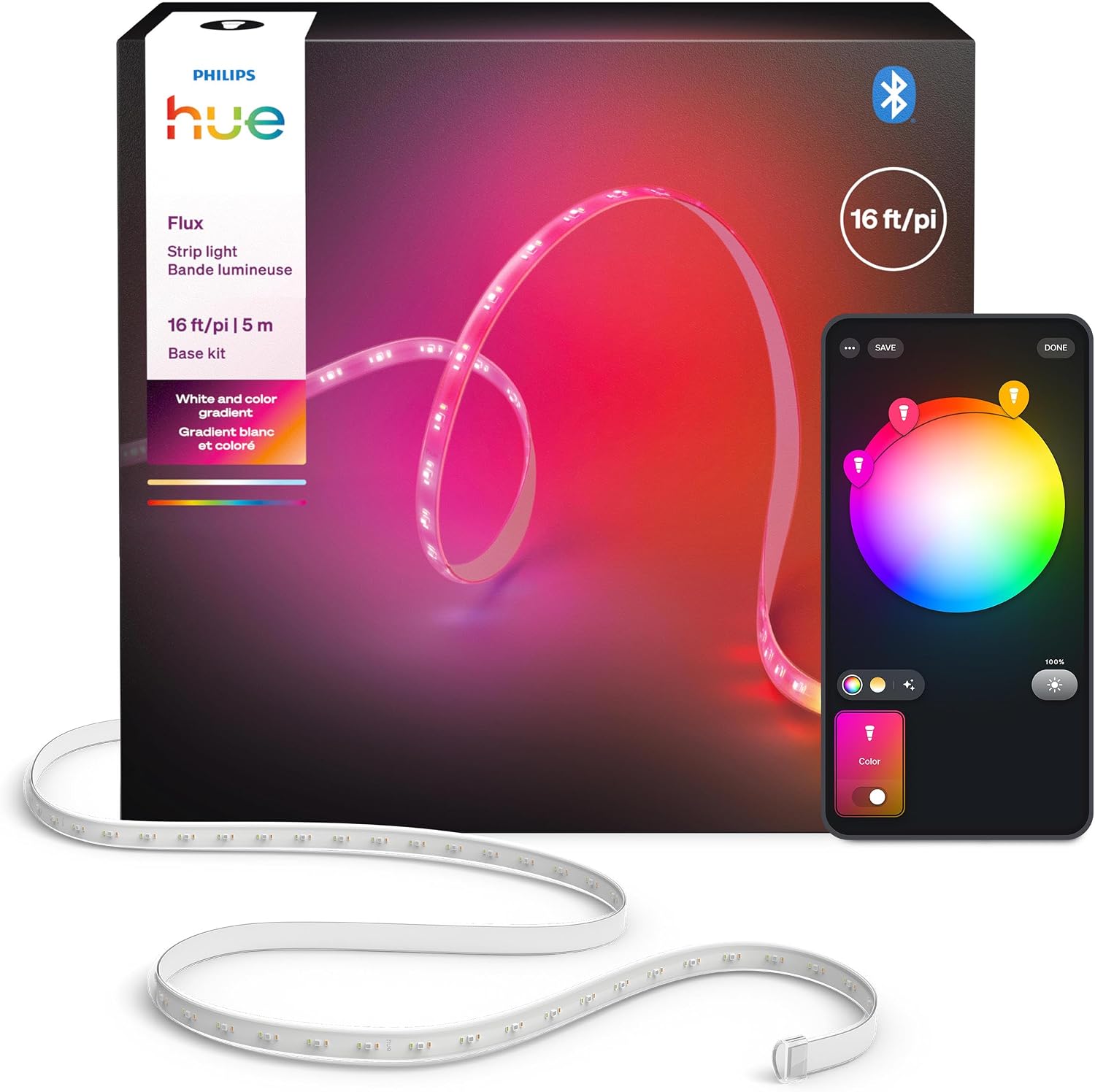
The 16-foot Hue Flux adds gradient colors and dedicated white LEDs to an existing Hue setup, with cuttable, extendable sections for lighting behind furniture.
Key highlights
- 16-foot strip with gradient color effects
- Dedicated white and warm white LEDs
- Cut marks every 16.7 cm
- Cut sections can be reused with compatible connectors sold separately
- Bluetooth and Zigbee connectivity; Matter integration through a Hue Bridge
Pros
- Displays multiple colors along the strip
- Supports extensions and reusable cut sections
- Customizable scenes through the Hue app
Cons
- Hue Bridge required for Matter integration
- Extensions and connectors cost extra
- Designed for concealed, indirect lighting
Who it is for: Existing Philips Hue users or those willing to invest in a premium, reliable smart lighting ecosystem.
Skip if
You want a standalone solution without additional hardware costs or aren't committed to the Hue ecosystem.
Govee COB Strip Light Pro - Best for diffused lighting
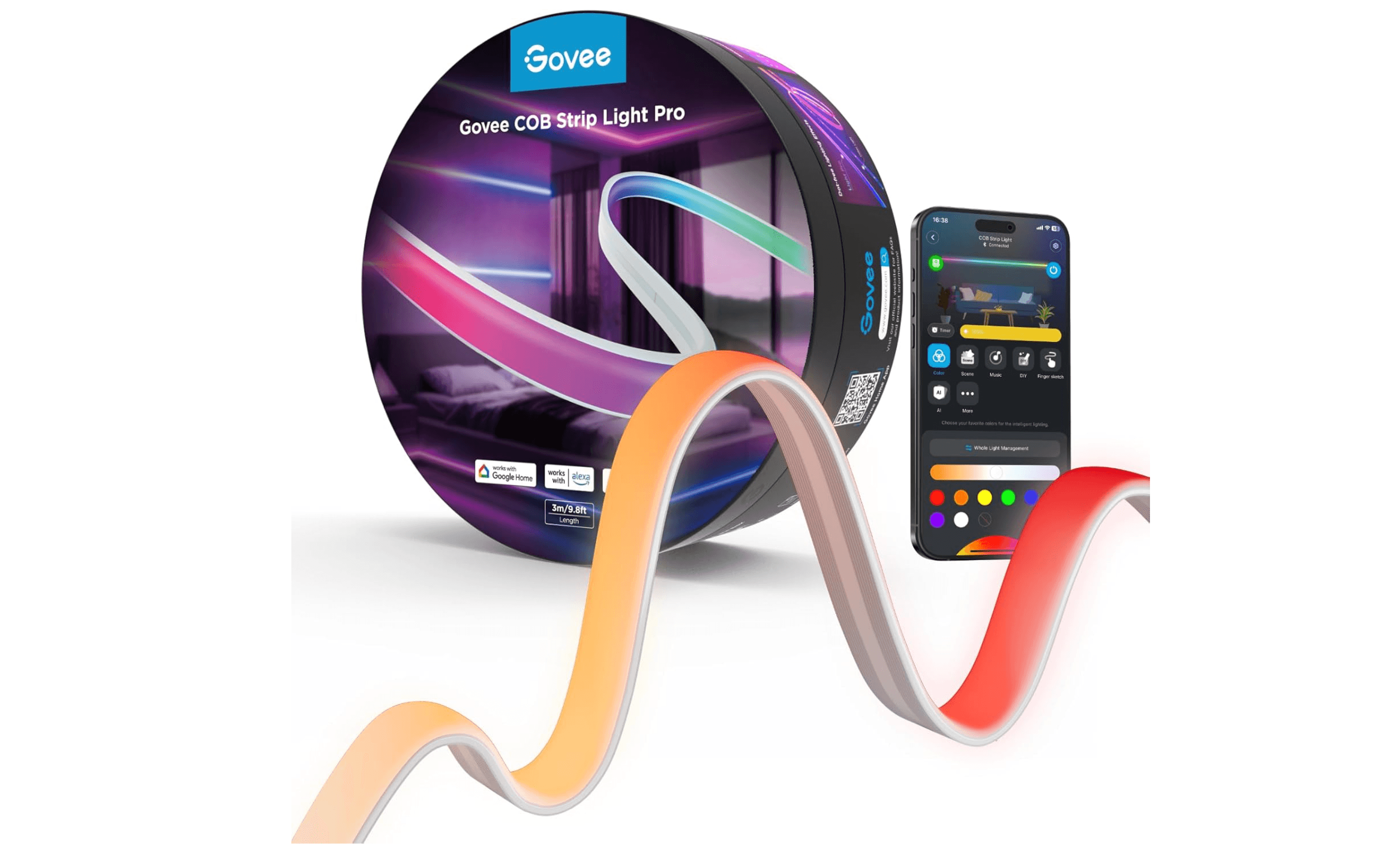
This strip uses advanced COB technology to deliver completely uniform light without visible LED dots, perfect for direct-view applications.
Key highlights
- COB (Chip-on-Board) technology eliminates visible LED dots
- 1,260 LEDs per meter for exceptionally smooth, continuous light
- Light-diffusing silicone covering reduces glare
- Same features as Light Strip Pro 2 including Matter support
- Can light up entire rooms at maximum brightness
Pros
- Completely uniform light without hotspots or visible dots
- Much easier on the eyes when viewed directly
- Exceptionally bright with high LED density
- Professional-grade diffused appearance
Cons
- Maximum length limited to 16.4 feet (5 meters)
- Cannot be extended beyond initial length
- Premium pricing for specialized technology
Who it is for: Those installing strips in direct line of sight or wanting professional-looking diffused lighting without visible LEDs.
Skip if
You need longer continuous runs or prefer the techy look of individual LED dots.
WiZ Smart RGBIC LED Light Strip - Best budget option
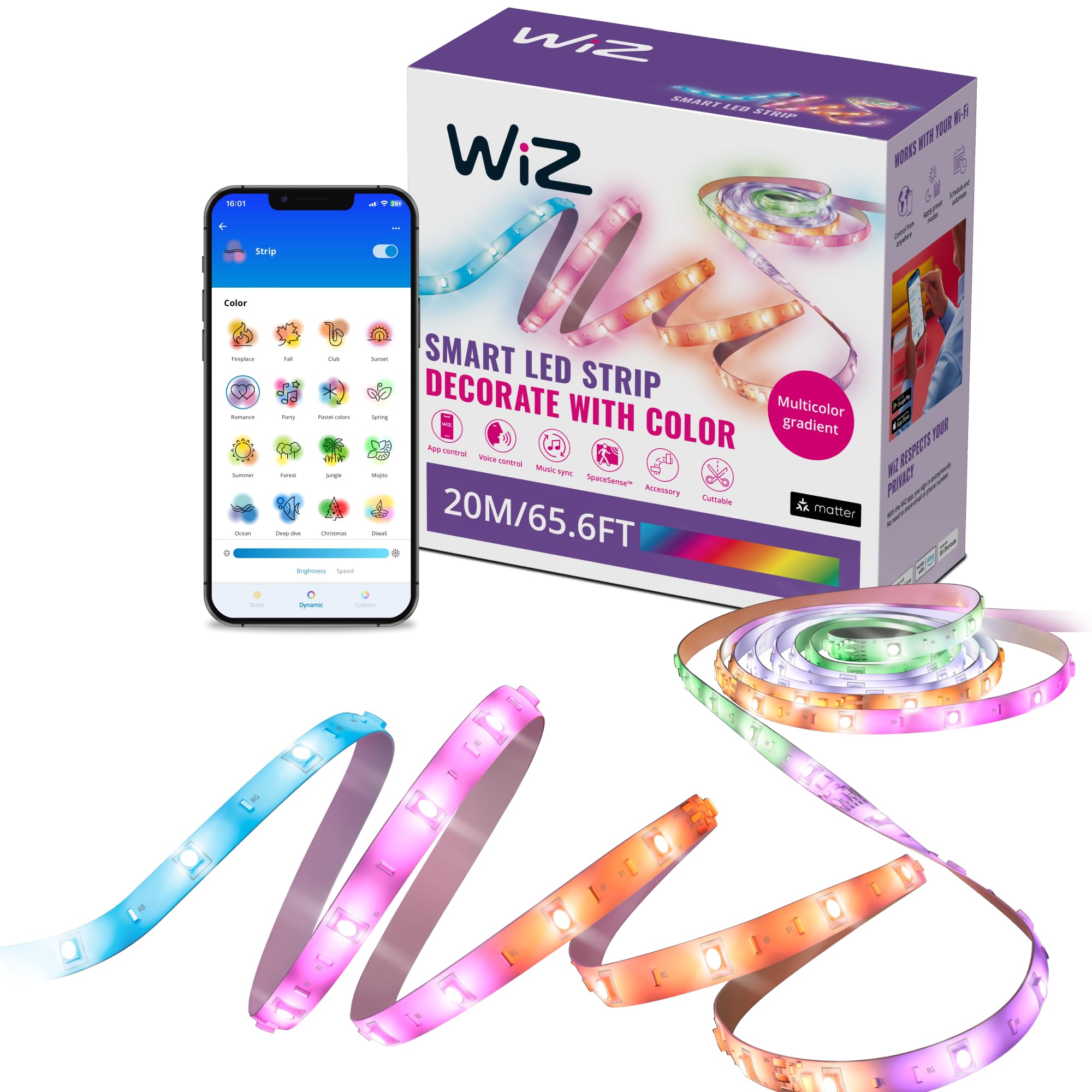
This inexpensive model provides basic smart features and color changing at an accessible price point, perfect for temporary or casual use.
Key highlights
- The linked kit includes 65.6 feet of RGBIC lighting across two rolls
- Secure snap-in connector between cord and light strip
- Works with Google Home, Amazon Alexa and Apple Home through Matter
- Basic color changing and effects at budget price
- Simple setup with peel-and-stick installation
Pros
- Very affordable entry point to smart lighting
- Reliable connector design prevents disconnection
- Multiple length options for different spaces
- Works with major smart home platforms
Cons
- Not as bright as premium options
- Basic features compared to more advanced strips
- Limited special effects and customization
Who it is for: Students, renters, or anyone wanting to experiment with smart lighting without significant investment.
Skip if
You need bright task lighting or extensive customization options.
Also Good
- Daybetter LED Strip Lights: Reliable budget option with good brightness and simple remote control, perfect for basic accent lighting.
- Nanoleaf Essentials Matter Lightstrip: Offers 300 addressable color zones, music effects and Matter over Wi-Fi for multicolor accent lighting.
How to Choose
Consider these factors when selecting LED strip lights:
Brightness and LED density: More LEDs per foot means brighter light with better color saturation. Look for at least 30 LEDs per meter for decent brightness, with 60 LEDs per meter providing excellent illumination for task lighting.
Color capabilities: RGBW strips (red, green, blue, white) offer better white tones than basic RGB strips. RGBWW adds dedicated warm and cool white LEDs for even more accurate and brighter whites. Addressable strips allow different colors on different sections simultaneously for advanced effects.
Smart home compatibility: Matter certification ensures cross-platform compatibility with Alexa, Google Home, and Apple HomeKit. Consider whether you need voice control, app scheduling, or integration with other smart devices.
Installation and flexibility: Check if strips are cuttable (and where), extendable, or come in fixed lengths. Strong adhesive is essential but may damage paint when removed. Consider clips for permanent installations or rental properties.
Diffusion and appearance: Clear-coated strips are thinner and easier to install but can be glaring. Diffused or COB strips provide smoother more professional-looking light that's easier on the eyes when viewed directly.
FAQ
How long do LED strip lights typically last?
Most quality LED strips last between 35,000 and 50,000 hours which translates to about 4-6 years of continuous use or much longer with typical home usage patterns.
Can LED strip lights be cut to fit my space?
Many strips can be cut at specific marked points but the trimmed piece usually becomes unusable. Always check manufacturer guidelines before cutting as improper cutting can damage the circuitry.
Are LED strip lights energy efficient?
Yes LED strips consume significantly less electricity than traditional incandescent bulbs. They're an eco-friendly choice that can help reduce energy bills, especially when used for accent lighting instead of overhead lights.
Do I need special tools to install LED strip lights?
Most strips use peel-and-stick adhesive backing for simple installation. Some may require clips for permanent mounting or additional power supplies for longer runs. Basic household tools like scissors and cleaning supplies are usually sufficient.
Can LED strip lights get hot?
LED strips generate some heat but remain much cooler than traditional light bulbs. They are safe to touch during normal operation and won't damage most surfaces when properly installed.
Published March 7, 2026 Last updated October 1, 2026
Share this article
More in News
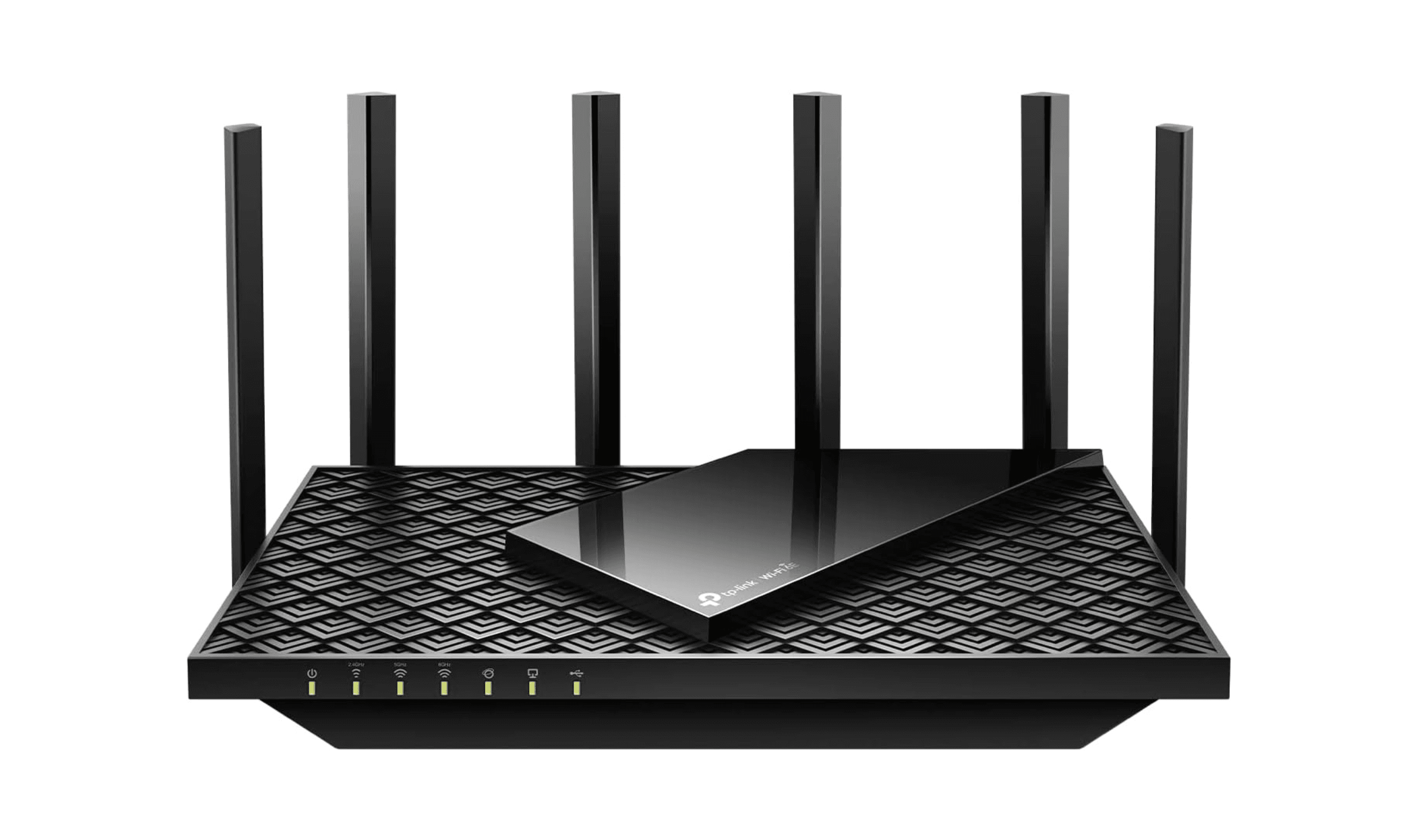
6 Best Wi-Fi Routers for 2026
TP-Link Archer AXE75 leads our 2026 router picks for value. Get our recommendations for gaming, mesh, multi-gig, and budget-friendly models.
5 min read
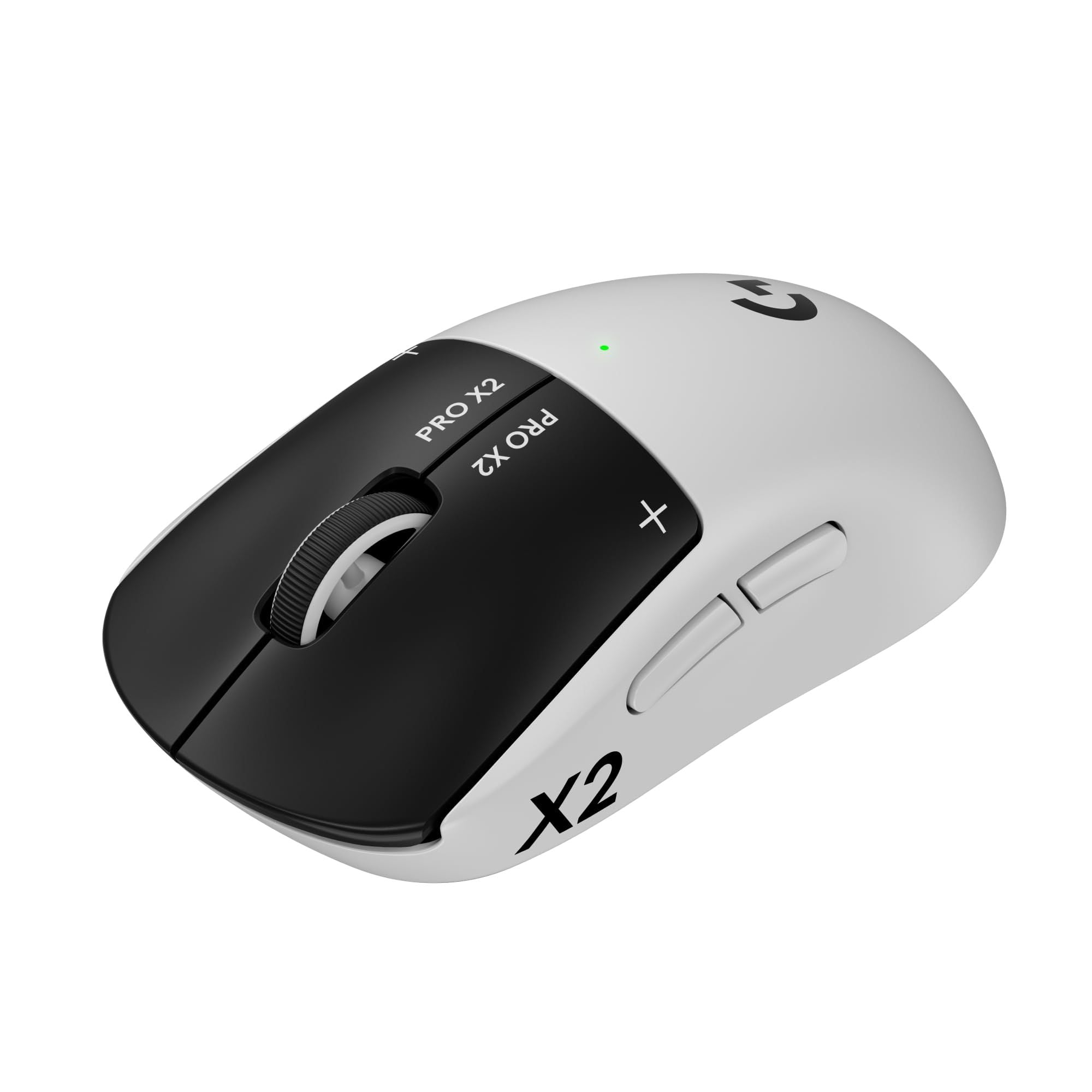
9 Best Wireless Gaming Mice in 2026
Logitech G PRO X2 SUPERSTRIKE leads our 2026 wireless gaming mouse picks with LIGHTSPEED, 61g weight, and tunable clicks.
3 min read
8 Best Fitness Trackers for 2026
Our picks for the best fitness trackers in 2026, from the Fitbit Charge 6 to the Apple Watch Series 11, Garmin Forerunner 265, Oura Ring 4 and Whoop 5.0.
5 min read
7 Best Turntables for Beginners in 2026
From the $250 Audio-Technica AT-LP60XBT to the Pro-Ject Debut Carbon Evo, here are 7 beginner turntables tested for easy setup, sound, and value.
3 min read
Best Anker Power Banks in 2026
3 min read
Best 32-Inch TVs for 2026
4 min read
6 Best OLED TVs for 2026
3 min read
8 Best Tablets for Photo Editing in 2026
3 min read
Best Workout Earphones for 2026
5 min read
8 Best Wireless Chargers for 2026
4 min read
6 Best Smart Toasters for 2026
4 min read
7 Best Digital Photo Frames for 2026
3 min read