Starting your vinyl collection should be exciting, not overwhelming. The Audio-Technica AT-LP60XBT makes that first step easy with automatic operation and Bluetooth connectivity. This list helps you find the right balance of sound quality, features, and simplicity for your budget and listening habits.
Technobezz is supported by its audience. We may get a commission from retail offers.
7 Best Turntables for Beginners in 2026
From the $250 Audio-Technica AT-LP60XBT to the Pro-Ject Debut Carbon Evo, here are 7 beginner turntables tested for easy setup, sound, and value.
T
Technobezz
Editorial Team
Updated October 1, 2026Oct 1, 2026
•6 min read

Get Deals Like These in Your Inbox
The best prices, straight to your inbox.
Add Technobezz on Google:Preferred SourceGoogle Discover
At a Glance
| Category | Product | Why We Picked It |
|---|---|---|
| Best overall | Audio-Technica AT-LP60XBT | Automatic operation with Bluetooth convenience |
| Best value | Fluance RT81 | An Audio-Technica AT95E cartridge for a step up |
| Best for upgraders | Pro-Ject Debut EVO 2 | Carbon-fiber tonearm, damped aluminum platter and replaceable cartridge |
| Best minimalist | U-Turn Audio- Orbit Plus (Gen 2) | Minimalist design with an acrylic platter and OM5E cartridge |
| Best for repeat playback | Victrola Automatic | One-touch automatic operation with continuous repeat mode |
| Also recommended | Audio-Technica AT-LP70XBT | Automatic Bluetooth playback with VM95-series stylus upgrades |
| Also recommended | Crosley C6 | Solid budget pick with adjustable tonearm |
How we chose
We picked turntables for first-time vinyl listeners based on published specifications and the features that matter to beginners, such as automatic operation, a built-in phono preamp and ease of setup. We prioritize products that balance performance with simplicity, avoiding overly complex systems that might frustrate new users.
The best turntables for beginners right now
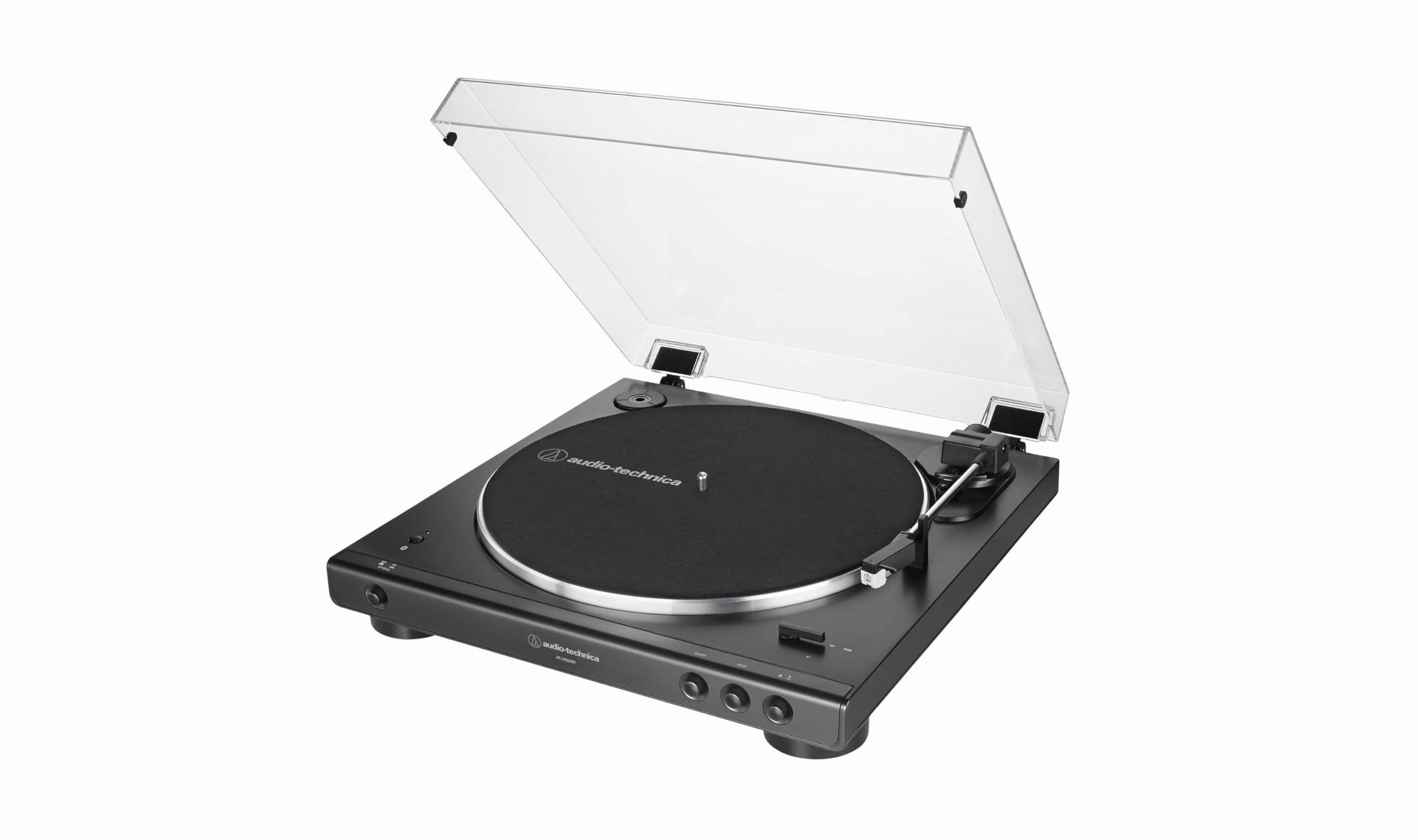
Audio-Technica AT-LP60XBT - Best overall

This automatic turntable removes the guesswork from vinyl playback while offering modern Bluetooth connectivity, which makes it a simple way to start playing records.
Key highlights
- Fully automatic operation starts and stops playback for you
- Built-in Bluetooth lets you connect wireless speakers or headphones
- Includes a preamp for direct connection to powered speakers
- Belt-drive system provides stable rotation speed
Pros
- No manual tonearm handling required
- Works with both wired and wireless audio systems
Cons
- Limited customization options for serious enthusiasts
- Fixed cartridge can't be upgraded easily
Who it is for: First-time vinyl buyers who want plug-and-play simplicity with modern connectivity options.
Skip if
You want to customize components or plan to upgrade your system significantly over time.
Fluance RT81 - Best value

This turntable is a strong value choice for beginners who care about audio performance. The MDF construction and adjustable tonearm show attention to detail usually found in more expensive models.
Key highlights
- High-mass MDF plinth helps isolate the record from vibrations
- Adjustable counterweight and anti-skate for proper tracking
- Built-in phono preamp eliminates need for separate component
- Belt-drive motor maintains consistent speed
- Uses an Audio-Technica AT95E cartridge
Pros
- Attractive design that doesn't look cheap
- Room for future upgrades if desired
Cons
- Manual operation requires more user involvement
- No Bluetooth connectivity option
- Heavier than some competing models
Who it is for: Beginners willing to spend a bit more for an upgraded Audio-Technica AT95E cartridge.
Skip if
You need automatic operation or wireless connectivity.
Pro-Ject Debut EVO 2 - Best for upgraders
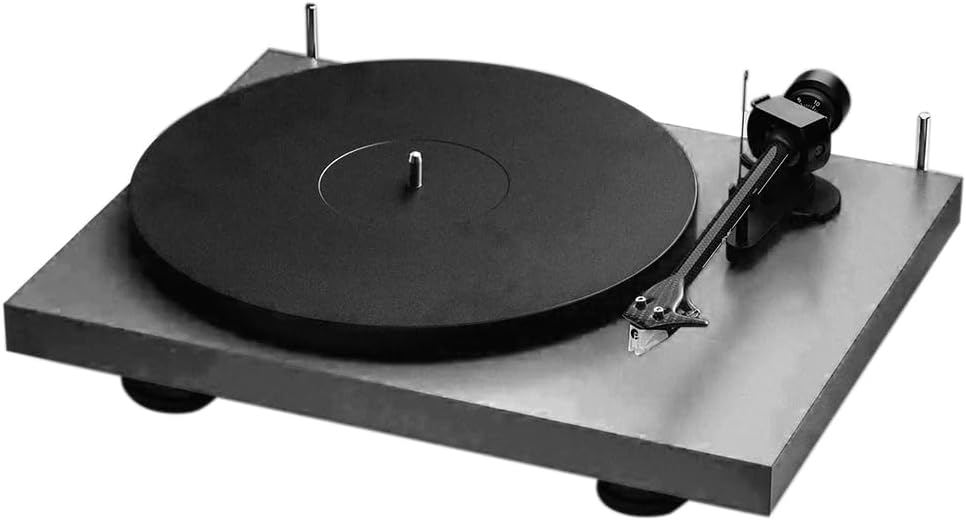
This manual turntable suits beginners who want a system they can upgrade over time. It pairs an 8.6-inch carbon-fiber tonearm with a Pick it MM EVO cartridge and a damped aluminum platter.
Key highlights
- 8.6-inch one-piece carbon-fiber tonearm
- Pre-mounted Pick it MM EVO cartridge
- 1.7 kg aluminum platter with TPE damping
- Electronic switching between 33 and 45 RPM
- Gold-plated RCA output sockets and included phono cable
Pros
- Change speeds without moving the belt
- Replaceable cartridge and RCA cable allow future upgrades
- Dust cover included
Cons
- Manual tonearm operation
- Requires an external phono preamp or an amplifier with a suitable phono input
- Tracking force and anti-skating need to be set during setup
Who it is for: Beginners who want to start with high-quality components and plan to build a serious audio system.
Skip if
You prefer automatic operation or need built-in connectivity features.
U-Turn Audio - Orbit Plus (Gen 2) Turntable - Best minimalist

With its clean, modern design and customizable options, this turntable appeals to those who appreciate simplicity and aesthetics. The direct-to-consumer model keeps prices reasonable while offering quality components.
Key highlights
- Minimalist design available in multiple colors
- Assembled in Woburn, Massachusetts
- OA3 magnesium tonearm with an Ortofon OM5E cartridge
- Manual belt changes select 33 or 45 RPM
- Acrylic platter included; this listing requires an external phono preamp or phono input
Pros
- Attractive, modern design stands out
- Direct support from the manufacturer
- Easy to upgrade components over time
- Compact footprint fits smaller spaces
Cons
- No built-in phono preamp in this configuration
- Speed changes require moving the belt by hand
Who it is for: Design-conscious beginners who want a minimalist turntable that suits their decor.
Skip if
You need automatic features or a built-in phono preamp.
Victrola Automatic - Best for repeat playback

The Victrola Automatic handles playback at the push of a button and can repeat a record side continuously. Connect it to Bluetooth speakers or headphones, or use its RCA output and switchable preamp with a wired system; speakers are not included.
Key highlights
- Fully automatic operation handles tonearm movement
- Repeat mode continuously replays a record side
- Bluetooth output connects to wireless speakers or headphones
- RCA output has a switchable phono preamp
- Includes a dust cover and 45 RPM adapter
Pros
- One-touch start and stop
- Wired and Bluetooth output options
- Repeat mode for continuous listening
Cons
- Speakers or headphones must be supplied separately
- Plays 33 1/3 and 45 RPM records only
Who it is for: Listeners who want automatic playback and repeat mode for a wired or Bluetooth audio setup.
Skip if
You want a record player with built-in speakers.
Also Good
- Audio-Technica AT-LP70XBT - automatic Bluetooth playback with VM95-series stylus upgrades.
- Crosley C6 - solid budget pick with adjustable tonearm.
How to Choose
Consider these factors when selecting your first turntable:
Automatic vs. manual operation: Automatic turntables handle tonearm movement for you, reducing the risk of damaging records. Manual models require you to place and lift the needle yourself but often offer better sound quality for the price.
Built-in features: Decide if you need a phono preamp (required to connect to most modern audio systems), Bluetooth connectivity, or built-in speakers. Each added convenience affects both price and potential sound quality.
Upgrade potential: Some turntables allow easy cartridge swaps, tonearm adjustments, or platter upgrades. If you plan to improve your system over time, choose a model with accessible upgrade paths.
Budget allocation: Entry-level turntables span a wide price range, with better components available as you move up from budget models. Remember to budget for speakers and potentially a phono preamp if your chosen model doesn't include one.
Space and aesthetics: Consider where the turntable will live and how it fits your decor. Some models offer multiple color options or have particularly compact footprints for smaller spaces.
FAQ
What's the difference between a turntable and a record player?
A turntable is just the component that spins records and requires separate amplification and speakers. A record player includes built-in amplification and speakers, making it a complete playback system.
Do I need a phono preamp?
Most modern audio equipment lacks the special equalization needed for vinyl playback. If your turntable doesn't include a built-in preamp, you'll need to purchase one separately or use a receiver with a dedicated phono input.
Can cheap turntables damage my records?
Very inexpensive turntables often use poor-quality cartridges and excessive tracking force, which can accelerate record wear. Spending a bit more protects your vinyl investment.
How much should I spend on my first turntable?
A budget or midrange model usually offers good sound quality without overwhelming complexity for a first turntable. Budget extra for speakers if needed.
What maintenance does a turntable require?
Regular cleaning of records and the stylus (needle) is essential. Belts may need replacement every few years, and the stylus should be replaced according to its manufacturer's recommended service interval.
Published March 4, 2026 Last updated October 1, 2026
Add Technobezz on Google:Preferred SourceGoogle Discover
More buying guides
Buying guide
6 Best Gaming Laptops in 2026
Buying guide
7 Best Electronic Drum Sets in 2026
Buying guide
6 Best Streaming Devices in 2026

Buying guide
6 Best Tech Gifts in 2026
Buying guide5 Best Graphics Cards in 2026Buying guide7 Best iPhone 17 Cases in 2026Buying guide5 Best Android Smartwatches in 2026Buying guide7 Best Mirrorless Cameras in 2026Buying guide5 Best Chromebooks in 2026Buying guide5 Best TVs for Xbox Series X in 2026Buying guide7 Best Monitors in 2026Buying guide6 Best Monitors for Xbox Series X in 2026