
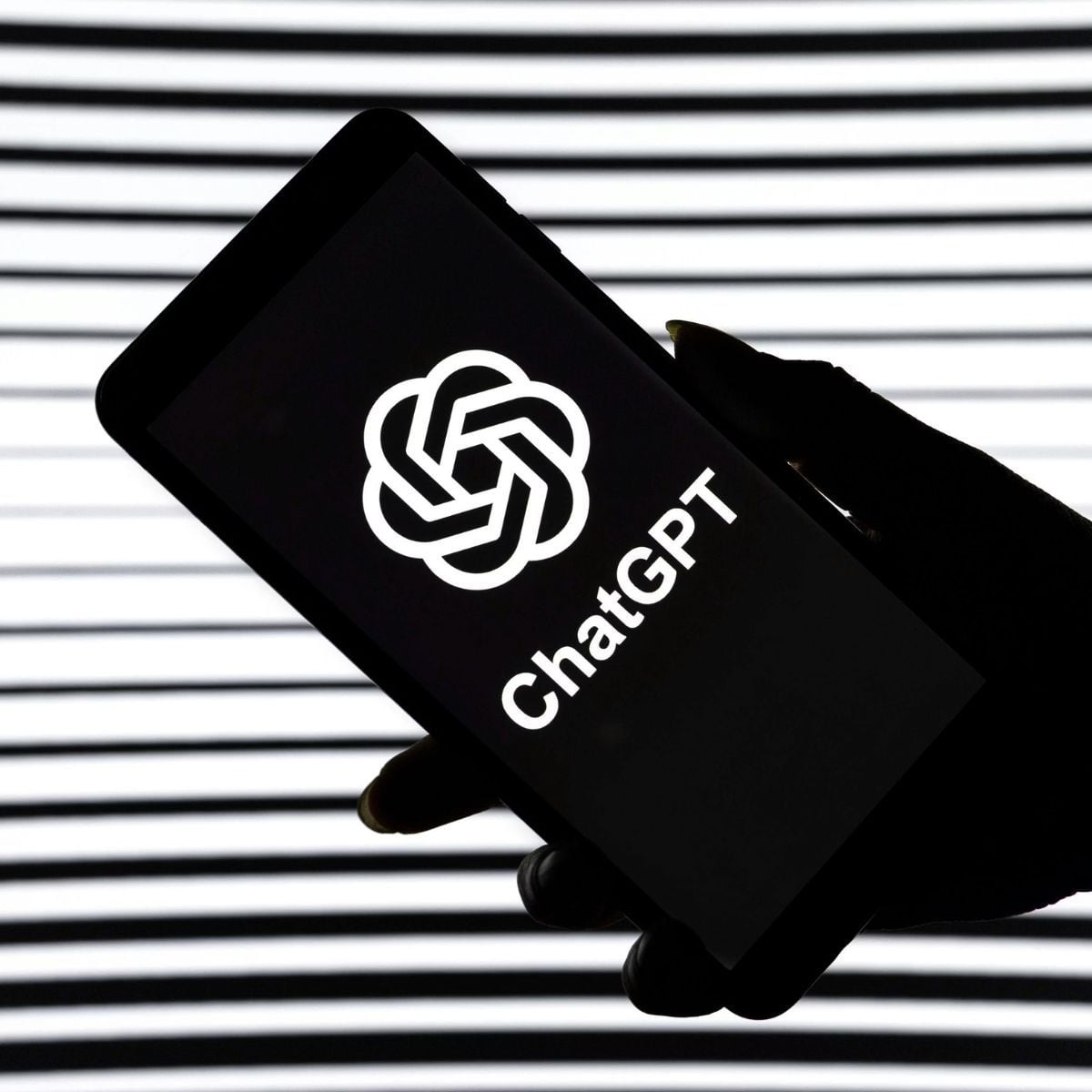
OpenAI just dropped GPT-5.2, and if you're wondering why the release feels particularly urgent, you're not imagining things. The company officially unveiled its latest flagship model today, December 11, marking what appears to be one of the fastest turnarounds in its release history. This isn't just another incremental update - it's a strategic counterpunch aimed squarely at Google's recent AI advances.
According to OpenAI's announcement, GPT-5.2 represents "the most advanced frontier model for professional work and long-running agents." The timing is telling: multiple reports from The Verge and other tech outlets indicate the launch was accelerated from its original mid-December schedule, with CEO Sam Altman reportedly declaring a "code red" situation within the company. The trigger? Google's Gemini 3 Pro, which launched last month and quickly established itself as a formidable competitor in the generative AI space.
What Actually Changed in GPT-5.2
Forget flashy new features, this update is all about structural improvements. OpenAI's documentation reveals GPT-5.2 brings "significant improvements in general intelligence, long-context understanding, agentic tool-calling, and vision." Translation: it's better at the stuff professionals actually use AI for, not just party tricks.
The benchmark numbers tell a compelling story. On GDPval, an evaluation measuring knowledge work across 44 occupations, GPT-5.2 Thinking scores 70.9%, nearly doubling GPT-5's 38.8% performance. That's not just a marginal improvement - it represents the first time an OpenAI model has performed "at or above a human expert level" according to the company's own assessment. For context, these aren't academic exercises; GDPval tasks include creating sales presentations, accounting spreadsheets, manufacturing diagrams, and other real-world work products.
Coding capabilities saw a similar leap. GPT-5.2 Thinking achieves 55.6% on SWE-Bench Pro, a rigorous evaluation of real-world software engineering that tests four programming languages. That's up from 50.8% for GPT-5.1, and early testers like Windsurf CEO Jeff Wang called it "the biggest leap for GPT models in agentic coding since GPT-5." The model also shows particular strength in front-end development, especially with complex or unconventional UI work involving 3D elements.
Here's where things get interesting. While OpenAI was polishing GPT-5.2, Google's Gemini 3 was making waves. Multiple sources, including reports from The Information, suggest Altman told staff that OpenAI's next reasoning model was "ahead of [Google's] Gemini 3" in internal evaluations. But the market perception and likely some internal pressure - pushed for faster deployment.
The acceleration wasn't subtle. Originally slated for later in December, the timeline reportedly shifted to December 9, then to today's December 11 launch. This rapid response strategy reflects the intense competition heating up between AI giants. As one report from Dataconomy noted, OpenAI is "operating under emergency protocols to deploy a significant upgrade to its flagship chatbot, aiming to blunt the momentum of Google's recently released Gemini 3."
What's particularly telling is the focus. Unlike previous updates that often highlighted novel capabilities, GPT-5.2 prioritizes "structural enhancements over flashy new features," according to The Verge's reporting. This suggests a maturity in OpenAI's approach, they're not just chasing headlines but building tools that work reliably for professional users.
So what does this mean for actual users? Several key areas show marked improvement. Factuality gets a boost, with responses containing errors dropping by 30% relative to GPT-5.1. For professionals using AI for research, writing, and analysis, that's not just a nice-to-have, it's essential for building trust in the tool.
Long-context understanding takes a significant leap forward. GPT-5.2 Thinking achieves near 100% accuracy on the 4-needle MRCR variant out to 256,000 tokens. In practical terms, this means the model can work with lengthy documents - reports, contracts, research papers, transcripts - while maintaining coherence across hundreds of thousands of tokens. That's a game-changer for deep analysis and multi-source workflows.
Vision capabilities also improved substantially, with error rates roughly halved on chart reasoning and software interface understanding. The model now has "a stronger grasp of how elements are positioned within an image," which helps with interpreting dashboards, technical diagrams, and visual reports, critical for finance, operations, and engineering workflows.
Tool calling sees perhaps the most dramatic improvement, with GPT-5.2 Thinking achieving 98.7% on Tau2-bench Telecom, demonstrating reliable tool use across long, multi-turn tasks. This translates to stronger end-to-end workflows for customer support cases, data analysis, and complex multi-step resolutions.
Availability and Pricing
GPT-5.2 is rolling out today in ChatGPT through three variants: Instant (fast workhorse for everyday tasks), Thinking (designed for deeper work), and Pro (smartest option for difficult questions). The rollout starts with paid plans - Plus, Pro, Go, Business, and Enterprise - with free users presumably getting access later.
In the API, GPT-5.2 Thinking is available immediately as gpt-5.2, with GPT-5.2 Instant as gpt-5.2-chat-latest and GPT-5.2 Pro as gpt-5.2-pro. Pricing reflects the increased capability: $1.75 per million input tokens and $14 per million output tokens, with a 90% discount on cached inputs. While that's higher than GPT-5.1's $1.25/$10 pricing, OpenAI notes that despite the greater cost per token, "the cost of attaining a given level of quality ended up less expensive due to GPT-5.2's greater token efficiency."
This accelerated launch reveals something important about the current state of AI competition. We're moving past the era of annual major releases into a more dynamic, responsive cadence. When Google dropped Gemini 3 last month, it didn't just introduce a new model, it reset expectations about how quickly the competitive landscape can shift.
OpenAI's response shows they're not willing to cede ground. The "code red" mobilization, the accelerated timeline, the focus on professional-grade improvements rather than consumer-facing features, all point to a company that recognizes it's in a real fight for AI supremacy.
With both companies now operating on faster release cycles and responding directly to each other's moves, we can expect more frequent, targeted updates. For developers and businesses, that means more choices and faster innovation. For the rest of us, it means watching two tech giants push each other to build better tools - and honestly, that's not a bad position to be in.
GPT-5.2 will be available in ChatGPT for paid users starting today, with broader rollout continuing through the week. Developers can access it immediately through OpenAI's API platform.