
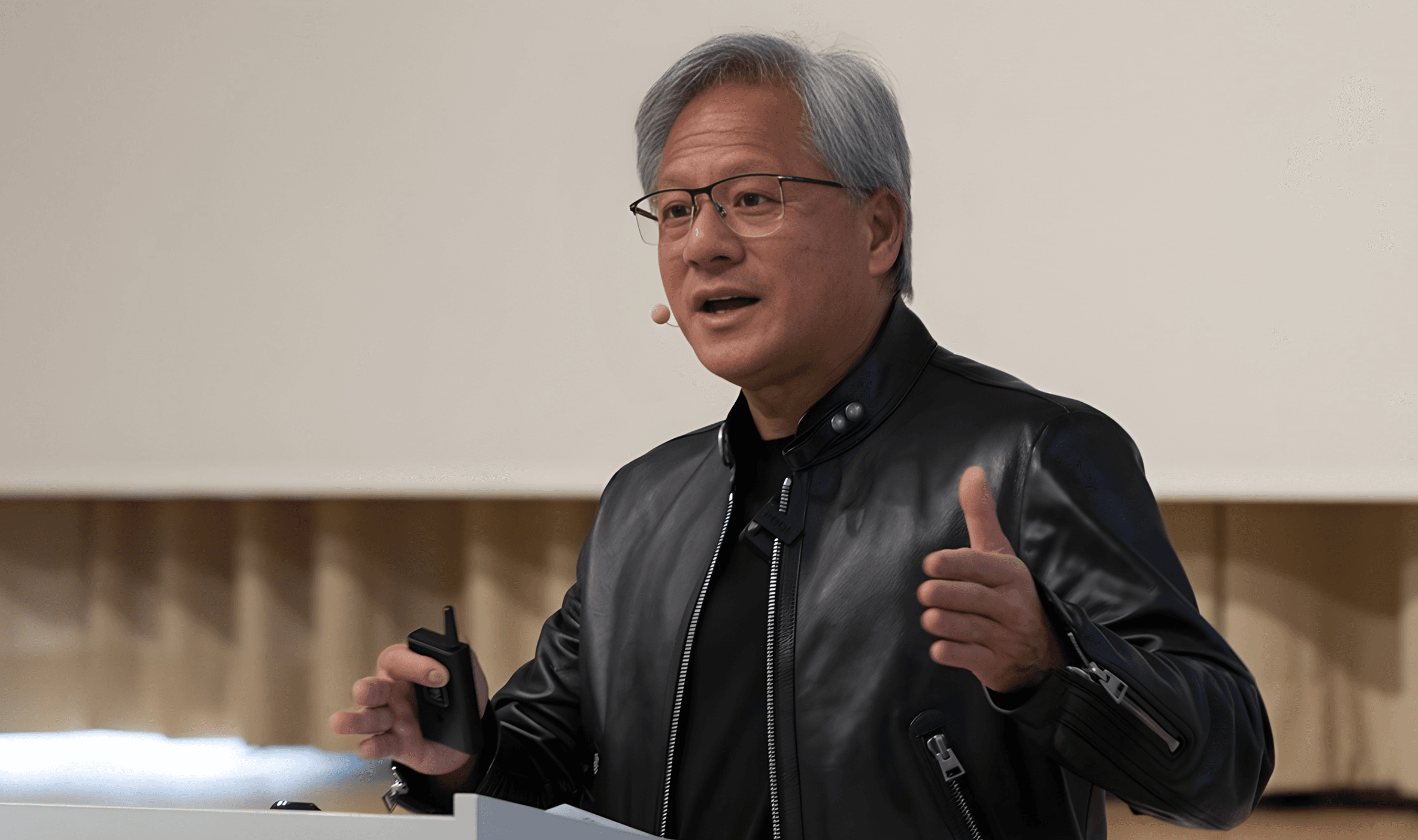
Nvidia CEO Jensen Huang said Taiwan Semiconductor Manufacturing Company may need to double its chip production capacity over the next decade to meet surging AI demand. Huang made the remarks during his Taiwan visit earlier this month after hosting what reporters called "trillion-dollar dinner" with TSMC CEO C.C. Wei and Foxconn chairman Young Liu.
"TSMC needs to work very hard this year because I need a lot of wafers,"
Huang told reporters outside a Taipei restaurant on February 1. He praised the foundry for doing "an incredible job" but emphasized that demand continues to outstrip supply.
Nvidia's requirements alone could push TSMC to expand capacity by more than 100 percent over the next ten years, according to Huang. The CEO described the scale of expansion needed as "the largest infrastructure build-out of its kind in human history."
TSMC has already signaled massive investment plans to address the AI chip crunch. The company said capital spending could jump up to 37 percent this year to $56 billion, with "significant" increases scheduled for 2028 and 2029.
Last month, TSMC reported a 35 percent increase in fourth-quarter profit that beat analyst estimates. The capacity constraints have prompted other major customers like Apple to explore alternative foundries.
The foundry's expansion includes a $165 billion investment in US manufacturing operations, building on its existing $65 billion commitment to Arizona facilities. TSMC Arizona began volume production of Nvidia's Blackwell chips last year, marking what Huang called "the single most important chip being produced in America."
The company's Arizona expansion includes three new fabrication plants, two advanced packaging facilities, and a major R&D center expected to create 6,000 direct high-tech jobs.
Memory supply presents another constraint in the AI hardware pipeline. Huang warned that memory availability remains "a real pain point this year," noting that shortages can delay system shipments even when GPUs are available.
The entire supply chain faces challenges because "demand is so much more," he said.
Nvidia has become TSMC's largest customer and was among the first companies to adopt the foundry's A16 process node. The relationship between the two companies extends beyond manufacturing to include joint development of computational lithography technology announced in 2023.
Huang's Taiwan visit included meetings with multiple supply chain partners, all of whom reported record-breaking years in 2025. The CEO extended his originally planned four-day trip to accommodate additional meetings before departing on February 2.
TSMC had production capacity equivalent to 17 million 12-inch wafers in 2024 and continues to scale production aggressively. The global chip market is projected to reach $1 trillion in sales this year, fueled by massive AI infrastructure spending across the industry.