
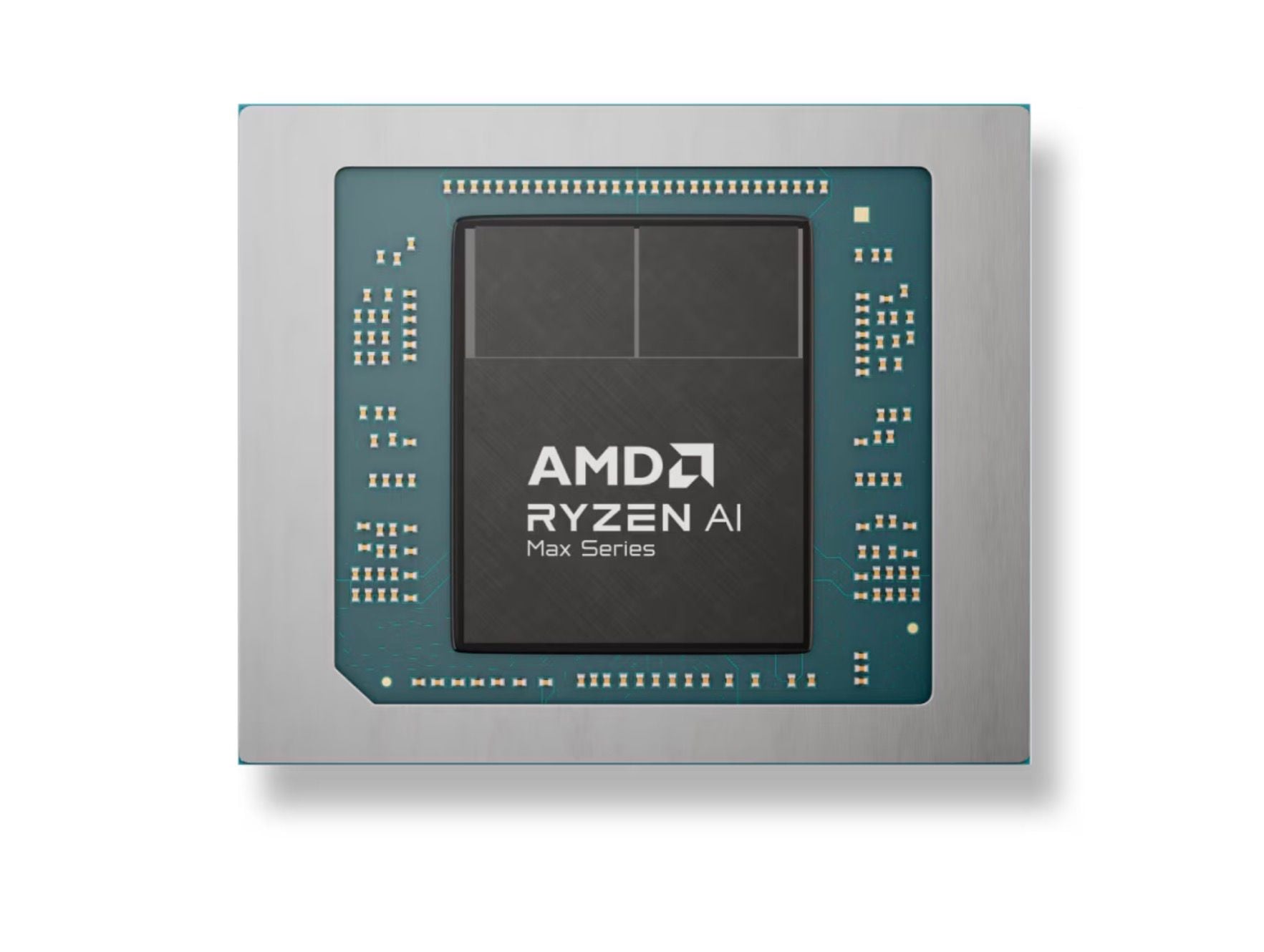
AMD's Ryzen AI Max+ 392 mobile processor benchmarks leaked via Geekbench 6, showing desktop-competitive performance from a laptop chip. The Strix Halo platform part scored 18,071 in multi-core tests, edging past AMD's Ryzen 9 7900X desktop CPU in Geekbench 6 multi-core tests.
The benchmark comes from an ASUS TUF Gaming A14 laptop configured with 64GB of LPDDR5X memory running at 8000 MT/s. Single-core performance reached 2,917 points, matching the Ryzen AI Max 390 and Max+ 395 despite a 100MHz clock deficit to the top model.
AMD announced the Ryzen AI Max+ 392 at CES 2026 earlier this month alongside the 8-core Max+ 388 variant. Both chips retain Strix Halo's full Radeon 8060S integrated graphics with 40 compute units and a 50 TOPS NPU for AI acceleration.
The 12-core/24-thread Zen 5 design operates with a 3.2GHz base clock and 5.0GHz boost frequencies. Notebookcheck reports the 392 extracts 3% more performance from its 12 cores than the Ryzen AI Max 390 and over 12% more than the Max Pro 390 tested in HP's ZBook Ultra G1a.
Strix Halo processors feature a 256-bit memory bus primarily to support the powerful integrated graphics. When GPU workloads aren't active, the wide bus provides extra bandwidth for CPU tasks, particularly benefiting Zen 5's AVX-512 capabilities.
The platform supports LPDDR5X speeds up to 8533 MT/s and capacities reaching 128GB. Configurable TDP ranges from 45W to 120W, allowing OEMs to tune performance for different chassis designs and cooling solutions.
HotHardware notes the benchmarked ASUS TX Air 14" laptop represents the Chinese-market version of the TUF Gaming A14. While the chip can peak at 120W, the 14-inch form factor likely operates below maximum power limits compared to desktop systems.
Multi-core performance surpassing the Ryzen 9 7900X marks significant progress for mobile computing. The desktop CPU comparison doesn't account for sustained workloads where thermal constraints favor larger cooling solutions.
AMD's Strix Halo targets systems needing strong CPU performance alongside capable integrated graphics and modern AI acceleration. The combination addresses productivity applications, content creation, and inference workloads without discrete GPU requirements.
Laptops featuring Ryzen AI Max+ 392 and 388 processors are expected to reach retail in the first half of 2026. Pricing remains unconfirmed, though previous Max-series devices have commanded premium positioning relative to performance.
The TUF Gaming A14 currently stands as the only globally confirmed system with the Ryzen AI Max+ 392. Sixunited suggested in November plans to use the same APU inside its AXP77 device as an alternative to ASUS's ROG Flow Z13.
Early benchmarks indicate AMD continues pushing performance boundaries in portable form factors. The Ryzen AI Max+ 392 demonstrates laptop chips can now compete with previous-generation desktop processors in multi-threaded workloads.