
AMD launched its fastest gaming processor and expanded AI capabilities across mobile, desktop, and software platforms at CES 2026. The announcements include the Ryzen 7 9850X3D gaming CPU, Ryzen AI 400 series mobile processors, and new developer-focused hardware.
The Ryzen 7 9850X3D replaces the 9800X3D as AMD's top gaming processor with a 5.6GHz boost clock, 400MHz faster than its predecessor. It maintains 8 cores, 16 threads, and 104MB of cache while delivering 5-27% better gaming performance according to different sources. AMD claims up to 27% improvement over Intel's Core Ultra 9 285K in demanding titles.
For AI-focused mobile systems, AMD introduced the Ryzen AI 400 series with up to 60 trillion operations per second (TOPS) from its XDNA 2 neural processing units. The flagship Ryzen AI 9 HX 475 reaches 60 TOPS, surpassing Intel's Panther Lake at 50 TOPS but trailing Qualcomm's upcoming 80 TOPS Snapdragon X2 chips.
The 400 series processors combine Zen 5 CPU cores, RDNA 3.5 graphics, and second-generation NPUs in a single package. They support up to 12 CPU cores, integrated Radeon 800M Series graphics, and faster memory speeds up to 8533 MT/s. AMD claims 1.3 times faster multitasking than Intel's Lunar Lake processors and 29% better performance in Microsoft Teams calls with productivity applications.
AMD expanded its Ryzen AI Max+ portfolio with two new models: the 392 with 12 cores and the 388 with 8 cores. Both feature 40 GPU compute units, representing an increase over previous-generation Max models, providing higher graphics performance for AI workloads and gaming. These processors target premium ultra-thin notebooks and compact desktops with shared memory architectures supporting up to 192GB.
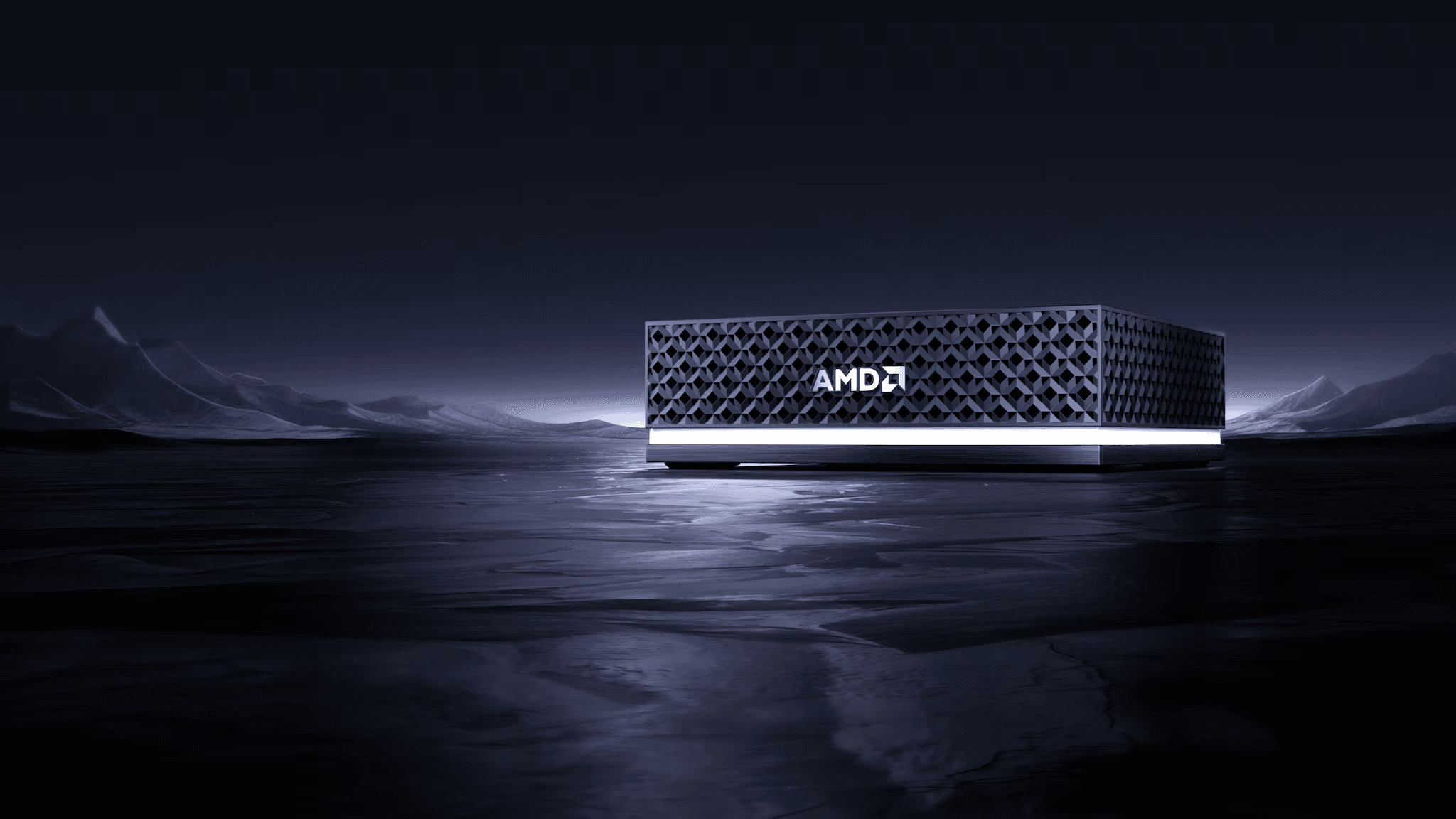
The company unveiled Ryzen AI Halo, its first AMD-branded AI developer platform. This mini-PC uses Ryzen AI Max+ processors with 128GB of unified memory and can run up to 200 billion parameter models locally. It delivers up to 60 TFLOPS of RDNA 3.5 graphics performance and supports both Windows and Linux environments.
Software updates include ROCm 7.2 for Windows and Linux with support for Ryzen AI 400 series processors. AMD also introduced an AI Bundle for its Adrenalin Edition software to simplify local AI setup. The FSR "Redstone" update adds machine learning frame generation and upscaling to recent AAA titles.
Systems with Ryzen AI 400 series processors will be available from Acer, Asus, Dell, HP, and Lenovo starting Q1 2026. Desktops featuring the chips arrive in Q2 2026. The Ryzen AI Halo developer platform launches in Q2 2026, while Ryzen 7 9850X3D systems become available from OEMs and retail partners in Q1 2026.
AMD senior vice president Jack Huynh stated, "The PC is being redefined by AI, and AMD is leading that transformation." The company reported strong year-over-year growth in OEM adoption of Ryzen AI processors across consumer, commercial, and gaming segments.
The announcements position AMD competitively in the AI PC market against Intel and Qualcomm while maintaining its gaming leadership with the X3D processor refresh. The expanded portfolio addresses multiple market segments from gaming enthusiasts to enterprise users and AI developers.