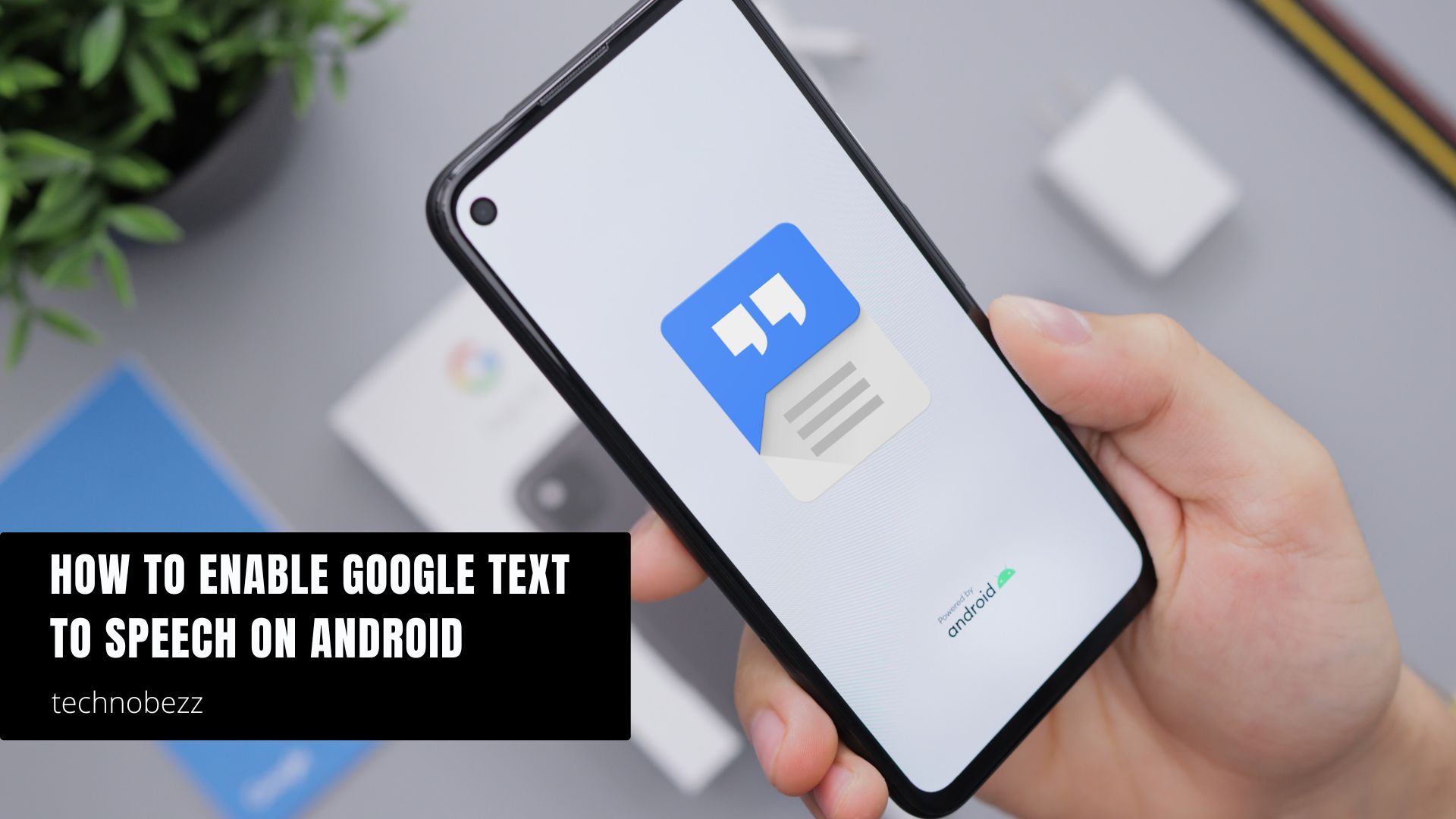
Google Text-to-Speech reads on-screen text aloud, powers TalkBack and Select to Speak, and lets apps like Google Play Books and Google Translate speak to you. This guide shows how to turn it on, change the voice, speed, and pitch, download offline voices, and fix it when there is no sound.
How to Enable Google Text-to-Speech
Most Android phones ship with the Google engine installed, so enabling it usually means setting it as your preferred engine and confirming the voice. The exact menu name changes slightly between stock Android and Samsung devices, but the options are the same.
On most stock Android phones, go to Settings > Accessibility > Text-to-speech output. On some devices this lives under Settings > System > Languages & input > Text-to-speech output instead.
Open the Settings app.
Tap Accessibility, then tap Text-to-speech output.
Under Preferred engine, select Speech Recognition & Synthesis, which is Google's engine. Older devices may show it as Google Text-to-Speech Engine.
Tap Language and choose the language you want spoken.
Press Play to hear a short sample at your current settings.
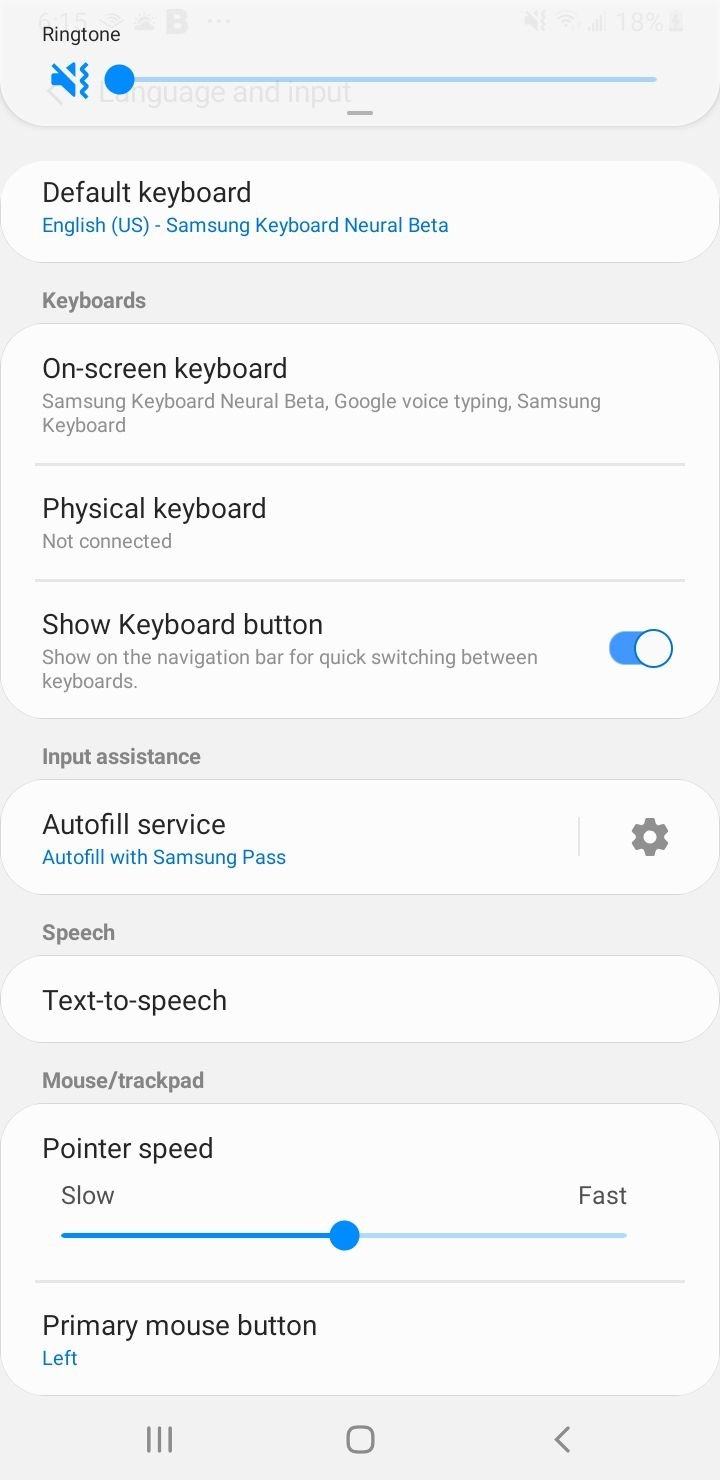
The feature is now active for any app that uses system text-to-speech. If the engine is missing or out of date, search for Speech Recognition & Synthesis in the Play Store and tap Update or Install.
How to Enable It on Samsung Galaxy Phones
Samsung places the same controls in a different menu, and it adds its own Samsung text-to-speech engine alongside Google's. You can switch between the two depending on which voices you prefer.
On a Galaxy phone or tablet, go to Settings > General management > Text-to-speech.
Open Settings and tap General management.
Next, tap Text-to-speech.
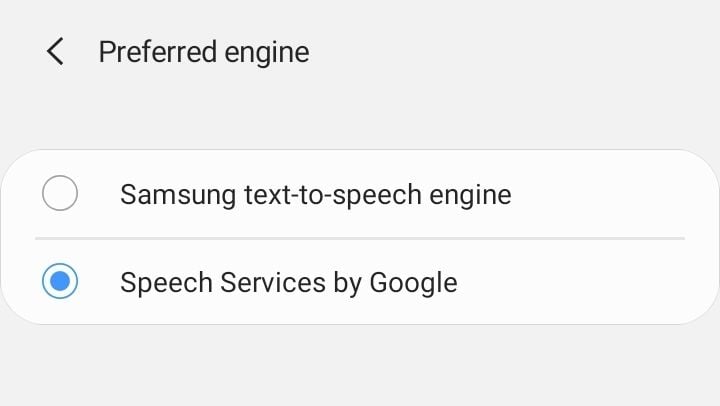
Under Preferred engine, choose Speech Recognition & Synthesis for Google or the Samsung engine.
Tap Language and pick the language you want.
Adjust Speech rate and Pitch, then tap Play to preview.
The languages you can choose are tied to the languages installed on the phone, so add a language under Settings first if the one you want does not appear.
How to Change the Voice Speed and Pitch
Both the speed and the tone of the voice are adjustable, which is useful if the default reads too fast or sounds too high. The sliders live on the same Text-to-speech screen.
Use Speech rate to control how fast the voice talks. Move it left for slower, clearer speech and right for faster reading.
Use Pitch to change how high or low the voice sounds. Left makes it deeper, right makes it higher. Tap Play after each change to test, and use Reset if you want to return rate and pitch to their defaults.
How to Download Offline Voices
Higher quality and offline voices are downloaded separately so they work without a data connection. This is also how you add extra voice variants for a language.
On stock Android, open Settings > Accessibility > Text-to-speech output, tap the settings icon next to Preferred engine, then tap Install voice data.
Tap the language you want.
Then tap the download icon next to the voice variant.
Wait for the download to finish, then return to the main screen and press Play to confirm it works.
On Samsung, the path is Settings > General management > Text-to-speech, tap the settings icon next to Preferred engine, then Install voice data. For the Google engine, tap the language and then the download icon; for the Samsung engine, tap the download icon and then Download.
Quick Settings Reference
| What you want | Where to go | What it does |
|---|---|---|
| Enable Google engine | Accessibility > Text-to-speech output > Preferred engine | Sets Google as the voice for all apps |
| Change language | Text-to-speech output > Language | Picks the spoken language |
| Adjust speed | Text-to-speech output > Speech rate | Makes the voice faster or slower |
| Adjust tone | Text-to-speech output > Pitch | Makes the voice deeper or higher |
| Offline voices | Engine settings icon > Install voice data | Downloads voices for use without data |
| Preview | Text-to-speech output > Play | Reads a sample at current settings |
How to Read Text Aloud With Select to Speak
Select to Speak reads only the items you tap or drag across, which is handy when you do not want the full screen reader. It uses the same text-to-speech engine you set above.
Turn it on under Settings > Accessibility > Select to Speak, then enable the Select to Speak shortcut. If you do not see it, update Android Accessibility Suite from the Play Store and try again.
To use it, trigger your shortcut, which is the Accessibility button, the volume keys, or an accessibility gesture, then tap an item, drag across several items, or tap Play to hear everything. In Settings you can turn on Read in background so it keeps reading while you scroll or switch apps.
How to Read Books and Translations Aloud
Once the engine is set, the apps that rely on it can speak for you. Two of the most common are Google Play Books and Google Translate.
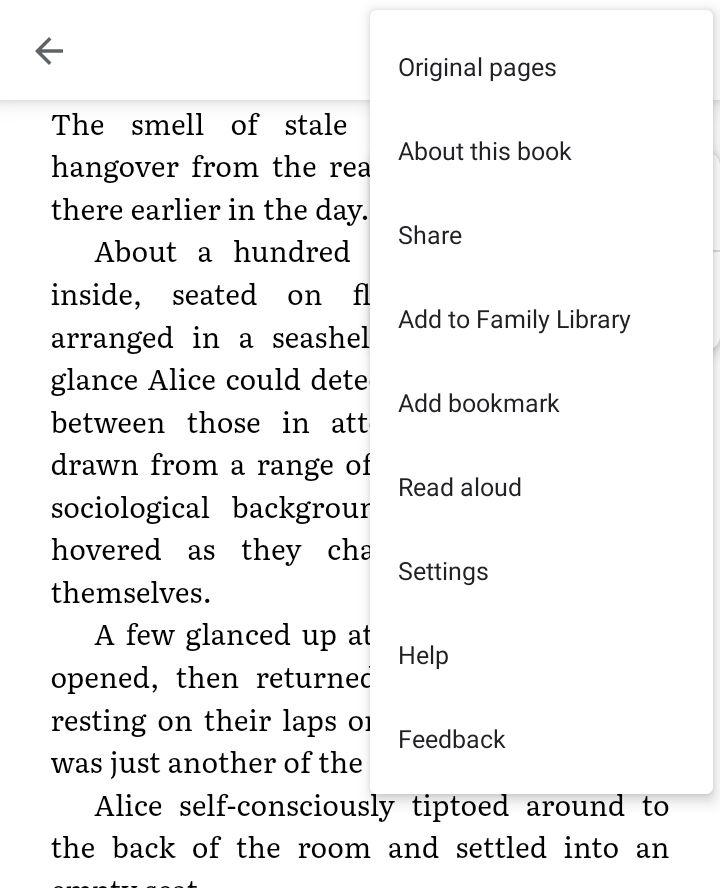
In Google Play Books, open a book, tap the three dots in the upper-right corner, and select Read aloud. The book is read using your chosen voice and speed.
In Google Translate, tap the speaker icon next to a translation to hear how the words are pronounced, which helps when you are learning a language. TalkBack, the full screen reader for blind and low-vision users, also speaks through this engine and can be turned on under Settings > Accessibility > TalkBack.
How to Fix No Sound or No Reading
If the voice plays nothing or apps stay silent, the cause is almost always the wrong engine, a missing offline voice, or a stale app. Work through these in order.
- 1.Confirm the engine is selected. Go to Text-to-speech output and make sure Speech Recognition & Synthesis is set as the Preferred engine, then press Play to test.
- 2.Check volume and silent mode. Raise the media volume and turn off any silent or Do Not Disturb mode, since text-to-speech uses the media channel.
- 3.Update the engine. Open the Play Store, search Speech Recognition & Synthesis, and tap Update if it is available.
- 4.Install or repair voice data. Use the engine settings icon > Install voice data and download the voice for your default language. If it is already installed, downloading it again can repair a corrupt file.
- 5.Pick a fully supported offline language. Some regional variants are not available offline, so set your default to a widely supported one such as English (United States) or English (United Kingdom).
- 6.Restart the phone. A reboot lets the device pick up the new engine and voice settings.
How to Fix Voice or Language Not Downloading
When a voice download stalls or fails, it is usually a connection or storage problem rather than a fault with the engine. A few quick checks clear most cases.
Make sure you are on a stable Wi-Fi connection with enough free storage, then toggle Airplane mode off and on to reset the network. Voice files can be large, so an unstable connection often interrupts them.
If downloads still fail, open Settings > Apps > Speech Recognition & Synthesis, clear its cache, and try again. As a last resort, tap the three-dot menu and uninstall updates to reset the app, then reinstall the latest version from the Play Store.
How to Fix the Engine Initializing Error
A message that the engine could not be initialized means the system could not load your selected voice. This points back to the engine or its voice data.
Reopen Text-to-speech output and reselect Speech Recognition & Synthesis as the Preferred engine, then reinstall the voice data for your default language. If a different engine was selected by accident, switching back to Google usually clears the error.
If the problem continues, update the engine from the Play Store and restart the phone so the new version loads cleanly.
Frequently Asked Questions
Is Google Text-to-Speech free?
Yes. The engine is free and comes preinstalled on most Android phones. You can update it for free from the Play Store, and downloading offline voices does not cost anything beyond data or storage.
What app provides the Google text-to-speech engine?
It is the Speech Recognition & Synthesis app from Google, which was previously known as Speech Services by Google and Google Text-to-Speech Engine. You can find it in the Play Store to update or reinstall it.
How do I get the text-to-speech voice to work offline?
Open the engine settings, tap Install voice data, and download the voice for your language. After it downloads, that voice works without a data connection, though some regional variants are online only.
Why does text-to-speech work in one app but not another?
Some apps use their own built-in reader instead of the system engine, and others have their own audio or read-aloud toggle. Check the app's own settings, and confirm media volume is up since text-to-speech plays through the media channel.
What is the difference between TalkBack and Select to Speak?
TalkBack is a full screen reader that speaks everything you touch and navigate, built for blind and low-vision users. Select to Speak reads only the specific text or images you tap or drag across, so it is lighter for occasional use.
Can I use a different text-to-speech engine?
Yes. Open Text-to-speech output, tap Preferred engine, and choose your device maker's engine, such as Samsung's, or any third-party engine you installed from the Play Store.