
If your Samsung Galaxy A16 isn't vibrating for calls or notifications, it's easy to miss important alerts. The good news is this is usually a quick software fix you can handle yourself.
Restart Your Phone
Let's start with the simplest step. Press and hold the Volume Down and Power buttons together for about 10 seconds. Release them when you see the Samsung logo appear.
This force restart clears out any temporary glitches in the system that might be stopping the vibration motor. It's the first thing I'd try.
Check Your Sound and Vibration Mode
Your phone might be set to a mode that disables vibration. Swipe down from the top of your screen to open the Quick Settings panel. Look for the sound mode icon.
Make sure it's set to "Sound" and not "Vibrate" or "Mute." If it's on "Vibrate," the phone will only vibrate, but if it's on "Mute," it won't vibrate or ring at all. Tapping the icon cycles through the modes.
Verify the Main Vibration Switch
Sometimes the main setting gets turned off. Open your Settings app and go to Sounds and vibration. On this menu, look for the "Vibrate while ringing" option and make sure the toggle is switched on.
If it's already on, try turning it off and back on again. This can refresh the setting if it's stuck.
Adjust the Vibration Strength
The Galaxy A16 lets you control how strong the vibrations feel. If it's too weak, you might not notice it. Go back to Settings > Sounds and vibration and tap on "Vibration intensity."
You'll see sliders for "Incoming call," "Notifications," and "Touch feedback." Slide each one to the right to increase the strength. Test it as you go to see if it makes a difference.
Look at App-Specific Settings
If vibration works for some apps but not others, the problem is in that app's notification settings. Go to Settings > Apps, then select the app that's not vibrating, like Messages or Gmail.
Tap on "Notifications" and find the specific notification category (like "New messages"). Make sure notifications are enabled and that the "Vibrate" option is checked for that category.
Test in Safe Mode
This tells us if a third-party app you installed is causing the conflict. To enter Safe Mode, press and hold the Power button until the power menu appears. Then, tap and hold the "Power off" option on your screen.
You'll see a prompt to reboot to Safe Mode. Tap "OK." Once the phone restarts, you'll see "Safe mode" in the bottom corner. Test if vibration works now.
If it does, an app you downloaded is the culprit. Restart your phone normally to exit Safe Mode and try uninstalling recent apps one by one to find the bad one.
Update Your Software
Outdated software can have bugs that affect hardware like the vibration motor. Samsung releases updates to fix these kinds of issues. Go to Settings > Software update and tap "Download and install."
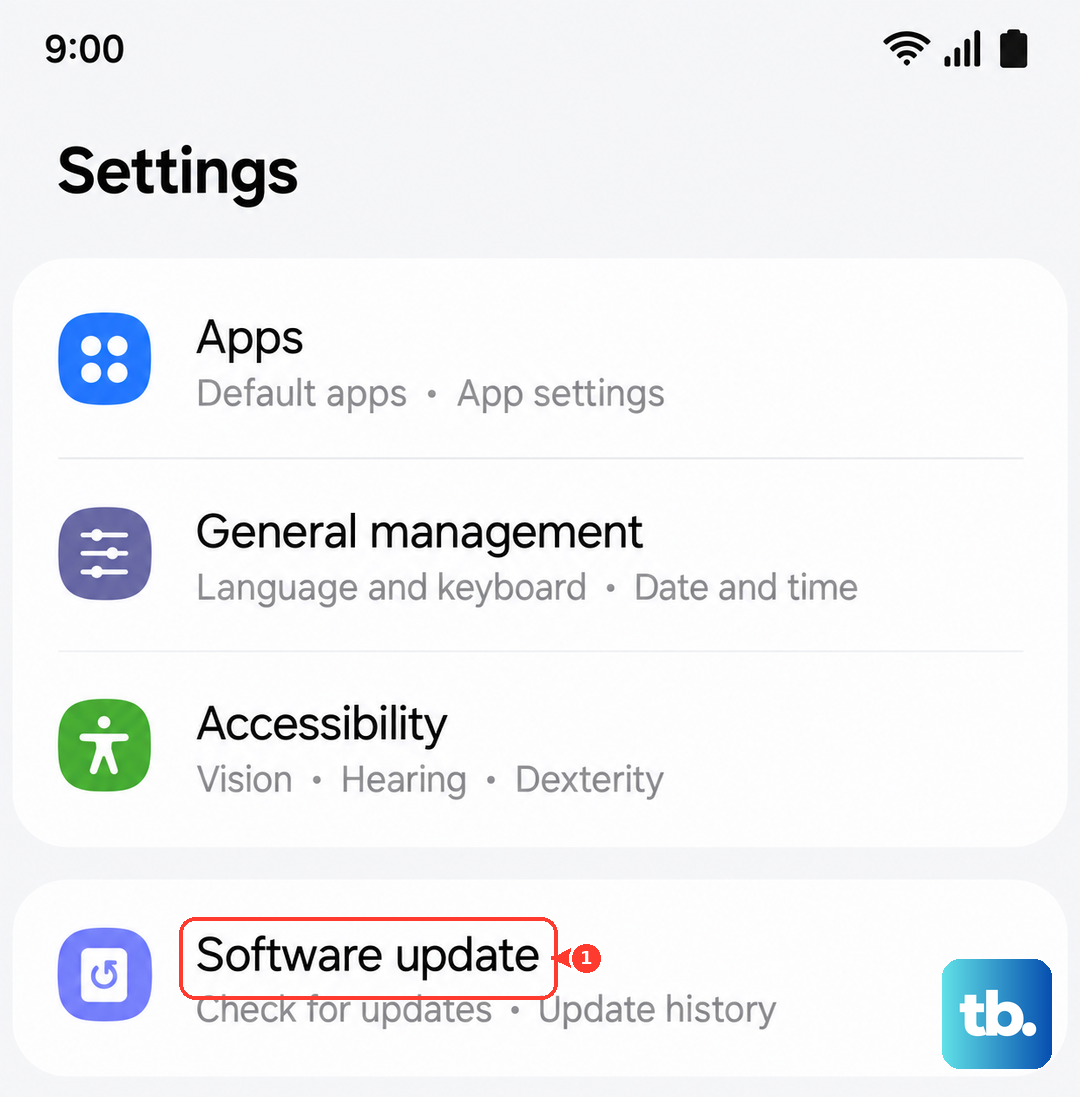
If an update is available, install it. Make sure your phone is connected to Wi-Fi and has a good charge, preferably over 50%, before starting.
Check for Interference from Themes
If you've applied a custom theme from the Galaxy Store, it might have unexpected bugs. Try reverting to the default theme to see if that helps.
Long-press on an empty area of your home screen and tap "Themes." Go to the "My stuff" section, find the default theme (usually called "Default" or "Samsung Default"), and apply it.
Run a Hardware Diagnostic
Let's check if the vibration motor itself is working. Open your Phone dialer app and type in *#0*#. This opens Samsung's secret service menu.
Tap on the "Vibration" test button. If your phone vibrates in a long, steady pattern, the hardware is functioning correctly and the issue is purely software-based.
Reset Your App Preferences
This resets all your notification and permission settings for apps without deleting any personal data. It can clear up conflicts. Go to Settings > General management.
Tap on "Reset" and then select "Reset settings." Confirm your choice. Your phone will reboot, and you'll need to re-allow notifications for your apps, but it often solves persistent issues.