
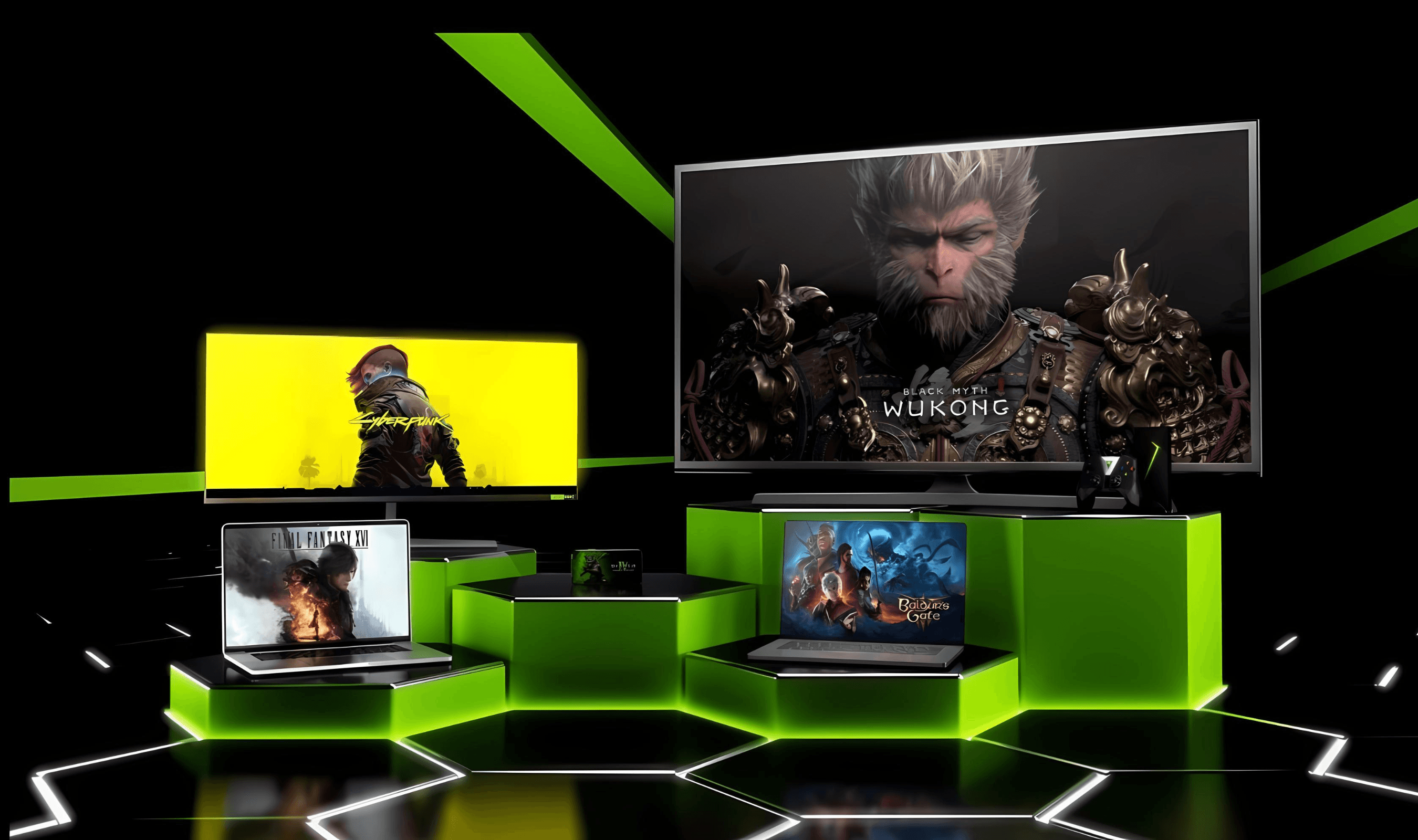
NVIDIA launched a beta GeForce Now app for Linux this week, delivering up to 5K 120 FPS cloud gaming to Ubuntu 24.04+ systems.
The native client transforms Linux desktops into GeForce RTX 5080-powered rigs through cloud streaming, eliminating previous browser-based workarounds.
The app supports DLSS 4, Reflex, and G-Sync over cloud connections, matching Windows and macOS functionality. NVIDIA confirmed the desktop client differs from its Steam Deck app, which targets the handheld with 1200p super-sampling for its 800p display and 90Hz refresh rate.
Initial support focuses on Ubuntu 24.04, though other distributions like Bazzite and Nobara may work with potential stability issues. The Flatpak-distributed app provides access to NVIDIA's Blackwell-grade GPUs for Ultimate tier subscribers.
Linux gaming momentum continues with Valve's Proton compatibility layer adding 19 new Windows games this week. Proton 10.0-4 expands the library of playable titles on Linux systems, building on Steam Deck's success with SteamOS.
Calibre 9.0 rolled out with a new bookshelf view and enhanced editing options for ebook management. The popular reader application now offers improved organization features alongside its existing conversion and library tools.
DietPi, a Raspberry Pi OS alternative, received a major update requiring Debian 12 or later. The lightweight distribution for single-board computers drops support for older systems unable to upgrade to current Debian versions.
The multi-system emulator MAME 0.285 arrived with better Apple Lisa support and expanded arcade options. The 2026 update improves emulation of Apple's first graphical interface computer alongside classic gaming platforms.
Gaming-focused Linux distributions formed the Open Gaming Collective to coordinate development efforts. The collaboration aims to reduce duplicate work and strengthen the Linux gaming ecosystem through unified development.
Heroic Games Launcher 2.19 debuted after five months of development, adding experimental platform support. The open-source manager for Epic Games Store, GOG, and Amazon Luna now includes additional gaming platform integration.
Nexus Mods confirmed its Vortex mod manager will officially support SteamOS in 2026. The announcement brings streamlined mod management directly to Steam Deck and upcoming Steam Machine hardware.
Ubuntu 26.04 LTS development progressed with Canonical committing to Linux kernel 6.20 or 7.0. A new snapshot release allows testing of the unfinished distribution ahead of its scheduled launch.
Fedora's Asahi Linux project achieved desktop booting on M3-based Mac hardware for the first time. The progress lags behind Apple's current M5 chips but represents significant advancement for Linux on Apple Silicon.
Microsoft acknowledged increasing Linux adoption as Windows users migrate due to stability concerns and AI feature integration. The company vowed to improve Windows reliability in response to growing competition from open-source alternatives.
GOG hinted at major Linux developments for 2026 through recent job postings and public comments. The gaming platform's expansion plans align with broader industry recognition of Linux's growing gaming market share.
Transmission 4.1 arrived after over a year of development with enhanced BitTorrent client features. The cross-platform application maintains its Windows, Linux, macOS, and headless server support.
GParted Live 1.8.0 released with updated disk partition editing tools and package base improvements. The bootable Linux distribution follows the main GParted application's 1.8.0 update.
Firefox began testing split-screen mode and tab notes for improved browsing workflow. Mozilla's experimental features allow simultaneous page viewing without multiple windows alongside enhanced tab organization.
GeForce Now expanded its library with 10 new titles including The Midnight Walkers and Cairn, both RTX 5080-ready. NVIDIA confirmed upcoming 2026 releases like Resident Evil Requiem and 007 First Light will join the streaming service.
The Linux gaming ecosystem demonstrates accelerated growth through hardware, software, and cloud service investments. Industry recognition of the platform's viability follows years of community-driven development and Valve's Steam Deck success.