
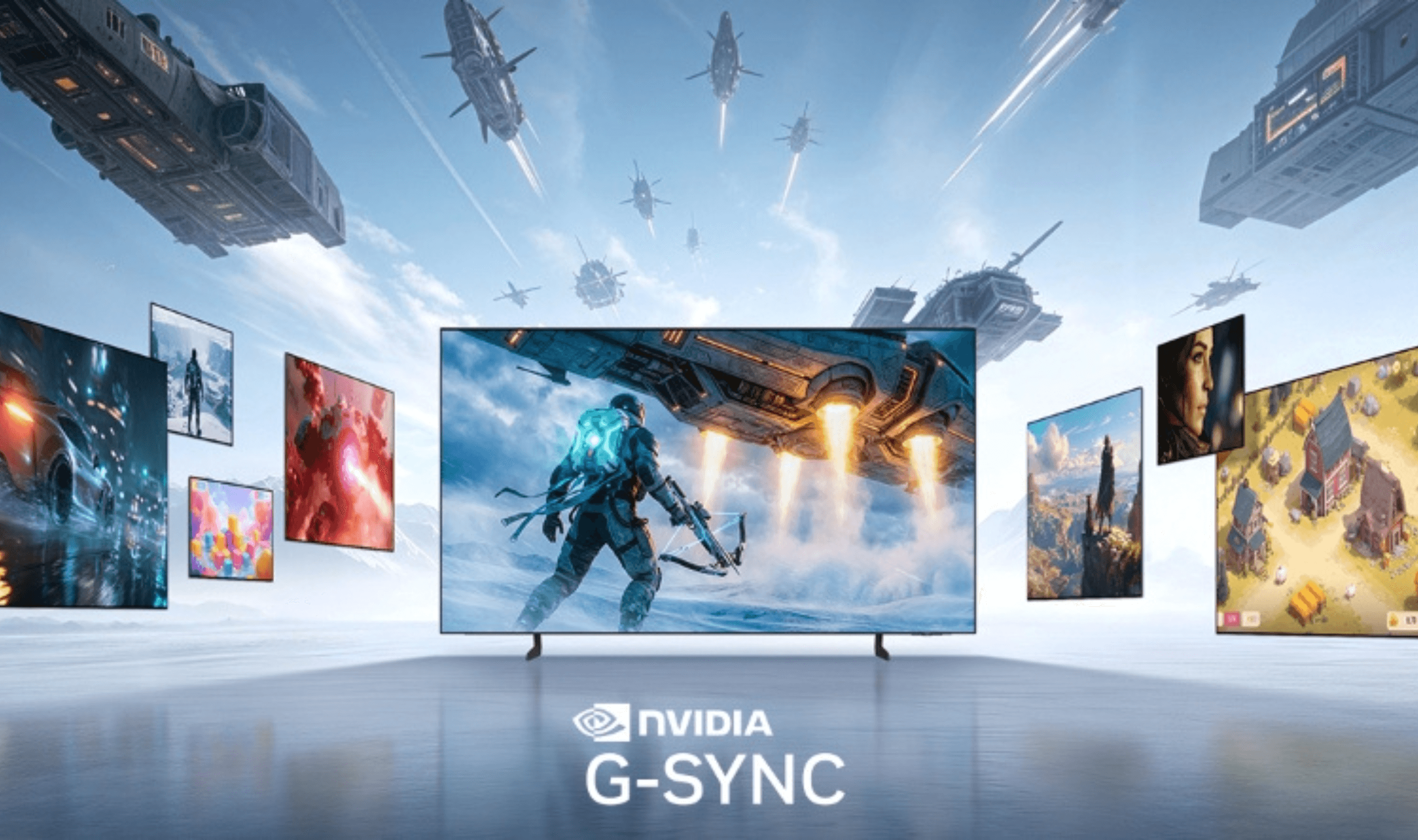
Samsung confirmed NVIDIA G-Sync compatibility for its 2026 OLED TV lineup and Odyssey gaming monitors in a February 2 announcement. The company's press release today follows the displays' initial introduction at CES 2026 earlier this year.
The 2026 OLED TV models gaining G-Sync support include the S95H, S90H, and S85H series. Samsung's flagship S95H is a 48-inch OLED TV that offers a 165Hz refresh rate, while the S90H matches that refresh rate with slightly reduced brightness. The S85H supports up to 120Hz refresh rates.
Samsung's Odyssey gaming monitor lineup also receives G-Sync certification, specifically the recently launched Odyssey G6 G60H and G61SH models. The 27-inch G60H model can achieve a staggering 1,040Hz refresh rate in HD mode, with a QHD@600Hz option available.
NVIDIA G-Sync technology synchronizes display refresh rates with GPU frame output to eliminate screen tearing and reduce stuttering. Samsung's implementation extends beyond G-Sync to include AMD FreeSync Premium Pro support, covering both major GPU ecosystems.
The 2026 OLED lineup also introduces HDR10+ Advanced, Samsung's next-generation HDR format designed to enhance brightness, contrast, and motion clarity. This standard aims to provide consistent high dynamic range performance across all content types.
Kevin Lee, Executive Vice President of Samsung's Visual Display Business, stated the company aims to deliver "more power, precision, and immersion to every kind of player" through these display innovations. The announcement positions Samsung's OLED TVs as viable large-scale gaming monitors for PC and console gamers.
Screen tearing has been a persistent issue in competitive gaming where inconsistent frame rates create visual artifacts. G-Sync compatibility addresses this by dynamically adjusting refresh rates to match GPU output, though professional players sometimes disable the feature to minimize input lag.
The move follows similar G-Sync implementations by competitors like LG, which added the technology to its OLED TVs in 2019. Samsung's broader adoption across both TV and monitor product lines represents a significant expansion of gaming-focused display technology.
Industry analysts note the timing aligns with growing trends in TV-based gaming, particularly with handheld devices like Steam Deck and announced Steam Machine consoles that connect to larger displays. The flexibility allows gamers to use high-end OLED TVs as both entertainment centers and competitive gaming monitors.
Samsung's 2026 display strategy combines high refresh rates with adaptive sync technologies across multiple product categories. The company's OLED TVs now compete directly with dedicated gaming monitors while maintaining their traditional television functionality.
Product availability and pricing details for the 2026 OLED lineup will follow in coming weeks, according to Samsung's announcement. The company typically releases its annual TV models in spring, with monitor availability varying by region.