
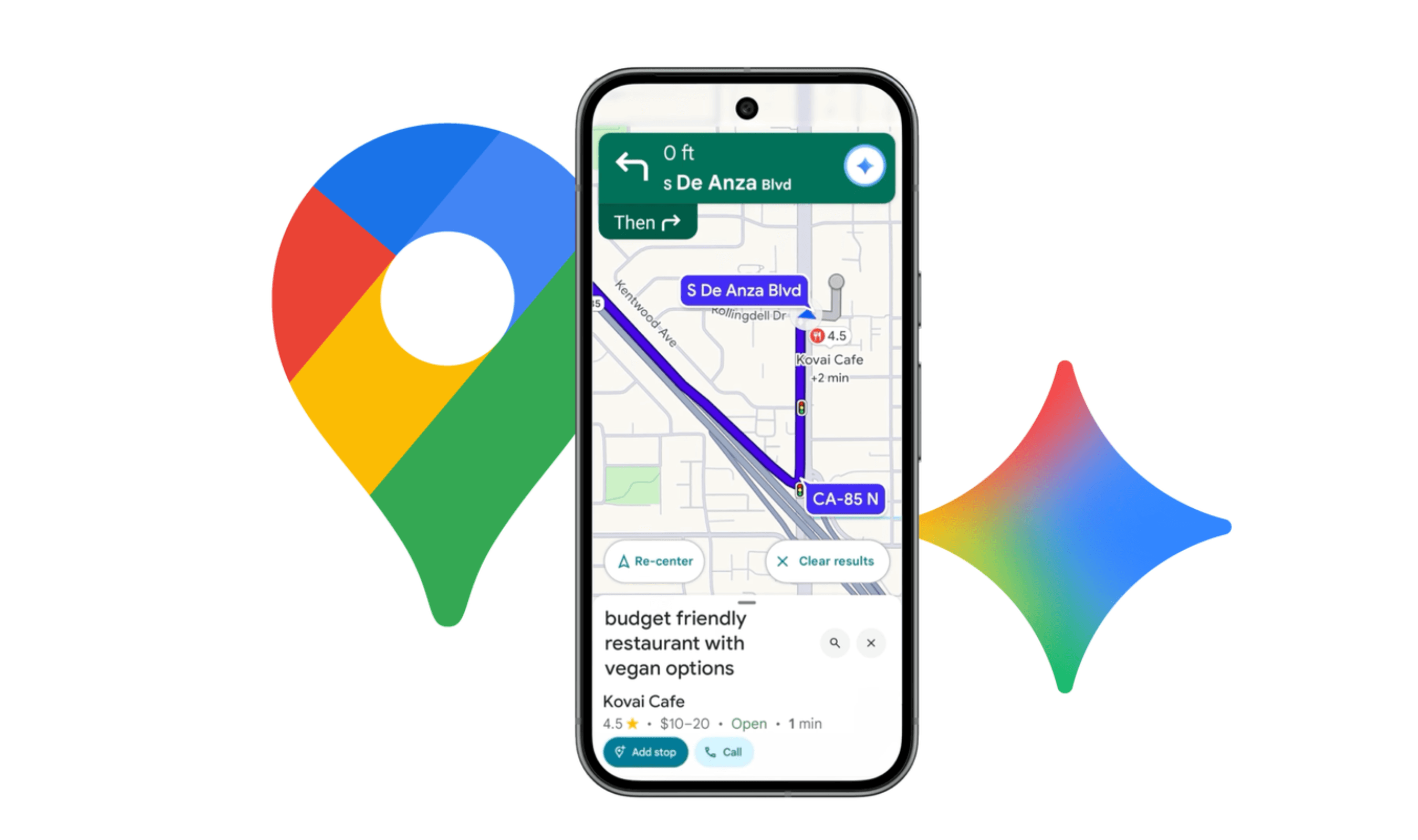
Google Maps version 26.05.04.860829830 contains code for Gemini integration into the app's community edit system, according to an APK teardown by Android Authority. The discovery reveals Google testing AI-powered suggestions for location updates, hours, and contact information.
The feature would replace the current "Suggest an edit" interface with a full Gemini chatbot experience. Users could type or speak natural language requests instead of selecting from predefined options, Android Police reported. All suggested edits would still require Google's review before appearing on Maps listings.
Google has been expanding Gemini across its navigation app throughout 2025 and early 2026. The company introduced walking and cycling navigation support earlier this month, following driving assistance that launched last year.
"The walking feature acts as a local expert, leveraging Street View imagery and real-world data," Chrome Unboxed noted.
Simultaneously, Google is developing a separate feature to import chat histories from competing AI platforms into Gemini. Code discovered in recent application updates shows infrastructure for migrating conversations from services like ChatGPT, according to WebProNews. The import functionality would preserve context and continuity for users switching between AI assistants.
The chat import feature addresses ecosystem lock-in concerns in the AI space, GEO TV reported. It would allow users to download history from other platforms and upload it to Gemini, removing the need to start research from scratch. Initial versions reportedly won't support advanced elements.
Gemini's expansion reflects Google's strategy to integrate AI across its product ecosystem. TechRepublic's cheat sheet shows the AI assistant now spans web, Android, iOS, Workspace, Chrome, Search, and smart home devices. The suite includes conversational help, writing tools, multimodal analysis, and custom assistants called Gems.
For Maps specifically, Gemini provides hands-free support across transportation modes. MobiGyaan detailed capabilities including real-time voice guidance for pedestrians, estimated arrival times for cyclists, and multi-step task completion for drivers. The assistant uses live Google Maps data for context-aware recommendations.
The community edit integration represents a logical next step in Gemini's Maps evolution. Android Authority's teardown showed the feature resembles a chatbot conversation more than the current interface. Users can suggest edits through an input box at the bottom of a screen displaying all editable information.
Each edit requested through Gemini would be automatically submitted to Google for review, Android Police noted. The publication observed the chatbot processes suggestions slowly in its current development state, though performance could improve before public release.
Google's dual approach of expanding existing features while developing new migration tools shows competitive positioning in the AI assistant market. WebProNews analysis suggests chat import could lower switching barriers for users invested in competing platforms like ChatGPT or Claude.
The company faces intensifying competition despite its foundational contributions to transformer architecture. OpenAI's ChatGPT maintains significant market share, while Anthropic's Claude has gained traction among enterprise users prioritizing safety features.
Gemini's integration into community edits could streamline the Maps contribution process. The current system requires users to navigate multiple screens and select specific fields for modification. A natural language interface might encourage more frequent updates from casual users.
No timeline exists for the community edit feature's public release. Android Authority confirmed it's not currently live for users and remains a work-in-progress. Google typically tests features extensively before wider rollout.
The broader Gemini expansion continues globally on Android and iOS where supported. Chrome Unboxed reported the walking and cycling features are rolling out worldwide, embedded directly into the navigation tool users already employ.
Enterprise customers represent another target for Gemini's growing capabilities. Organizations evaluating AI platforms could test Google's offering while preserving existing conversational assets, potentially accelerating adoption cycles.
Privacy considerations accompany both developments. Chat import raises questions about data handling for sensitive conversations, while community edits involve location information. Google will need clear consent mechanisms and security protocols for both features.
The company's aggressive Gemini integration follows its 2024 rebrand from Bard. Despite technical leadership in machine learning, Google has struggled to match ChatGPT's viral adoption in consumer-facing AI applications.
Maps represents a strategic beachhead with a massive user base. Embedding Gemini directly into navigation workflows could expose the AI assistant to users who might not seek out standalone chatbot applications.
Industry analysts note the chat import feature's timing coincides with maturing competition in the AI assistant market. As platforms evolve, data portability becomes a competitive differentiator rather than an afterthought, similar to email and cloud storage services.
Google's approach acknowledges that technical superiority alone doesn't guarantee user adoption. Network effects from accumulated conversation histories create switching costs that import functionality could reduce.
The community edit integration shows Google identifying unexpected touchpoints for AI assistance. Rather than limiting Gemini to obvious navigation tasks, the company is exploring how conversational AI can enhance collaborative map maintenance.
Both developments reflect Google's broader ambition to weave Gemini into ambient aspects of digital life. Instead of requiring users to open separate applications, the assistant increasingly appears within tools they already use daily.
Success will depend on execution quality. Imported chats must function seamlessly within Gemini's architecture, while community edit suggestions need accurate processing to maintain Maps' data integrity.
Regulatory considerations may influence both features. European data portability mandates under GDPR and the Digital Markets Act could shape chat import implementation, while location data handling faces scrutiny across jurisdictions.
Google's rapid Gemini expansion shows no signs of slowing. The company appears committed to establishing its AI assistant as a ubiquitous presence across its product ecosystem, with Maps serving as a critical distribution channel.
The community edit integration represents perhaps the most surprising application yet, bringing conversational AI to the collaborative maintenance of the world's most popular digital map.