

Samsung's One UI 8.5 firmware reveals a Privacy Display feature for the Galaxy S26 series that makes screens unreadable from side angles. The feature, discovered in firmware code by SamMobile, uses AI-powered technology to prevent bystanders from viewing phone contents.
Privacy Display activates through quick settings or automatically via Modes and Routines integration. Users can configure conditions like activating outside home or office locations. The system requires Samsung Display's newer OLED panels with Flex Magic Pixel technology showcased at MWC 2024.
Galaxy S26 Ultra leaks show a redesigned camera island replacing individual lens rings. Tipster OnLeaks shared dummy unit videos showing three vertical sensors in a raised module similar to Galaxy Z Fold 7 designs. The left-side placement may cause table wobble issues without cases.
Samsung reportedly focuses on camera refinements rather than new sensors for the S26 Ultra. According to tipster Ice Universe, improvements include lens coatings to reduce flare and updated skin tone processing. The company maintains the quad-camera setup from S25 Ultra models.
The S26 Ultra features flatter sides with rounded corners addressing S25 Ultra comfort complaints. At 218 grams, the S25 Ultra felt light for its size but had sharp edges. The S26 design evolution keeps premium flat-frame styling while improving ergonomics.
Current leaks point to a February 2026 launch, later than Samsung's typical January flagship schedule. The delay aligns with multiple reports but remains unconfirmed by Samsung. The S26 series may use Snapdragon 8 Elite Gen 5 or Exynos 2600 processors depending on region.
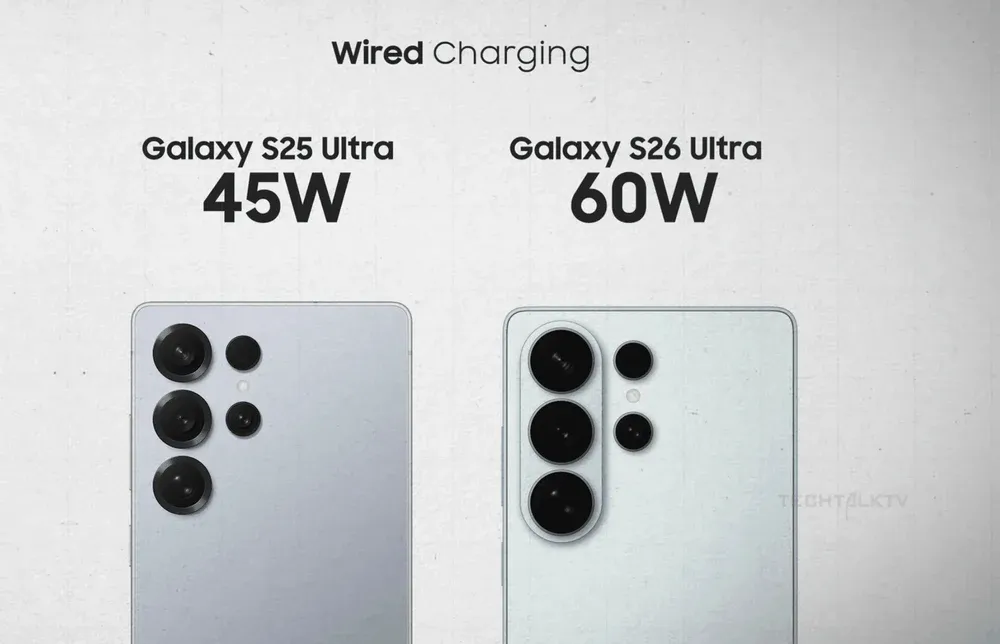
Charging speeds could increase to 60W from current 45W maximums. Privacy Display availability across all three S26 models remains unclear. No other smartphones currently seem to offer similar built-in side-angle privacy technology.
Samsung's strategy emphasizes software and optical improvements over hardware expansion. This contrasts with competitors introducing new camera sensors annually. The approach addresses user-reported issues like inconsistent color output under mixed lighting conditions.