
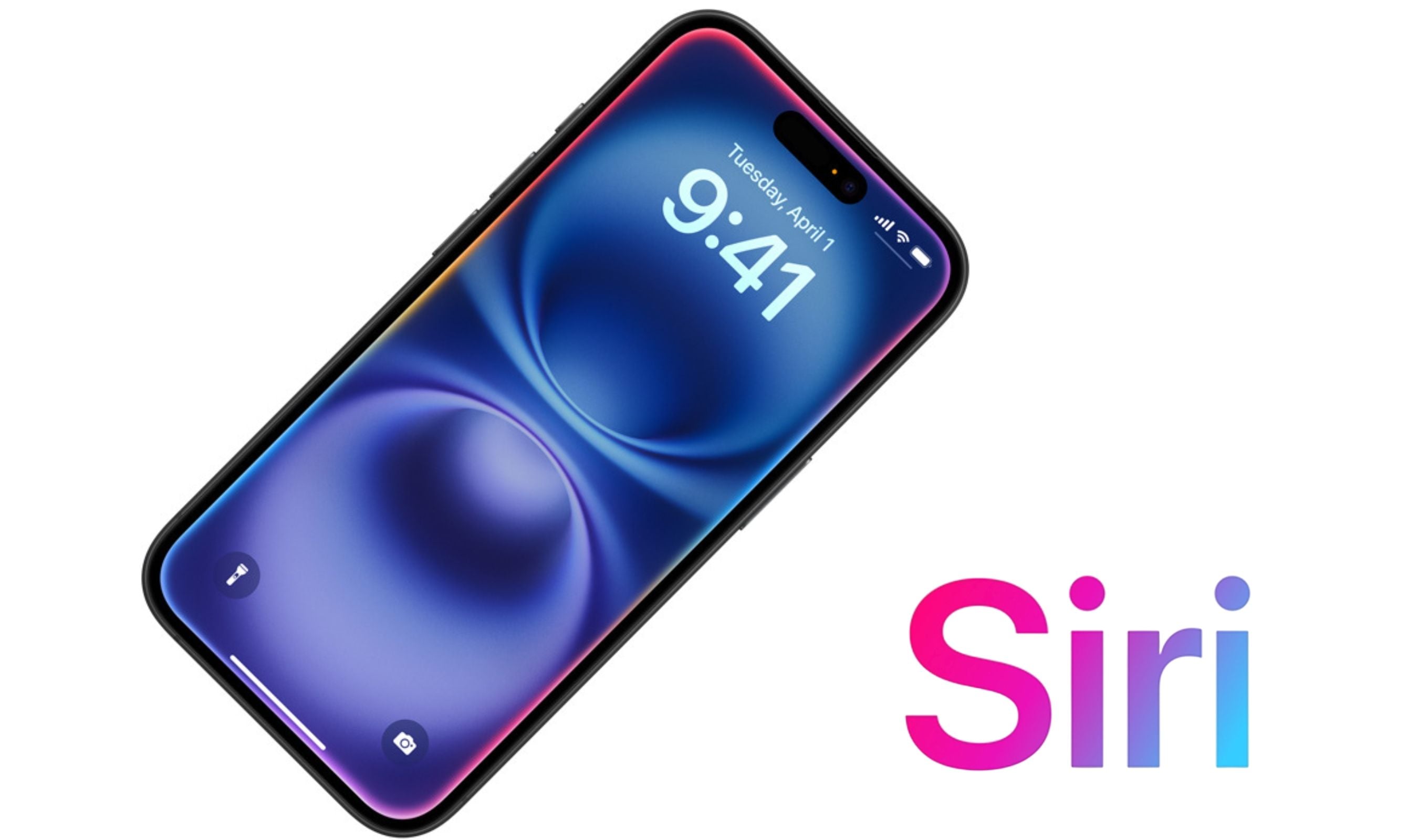
Tim Cook takes the Apple Park stage Monday for his final keynote as CEO, and the product he will introduce (a rebuilt Siri powered by a custom Google Gemini model) arrives under a legal cloud Apple created for itself.
Apple's 37th Worldwide Developers Conference opens June 8 at 10 a.m. PDT with more riding on it than any keynote in years.
Cook announced in April he will hand the top job to hardware engineering chief John Ternus on September 1, making this his last developers conference as chief executive. The main event is a Siri overhaul Apple first promised at WWDC 2024 and then failed to ship for nearly two years.
Apple has licensed a custom 1.2-trillion-parameter Gemini model from Google at roughly $1 billion per year to serve as Siri's cloud intelligence backbone, according to Bloomberg and confirmed by Google Cloud CEO Thomas Kurian at Google Cloud Next '26. The model uses a mixture-of-experts design that activates only a relevant subset of parameters per query, keeping latency competitive while maintaining the knowledge capacity of a trillion-parameter system.
Gene Munster of Deepwater Asset Management pegs the multi-year deal's total value at up to $5 billion. The rebuilt Siri debuts as a dedicated standalone app across iOS 27, iPadOS 27, and macOS 27. Bloomberg's Mark Gurman describes an iMessage-style interface with persistent conversation bubbles and full chat history synced via iCloud.
Users can attach images and documents through an upload button and toggle between standard voice-triggered Siri and a deeper chatbot mode by swiping down on a transparent results card. A system-wide "Search or Ask" panel triggered by swiping down from the top center of the screen lets users route queries to Siri, ChatGPT, or Google Gemini, effectively turning the iPhone's search layer into a multi-provider AI marketplace. Apple has reportedly tested Anthropic's Claude as an additional option. The revamped assistant gains personal context access to emails, photos, messages, and files, along with on-screen awareness and multi-step task execution across apps. These are the exact capabilities Apple demonstrated at WWDC 2024 and then never shipped, forming the core of a false-advertising lawsuit the company settled in May for $250 million.
Eligible iPhone 15 Pro, 15 Pro Max, and iPhone 16 series owners who purchased between June 10, 2024 and March 29, 2025 can claim $25 per device, rising to as much as $95 if overall claim volume is low. Apple denied wrongdoing, stating it resolved the matter "to stay focused on doing what we do best."
Apple's privacy architecture for the Gemini integration routes queries exceeding the capacity of its 3-billion-parameter on-device model to Apple Silicon servers rather than Google's cloud infrastructure. Those servers use stateless, ephemeral compute: no user data is retained after a query resolves, and personally identifiable information is stripped before content reaches the Gemini inference layer.
Apple's contract with Google prevents Google from using Apple users' Siri queries to train future Gemini models. An ACM conference paper presented in June 2026 confirmed Apple's three core Private Cloud Compute privacy claims after independent analysis.
iOS 27 is described by Gurman as a "Snow Leopard" release, a reference to Apple's 2009 macOS update that prioritized codebase cleanup and performance gains over headline features. Beyond the Siri chatbot app and "Search or Ask" Dynamic Island integration. The update brings enhanced autocorrect with word-suggestion capabilities, a customizable Camera app, a system-wide Liquid Glass opacity slider, and a redesigned AirPods settings menu.
According to Weibo-based leaker Instant Digital, whose compatibility lists have been corroborated by 9to5Mac and MacRumors, iOS 27 will require at least an A14 Bionic chip. That drops the iPhone 11, iPhone 11 Pro, iPhone 11 Pro Max, and iPhone SE (2nd generation), all four of which share the A13 Bionic. The iPhone 12 becomes the oldest supported model. Apple will confirm the official list at Monday's keynote.
Dropped devices will continue receiving iOS 26 security patches for at least another year or two.
macOS 27 is expected to mark the end of Intel Mac support, becoming an Apple Silicon-exclusive release with the same performance-focused "Snow Leopard" approach. Apple Intelligence features requiring on-device neural processing are limited at launch to iPhone 15 Pro models and newer, with full support across the iPhone 17 lineup.
Developer betas of all six operating systems (iOS 27, iPadOS 27, macOS 27, watchOS 27, tvOS 27, and visionOS 27) are expected to drop Monday afternoon. Public betas follow in July, with final releases anticipated in September alongside the iPhone 18 lineup.
Cook's tenure since August 2011 saw Apple's annual revenue more than quadruple and the company reach a market capitalization of approximately $4 trillion. The keynote he delivers Monday is also the introduction of the product that, more than any other, will define whether his final year is remembered as a redemption for the 2024 AI stumble or as the year Apple finally delivered on a promise it had made twice.