
When the predictive text on your iPad Air (2026) stops working, it can really slow you down. You might notice the word suggestions bar is empty, the autocorrect is making bizarre changes, or the keyboard just feels less helpful than it should be. The good news is, this is almost always a software hiccup you can fix yourself.
Restart Your iPad
This is the quickest thing to try and often solves the problem right away. A simple restart clears out temporary glitches in iPadOS 26 that can affect the keyboard's learning system. Just press and hold the top button and either volume button until you see the power slider, then slide to power off.
Wait about 30 seconds, then press the top button again to turn it back on. Once it boots up, open Notes or Messages and start typing to see if predictions are back.
Toggle Predictive Text Off and On
Sometimes the feature just needs a quick refresh. You can do this directly from any keyboard. Open an app where you can type, like Mail or Safari.
Tap in a text field to bring up the keyboard. Look for the predictive text bar above the keys. If you see a small globe or emoji icon on the bottom row, press and hold it.
A menu will pop up. Tap Keyboard Settings. On the next screen, simply toggle the switch for Predictive Text off, wait a second, and then toggle it back on. Go back to typing and it should start learning again.
Check Your Keyboard and Language Settings
Incorrect settings can prevent predictions from working properly. Head to Settings > General > Keyboard. Here, you want to make sure a few things are enabled.
First, verify Predictive Text is turned on. Right below that, check that Auto-Correction and Check Spelling are also enabled. These features all work together.
Next, tap Keyboards at the top. Make sure your primary language keyboard, like English (US), is listed. If you have multiple keyboards, the predictive engine can get confused. I'd recommend removing any keyboards you don't actively use for now.
Reset All Keyboard Dictionaries
If the keyboard has learned bad habits or the dictionary file is corrupted, resetting it can help. This will erase all custom words you've added by rejecting suggestions, so keep that in mind.
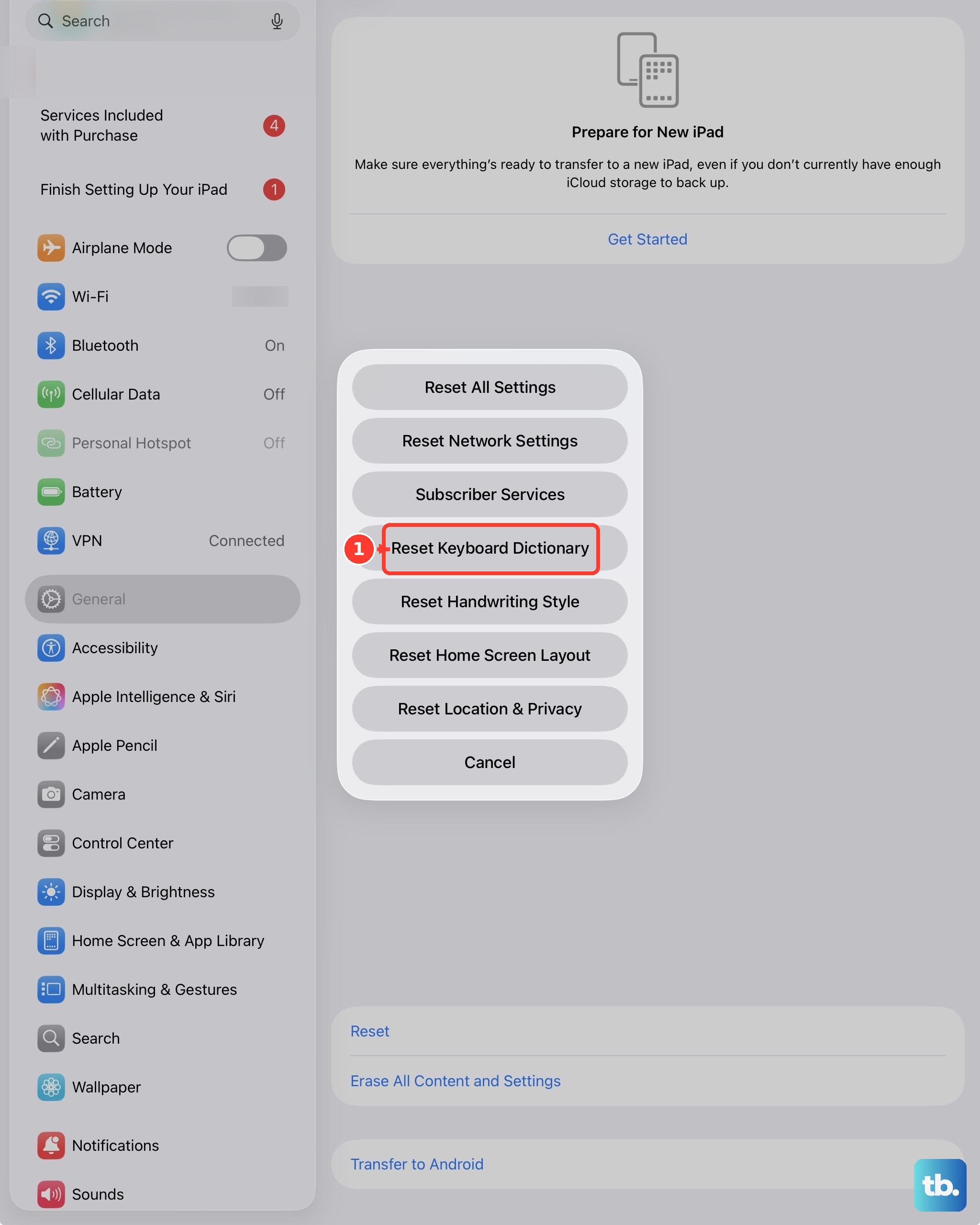
Go to Settings > General > Transfer or Reset iPad. Tap Reset at the bottom of the list.
On the Reset screen, choose Reset Keyboard Dictionary. You'll need to enter your passcode to confirm. After the reset, the keyboard will start fresh with its default dictionary.
Update iPadOS
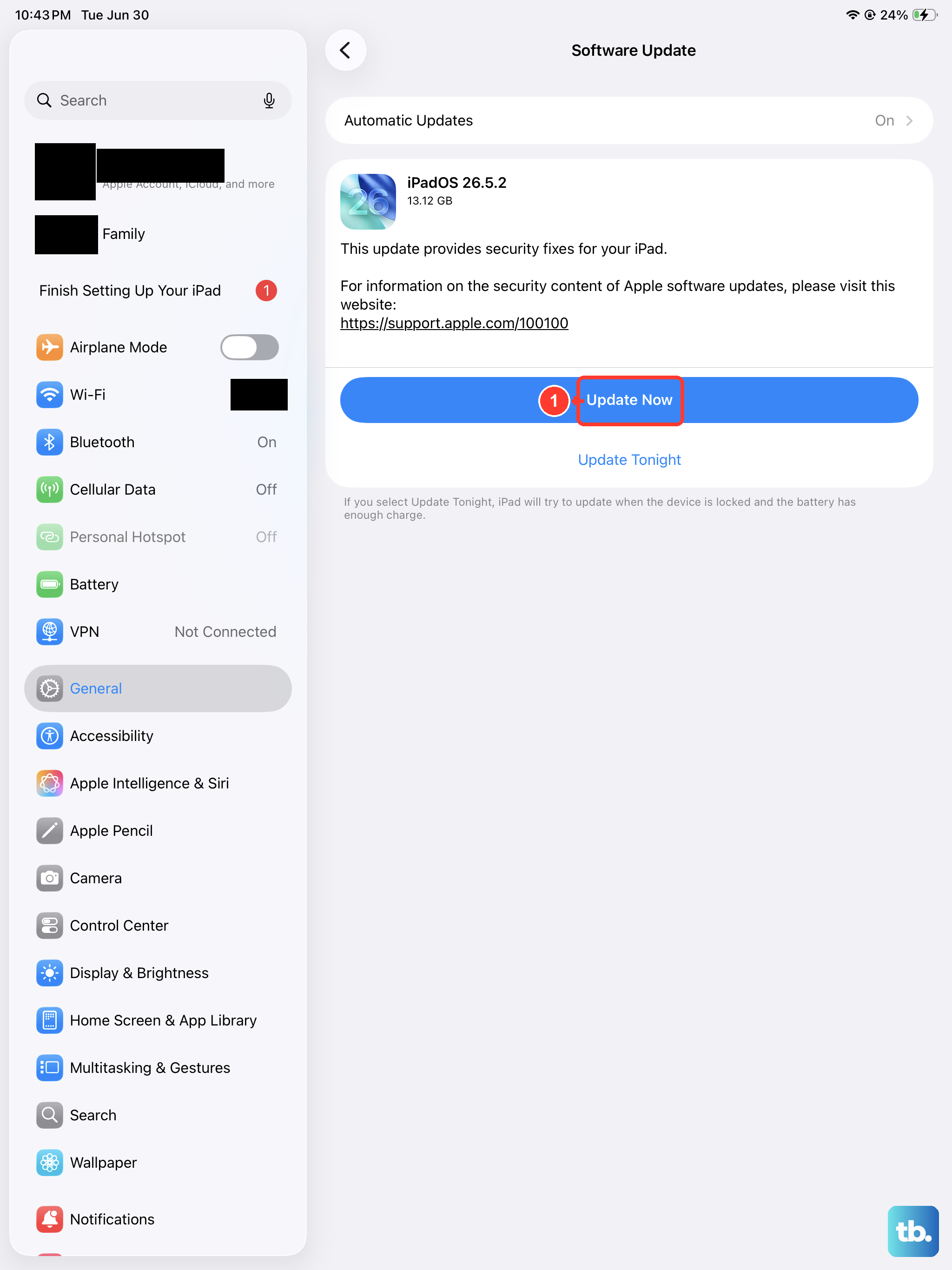
Apple frequently releases updates that include fixes for system apps, including the keyboard. An outdated version of iPadOS 26 could be the root of the problem.
Connect your iPad to Wi-Fi and plug it into power using a USB-C PD charger. Go to Settings > General > Software Update.
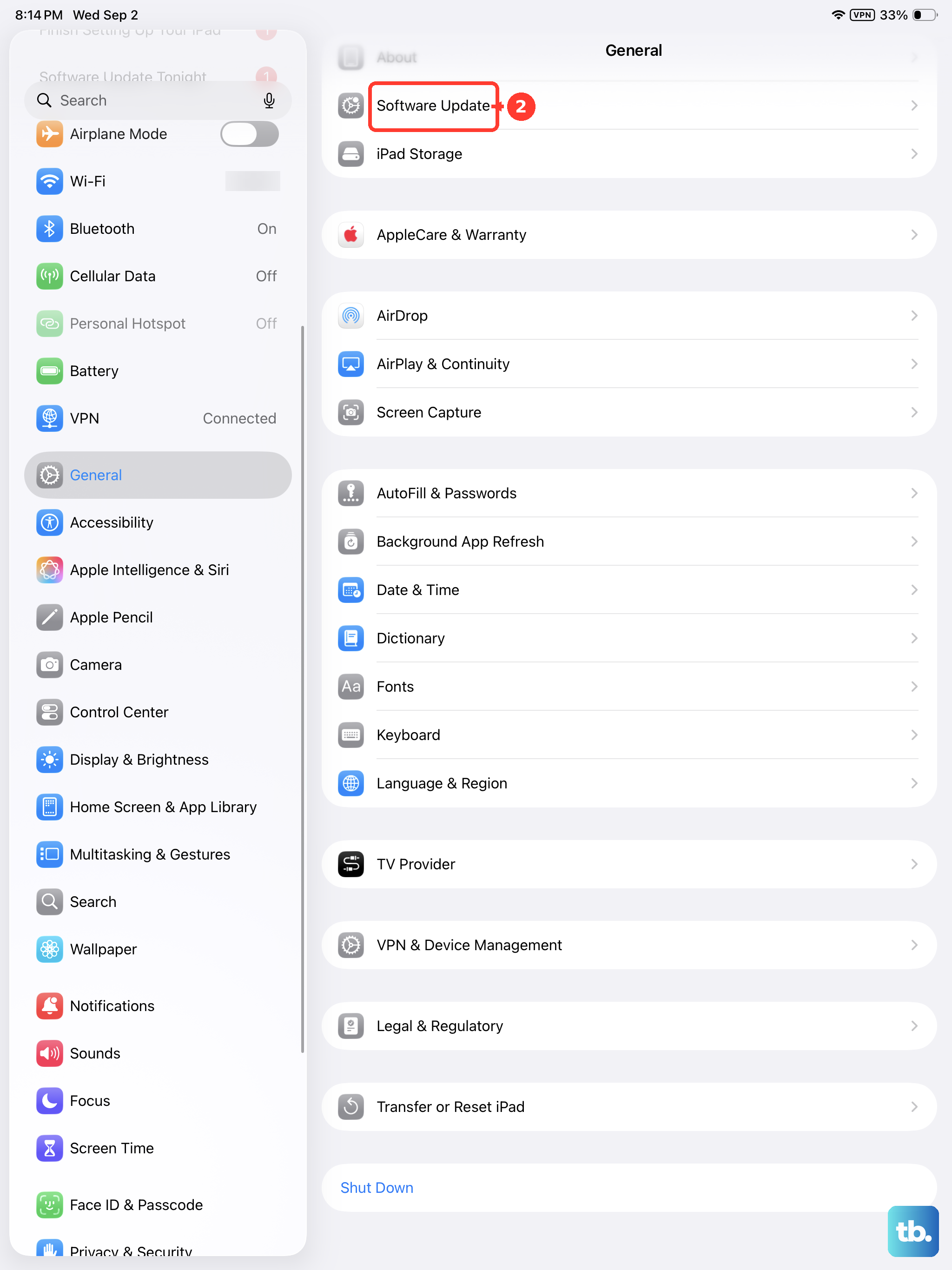
If an update is available, tap Download and Install. Keeping your iPad updated is one of the best ways to ensure all features, including predictive text, run smoothly.
Force Restart Your iPad Air
If the keyboard is completely frozen or unresponsive, a standard restart might not be enough. A force restart is a deeper reboot that doesn't erase your data. For the iPad Air (2026), press and quickly release the Volume Up button, then press and quickly release the Volume Down button.
Finally, press and hold the Top button. Keep holding it even after you see the power off slider. Continue holding until you see the Apple logo appear, then you can let go. This process can clear more stubborn software issues.