
Factory resetting your Samsung Galaxy Tab S9 erases every file, setting, and app, returning it to the state it was in when you first took it out of the box. It's a powerful step for troubleshooting major software glitches, preparing the tablet for a new owner, or simply wiping the slate clean. I'd always recommend backing up first, but the process itself is straightforward once you're ready.
Back Up Your Tab S9 First
Before you do anything else, secure your data. For a complete backup, use Samsung's Smart Switch app. You can find it in Settings > Accounts and backup > Smart Switch, which lets you back up to a computer or a microSD card. This captures your apps, home screen layout, and most settings.
Also, double-check your cloud syncs. Go to Settings > Accounts and backup > Manage accounts and ensure your Google account is syncing contacts and calendar. For photos and videos, open Google Photos and confirm backup is turned on. Once the reset happens, anything stored only on the tablet is gone for good.
Sign Out of Samsung and Google
This is a critical step to avoid Factory Reset Protection (FRP) locks. Head to Settings > Accounts and backup > Manage accounts. Tap on your Samsung account, then select Remove account and confirm. Do the same for your primary Google account.
Removing these accounts before the reset ensures you won't be asked for the previous owner's credentials when setting the tablet up again. It's a security feature, but forgetting this step can lock you out of your own device.
Perform a Factory Reset from Settings
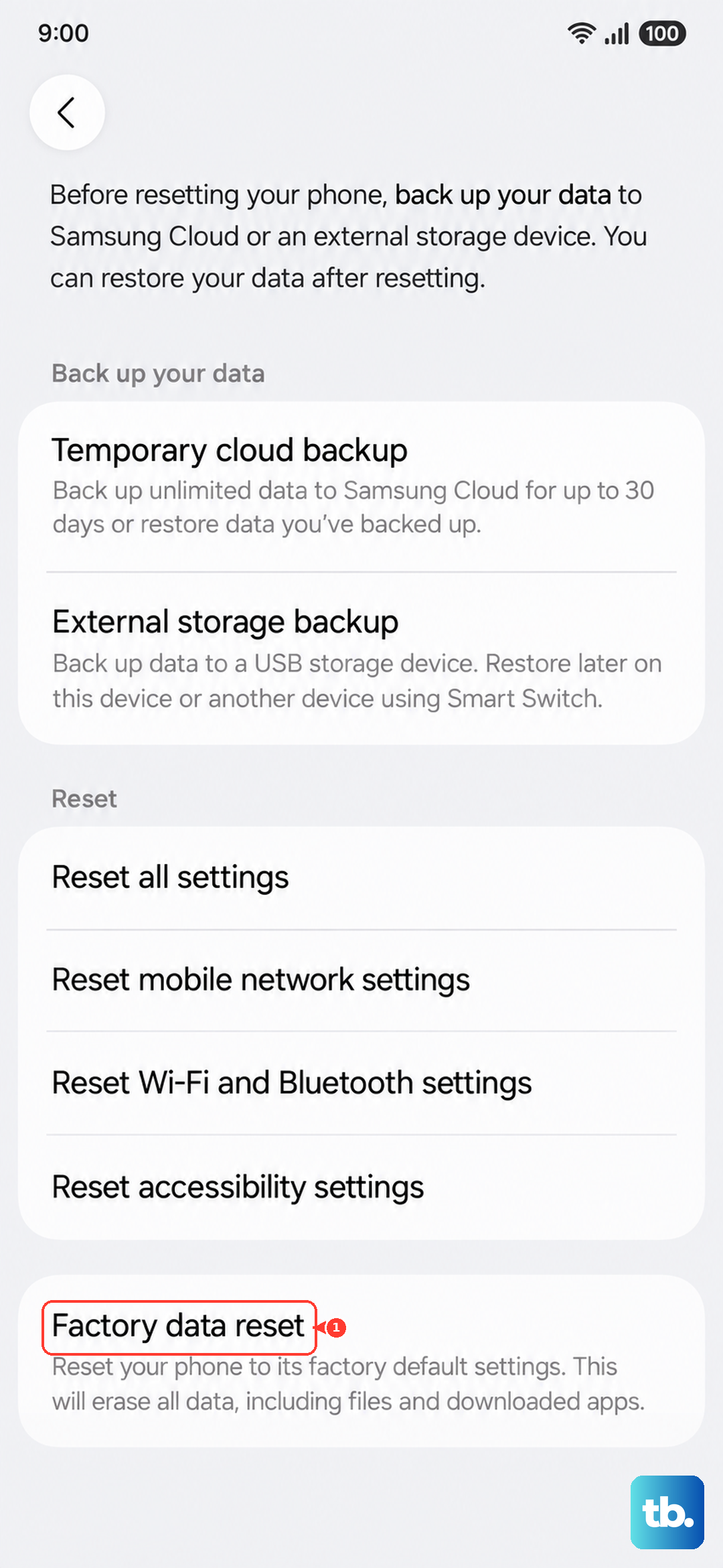
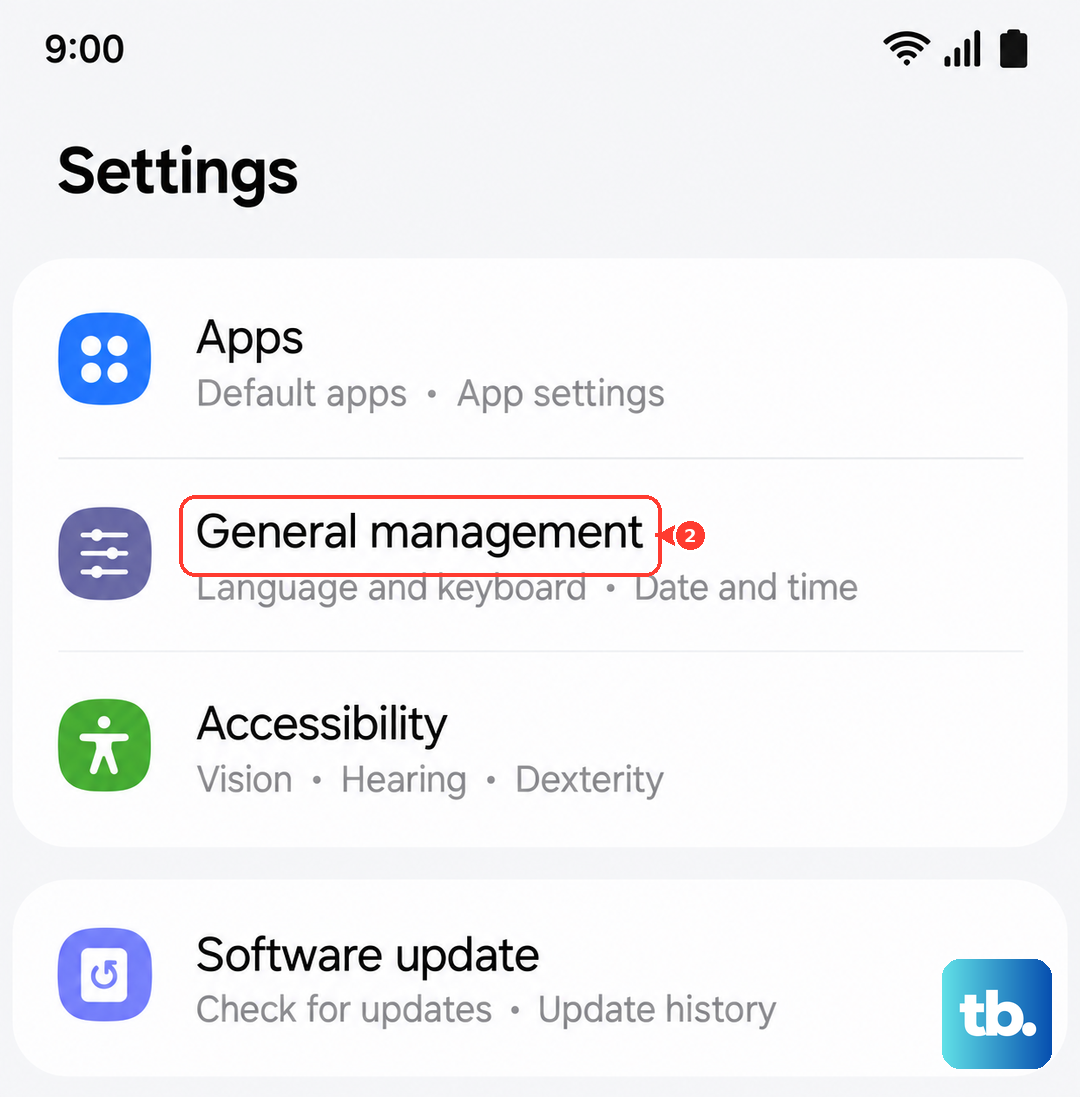
This is the standard method when your tablet is functioning. Open Settings and navigate to General management > Reset > Factory data reset. You'll see a detailed list of everything that will be erased, including your personal files and downloaded apps.
Scroll to the bottom and tap Reset. On the next screen, tap Delete all. You'll be asked to enter your PIN, pattern, or password for security. After confirming, the tablet will restart and begin the wiping process, which can take several minutes. When it's done, you'll see the initial setup screen in your chosen language.
Use Recovery Mode for a Forced Reset
If your Tab S9 is frozen, won't boot past the Samsung logo, or you've forgotten your lock screen password, you'll need to use recovery mode. First, turn the tablet off completely. With it powered down, press and hold the Volume Up button and the Side (power) button simultaneously.
Release both buttons when you see the Samsung logo, and you'll enter the Android Recovery menu. Use the Volume Down button to highlight Wipe data/factory reset, then press the Side button to select it. On the next screen, use Volume Down to select Factory data reset and press the Side button again to confirm. Once it finishes, select Reboot system now with the Side button.
Try a Reset Without Losing Your Files
If you're dealing with a specific issue like Wi-Fi problems or app crashes, a full factory reset might be overkill. Go to Settings > General management > Reset to see other options. Reset network settings will clear all Wi-Fi passwords and Bluetooth pairings, which often fixes connectivity bugs.
You can also choose Reset accessibility settings or Reset app preferences. These targeted resets can solve glitches without touching your photos, messages, or installed applications. In my experience, resetting app preferences is a great first step for fixing misbehaving apps.
Setting Up Your Tablet After the Reset
After the reset completes, you'll walk through the standard Android setup. Choose your language, connect to a Wi-Fi network, and sign back into your Google and Samsung accounts. When prompted, you can choose to restore your data from a backup you made earlier with Smart Switch or Google Drive.
This is the time to be selective. If you were resetting to fix a performance issue, you might want to set up as a new device first to see if the problem recurs before restoring an old backup that could contain the same corrupted data.
When a Factory Reset Makes Sense
A full reset is your best tool for persistent, unexplained slowdowns in One UI, severe battery drain that diagnostics can't pinpoint, or software instability that survives multiple reboots. It's also absolutely necessary before selling or gifting your Tab S9 to protect your personal information.
For less severe issues, consider clearing the system cache first. You can do this from the same recovery mode menu by selecting Wipe cache partition instead of the factory reset option. This clears temporary system files without touching your personal data and can resolve many minor software hiccups.