
Factory resetting your Samsung Galaxy S26 wipes your personal data and restores default settings. It's a powerful step for dealing with stubborn software bugs, preparing the phone for a new owner, or just getting a completely fresh start. Back up your data first, and make sure you know your account credentials before starting.
Back Up Everything Before You Start
This step is non-negotiable. A factory reset will permanently delete all your apps, photos, messages, and settings from the phone's internal storage. For a Google backup, open Settings > Accounts and backup, tap Back up data under Google Drive, then Back up now. For Samsung Cloud, open Settings, tap your Samsung account name, then Samsung Cloud > Back up data. Select your data and tap Back up now.
For a more comprehensive backup, I'd recommend using Samsung's Smart Switch app on a Windows PC or Mac. It lets you choose data categories to back up, such as contacts, messages, and apps. Double-check that your photos are safely synced to Google Photos or another cloud service before proceeding.
Remove Your Samsung and Google Accounts
Resetting through Settings avoids triggering Factory Reset Protection (FRP). If you're giving the phone to someone else, you can remove your accounts before resetting. Go to Settings > Accounts and backup > Manage accounts. Tap on your Samsung account, then select Remove account. Do the same for your primary Google Account.
A reset through the Recovery menu requires the last Google account's username and password afterward. Some Android versions may also ask for your previous screen lock PIN or password. Make sure you know these credentials before using Recovery mode.
Perform the Reset from Within Settings
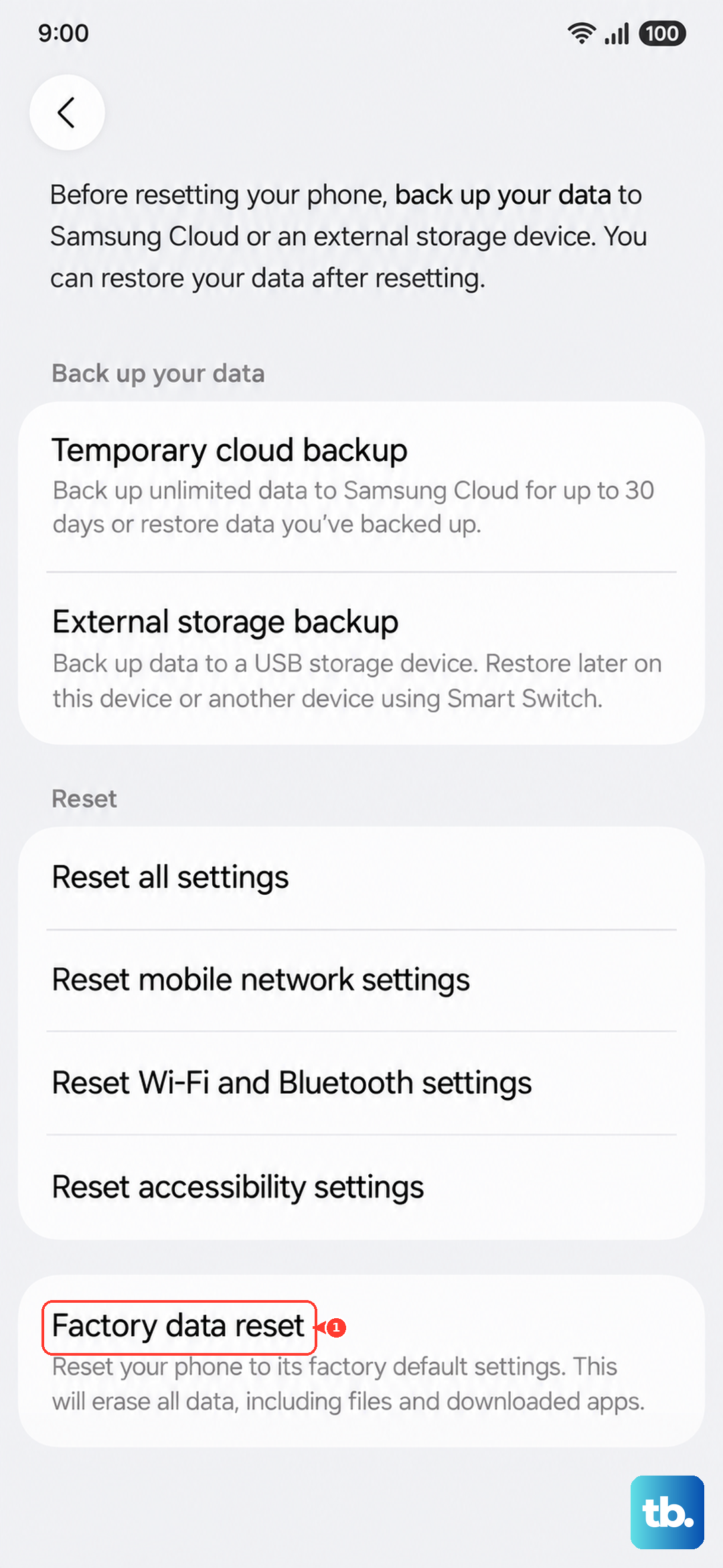
This is the standard method when your phone is working normally. Open Settings and navigate to General management > Reset > Factory data reset. You'll see a detailed list of everything that will be erased, including apps, accounts, and personal files.
Scroll to the bottom and tap Reset. Enter your PIN, pattern, or password if asked, then tap Delete all. If a Samsung account is still added, enter its password when prompted; you'll need a network connection to sign out. The phone will restart and begin the erasure process, which can take several minutes. When it's done, you'll see the initial setup screen.
Use Recovery Mode If the Phone Is Frozen
If your Galaxy S26 is unresponsive, first press and hold the Volume down button and the Side button together for more than 7 seconds until it restarts. If it responds, open Settings > General management > Reset and tap Factory data reset. To try Recovery mode instead, turn the phone off and connect it to a computer with a USB cable, then press and hold the button combination for recovery mode. On recent Galaxy phones, this is usually Volume Up and the Side button.
Hold them until you see the Samsung logo, then release. If the Android Recovery menu opens, use the Volume buttons to highlight Wipe data/factory reset and press the Side button to select it. Confirm by selecting Factory data reset. Once it finishes, choose Reboot system now. You'll need the last Google account's credentials during setup afterward.
Try a Less Drastic Reset First
For issues like Wi-Fi or Bluetooth not connecting, or general system sluggishness, a full factory reset might be overkill. Go to Settings > General management > Reset. Here you'll find Reset mobile network settings and Reset Wi-Fi and Bluetooth settings; neither erases apps or data. After the Wi-Fi and Bluetooth reset, reconnect to Wi-Fi and re-pair your accessories. Reset all settings restores default settings while keeping security and language settings, accounts, personal data, and settings for downloaded apps.
For issues caused by changed settings, resetting all settings can help. It's a good middle-ground step before committing to the full wipe.
Restoring Your Phone After the Reset
After the reset completes, you'll walk through the standard Android setup. Connect to Wi-Fi and sign back into the Google and Samsung accounts you removed earlier. When you reach the restoration screen, you can choose to restore from the Samsung Cloud or Google Drive backup you made earlier.
Depending on what your backup includes, this can restore apps, call logs, messages, and device settings. Your photos will need to sync back down from your cloud service. Be patient, as downloading everything, especially on a fresh install of a new OS, can take a while.
When a Factory Reset Is the Right Call
On the S26, a factory reset can help with persistent software problems that a simple restart doesn't fix. It's also a way to erase your personal information and data from the phone before selling it.
For problems like severe battery drain, constant app crashes, or if you suspect malware, a reset can be the most effective solution. If you're sending the phone for repair, you can use Settings > Device care > Maintenance mode > Turn on to hide your personal data. Back up first, then follow the prompts to restart in Maintenance mode.