
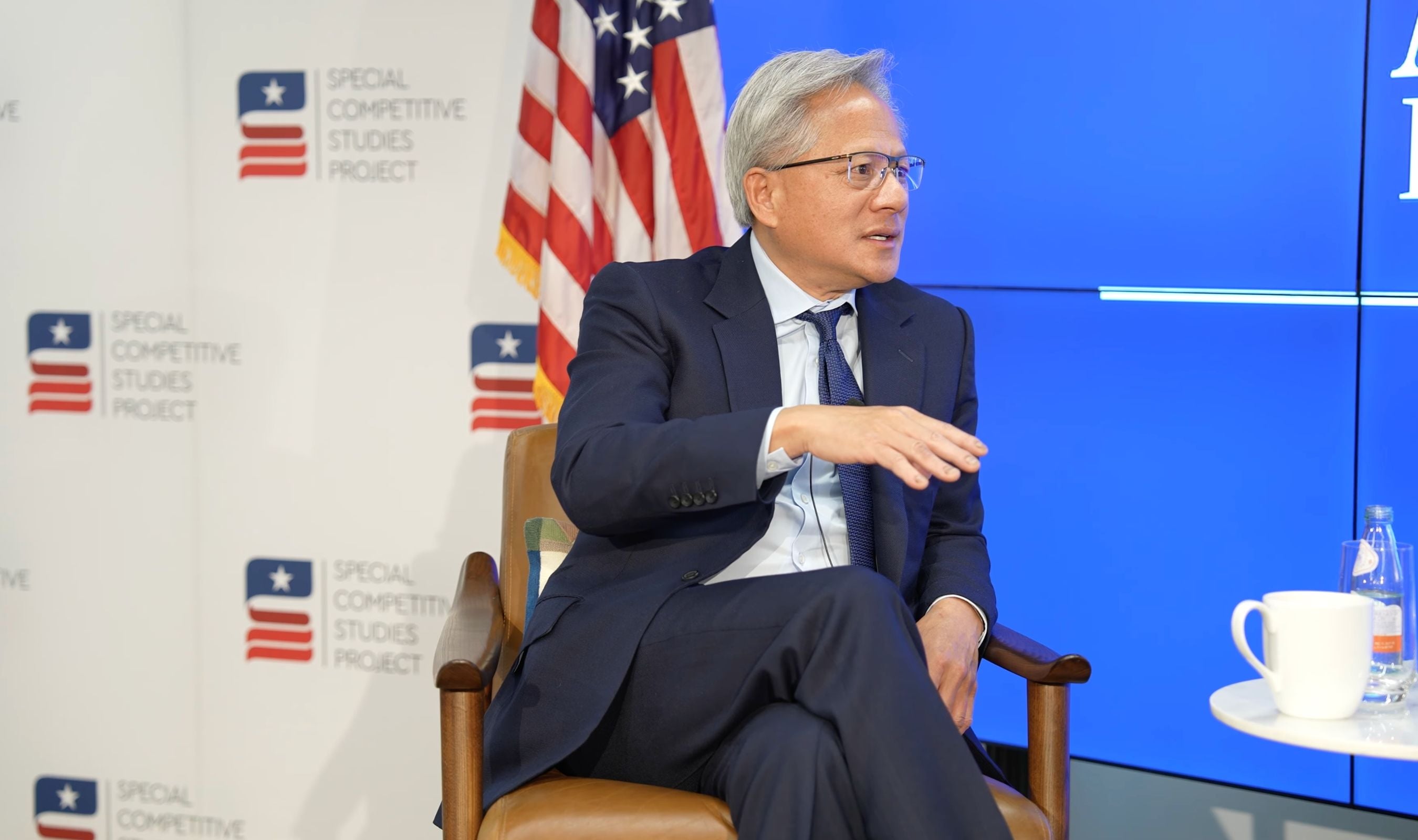
US export restrictions have wiped Nvidia out of China's AI chip market entirely, with CEO Jensen Huang telling lawmakers the policy has "already largely backfired."
Speaking on the Special Competitive Studies Project's "Memos to the President" podcast on April 30, Huang confirmed Nvidia's market share in China dropped to zero. Two years ago, the company controlled 95% of the country's AI accelerator market.
"In China. We have now dropped to zero," Huang said. "Conceding an entire market the size of China probably does not make a lot of strategic sense, so I think that has already largely backfired." The collapse happened faster than analysts predicted. Earlier this year, Bernstein estimated Nvidia's share of China's AI GPU market would fall from 66% in 2024 to roughly 8%.
Huang's admission shows the decline went beyond those projections.
Export controls that began in 2022 steadily tightened. On April 9, 2025, the US government told Nvidia it needed a license to ship even its H20 chips, which were specifically designed to comply with earlier restrictions.
Nvidia took a $4.5 billion charge in Q1 fiscal 2026 tied to H20 excess inventory and purchase obligations it could no longer fulfill. The US granted Nvidia a license to ship its H200 chip to China in February, but the company has generated no revenue from those sales and does not know if it will receive an import license from the Chinese government.
Nvidia's 10-K filing acknowledged the damage extends beyond lost China sales. "Our effective foreclosure from the China market helped our competitors build larger developer and customer ecosystems to challenge us worldwide," the company said.
Chinese rivals are filling the void. Companies including Huawei, Cambricon, Moore Threads, and MetaX are advancing both silicon and software alternatives.
Meanwhile, Nvidia's B300 servers cost roughly $1 million in China, nearly double the US price of about $550,000, after US authorities disrupted the grey market supply channel.
Huang warned against underestimating China's AI capabilities even without American chips. "They have cheaper energy.
They have incredible talent," he said. "The number of AI researchers in China is quite extraordinary; it's one of their national treasures."
Despite losing access to a massive market, Nvidia's stock trades at around $198, just 9% below its all-time high of $216.61 hit on April 27. Based on 70 analyst ratings, 91% give Nvidia a Buy rating with an average price target of $267.50. The company reports Q1 fiscal 2027 earnings on May 20, guiding for 77% revenue growth.