Microsoft emailed Windows 10 ESU subscribers this week with a headline that reads "Stay secure for another year" and zero mentions of Windows 11. For a company that has spent the past few years pushing upgrade prompts through pop-ups, full-screen notifications, and Settings badges, the omission is the story. The email, first reported by Windows Latest, confirms that consumer Extended Security Updates now run through October 12, 2027.
Existing enrollees get the extra year automatically, no action, no payment, no re-enrollment. The tone is practical rather than promotional: "We understand that moving to a new PC can take time."
There are no Copilot+ PC ads, no compatibility checker links, no "upgrade today" buttons. The Register noted the email talks about "our ongoing commitment to helping customers stay secure" without mentioning Windows 11 or Copilot at all.
Windows Report called it a "far more practical tone" that acknowledges many customers are staying on Windows 10 for now.
That's a lot of users. While Windows 11 accounts for about 70 percent of the Windows device market per Statcounter, millions remain on Windows 10, many because their hardware doesn't qualify for the upgrade.
Soaring component prices have made replacing functional PCs even less appealing. The irony? The email landed in Outlook's "Other" folder, not the Focused inbox, meaning most users will never see it.
It's the digital equivalent of a notice taped to a back door.
Windows News notes this is the first direct communication to enrolled users since Microsoft quietly updated its support pages in late June. The main Windows 10 end-of-support page now shows the October 2027 date, but some consumer ESU documentation still references the original October 2026 cutoff, an inconsistency Microsoft has yet to clean up.
The extension also gives Microsoft breathing room. Windows 11's shell was rebuilt on WebView2 and XAML, and the company has admitted File Explorer has been slower than the Windows 10 version for years.
Preloading Explorer into memory helped, but it still lags behind Windows 10 while consuming extra RAM. October 2027 buys Microsoft the runway to finish performance work that should have been done at launch.
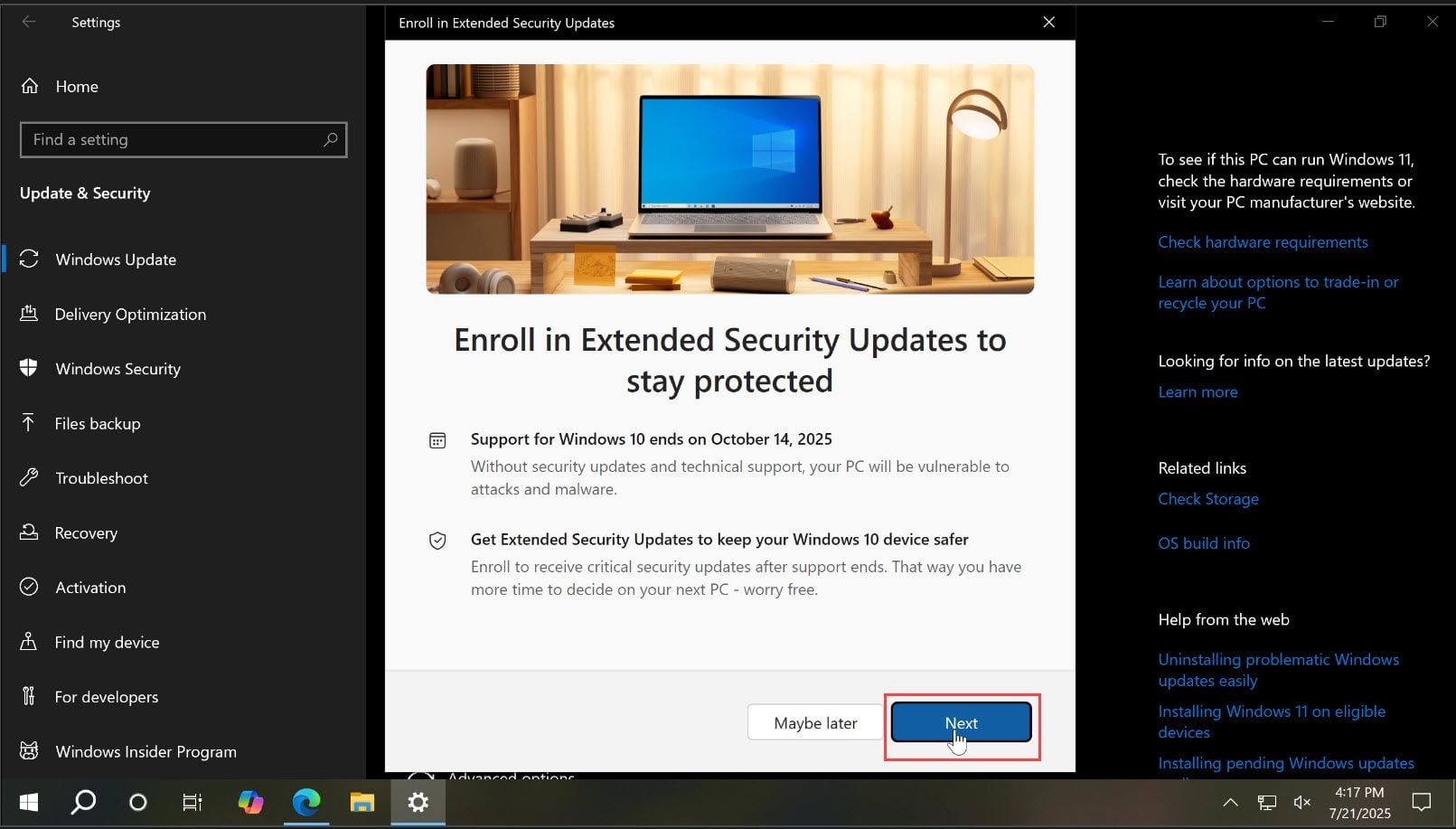
For users already enrolled, there's nothing to do. Coverage is automatic. Those who haven't enrolled can do so through Settings under Update and Security, with three options: free (Microsoft account sign-in with settings sync), 1,000 Rewards points, or a one-time $30 payment. One account covers up to 10 devices.
One catch: if a linked Microsoft account goes 60 days without activity, ESU updates pause until the user signs back in. The email may have been easy to miss in Outlook's spam-adjacent folder, but the message is clear. Microsoft isn't pushing Windows 11 right now.
It's buying time, for its users and for itself.