
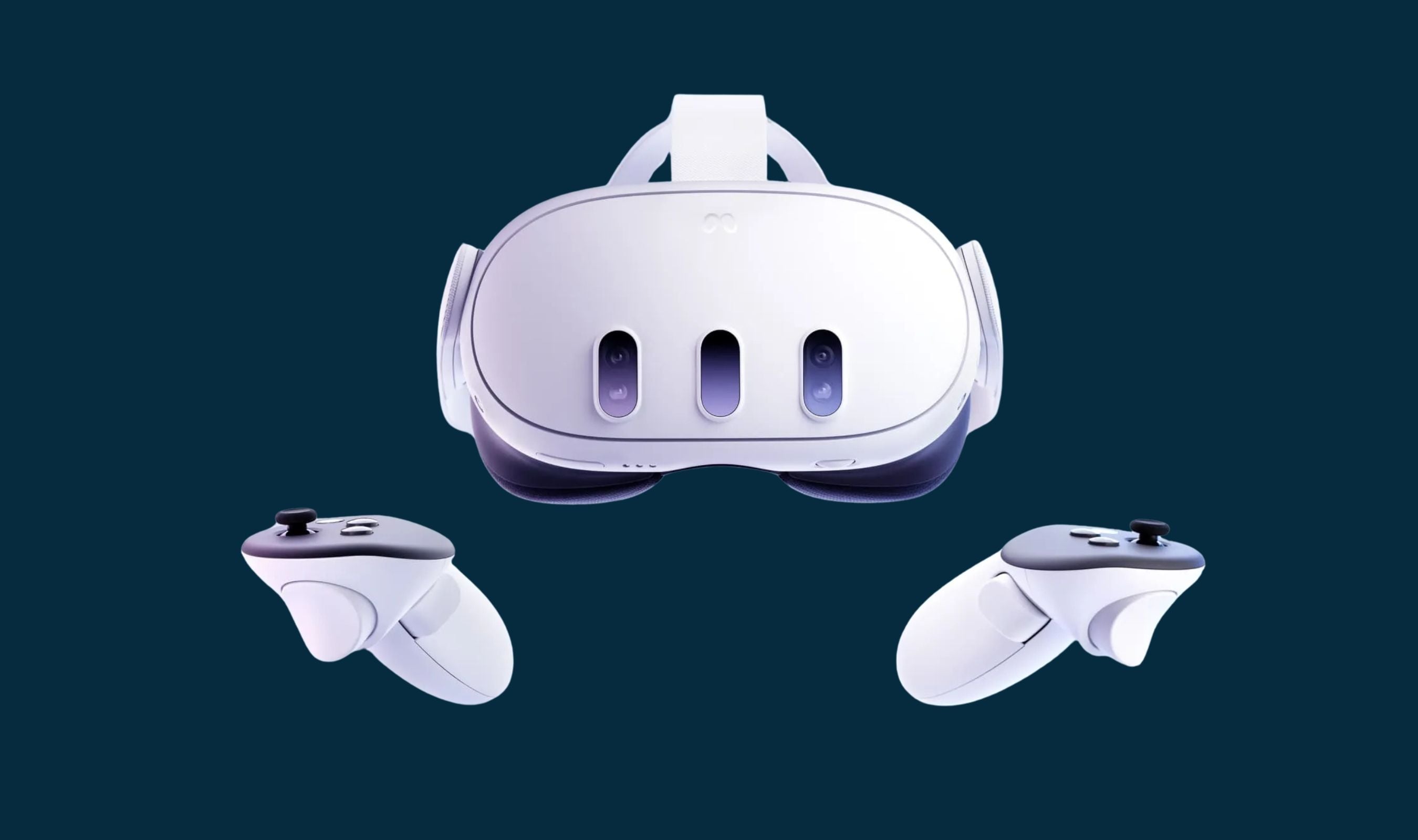
Meta's Quest 3 now transforms any flat surface into a virtual keyboard and touchpad through a new Surface Keyboard feature in Horizon OS v85. The software-driven tool detects desks or tables and overlays interactive controls, letting users type and navigate without physical hardware.
The feature is currently testing in the Public Test Channel and works exclusively on Quest 3 headsets. Meta Quest 3S and older models cannot access the functionality, suggesting it requires the newer headset's improved sensors and depth projection capabilities.
VR productivity has long struggled with typing limitations. Air typing on floating keyboards becomes tiring during extended sessions, while holding hands up for prolonged periods creates discomfort. The Surface Keyboard addresses this by returning hands to natural resting positions on actual surfaces.
A built-in touchpad may prove more valuable than the keyboard itself. Scrolling web pages, selecting text, and navigating windows with finger swipes on a desk feels more intuitive than mid-air gestures.
"Yoon Park, a designer at Meta, demonstrated smooth scrolling and Microsoft Word navigation using the touchpad in a recent video."
Meta's v85 update includes several other productivity enhancements. All Quest users gain automated malware scanning that runs after app installations, plus privacy indicators following Android 12 guidelines. Passkeys now work in the Meta Quest Browser, eliminating password memorization.
Quest 3S owners receive action button customization in v85, allowing short and long-press functions beyond the default mixed reality toggle. The browser also pins to virtual walls in Meta Quest Home for instant web access upon boot.
Accessibility improvements include voice command and head movement control for 2D windows, designed for users with limited hand mobility. Virtual hands can now hide when not in view through movement tracking settings.
Meta continues phasing out Horizon Worlds content, removing the Horizon Feed panel that featured Instagram reels and videos. The company stated the feed "has not driven strong entitlement conversion," with more users closing the window than clicking its contents.
All home screens will gradually convert to the Navigator UI, a simplified interface that launches apps with one click after headset activation. Meta has refined Navigator based on user feedback since early 2025 testing.
The Surface Keyboard represents Meta's push to position Quest 3 as a productivity device alongside gaming. Windows 11 integration already allows PC extension to virtual monitors, while Windows 365 streams cloud PCs to headsets. Combined with the new typing solution, Meta aims to create portable virtual offices requiring only flat surfaces.
Physical keyboards still offer superior tactile feedback and ergonomics for serious VR work. However, the Surface Keyboard provides a middle ground between full hardware and awkward gesture controls, potentially making extended VR sessions more practical.
Meta updates Quest system software nearly every month, with v85 expected to reach all users within weeks. Public Test Channel participants can access the features now, though testing often includes bugs and instability according to previous participants.
The timing aligns with Meta's broader hardware roadmap. Quest 4 prototypes reportedly feature micro-OLED displays from BOE and Seeya, Snapdragon XR2 Gen 3 processors, and 80-megapixel passthrough cameras. A two-tier approach includes budget Pismo Low models around $399-$499 and premium Pismo High versions with eye tracking estimated at $699-$999.
For now, Quest 3 owners gain practical productivity tools through software updates rather than hardware upgrades. The Surface Keyboard could bridge the gap between VR's gaming origins and its workplace potential, provided the implementation delivers on its promise of natural, fatigue-free interaction.
As Meta advances its VR ecosystem, competitors like Apple and Samsung are preparing their own entries into the smart glasses market, with both companies targeting 2026 launches for their AI-powered eyewear.