
Google announced a new shopping ad format for AI Mode and added Veo 3 support to its Ads Asset Studio this week. The company also launched Veo 3 support in Google Ads Asset Studio, enabling advertisers to produce studio-quality work in minutes.
The company is testing ad placements that let retailers showcase products directly within AI-generated search results.
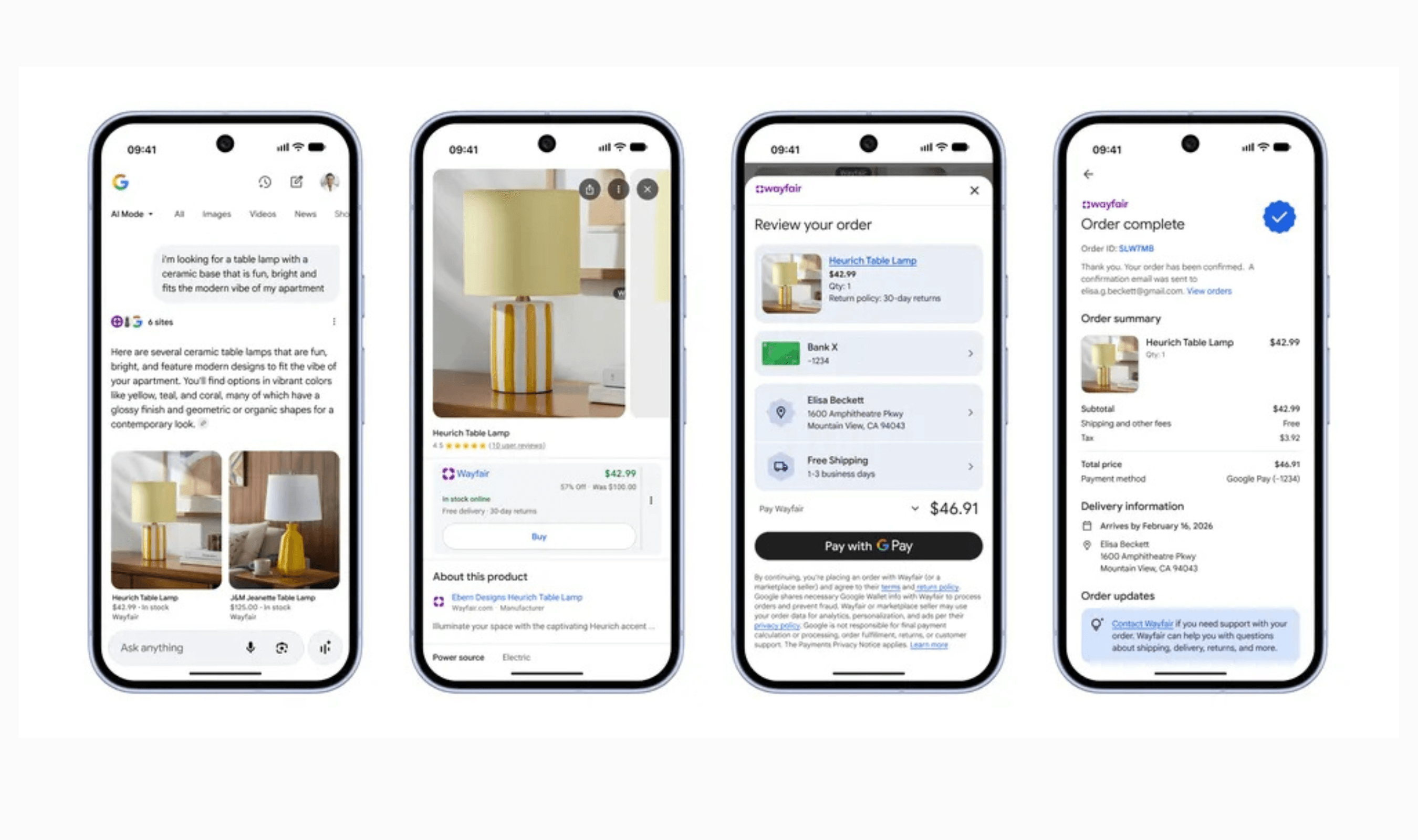
Users in the US can now purchase items from Etsy and Wayfair without leaving Google Search or the Gemini app. This functionality arrives through the Universal Commerce Protocol, a new system Google developed with enterprise partners including Shopify, Target, and Walmart.
Vidhya Srinivasan, Google's VP and GM of Ads and Commerce, outlined the company's 2026 strategy in her third annual letter.
"We aren't just bringing ads to AI experiences in Search; we are reinventing what an ad is," Srinivasan wrote.
The new shopping experience works when users ask for product recommendations. For example, searching "cozy throw blanket recommendations" triggers AI to display listings from supported retailers. Users can add items to cart and complete purchases using saved Google Pay details.
Google introduced a Direct Offers feature within AI Mode that allows brands to present tailored discounts at the point of purchase. These sponsored placements appear below organic AI-generated results and carry clear "Sponsored" labels.
UCP-powered checkout began rolling out in the US this month. The protocol standardizes how AI agents connect with retailers and process payments securely. Shopify, Target, and Walmart integrations will follow the initial Etsy and Wayfair support.
Google's advertising transformation extends beyond retail. The company is testing similar ad formats in travel categories and plans to embed sponsored content directly into AI-driven discovery across multiple sectors.
The company reported significant growth in AI-generated advertising assets. In 2025, advertisers created three times more assets using Gemini tools compared to the previous year. The fourth quarter alone saw nearly 70 million creative assets generated through AI Max and Performance Max campaigns.
Spending by Google, Amazon, Meta Platforms and Microsoft on AI infrastructure is projected to reach $650 billion in 2026. This investment fuels the shift toward agentic commerce, where AI assistants handle entire shopping journeys from discovery to checkout. This follows similar moves by other tech companies like OpenAI which recently introduced ads in ChatGPT.
Google's mobile Ads app received an update on February 6, 2026, adding campaign management features for on-the-go advertisers. The company also updated its Personalized Advertising policy in January 2026 for improved organization and clarity.
The advertising overhaul comes as search behavior evolves beyond traditional keywords. Users increasingly ask full questions, upload photos, and engage in conversational queries with AI tools. Google's response transforms search from a browsing tool into an interactive shopping assistant, similar to Alibaba's AI shopping chatbot that recently faced overwhelming demand.
YouTube creators will play expanded commercial roles in Google's 2026 strategy. The company plans to use AI to match advertisers with creator communities most likely to convert, turning organic influence into measurable business outcomes.
Privacy and security remain central to Google's AI commerce approach. As agents begin acting on behalf of consumers, the company emphasized rigorous data protection standards will govern all commercial interactions.
Google confirmed the UCP rollout in a February 11 blog post. The feature currently operates only in the US with products from Etsy and Wayfair, though broader availability and additional retailer integrations are planned.