
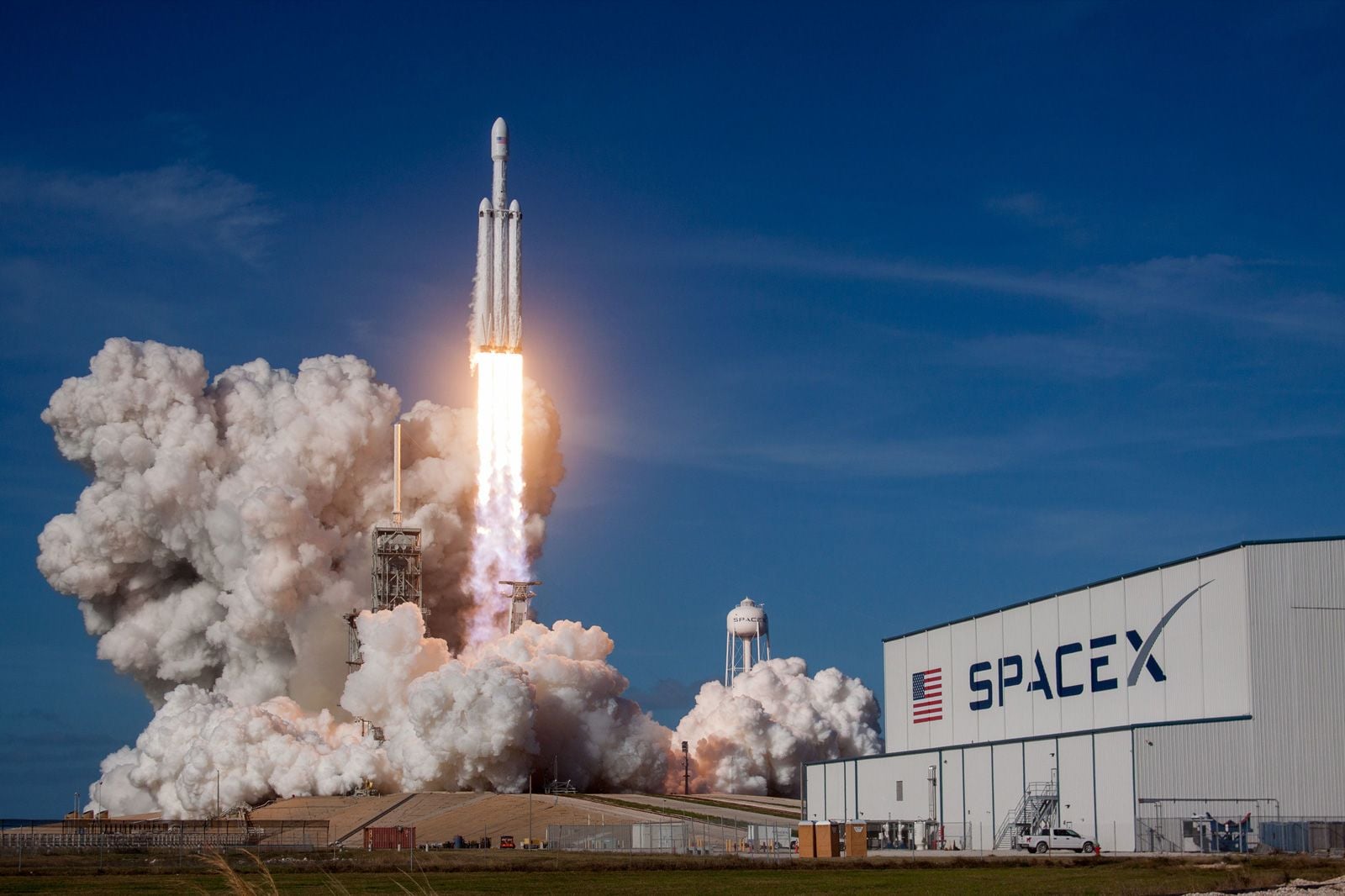
SpaceX targets a mid-to-late 2026 public offering that could become one of the largest IPOs in history, with Elon Musk reportedly confirming the timeline as "accurate" according to multiple sources. The company aims for a valuation between $1 trillion and $1.5 trillion, which would surpass Saudi Aramco's 2019 offering that raised up to $29.4 billion.
The aerospace firm recently completed a secondary share sale that valued SpaceX at approximately $800 billion, with shares trading around $420 each. This private market activity has shifted investor perception from speculation to expectation, treating SpaceX as a public giant that simply hasn't rung the opening bell yet.
SpaceX plans to raise over $30 billion in fresh capital through the offering, according to reports from Bloomberg and The New York Times. Chief Financial Officer Bret Johnsen wrote to employees that the company and investors intend to buy $2.56 billion of shares from stockholders at $421 per share, nearly double the previous internal share price.
Wells Fargo analysts predict the SpaceX debut will propel the communications sector rather than technology stocks, citing the company's satellite networks revolutionizing global connectivity. Mark Smith, senior vice president at Wells Fargo Advisors, told CNBC that SpaceX's satellites will fundamentally change how investors view communication services over the next decade.
The company's revenue projections show SpaceX generating $22-$24 billion in 2026, primarily driven by Starlink's rapid global expansion across consumer, enterprise, and government markets. SpaceX launched more than 3,200 satellites in 2025, according to reports, maintaining dominance in the low-Earth orbit market where SpaceX completed 971 launches in the final quarter.
Major investors have already positioned themselves for the public offering. Ron Baron disclosed that SpaceX represents roughly 25% of his personal portfolio, while Cathie Wood's ARK Venture Fund holds SpaceX as its largest single position. Both investors built these stakes based on operating metrics rather than IPO speculation.
SpaceX intends to use IPO proceeds to fund orbital data center initiatives, positioning the company at the intersection of space, energy, and artificial intelligence. The company plans to develop space-based infrastructure powered by solar energy to support high-intensity AI workloads, including potential demand from Musk's xAI venture.
Technological progress in the Starship program remains central to SpaceX's valuation thesis, with continued milestones justifying the trillion-dollar price tag. The 404-foot rocket, capable of carrying 150 metric tons fully reusable, underpins the company's long-term launch economics and deep-space ambitions including Mars missions planned for 2026.
The prospect of a SpaceX IPO has already impacted the aerospace sector, with publicly traded peers Rocket Lab and EchoStar seeing share gains between 4% and 12% following recent reports. Analysts describe the potential listing as "seismic," arguing it could reframe capital markets by placing the space economy at the center of global finance.
China's rocket startup LandSpace has emerged as a competitive threat, conducting its first reusable rocket test last month while preparing for its own public offering. Beijing is reportedly making it easier for domestic aerospace companies to pursue IPOs, creating a parallel space race in public markets.
SpaceX's IPO timing coincides with challenges in other parts of Musk's business empire. Tesla reported weaker-than-expected fourth quarter deliveries in late 2025, losing its position as the world's top EV seller to BYD. While Musk's $1 trillion Tesla compensation package received shareholder approval, investors increasingly view SpaceX as the primary driver of future upside.
If SpaceX reaches public markets near current valuation expectations, the debut would not only set IPO records but signal that space infrastructure has moved from speculative frontier to mainstream investment. The offering would redefine how investors value frontier technologies and establish orbital infrastructure as the next defining sector in global capital markets.