
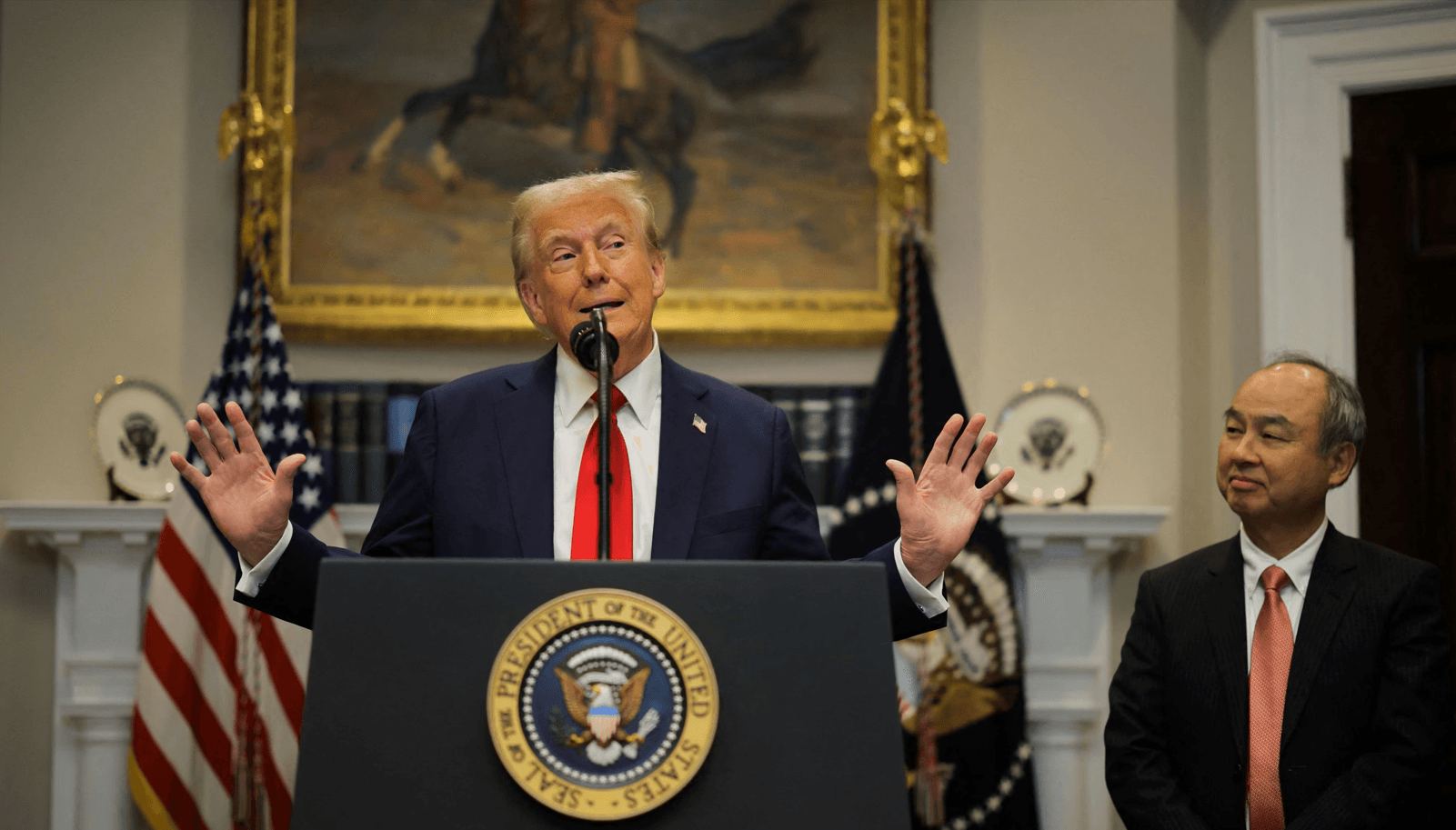
SoftBank Group races to deliver $22.5 billion to OpenAI by year-end, selling assets and tapping Arm-backed loans to meet its funding commitment. The Japanese conglomerate faces a December deadline for the remaining payment from its $30 billion investment agreement signed in April.
Masayoshi Son has already sold SoftBank's entire $5.8 billion stake in Nvidia and reduced its T-Mobile US holding by $4.8 billion. The CEO has slowed other Vision Fund dealmaking to a crawl, requiring his personal approval for any investment above $50 million, according to sources familiar with the matter.
The funding push comes as OpenAI completed its transition to a for-profit corporation in October, triggering the remaining payment. SoftBank originally invested at a $300 billion valuation, but OpenAI now reportedly discusses new funding that could triple its valuation to nearly $900 billion.
SoftBank plans multiple cash-raising moves simultaneously. Its payments app operator PayPay, originally scheduled for a December IPO, now targets a first-quarter 2026 listing that could raise over $20 billion. The delay followed a 43-day U.S. government shutdown that ended in November.
The company also considers selling part of its Didi Global stake as the Chinese ride-hailing firm prepares a Hong Kong listing. Didi was forced to delist from U.S. markets in 2021 following regulatory pressure.
Margin loans secured against SoftBank's Arm Holdings ownership provide another funding source. The company recently expanded its margin loan capacity by $6.5 billion, bringing total undrawn capacity to $11.5 billion. Arm's stock has tripled since its IPO, increasing available collateral.
SoftBank reported 4.2 trillion yen ($27.16 billion) in parent-level cash as of September 30. It retains about 4% of T-Mobile US, valued at roughly $11 billion, according to LSEG data.
OpenAI needs the capital for its ambitious compute expansion plans. CEO Sam Altman told employees the company entered a "code red" phase to improve ChatGPT amid intensifying competition from Google's Gemini. In October, Altman outlined goals to build 30 gigawatts of computing capacity for $1.4 trillion.
Both companies invest in Stargate, a $500 billion initiative to build AI data centers for training and inference. The project supports U.S. government ambitions to maintain AI leadership over China.
The funding scramble highlights financial strain across the AI sector as tech giants commit unprecedented sums to infrastructure. Meta Platforms and others pour billions into chips, power systems, and cooling infrastructure, often partnering to spread risk.
SoftBank continues backing select AI startups including Sierra and Skild AI despite redirecting most capital toward OpenAI. The company's April agreement promised up to $30 billion total, with $10 billion delivered immediately and the remainder contingent on OpenAI's for-profit transition.
Industry analysts watch whether massive AI infrastructure investments will generate sufficient returns. The spending wave has raised concerns about a potential bubble if revenues fail to match escalating costs.