
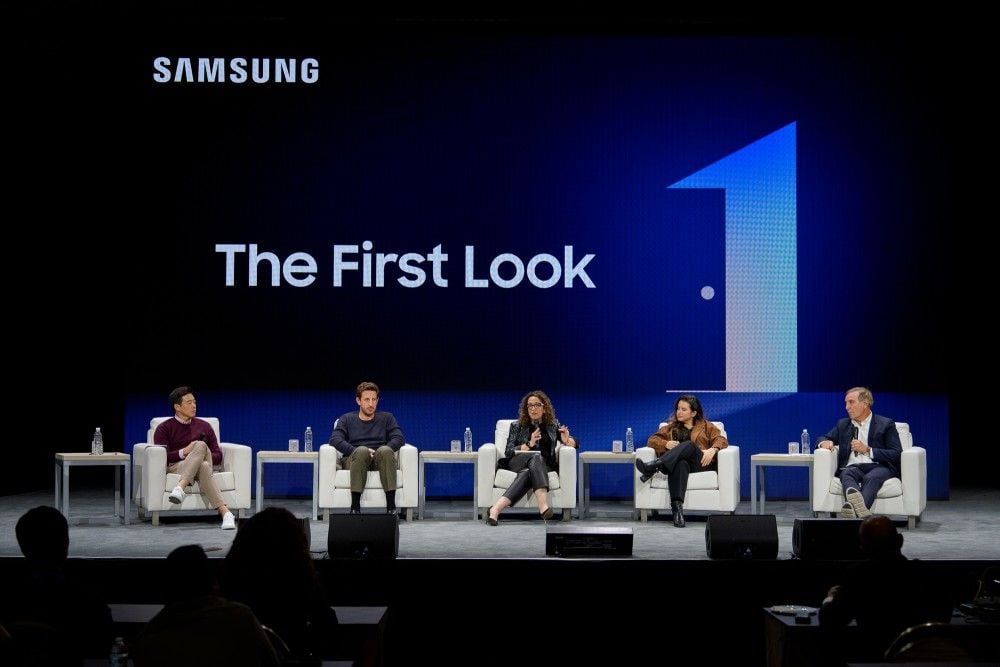
Samsung convened industry leaders at CES 2026 for dual panels addressing AI's future in connected homes and trust frameworks. The company hosted "When Everything Clicks: How Open Ecosystems Deliver Impactful AI" and "In Tech We Trust? Rethinking Security & Privacy in the AI Age" at The Wynn in Las Vegas on January 5, 2026.
More than 500 million users already participate in Samsung's SmartThings ecosystem, providing the company with over a decade of connected living data. This foundation supports AI experiences that coordinate across appliances and services, according to Samsung executives.
"Home is the most personal place in our lives, so home AI must earn trust quietly, respectfully, and with value users can feel," said Yoonho Choi, President of the Home Connectivity Alliance and Head of Strategic Alliances at Samsung Electronics. "That requires interoperability across brands so the home works as one system instead of disconnected features."
Panelists emphasized that trust must be earned through consistent, understandable behavior rather than promises. Samsung highlighted its Knox security platform, which protects billions of devices from the chipset up, and Knox Matrix, a cross-device security framework enabling products to authenticate and protect one another.
"Trust in AI starts with security that's proven, not promised," said Shin Baik, AI Platform Center Group Head at Samsung Electronics. "For more than a decade, Samsung Knox has provided a deeply embedded security platform designed to protect sensitive data at every layer."
The open ecosystems panel focused on cross-industry partnerships transforming connected homes into intelligent environments. Samsung showcased its collaboration with Hartford Steam Boiler as a first-of-its-kind example of how smart home data can deliver meaningful outcomes when used responsibly.
"We've created a bridge to the insurance industry that takes simple datapoints and turns them into tangible savings for consumers," said Jed Usich, Senior Vice President of Strategic Growth Solutions at HSB.
Experts argued that the next era of home intelligence must be built on open collaboration rather than closed ecosystems. As homes increasingly rely on devices from multiple brands, openness enables AI systems to work together in ways that create real-world impact.
"When it comes to AI, users are looking for transparency and control," said Allie K. Miller, CEO of Open Machine. "They want to understand whether an AI model is running locally or in the cloud, to know their data is secure and to clearly see what is powered by AI and what is not."
Samsung's approach includes on-device AI that keeps personal data local whenever possible, with cloud-based intelligence used selectively when greater speed or scale is required. This gives users flexibility without compromising privacy, according to company representatives.
The company pointed to partnerships with Google and Microsoft as ways to strengthen shared security research and ecosystem-wide protection. Panelists agreed that technologies earning long-term trust will prioritize security, transparency and meaningful user choice from the start.
Michael Wolf, founder of The Spoon, noted that broadly connected kitchens represent significant potential benefits. "There's no area that will bring more benefit than a broadly connected kitchen that allows users to understand what's in their refrigerator while connecting to water and heating networks," he said.
Panelists concluded that the future of home AI depends on interoperability, responsible data use and collaboration across industries. They emphasized that intelligent homes must deliver real value without compromising trust as AI becomes more ambient and system-wide.
Samsung's dual CES 2026 panels reflect the company's focus on building open ecosystems that make connected living simpler, safer and more meaningful. The discussions highlighted how trust, security and privacy will shape AI adoption as the technology becomes increasingly integrated into daily life.