
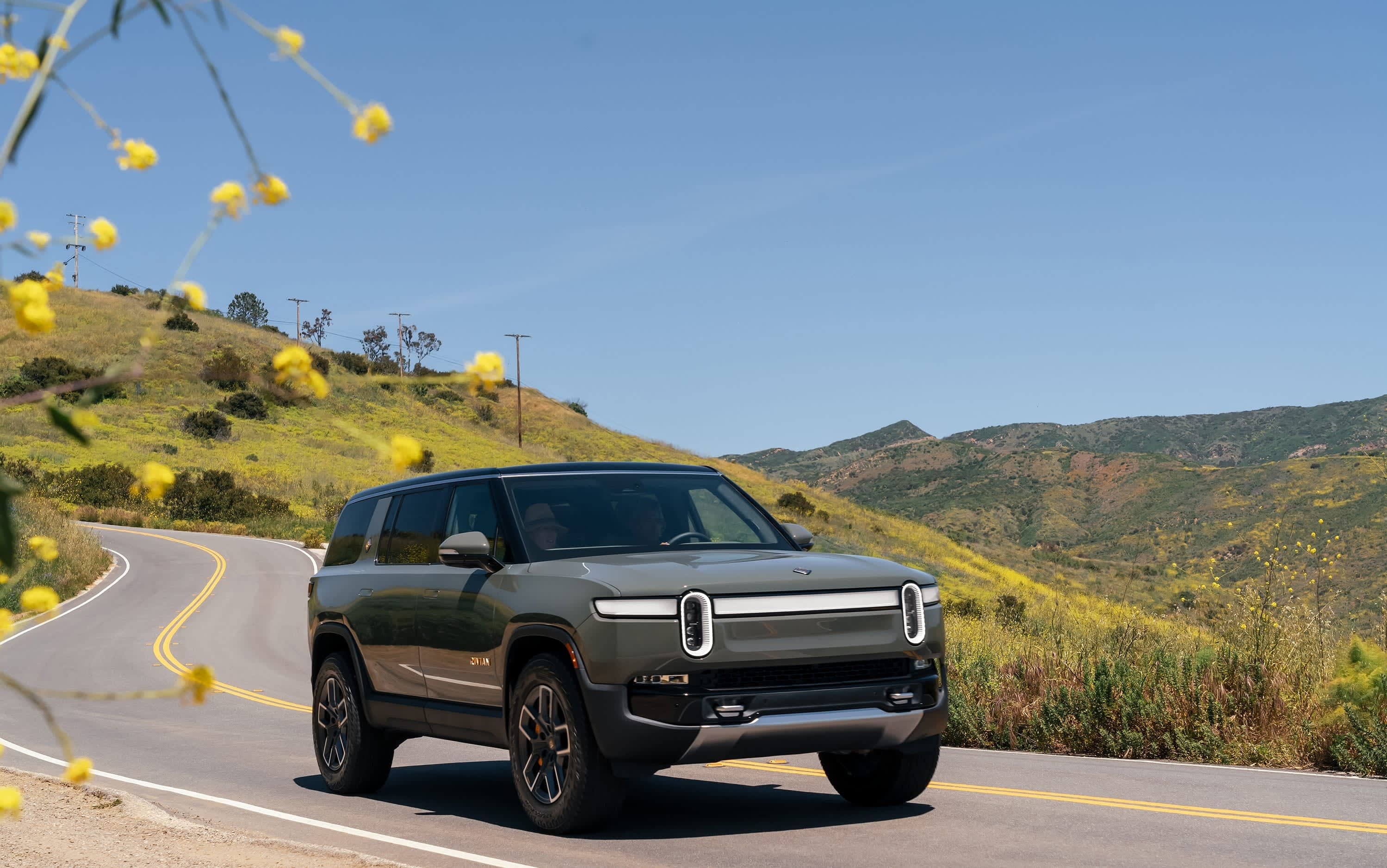
Rivian Automotive unveiled its first in-house AI chip at an Autonomy & AI Day event in December 2025, marking a strategic shift away from Nvidia hardware. The electric vehicle maker will equip upcoming R2 SUVs with its Rivian Autonomy Processor 1 (RAP1) chips and new LiDAR sensors starting in 2027.
Two RAP1 chips will power Rivian's next-generation Autonomy Compute Module 3, processing 5 billion pixels per second with four times the performance of current Nvidia-powered systems. Taiwan Semiconductor Manufacturing Company will manufacture the custom silicon, which CEO RJ Scaringe said reduces costs by "hundreds of dollars per vehicle" while improving performance.
The company's R2 SUV enters production in the first half of 2026, though initial vehicles won't include the new chip or LiDAR. From 2027, Rivian will gradually introduce software enabling point-to-point hands-free driving, initially limited to highways before expanding to other roads.
Rivian's autonomy roadmap centers on its Large Driving Model, an AI system trained similarly to large language models but focused on driving scenarios. The company will launch its Autonomy+ software platform in early 2026 for existing R1 owners, priced at $2,500 upfront or $49.99 monthly.
The platform expands hands-free driving coverage to 3.5 million miles of US and Canadian roads, up from roughly 135,000 miles currently. An updated point-to-point version arriving in 2027 will enable navigation, turns, and lane changes while still requiring driver supervision.
LiDAR integration represents a departure from Tesla's camera-only approach. Rivian will mount the sensors behind windshields to avoid exterior protrusions, with Scaringe noting LiDAR now represents "a very small percentage of the vehicle's bill of materials."
The autonomy technology remains separate from Rivian's joint venture with Volkswagen Group, which covers only zonal control and infotainment systems. Scaringe told Newsweek the self-driving platforms "are not part of the joint venture," though they could become part of a separate deal.
Rivian's stock dropped 10% immediately after the December 11 announcement before recovering partially. The company continues to burn cash, with its stock down more than 80% from post-IPO highs despite Volkswagen's investment of up to $5.8 billion in their software partnership.
The automaker's ultimate goal involves Level 4 autonomy where vehicles operate without anyone in the driver's seat. Scaringe envisions Rivians that "can drop you at the airport, pick your kids up from school, or go get things from the store for you" while also driving themselves for service appointments or to EV charging stations.
Rivian joins Tesla as one of few automakers developing custom AI silicon, bucking the industry trend of relying on specialists like Nvidia, Mobileye, or Qualcomm. Most manufacturers avoid custom chip development due to the expense and technical challenges involved.
The company's Illinois plant expects to produce fewer than 50,000 vehicles this year, a fraction of its total capacity. Rivian has repeatedly cut jobs while continuing to hire software talent from Tesla, Apple, and Silicon Valley firms to support its autonomy ambitions.