
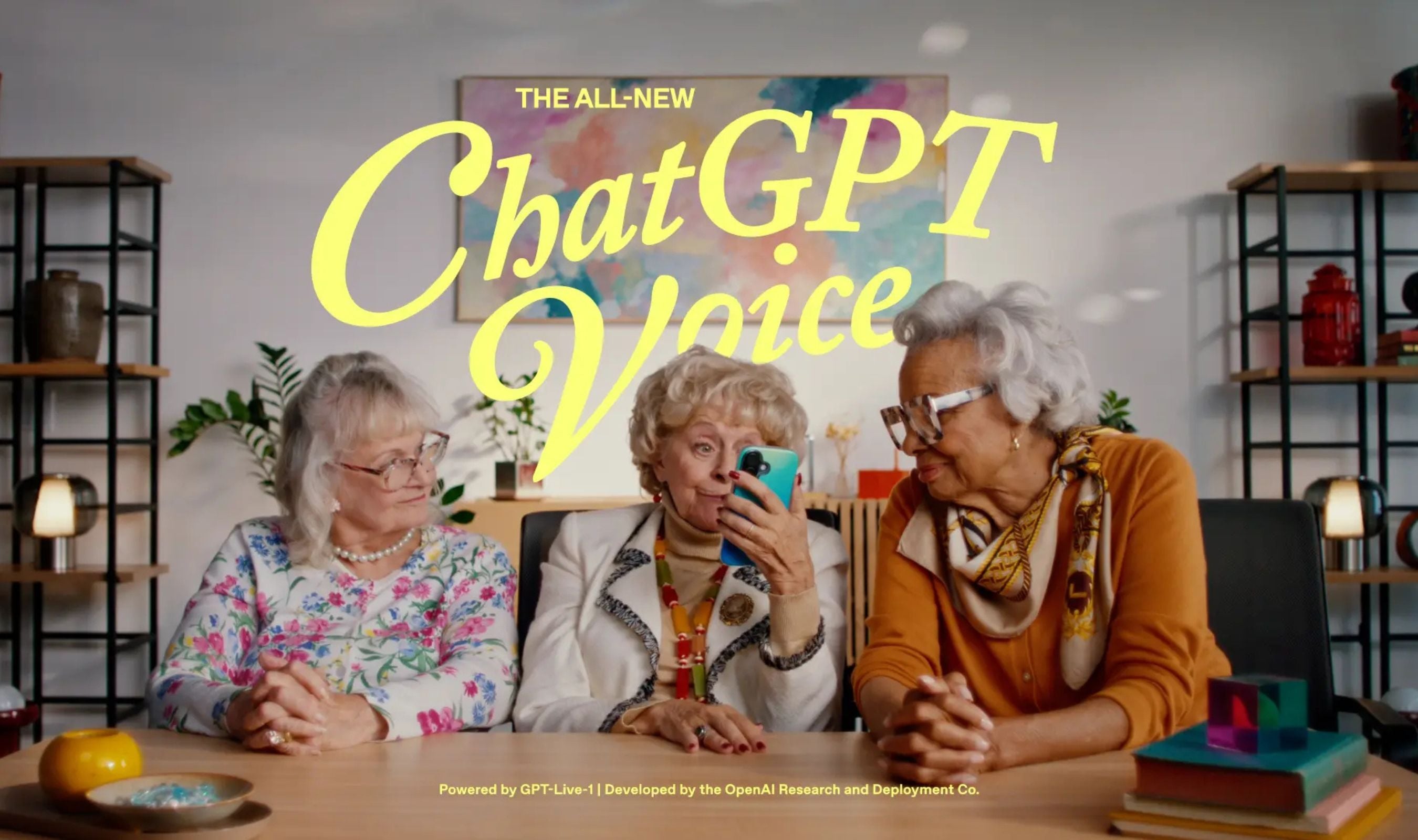
ChatGPT can now listen and speak at the same time. OpenAI rolled out GPT-Live, a new voice model built on full-duplex architecture, to all users starting today across iOS, Android, and the web.
The upgrade eliminates one of the most persistent complaints about ChatGPT's voice mode: the awkward pauses and interruptions when users stopped to think. GPT-Live processes bidirectional audio simultaneously, meaning it can hear users while it's still talking and adjust its response in real time.
"We're launching GPT-Live, a new generation of voice models that make talking with AI feel much more like having a real conversation," OpenAI said during the livestream. "GPT-Live is built on a full-duplex architecture, meaning it can listen and speak at the same time."
OpenAI debuted two tiers of the model. GPT-Live-1-mini serves as the default voice mode for free users, while paid customers across all tiers get access to GPT-Live-1.
Both versions began rolling out globally July 8, with full availability expected over the next few days. The new architecture includes conversational cues that mimic human interaction. During chats, GPT-Live can respond with "mhmm" or "yeah," engage in rapid back-and-forth, or stay quiet when the user needs a moment.
Users can also adjust the intelligence level of the voice experience. For complex queries, GPT-Live delegates harder questions to GPT-5.5 behind the scenes, signaling the handoff with phrases like "let me just check that for you" to maintain natural conversation flow. The same mechanism handles web lookups, keeping response times short without breaking the conversational rhythm.
GPT-Live also introduces simultaneous translation for the first time in ChatGPT. Users can ask for real-time translation of spoken content, with support for major languages.
OpenAI said it optimized the model for the most popular languages in ChatGPT, though it acknowledged that some languages may have a non-native accent or gaps in fluency and said it is actively working on improvements.
Presenters during the livestream included Kundan Kumar, Yuchen Zhang, Ehsan Asdar, and Rithesh Kumar.
Two features are missing at launch. GPT-Live does not support voice with video or screen sharing, which still requires the legacy ChatGPT Voice mode.
OpenAI said those features remain in development.
Developers interested in integrating GPT-Live through OpenAI's API can join a waitlist. The rollout coincides with the scheduled release of GPT-5.6 tomorrow, marking a busy week for the company's product lineup.