
An operating system where AI agents replace apps entirely, built on Android rather than Windows. That is Project Solara, Microsoft's chip-to-cloud platform unveiled at Build 2026, designed for purpose-built hardware that is neither a phone, PC, nor tablet. The platform runs on Microsoft's Device Ecosystem Platform (MDEP), an enterprise Android build from the Android Open Source Project. It ships with Intune device management, Entra ID authentication, Hello for Business biometrics, and a hardware mic mute button.
There is no app store, no browser-first experience, no traditional desktop.
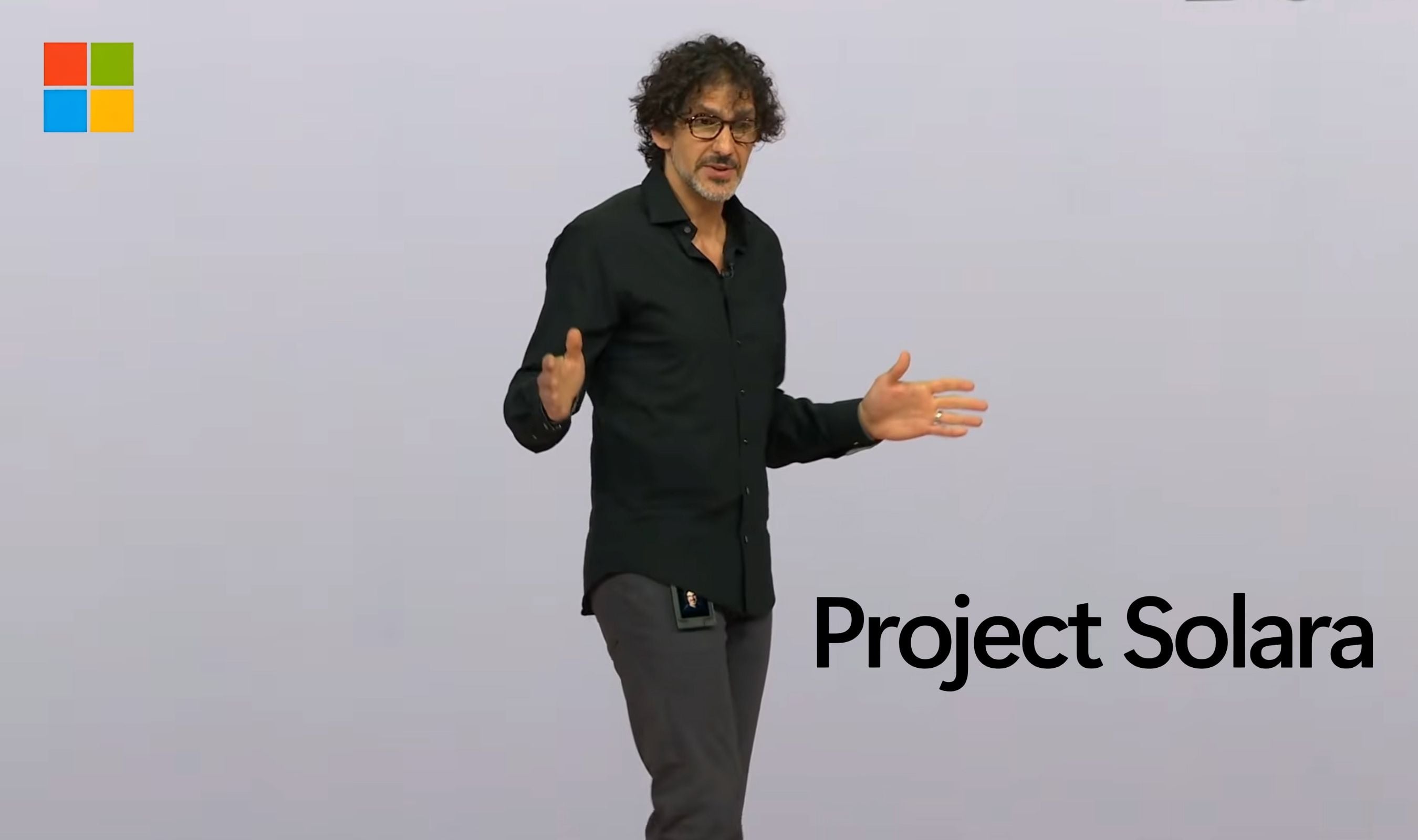
"Rather than requiring developers to build separate experiences for each form factor, the agent adapts its presentation to the device," Microsoft's Steven Bathiche, Corporate Vice President and Technical Fellow at the Applied Sciences Group, said. The goal, he added, is to "bring intelligence closer to where work happens rather than limiting it to traditional PCs, browsers, or smartphones."
Microsoft showed two reference devices. The first is a wearable employee badge with a touchscreen, camera, fingerprint sensor, far-field microphone array, speaker, and 5G connectivity powered by Qualcomm wearable silicon. A single button activates an AI agent. The company demonstrated instant transcription of a recorded conversation with one press, with the camera letting the agent see what the user sees. The second device is a desk companion with a touchscreen, dual microphones, UWB presence sensor, and MediaTek IoT silicon. It authenticates via facial recognition and provides ambient agent access while the user works.
Plugged into an external display via USB-C, it becomes a Windows 365 cloud PC client.
Microsoft does not plan to sell either device. They are reference designs for hardware partners to adapt.
Qualcomm and MediaTek are the first silicon providers. The company has started internal testing with hundreds of employees and announced a private pilot program with AccuWeather, Best Buy, CVS Health, Levi's, and Target. GitHub Copilot and Dragon Copilot (Microsoft's healthcare AI) are both exploring agent-first experiences on the platform.
Google, Salesforce, and OpenAI are building agent platforms. Microsoft is the first to extend the concept to dedicated hardware.
Whether enterprises adopt a new device category with all the procurement and management that entails is the open question the pilot partners will answer.