
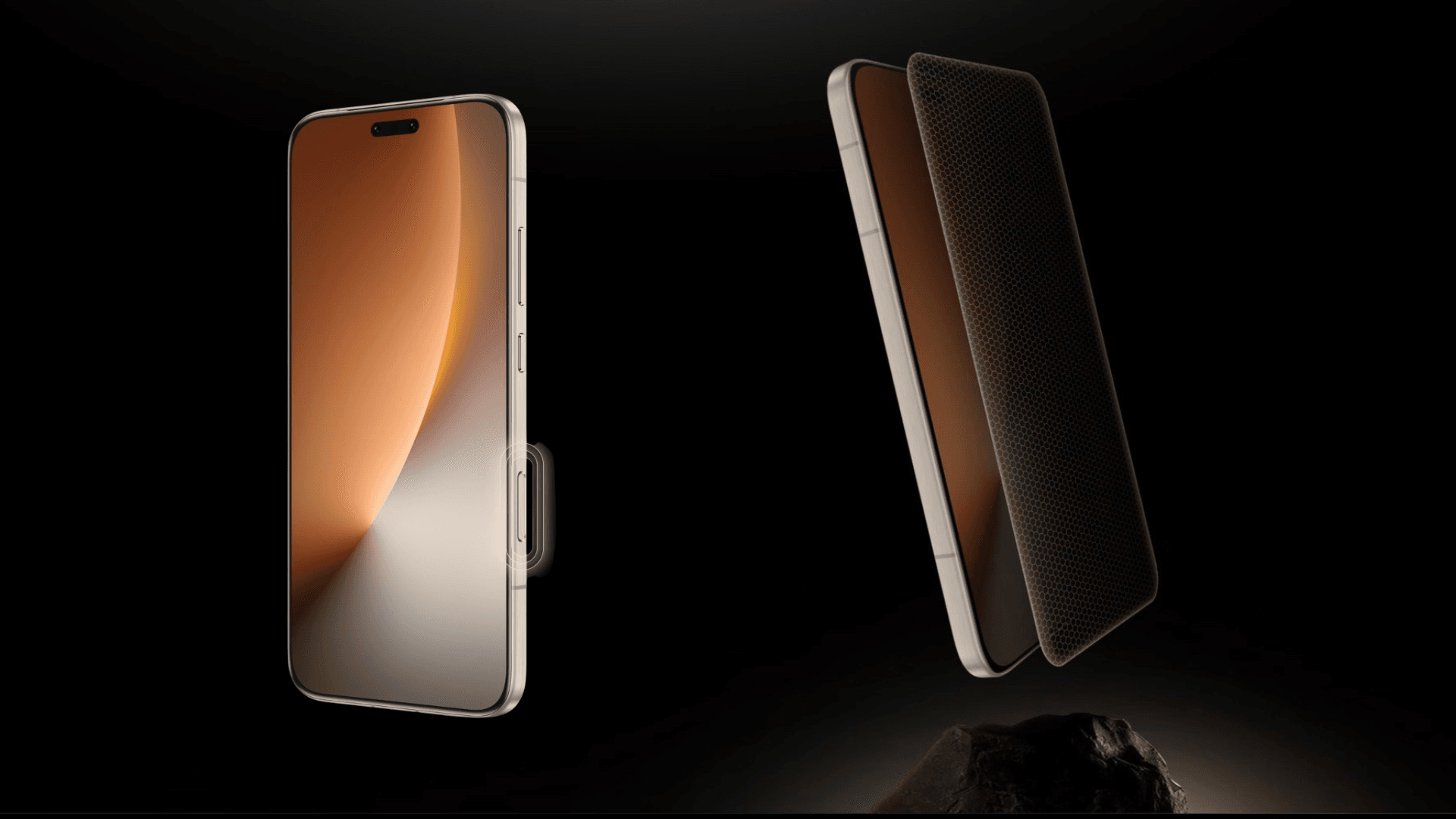
Honor unveiled the Magic 8 Pro Air in China today, a 6.1mm-thin flagship that directly targets Apple's iPhone Air while packing superior specifications. The device measures half a millimeter thicker than Apple's 5.6mm iPhone Air but includes a 5,500mAh silicon-carbon battery that dwarfs the iPhone's 3,124mAh capacity.
The Magic 8 Pro Air launches with MediaTek's Dimensity 9500 chipset paired with up to 16GB RAM and 1TB storage. Its 6.31-inch QHD+ AMOLED display reaches 6,000 nits peak brightness, featuring ultra-narrow 1.08mm bezels and 4320Hz PWM dimming for eye comfort. Honor has been pushing display technology boundaries with its recent flagship releases.
Honor's camera system combines a 50MP main sensor with 1/1.3-inch size and f/1.6 aperture, a 64MP periscope telephoto with 3.2x optical zoom, and a 50MP ultrawide lens. The front houses a 50MP selfie camera, creating a triple-camera array that visually resembles Apple's pill-shaped module but adds two additional sensors.
Design elements borrow heavily from multiple iPhone generations. The orange colorway copies the iPhone 17 Pro's marquee hue, while flat matte sides mimic the iPhone 17 series. From the front, the device resembles Samsung's Galaxy S25 Edge more than previous Honor releases.
The Magic 8 Pro Air includes IP68 and IP69 dust and water resistance, 120Hz refresh rate, 80W wired charging, and 50W wireless charging. Honor claims the silicon-carbon battery technology enables this combination of thinness and capacity.
Pricing starts at approximately $645-$717 (CNY 4,499-4,999) in China, with availability beginning January 23rd. The company has not confirmed global release plans, continuing Honor's pattern of limited regional availability despite offering seven years of Android OS and security updates.
Honor's close relationship with Google provides MagicOS 10 users with Gemini AI integration, Circle to Search functionality, and cloud-powered features. The company positions its devices as Android alternatives to Apple's ecosystem, offering secure 3D face unlock similar to Face ID.
Industry analysts note Honor's persistent design mimicry while acknowledging technical improvements. The Magic 8 Pro Air represents the company's attempt to compete on specifications where Apple prioritizes thinness, though at the cost of original design identity.