Portable power stations give you quiet, reliable electricity when you need it most, whether that's during a blackout or at a remote campsite. The Bluetti Elite 200 V2 stands out as the best overall choice with its excellent balance of capacity, power output, and portability. This list helps you find the right station for your needs, from weekend camping trips to whole-home backup systems.
Technobezz is supported by its audience. We may get a commission from retail offers.
8 Best Portable Power Stations in 2026
Bluetti Elite 200 V2 leads our picks for the best portable power stations of 2026. Compare top models for camping, home backup, and value.
T
Technobezz
Senior Editor
Updated September 5, 2026Sep 5, 2026
•7 min read

Get Deals Like These in Your Inbox
The best prices, reviewed weekly.
At a Glance
| Category | Product | Why We Picked It |
|---|---|---|
| Best overall | Bluetti Elite 200 V2 | Excellent balance of power and portability |
| Best value | Jackery Explorer 300 | 292Wh LiFePO4 battery and six outputs for small devices |
| Best for home backup | Anker Solix F3800 Plus | Massive capacity for extended outages |
| Best for camping | EcoFlow River 3 | Compact and fast-charging for weekend trips |
| Best for cold weather | Bluetti Pioneer Na | Sodium-ion battery works in freezing temperatures |
| Also recommended | Goal Zero Yeti 700 | Reliable and efficient, with weather resistance |
| Also recommended | DJI Power 2000 | Top pick for drone pilots, fast charging |
| Also recommended | EcoFlow Delta Pro 3 | Powerful home backup, capacity you can expand |
How we chose and tested
We evaluated portable power stations based on extensive research and analysis of multiple testing methodologies. Our assessment considers battery capacity, power output, charging speed, portability, and real-world performance. We prioritize products that deliver reliable power across different scenarios, from emergency home backup to outdoor adventures. The evaluation includes analysis of battery chemistry, port selection, and durability to ensure recommendations meet practical needs.
The best portable power stations right now
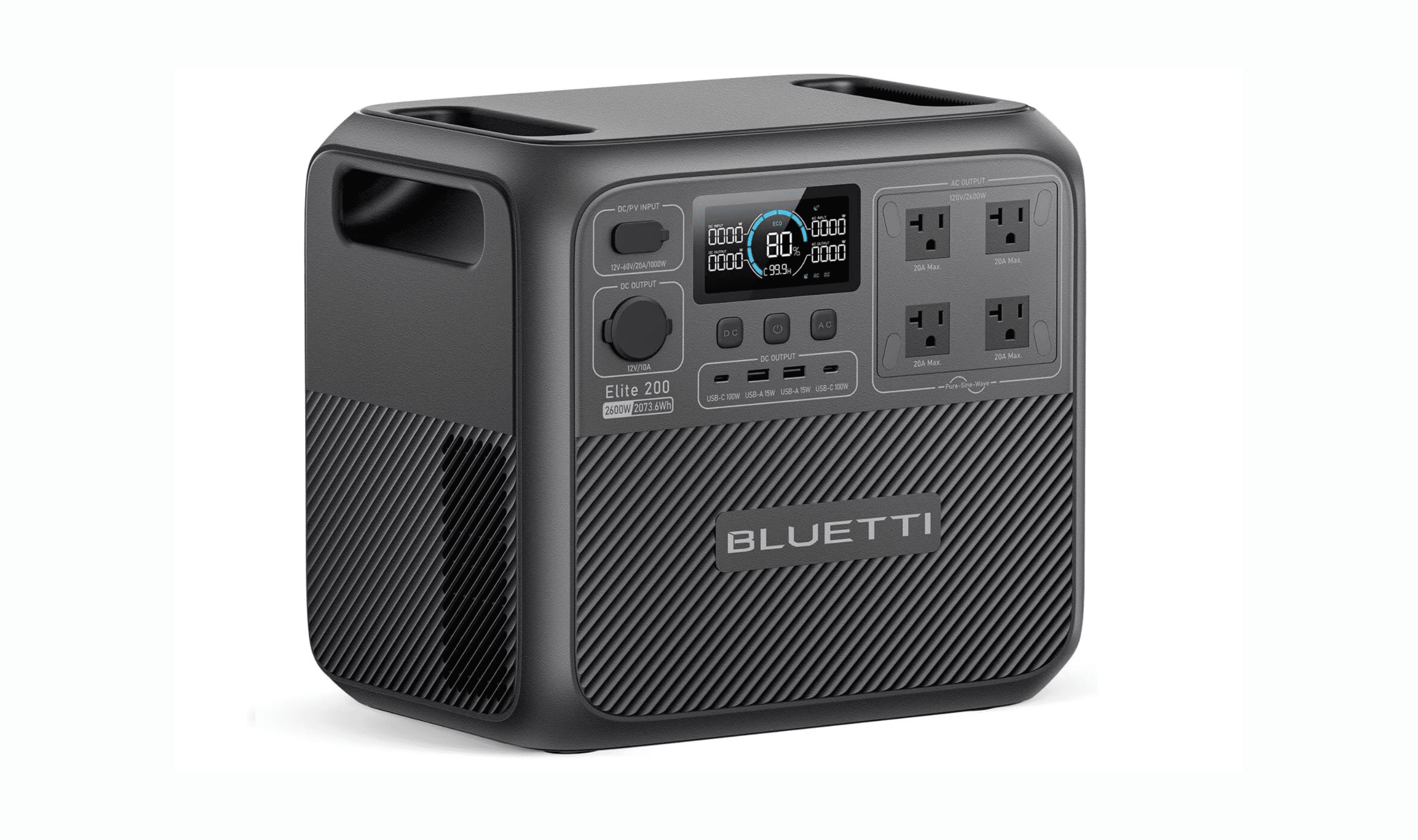
Bluetti Elite 200 V2 - Best overall
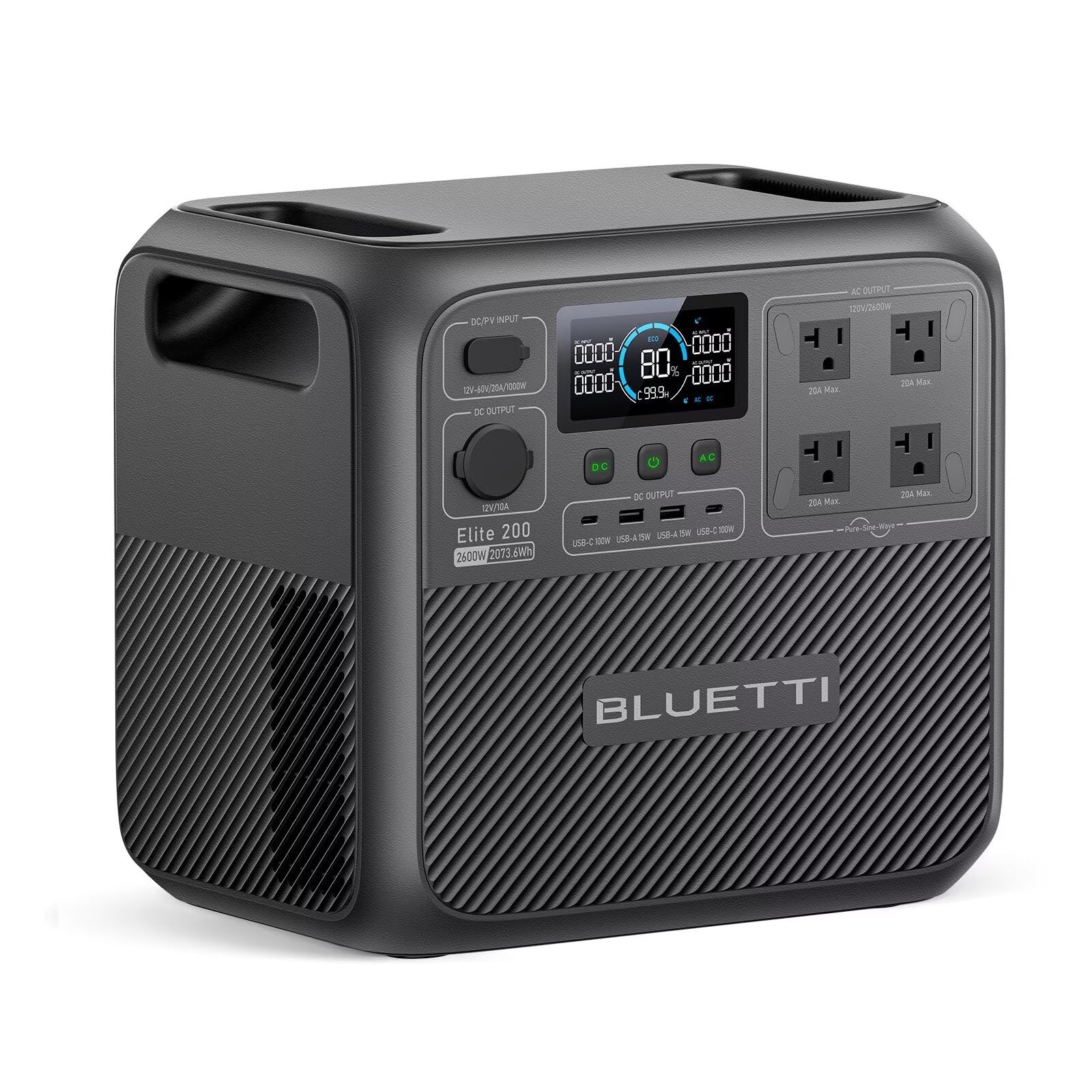
The Bluetti Elite 200 V2 delivers exceptional performance in a relatively portable package, making it suitable for most users who need reliable power for camping, RV trips, or home backup. It combines substantial capacity with enough output to run essential appliances.
Key highlights
- 2,073 watt-hour capacity provides extended runtime
- 2,600 watt continuous output handles most appliances
- Fast charging reaches full capacity in about 90 minutes
- Multiple port options including AC, USB-C, and car outlets
- LiFePO4 battery chemistry ensures long lifespan
Pros
- Excellent power-to-weight ratio for its capacity
- Fast charging via wall outlet or solar panels
- Durable construction with comfortable handles
- App integration for remote monitoring and control
Cons
- At 53 pounds, it's heavy for extended carrying
- Premium price compared to smaller options
- Limited expansion options compared to some competitors
Who it is for: Campers, RV owners, and homeowners who need reliable backup power without the bulk of whole-home systems.
Skip if
You only need power for small devices or want something ultra-portable for backpacking.
Jackery Explorer 300 - Best value
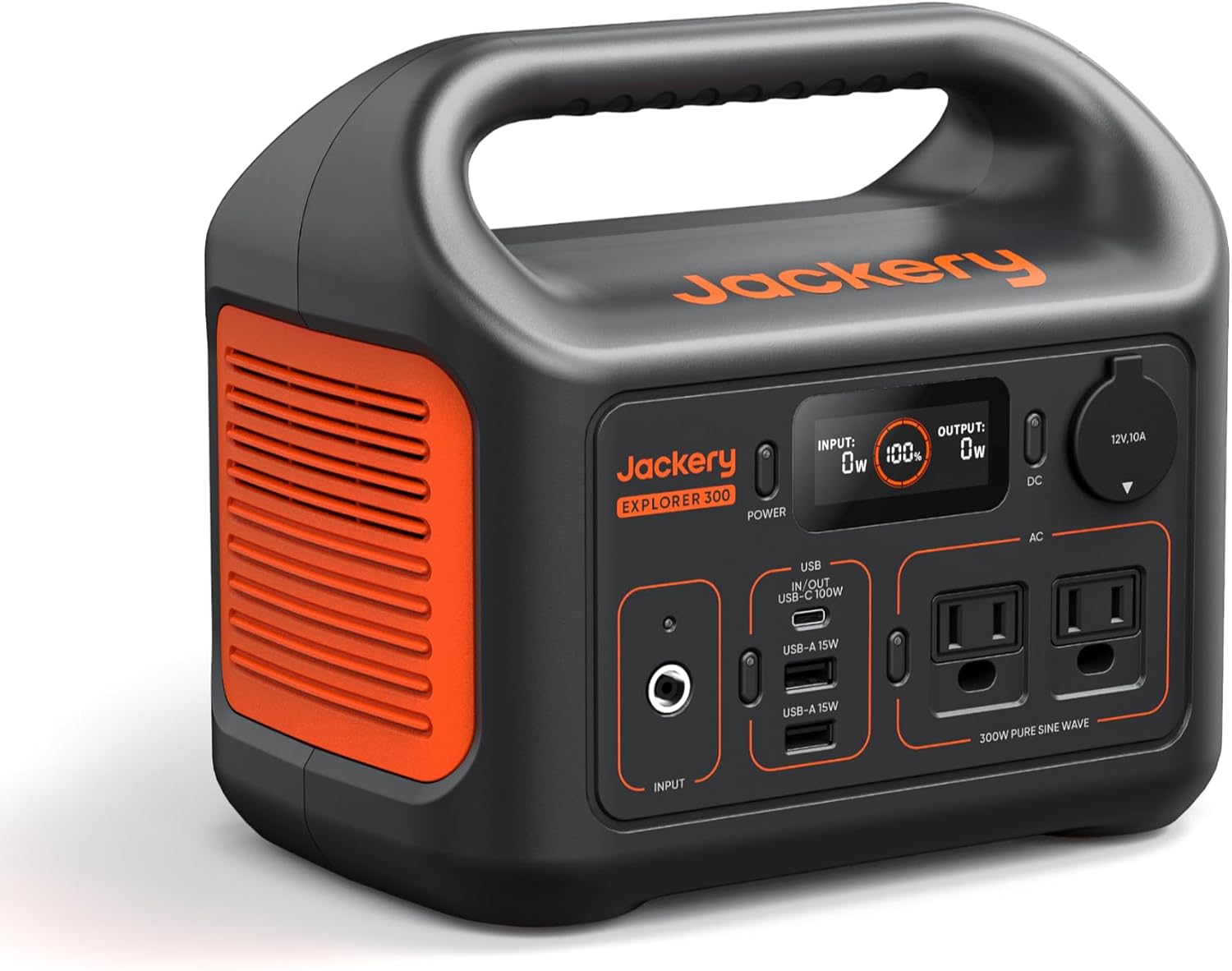
The Jackery Explorer 300 suits modest power needs with a 7.5-pound body, a LiFePO4 battery, and AC and USB outputs for phones, laptops, and cameras.
Key highlights
- 292 watt-hour battery capacity
- 300 watt rated output with 600 watt peak surge
- LiFePO4 battery rated for over 4,000 cycles to 70% capacity
- Weighs 7.5 pounds
- Two AC outlets, one 100W USB-C port, two USB-A ports, and a car outlet
Pros
- Lightweight body with an integrated handle
- Long-lasting LiFePO4 battery
- 100W USB-C charging for compatible devices
- Supports solar charging
Cons
- 300W output limits appliance choices
- 292Wh capacity limits runtime
- Solar panel sold separately
Who it is for: Weekend campers, digital nomads, and those needing backup power for small devices.
Skip if
You need to run refrigerators, power tools, or other high-wattage appliances.
Anker Solix F3800 Plus - Best for home backup
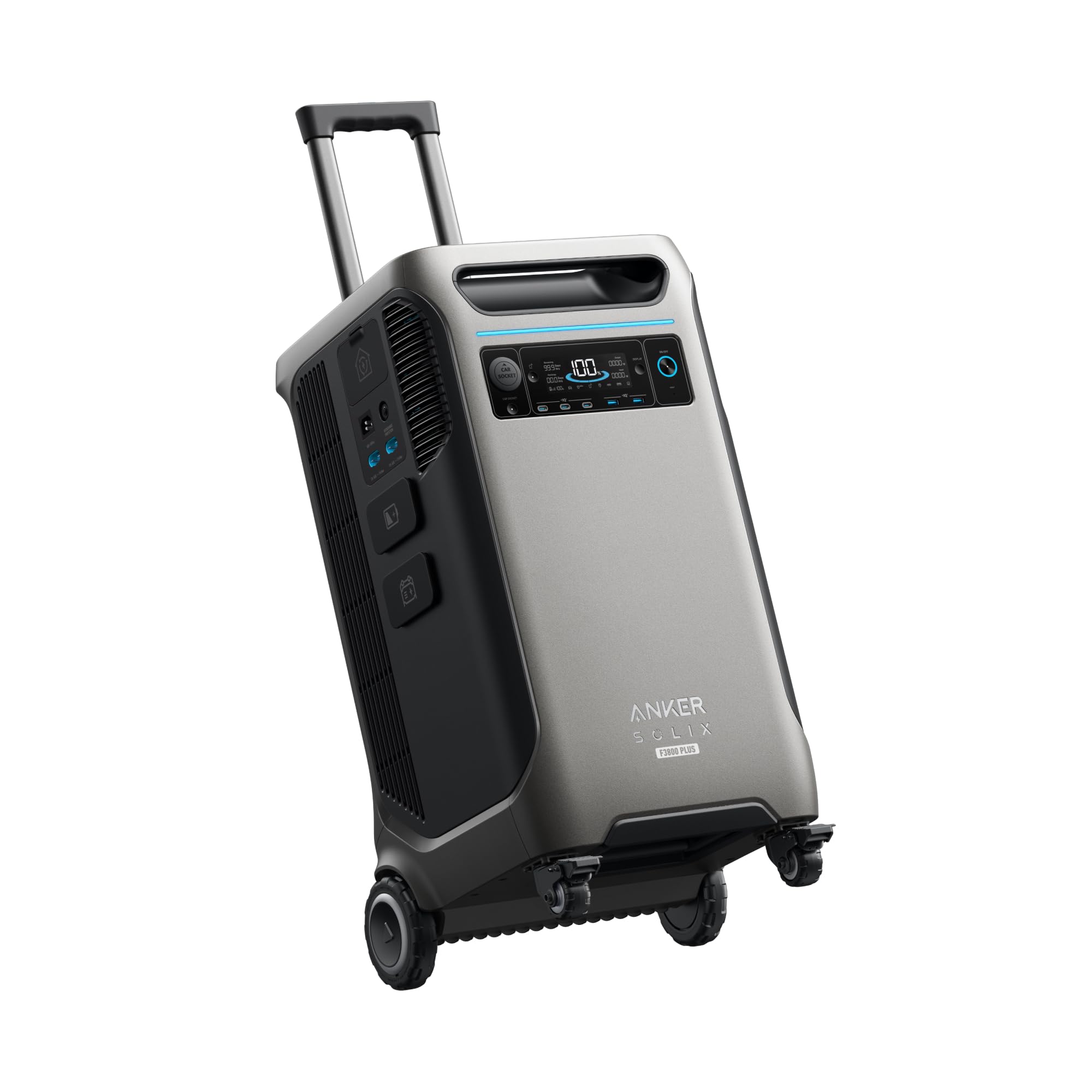
The Anker Solix F3800 Plus represents the high end of portable power, with enough capacity and output to serve as a serious home backup solution. Its expandable design and massive power capabilities make it suitable for extended outages.
Key highlights
- 3,840 watt-hour base capacity; 53,760 watt-hours requires two stations and twelve expansion batteries
- 6,000 watt continuous output handles major appliances
- Up to 3,200W solar input enables a full recharge in about 1.5 hours under ideal conditions
- Includes 240-volt outlet for larger appliances
- Wheels and telescoping handle for mobility
Pros
- Massive capacity for extended power outages
- High output runs air conditioners and major appliances
- Expandable system grows with your needs
- Professional-grade construction and features
Cons
- Very heavy at 136.7 pounds
- Premium pricing makes it a significant investment
- Overkill for casual or occasional use
Who it is for: Homeowners in areas with frequent outages, off-grid enthusiasts, and those needing whole-home backup capability.
Skip if
You have modest power needs or want something truly portable.
EcoFlow River 3 - Best for camping
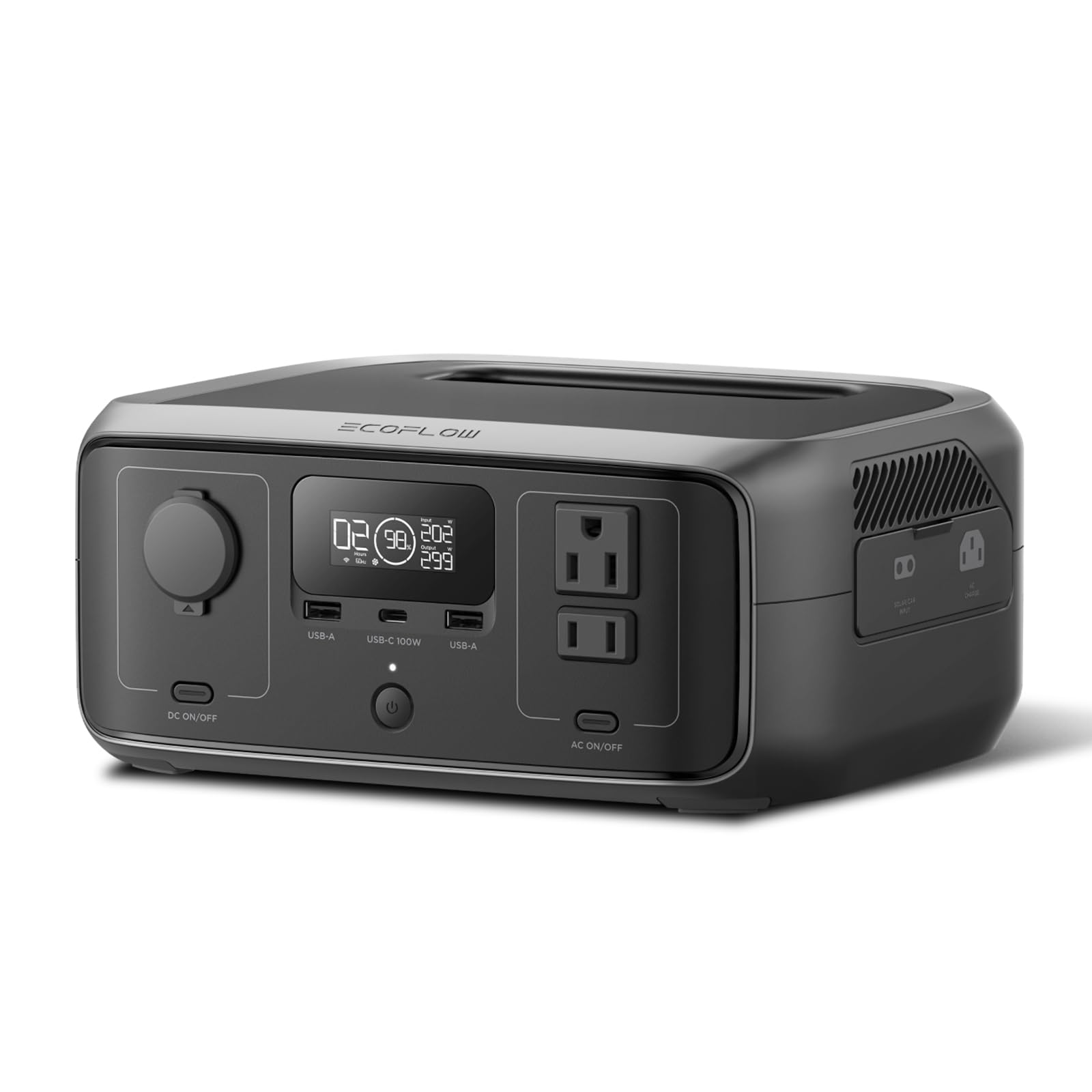
The EcoFlow River 3 combines compact size with useful features for outdoor adventures, making it an excellent choice for weekend camping trips or remote work locations. Its fast charging and lightweight design prioritize portability.
Key highlights
- 245 watt-hour capacity handles phones, laptops, and lights
- 300 watt continuous output with 600 watt surge
- Charges from 0 to 100% in about 1 hour
- Weighs just 7.8 pounds for easy transport
- Multiple port options in a compact design
Pros
- Extremely fast charging capability
- Lightweight and easy to pack
- Good port selection for its size
- Affordable for weekend adventures
Cons
- Limited capacity for extended use
- Lower output restricts appliance options
- Not suitable for high-power devices
Who it is for: Weekend campers, road trippers, and remote workers who need portable power for small devices.
Skip if
You need to power refrigerators, power tools, or other high-wattage equipment.
Bluetti Pioneer Na - Best for cold weather
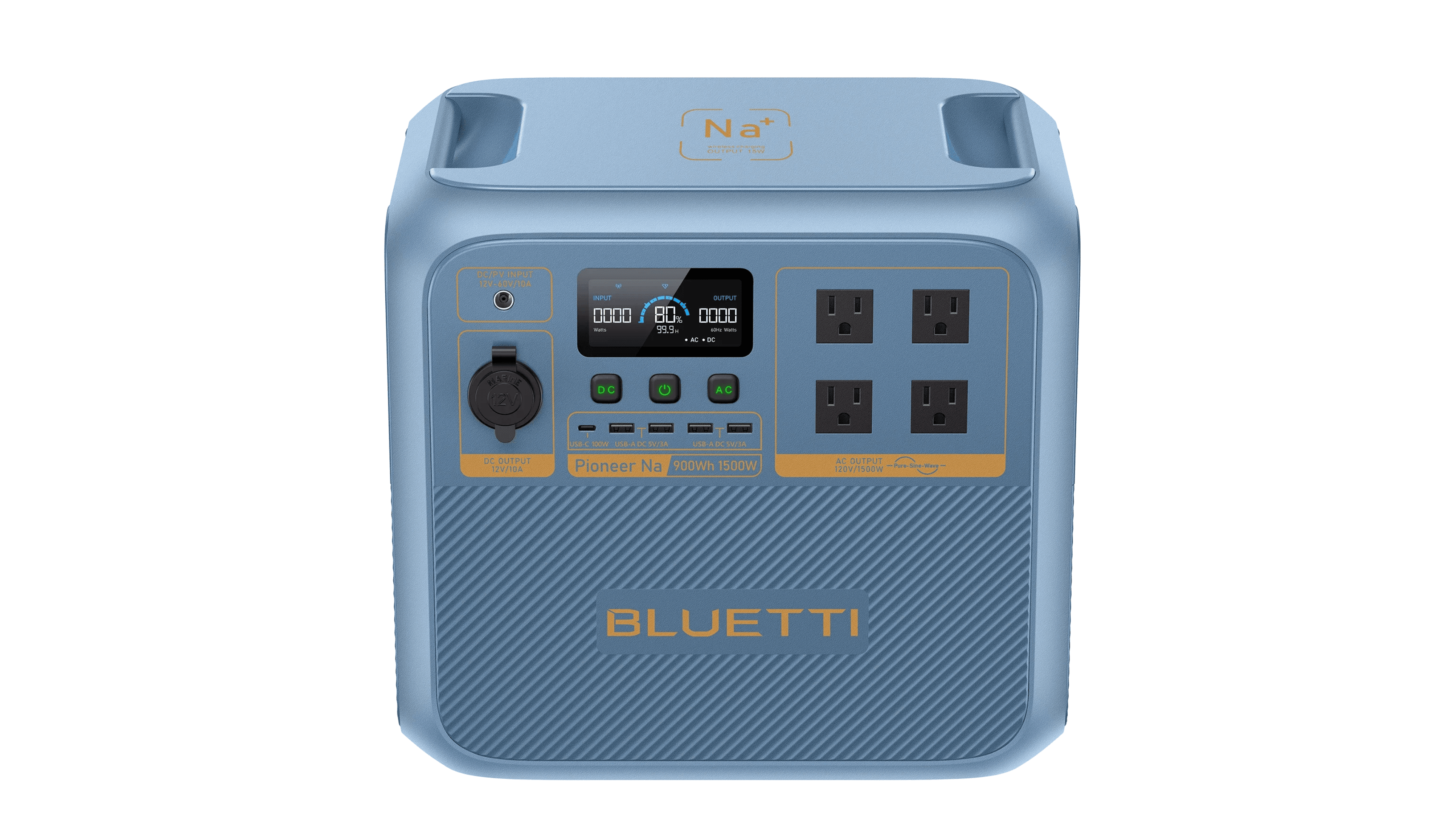
The Bluetti Pioneer Na uses Sodium-ion battery technology. This makes it ideal for winter camping or locations with freezing conditions.
Key highlights
- 900 watt-hour capacity provides solid runtime
- 1,500 watt continuous output handles essential devices
- Sodium-ion battery
- Charges down to 5°F (-15°C); below 14°F (-10°C), charging is limited to 60% capacity
- Compact design for its capabilities
Pros
- Excellent cold weather performance
- Fast charging capability
- Good power output for its size
- Innovative battery technology
Cons
- Higher cost than comparable lithium models
- Lower energy density than lithium batteries
- Limited availability compared to mainstream options
Who it is for: Winter campers, cold climate homeowners, and outdoor enthusiasts in freezing conditions.
Skip if
You live in warm climates or don't need cold weather performance.
Also Good
- Goal Zero Yeti 700 - reliable and efficient, with weather resistance.
- DJI Power 2000 - top pick for drone pilots, fast charging.
- EcoFlow Delta Pro 3 - powerful home backup, capacity you can expand.
How to Choose
Consider these factors when selecting a portable power station:
Battery capacity determines how long your devices will run. Calculate your daily watt-hour needs by adding up device consumption, then add 25% for efficiency losses. For weekend camping with phones and lights, 300-500 watt-hours usually suffices. For home backup with a refrigerator, aim for at least 1,000 watt-hours.
Power output dictates what you can run. Check both continuous watts (sustained power) and surge watts (brief startup power). Most household appliances list their wattage requirements. Space heaters need 1,500 watts, while laptops use 60-100 watts.
Battery chemistry affects lifespan and safety. LiFePO4 batteries last 3,000+ cycles and are safer than older NMC batteries that last about 500 cycles. The extra cost for LiFePO4 pays off in long-term reliability.
Portability matters based on your use case. For car camping, 30-60 pounds is manageable. For home backup, wheels and handles help with heavier units. Backpacking requires under 10 pounds.
Charging options provide flexibility. Solar input extends off-grid capability, while fast AC charging prepares you quickly for outages. Multiple input methods ensure you can recharge in various situations.
FAQ
How long do portable power stations last?
Most modern stations with LiFePO4 batteries last 3,000+ charge cycles, which translates to about 10 years with regular use. The battery gradually loses capacity over time, typically retaining 80% of original capacity after the rated cycle count.
Can I run a refrigerator on a portable power station?
Yes, but you need sufficient capacity and output. A typical refrigerator uses 100-200 watts when running, with startup surges up to 800 watts. A 1,000 watt-hour station can run a refrigerator for 8-12 hours, depending on efficiency and how often the compressor cycles.
How long does it take to recharge with solar panels?
Recharge time depends on panel wattage, sunlight conditions, and station capacity. A 200-watt panel in good sun produces about 800-1,000 watt-hours per day. A 1,000 watt-hour station typically takes 5-8 hours of good sunlight to fully recharge.
Are portable power stations safe to use indoors?
Yes, unlike gas generators, portable power stations produce no emissions and can be used safely indoors. They operate quietly without carbon monoxide risk. Always follow manufacturer guidelines for ventilation and temperature ranges.
What's the difference between a power bank and a power station?
Power banks are small (under 100 watt-hours) for charging phones and tablets. Power stations are larger (300+ watt-hours) with AC outlets for running appliances. Power stations also typically have higher outputs and more charging options.
Published March 11, 2026 Last updated September 5, 2026
Share this article
More in News
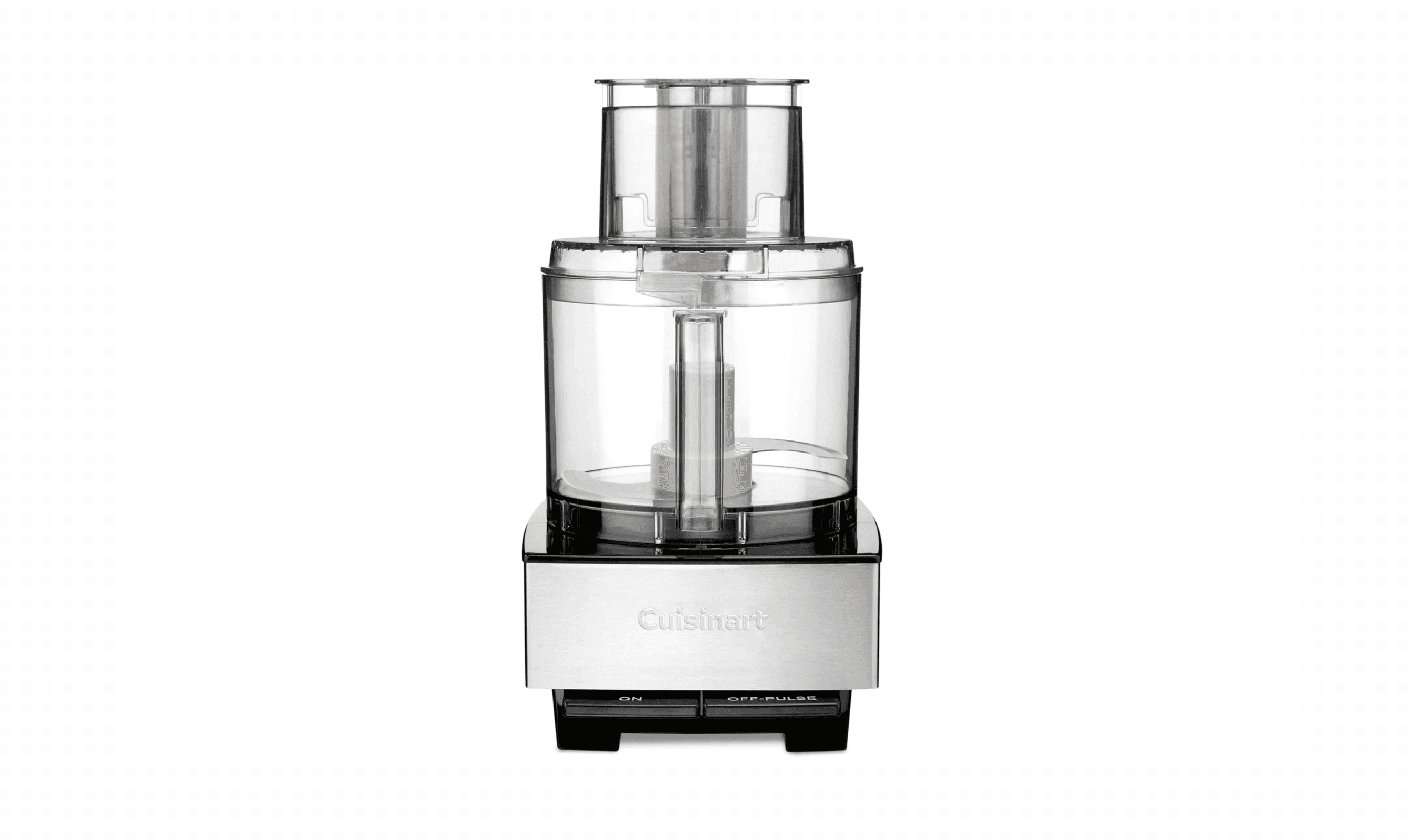
7 Best Food Processors for 2026
Cuisinart Custom 14-Cup leads our picks for 2026. Compare top models for value, power, and compact kitchens to find the right food processor for your needs.
3 min read
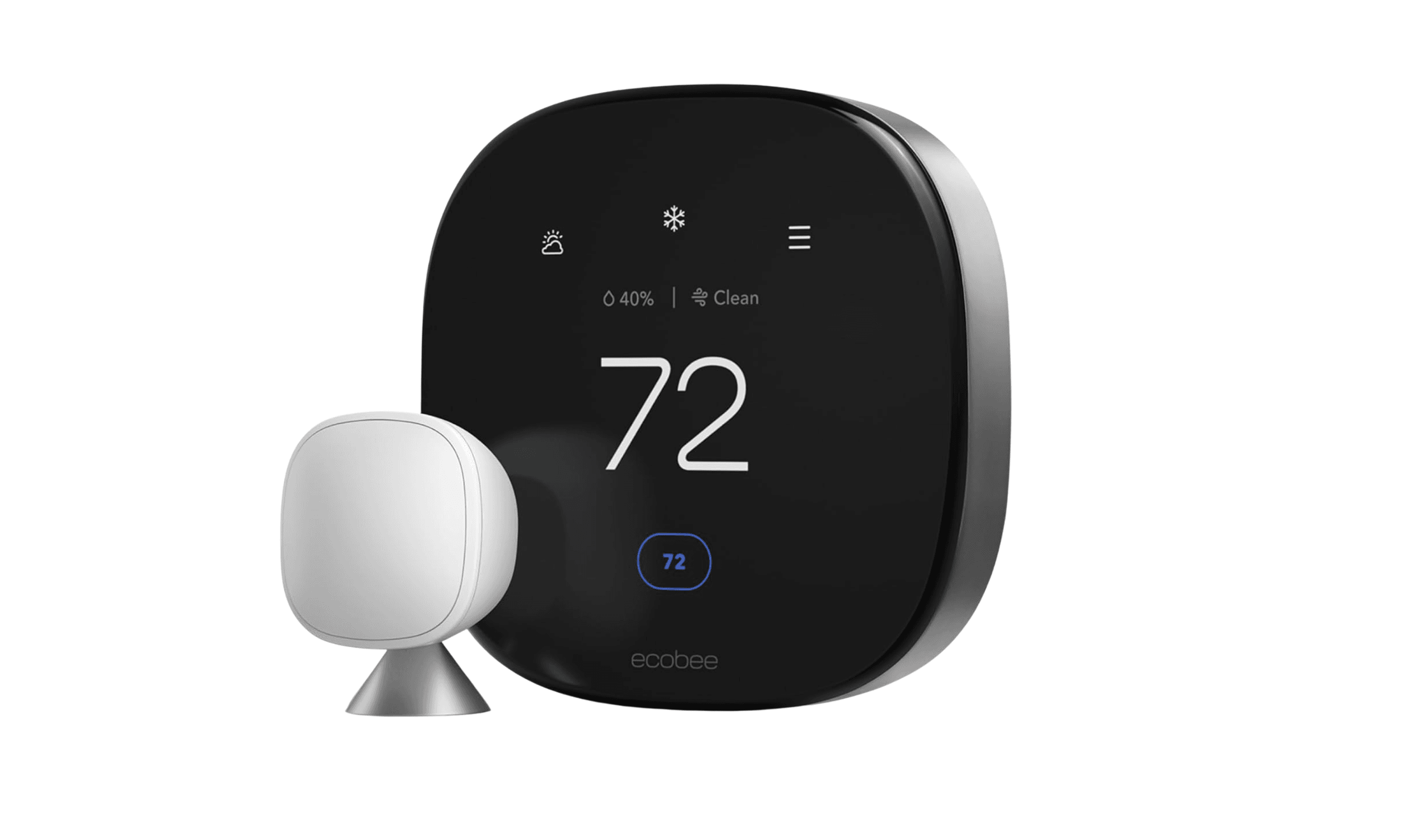
6 Best Smart Thermostats for 2026
Ecobee Smart Thermostat Premium leads our picks for 2026. Compare top models for energy savings, smart features, and budget-friendly options.
5 min read
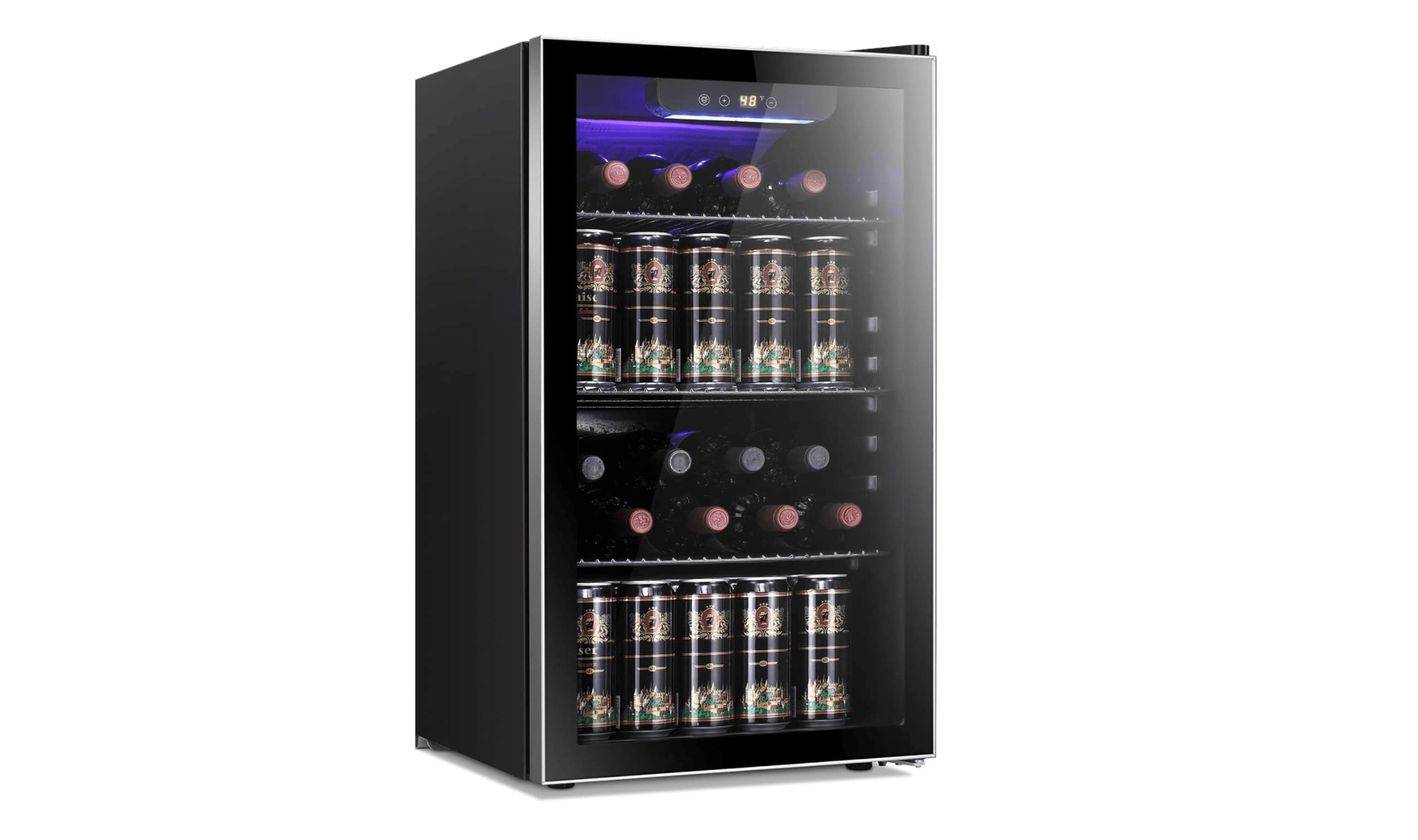
6 Best Beverage Coolers for Your Home (2026)
The hOmeLabs Beverage Refrigerator (~$310) leads our picks, with quiet 6 beverage coolers from $199 to $550 covering small spaces, big capacity, and glass-door visibility.
5 min read
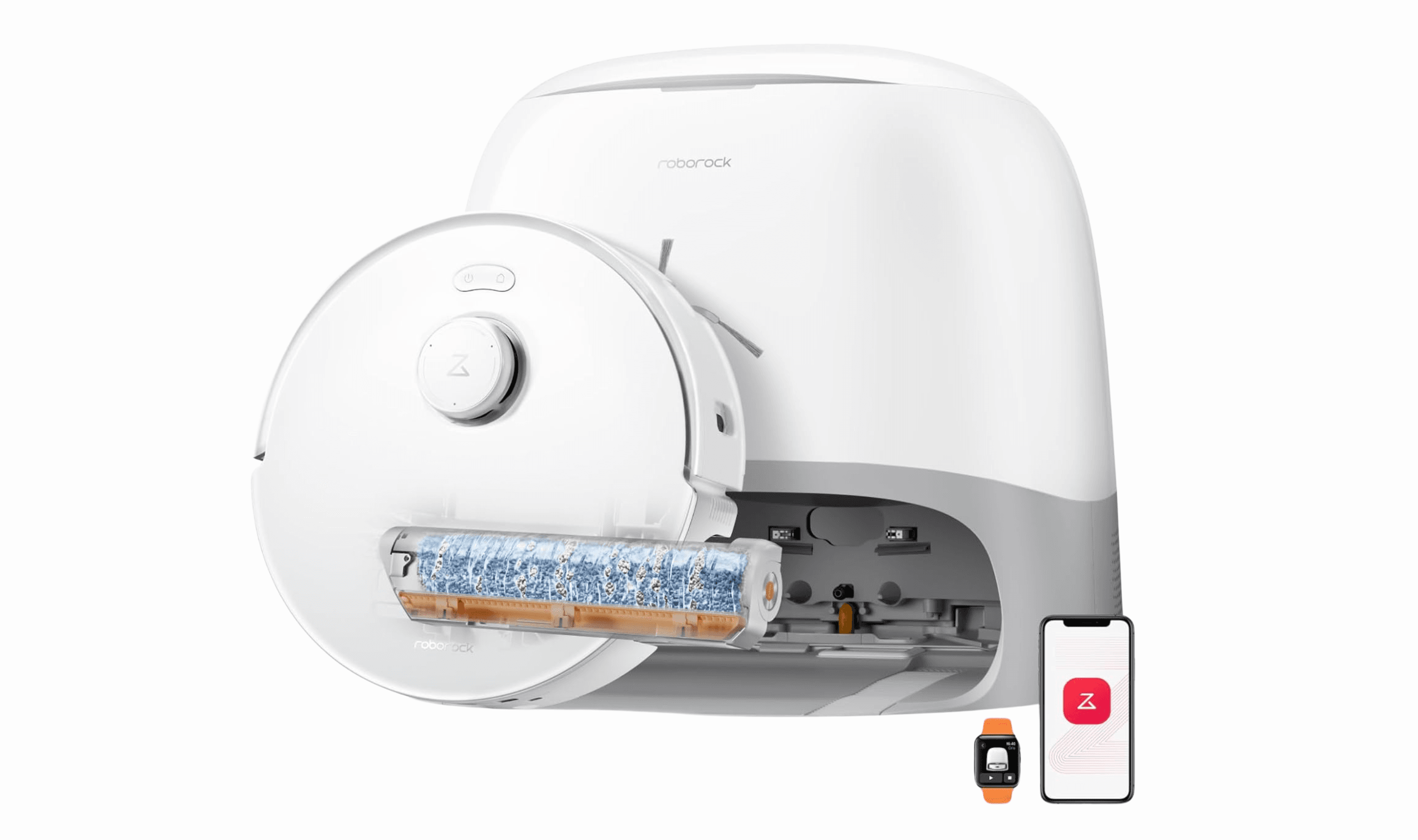
Best Robot Mops for 2026
Roborock Qrevo Curv 2 Flow leads our picks for the best robot mops. See our top 8 models for 2026, including budget-friendly and mixed-flooring options.
4 min read
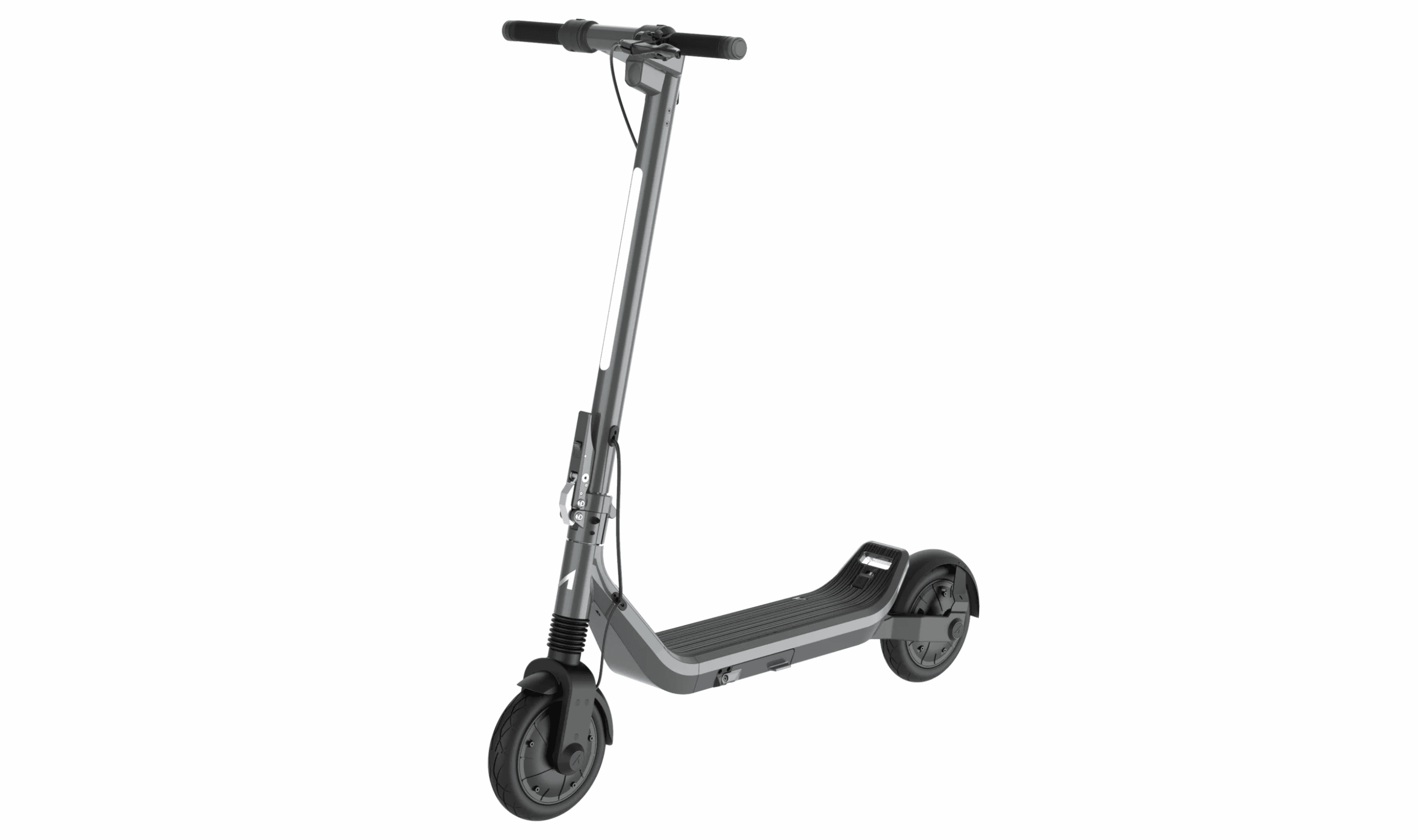
7 Best Electric Scooters for 2026
3 min read
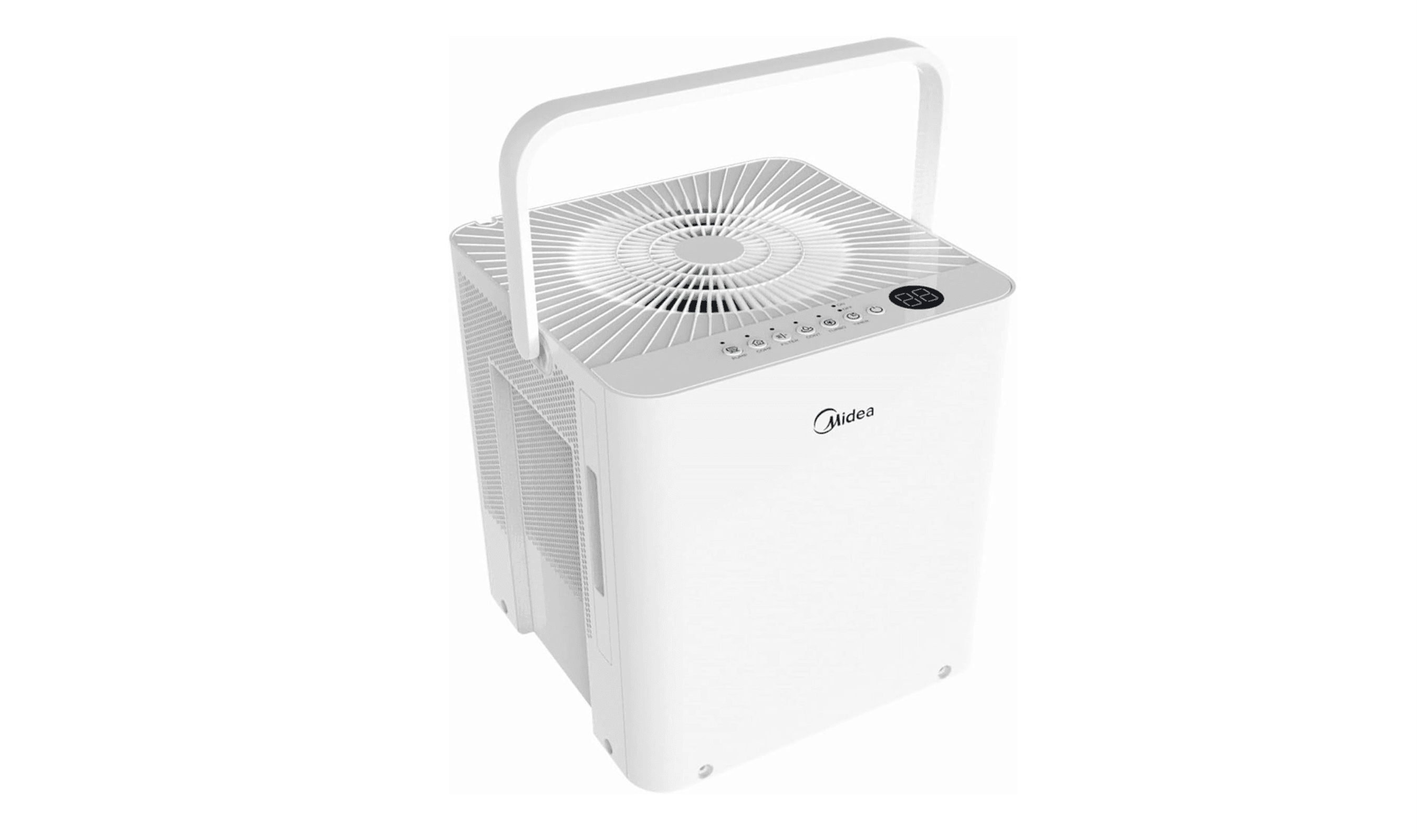
Best Dehumidifiers for Basements and Homes in 2026
3 min read

8 Laptops with the Best Battery Life to Buy in 2026
4 min read
9 Best Desktops Under $1500 for 2026
3 min read
8 Best Gaming Mice to Buy in 2026
5 min read
Top 6 cordless vacuums for 2026
4 min read
7 Best Outdoor Projectors for 2026
5 min read
Best Camera for YouTube in 2026
4 min read