

The next flagship smartphone will reportedly receive its most significant security upgrade in years, with the Tensor G6 chipset expected to integrate a new Titan M3 security coprocessor. The move positions the device to compete more directly with Apple's Secure Enclave technology.
According to leaks from Mystic Leaks on Telegram, the Tensor G6 (codenamed Malibu) will feature the Titan M3 chip alongside connectivity improvements. The security processor carries the internal codename "Google Epic" and runs firmware labeled "longjing."
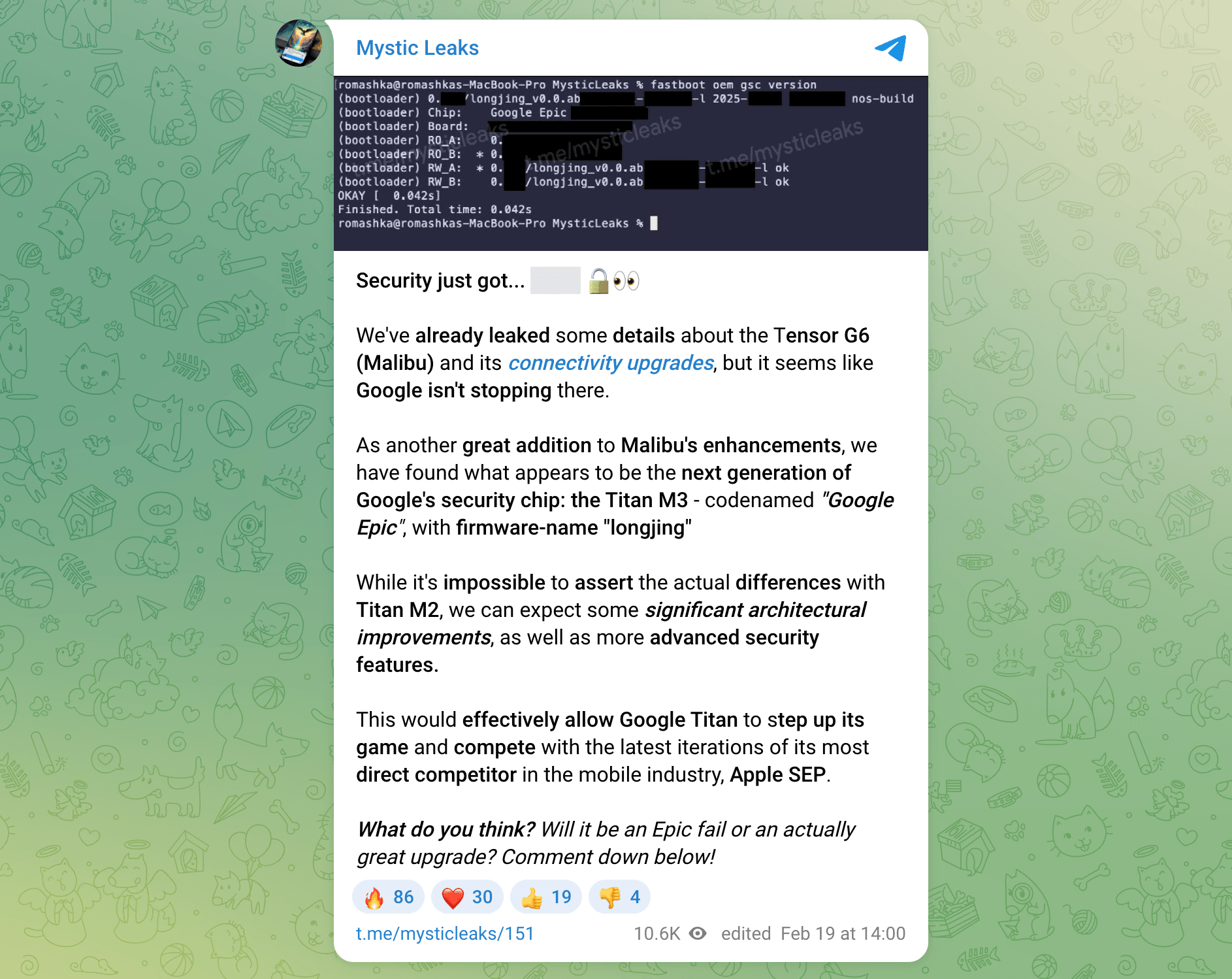
This marks the first major update to the Titan line since introducing the RISC-V-based Titan M2 alongside the original custom silicon.
The Titan series debuted in 2018 with the Pixel 3 as a standalone companion chip before integrating into Tensor silicon starting with the second-generation G1. Previous implementations provided bootloader validation, lock screen protection through limited login attempts, and private key generation through Android's StrongBox KeyStore API, with Titan M2 specifically offering protection against electromagnetic analysis, voltage glitching, and laser fault injection.
Protection remains a critical concern as smartphones increasingly handle banking information, biometric authentication, and sensitive personal data. Various vulnerabilities have been addressed through monthly patches over recent years, but hardware-level safeguards provide additional defense against sophisticated attacks.
The upcoming device is expected to launch in August 2026 with Android 17, continuing the annual release schedule. The company typically releases four models each generation, though specific details about the upcoming lineup remain unconfirmed.
The timing coincides with meaningful anniversaries for Google's smartphone division: the tenth anniversary of Pixel devices and five years since introducing custom silicon. This dual milestone provides context for why a substantial enhancement might be prioritized for the next flagship release.
The current smartphone lineup includes the recently announced Pixel 10a, which maintains a $499 starting price while adding Satellite SOS functionality and brighter displays over its predecessor. That device continues using the Tensor G4 chipset rather than advancing to newer silicon, highlighting how upgrades remain reserved for flagship models.