

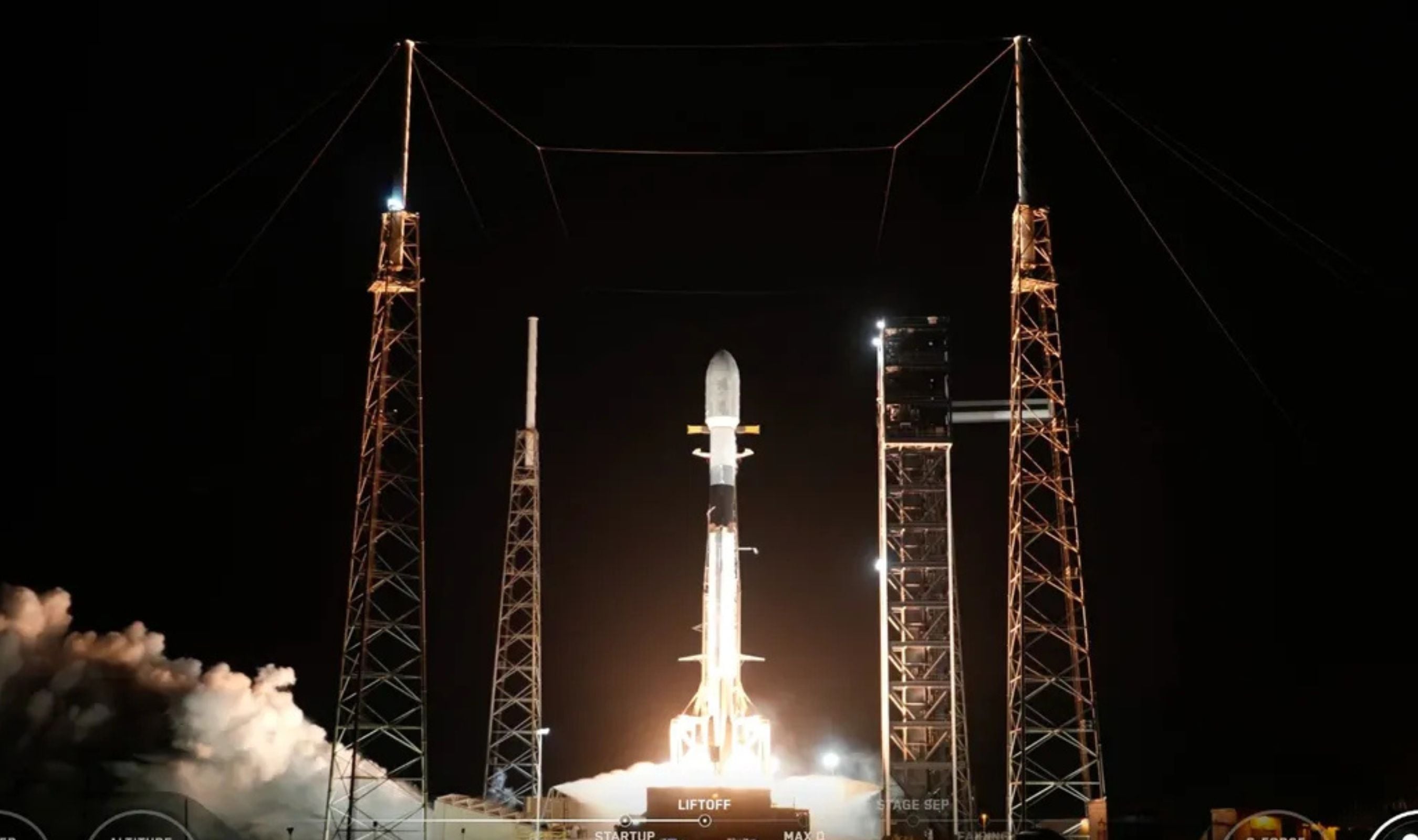
A GPS satellite originally assigned to United Launch Alliance's Vulcan Centaur rocket instead launched on a SpaceX Falcon 9 early Tuesday morning, completing the U.S. Space Force's advanced GPS III constellation while highlighting ongoing reliability issues with competing launch vehicles. The Falcon 9 lifted off from Cape Canaveral Space Force Station at 2:53 a.m. EDT, carrying the GPS III SV10 satellite to medium Earth orbit.
This marked the fourth time SpaceX has launched a GPS satellite that was initially contracted to ULA, with previous switches occurring due to development delays with Vulcan.
Last month, the Space Force moved this final GPS III satellite from Vulcan to Falcon 9 after ULA's rocket experienced problems with its Northrop Grumman-built solid rocket boosters during its most recent launch. In exchange, ULA will fly the USSF-70 national security mission on Vulcan in 2028, a payload originally slated for SpaceX's Falcon Heavy.
The mission arrived just days after Blue Origin's New Glenn rocket failed during its third flight, leaving a satellite in the wrong orbit and grounding the vehicle pending investigation. That Sunday launch saw Blue Origin's upper stage engine fail to produce enough thrust, dooming an AST SpaceMobile satellite designed for direct space-to-smartphone service.
GPS III satellites offer three times better positional accuracy and eight times improved jam resistance compared to earlier versions. These capabilities provide "an across-the-board boost in effectiveness and lethality to weapon systems in every theater," according to Space Force officials.
The SV10 satellite, named after Austrian-American actress and inventor Hedy Lamar whose frequency-hopping research contributed to GPS technology, represents the tenth and final spacecraft in the GPS III block. It will join 37 other satellites in medium Earth orbit, with 32 currently active and others held in reserve.
SpaceX launched the mission using Falcon 9 booster B1095 on its seventh flight, which successfully landed on the droneship "Just Read the Instructions" about 8.5 minutes after liftoff. This marked the final Falcon 9 landing for that particular droneship, which SpaceX says will now pivot to supporting Starship operations.
Following deployment approximately 90 minutes after launch, SV10 will spend ten days raising its orbit before two to three days of on-orbit testing. The satellite carries an optical cross-link demonstration system being tested before integration on next-generation GPS IIIF satellites, along with a new digital atomic clock for improved precision.
"Today marks an important milestone for our unit and for the entire GPS enterprise. As we prepare to launch the final satellite in the GPS III block, we're closing out a chapter that has defined the last several years of work for this team."
said USSF Col. Stephen Hobbs, Mission Delta 31 commander within Combat Forces Command. "We're excited to turn the page and continue advancing our mission with the GPS IIIF generation." The successful launch came despite a one-day weather delay caused by poor conditions in the booster recovery zone.