
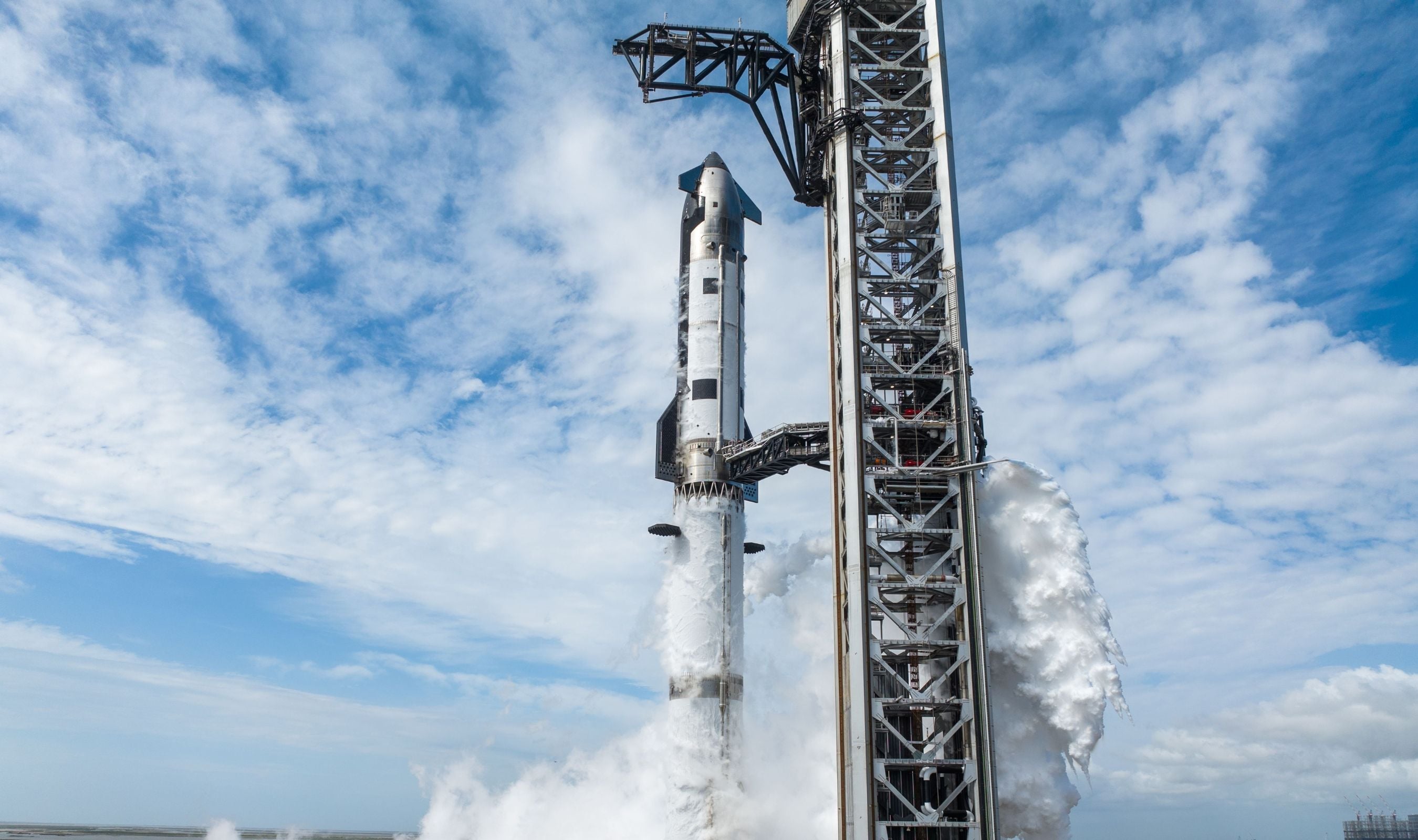
The FAA grounded SpaceX's Starship on Wednesday after the Super Heavy booster failed to relight its engines during Flight 12, marking the sixth time in three years the agency has halted launches of the world's largest rocket. The timing could not be worse: SpaceX filed its IPO prospectus last week. The May 22 launch from Starbase in South Texas was the debut of Starship's upgraded V3 configuration, standing 407 feet tall and powered by 33 Raptor engines. Minutes after liftoff, one of Super Heavy's engines shut down prematurely.
Several more failed to ignite during the planned flip and boostback maneuver, according to the FAA, which said the booster made a hard splashdown in the Gulf of Mexico.
There were no injuries or property damage, the agency confirmed. The upper stage performed better. Starship deployed 20 mock Starlink satellites and two modified satellites that, in a first, captured images of the spacecraft in space.
It completed a controlled splashdown in the Indian Ocean despite losing one of its own six engines. SpaceX also canceled a planned in-space relight test due to an engine issue. The FAA said it will oversee SpaceX's investigation, participate in every step, and approve the final report including corrective actions. Starship will not fly again until the agency signs off.
This is the sixth FAA grounding for Starship since its April 2023 debut. The first launch ended in an explosion that required 63 corrective actions before SpaceX could try again.
Last year, a separate upper-stage failure grounded the vehicle after a rapid unscheduled disassembly. The grounding comes as SpaceX pursues what could be the largest IPO in history. The company's public filing, released earlier this month, reveals accelerating losses: $4.9 billion in FY 2025 on $18.7 billion in revenue. In Q1 2026 alone, SpaceX lost $4.3 billion on $4.7 billion of revenue, driven largely by its acquisition of xAI.
SpaceX has approval for up to 25 annual Starship launches from Texas. It completed only one flight in the first five months of 2026 following five in all of 2025. The more than seven-month gap between Flight 11 in October and Flight 12 was the longest since Starship began flying.
NASA is counting on Starship for a human lunar landing as soon as 2028. The agency has estimated the mission will require multiple tanker flights to stock an orbital fuel depot for the Starship Human Landing System.
Delays to Starship's flight testing could push NASA toward Blue Origin's Blue Moon Mark 2 as an alternative, according to Politico.
SpaceX has not issued a statement on the FAA investigation, instead highlighting the mission's successes.