
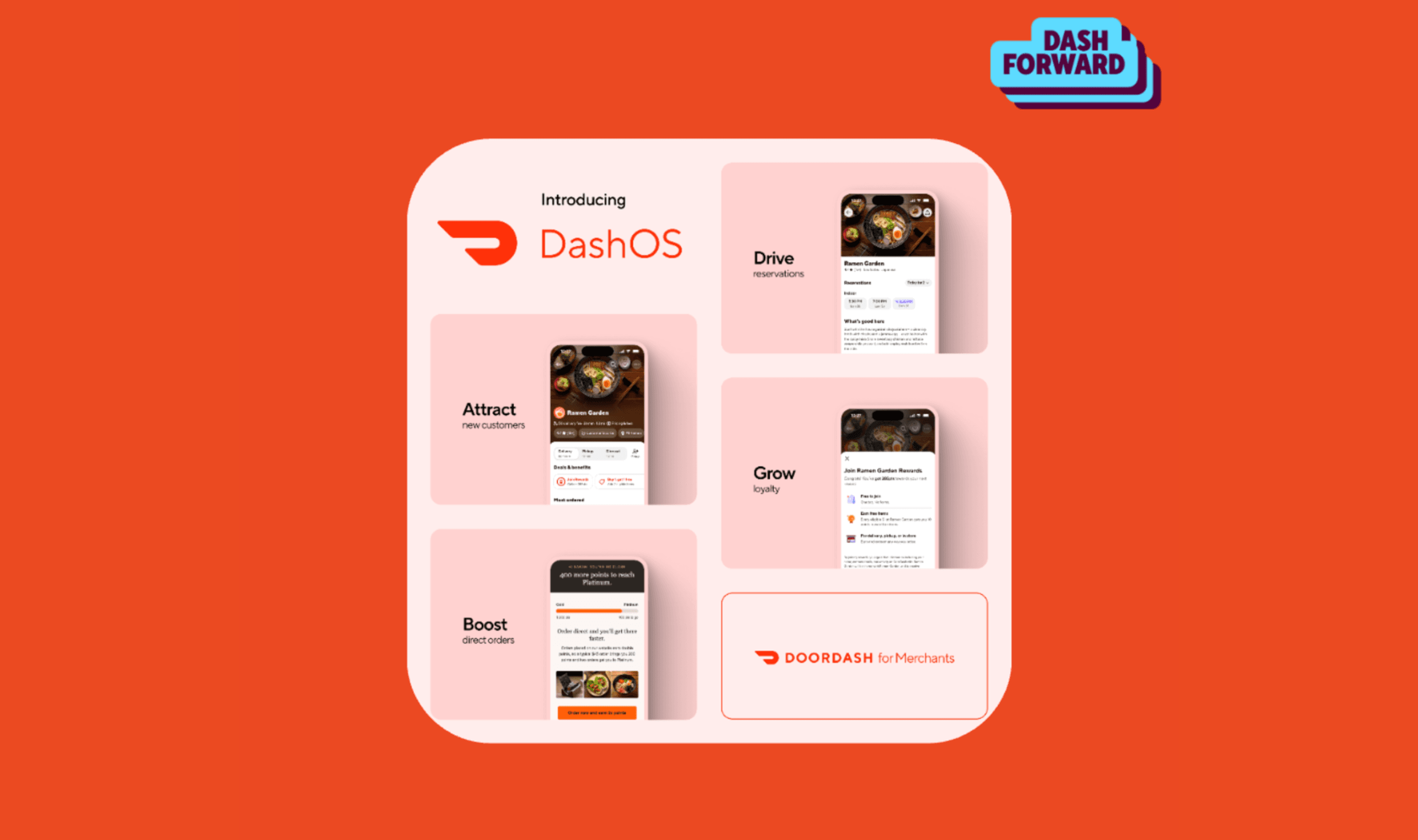
DoorDash has introduced DashOS, a single platform it says restaurant operators can adopt without swapping out the systems they already run or rebuilding how they work. The company describes DashOS as a way to pull customer interactions from every channel into one profile, so a guest's delivery order, reservation, loyalty activity and marketing messages all sit in the same place. The stated aim is to reduce what restaurants spend winning back customers they have already served, and to turn that spending into profitable growth. DoorDash announced the platform on September 30.
The pitch rests on how fragmented restaurant technology has become. DoorDash cites survey data showing that 40% of surveyed U.S. operators juggle four to five separate systems, and that 83% believe better-connected tools would improve their profitability. DashOS is meant to answer that sprawl by unifying customer interactions across channels rather than adding another dashboard. DoorDash says its goal is for every restaurant to be able to grow with DashOS no matter what technology stack it runs.
Early testing offers the most concrete numbers. DoorDash says AI-driven personalized recommendations lifted total reservations by more than 15% in those tests. Its SevenRooms marketing tools, which draw on blinded and aggregated insights from the DoorDash Marketplace, helped restaurants bring in sales topping $150 million so far this year, the company says. The AI features automate campaign creation, behavior analysis, review responses and call answering. DoorDash credits one of them, SevenRooms Voice AI, with monthly revenue averaging more than $10,000 per restaurant.
DoorDash is also deepening ties with point-of-sale and middleware providers, naming Clover from Fiserv, Qu, Checkmate, Chowly, Deliverect, Stream and Urban Piper as integration partners, with more to come. Starting in 2027, DoorDash says it plans to give more than 80,000 restaurants on those systems added ways to use SevenRooms guest profiles, Online Ordering, In-Store Rewards and Omnichannel Loyalty.
The company points to a Bay Area restaurant, Italian Brothers, as an example of how a guest journey can move through delivery, loyalty, email, an in-store reward and an event. DoorDash also cites consumer survey findings that cut both ways: 74% of those surveyed said a dine-in visit led them to order delivery from the same restaurant later, while 62% said a delivery order led to a later dine-in visit.
Several details remain unstated. DoorDash did not disclose a price for DashOS, gave no general availability date beyond the 2027 integration plans, and named no specific regions for the rollout. The announcement includes a forward-looking statements disclaimer, and DoorDash trades on Nasdaq under the ticker DASH.