
AMD reported record fourth-quarter revenue of $10.27 billion, beating analyst estimates of $9.67 billion. The company posted full-year 2025 revenue of $34.6 billion, marking 34% year-over-year growth driven by data center and AI demand.
First-quarter 2026 guidance of $9.8 billion plus or minus $300 million disappointed investors, sending shares down 8% in after-hours trading. The forecast includes $100 million from China MI308 sales but represents a sequential decline from Q4's record performance.
CEO Lisa Su acknowledged PC market uncertainty while emphasizing enterprise focus.
"The PC market is an important market," Su said, "but our focus areas are enterprise."
She noted inflationary pressures on memory pricing have impacted the total addressable market.
Data center revenue reached a quarterly record of $5.4 billion, up 39% year-over-year. This growth was driven by EPYC processor adoption and Instinct GPU shipments, with eight of the top ten global AI companies now using AMD Instinct GPUs for production workloads.
Client and gaming segment revenue grew 37% to $3.9 billion in Q4. Client business specifically hit $3.1 billion, up 34% year-over-year, while gaming revenue increased 50% to $843 million driven by semi-custom console sales and Radeon GPU demand.
China contributed $390 million in Q4 revenue from MI308 sales, representing the company's return to the market after export restrictions. AMD received licenses to sell modified versions of its MI300 series chips after the Trump administration approved export licenses for certain AI chip sales to China.
The company maintains aggressive long-term targets, projecting 35% revenue CAGR over the next three to five years. Data center revenue is expected to grow more than 60% annually, with annual EPS potentially exceeding $20 in the strategic timeframe.
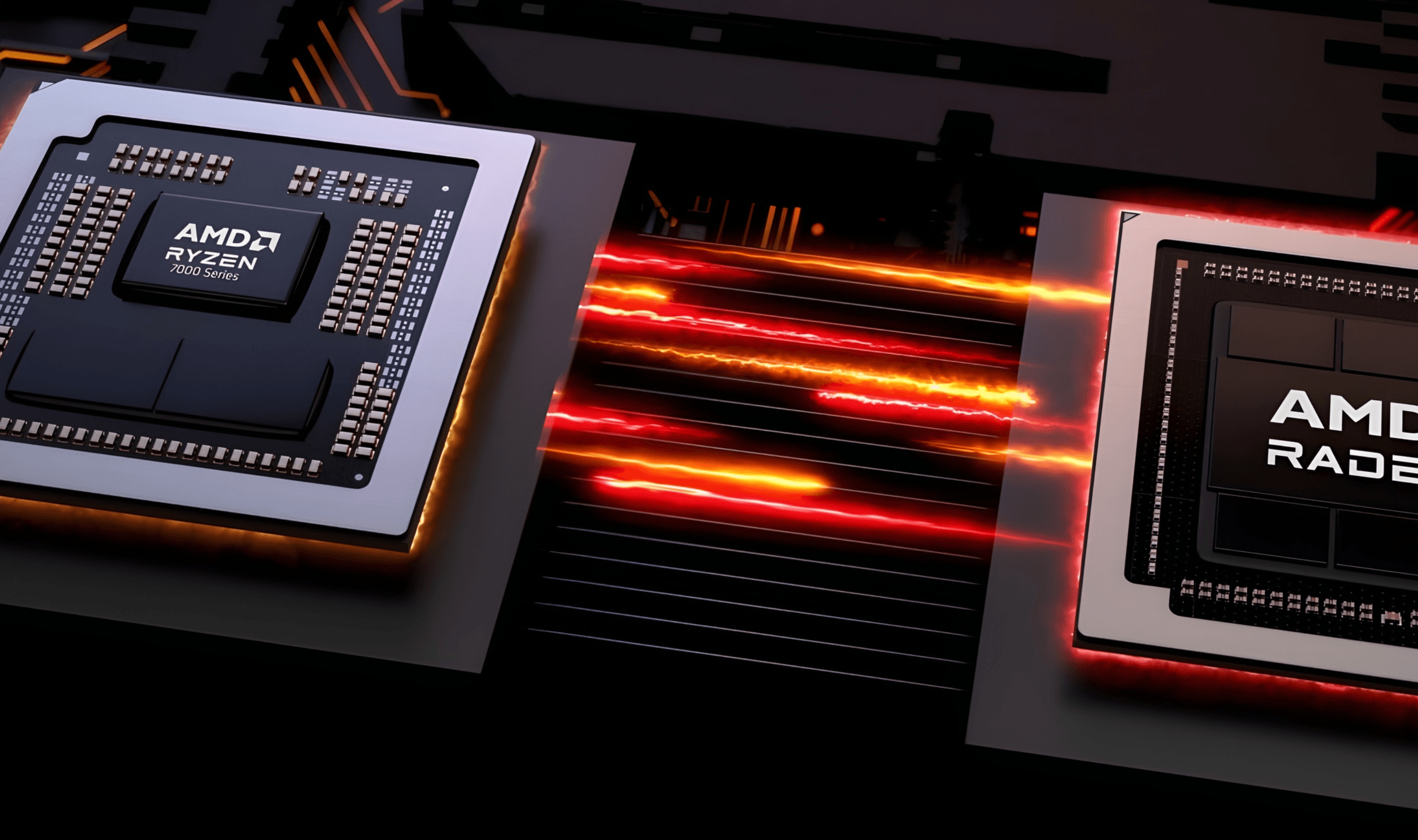
AMD's enterprise shift includes new Ryzen AI products like the Halo platform and Gorgon Point APUs. These solutions target edge AI applications and mobile computing, combining enterprise and client capabilities to drive premium market growth.
Future product roadmaps show MI450 and Helios platform production ramps in second-half 2026. RDNA 5 graphics architecture is slated for H2 2027, while the next-generation Xbox powered by AMD custom silicon is expected in 2027.
Analysts expressed mixed reactions to the guidance. Stifel maintained a Buy rating with $280 price target, citing multi-year OpenAI deployment commitments and cloud service provider agreements supporting growth projections.
Memory supply constraints continue affecting consumer PC plans, with potential impacts extending into 2028. AMD's strategy focuses on premium segments and enterprise solutions to navigate market uncertainty while maintaining client business growth.
The company's ROCm software stack has seen significant integration with inference engines like vLLM. AMD launched an Enterprise AI Suite to simplify production deployments, complementing hardware advancements across data center and edge computing segments.