
Apple released Xcode 26.3 this week with direct integration for Anthropic's Claude Agent and OpenAI's Codex, marking a significant push into autonomous AI coding. The update transforms Apple's development environment from a code suggestion tool to a platform where AI agents can build, test, and deploy applications with minimal human oversight.
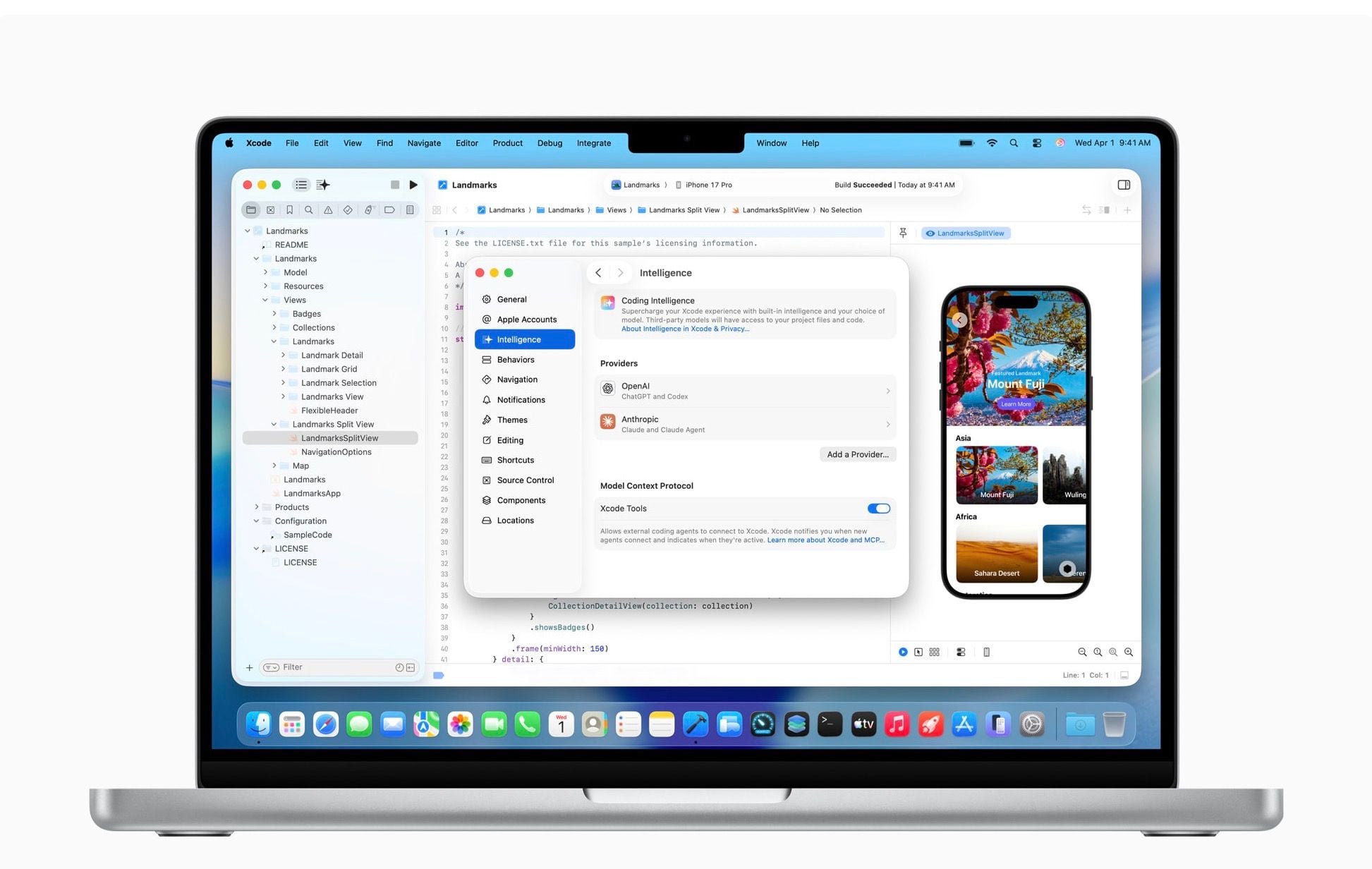
Xcode 26.3 introduces "agentic coding," a controversial practice where artificial intelligence systems independently handle complex development tasks. Unlike previous versions that offered autocomplete and suggestions, the new system grants Claude Agent and Codex access to nearly every aspect of the development process.
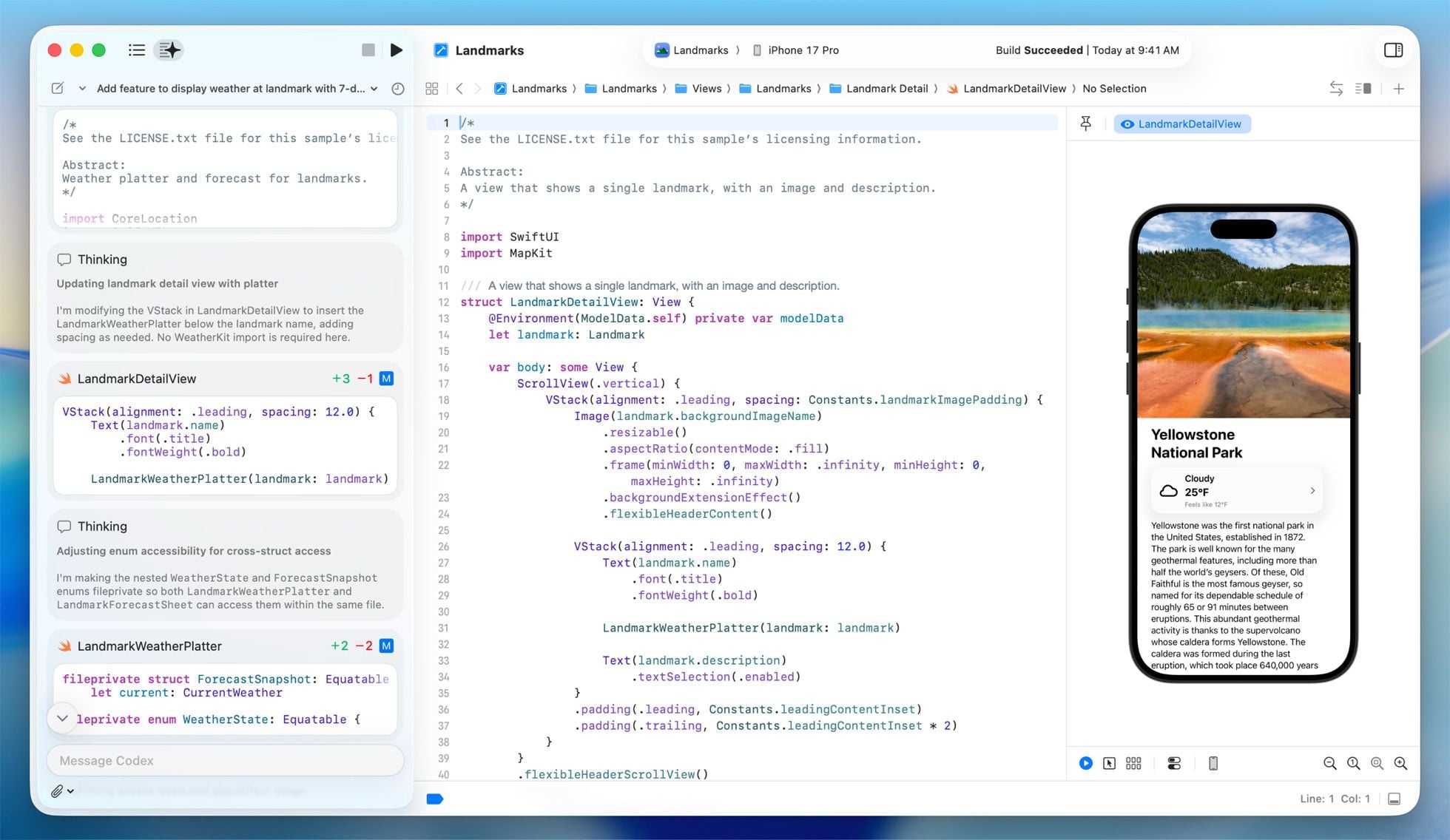
The agents can analyze project architecture, write necessary code, build projects, run tests, and visually verify their work using Xcode Previews. During a demonstration, Apple engineers showed Claude Agent receiving a prompt to "add a new feature to show the weather at a landmark" and autonomously completing the entire implementation.
Apple worked directly with Anthropic and OpenAI to optimize token usage and ensure efficient operation within Xcode. Developers need existing accounts with either company and pay fees based on API usage, connecting through API keys in Xcode settings.
The timing is strategic, arriving just days after OpenAI launched its standalone Codex app for macOS. While that application serves as a dedicated command center for coding agents, Xcode 26.3 brings similar functionality directly into Apple's integrated development environment used by millions of iOS, macOS, and watchOS developers.
Beyond the built-in Claude and Codex integrations, Xcode 26.3 supports the open-source Model Context Protocol standard. This allows developers to connect any MCP-compatible AI tool, providing flexibility beyond Apple's chosen partners.
"Agentic coding supercharges productivity and creativity, streamlining the development workflow so developers can focus on innovation,"
said Susan Prescott, Apple's vice president of Worldwide Developer Relations. The company positions the feature as both a productivity tool and learning resource for developers exploring new implementation approaches.
The release candidate is available immediately to Apple Developer Program members, with a public App Store release expected within weeks. Apple will host a "code-along" workshop on Thursday where developers can learn agentic coding techniques in real-time.
Xcode 26.3 represents Apple's most significant AI development investment since introducing intelligence features in Xcode 26 last year. The move comes as "vibe coding", delegating software creation to large language models, has become one of Silicon Valley's most debated technological practices.
Developers maintain control throughout the autonomous process, with Xcode creating milestones at each agent modification and providing full transparency through project transcripts. The system highlights code changes visually and allows instant reversion to any previous state if results don't meet expectations.
Apple's embrace of agentic coding signals a fundamental shift in how applications are built for its platforms. As AI agents gain unprecedented access to development workflows, the company is positioning Xcode as the central hub for next-generation software creation across its entire hardware ecosystem.