Tile floors look great, but keeping grout lines and smooth surfaces clean takes the right vacuum. After evaluating dozens of models across multiple sources, the Shark Navigator Lift-Away NV356E stands out as the best all-around pick for its strong suction, brush roll shutoff for tile safety, and a price that won't make you wince. Whether you need a cordless stick for quick pickups or a vacuum-mop combo for deep grout cleaning, this list covers the real winners.
Technobezz is supported by its audience. We may get a commission from retail offers.
5 Best Vacuums for Tile Floors in 2026
The 5 best vacuums for tile floors in 2026, led by the Shark Navigator Lift-Away NV356E, plus top cordless, robot, value, and canister picks from $30 to $820.
T
Technobezz
Senior Editor
Updated September 5, 2026Sep 5, 2026
•10 min read

Get Deals Like These in Your Inbox
The best prices, reviewed weekly.
At a Glance
| Category | Product | Why We Picked It |
|---|---|---|
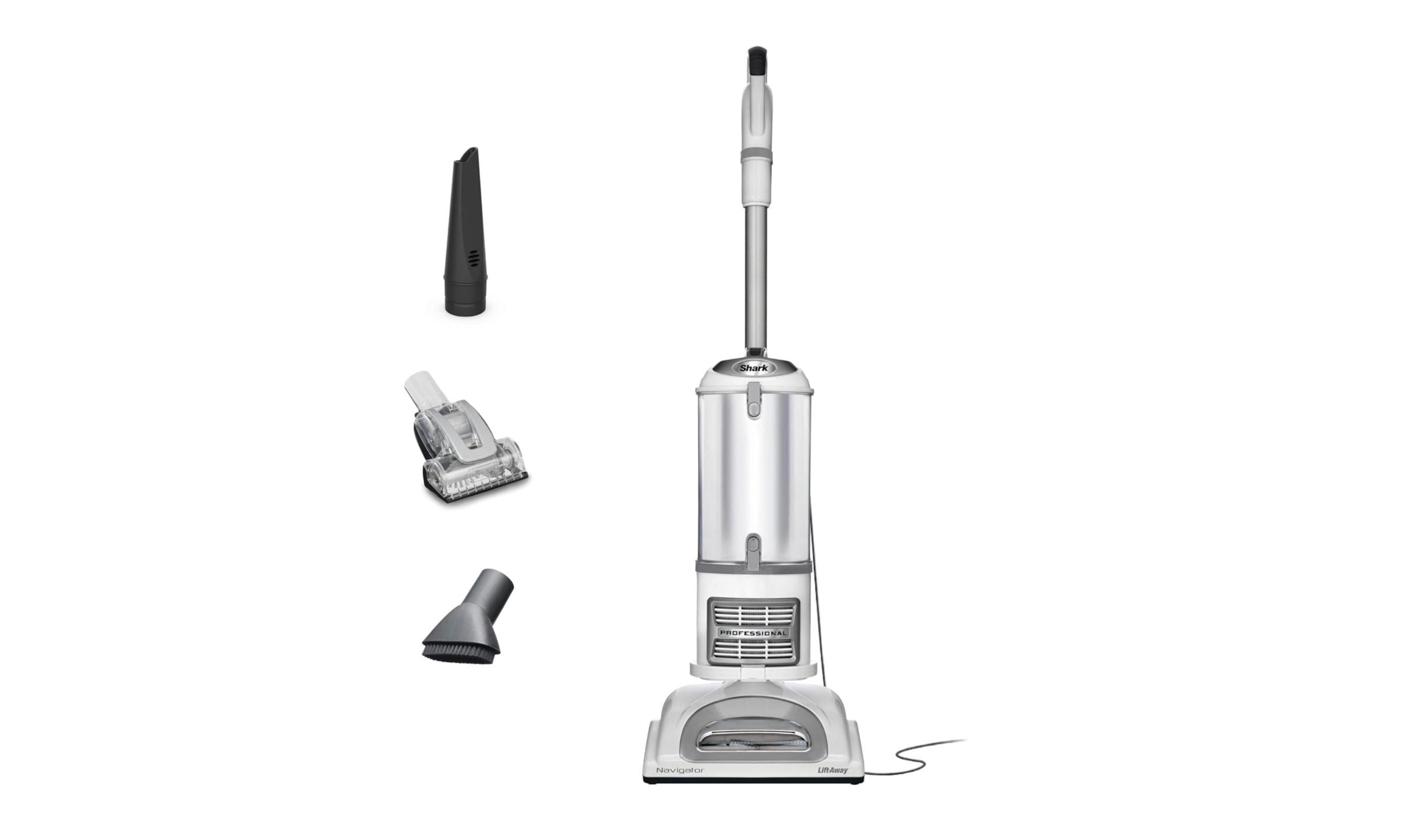
| Best overall | Shark Navigator Lift-Away NV356E | Powerful suction with a brush roll shutoff that protects tile |
| Best cordless | Dyson V15 Detect | Illuminated soft roller reveals dust on hard floors |
| Best value | Bissell Featherweight 2033M | Lightweight stick under 3 pounds for quick daily cleaning |
| Best robot | Roborock Saros 20 Sonic | 36,000Pa suction, an extendable sonic mop and automatic mop washing |
| Best canister | Miele Guard L1 AllFloor | Bagged canister with four suction modes and an AllFloor brush for hard floors |
| Also recommended | Shark Stratos Powered Lift-Away | Great for switching between carpet and tile |
| Also recommended | Eureka WhirlWind NEN110A | Cheap canister with solid suction control |
| Also recommended | LEVOIT LVAC-200 | Cordless stick with long runtime for quick cleanups |
How we chose and tested
We evaluated vacuums based on their ability to clean tile surfaces and grout lines without scratching or scattering debris. Our assessment considered suction power, brush roll design (especially models with an on/off switch or soft rollers), filtration quality, maneuverability on hard floors, and real-world user feedback across multiple sources. We prioritized models that balance strong debris pickup with tile-safe features, whether you need a corded upright for whole-house cleaning or a cordless stick for daily maintenance.
The best vacuums for tile floors right now
Shark Navigator Lift-Away Professional NV356E - Best overall
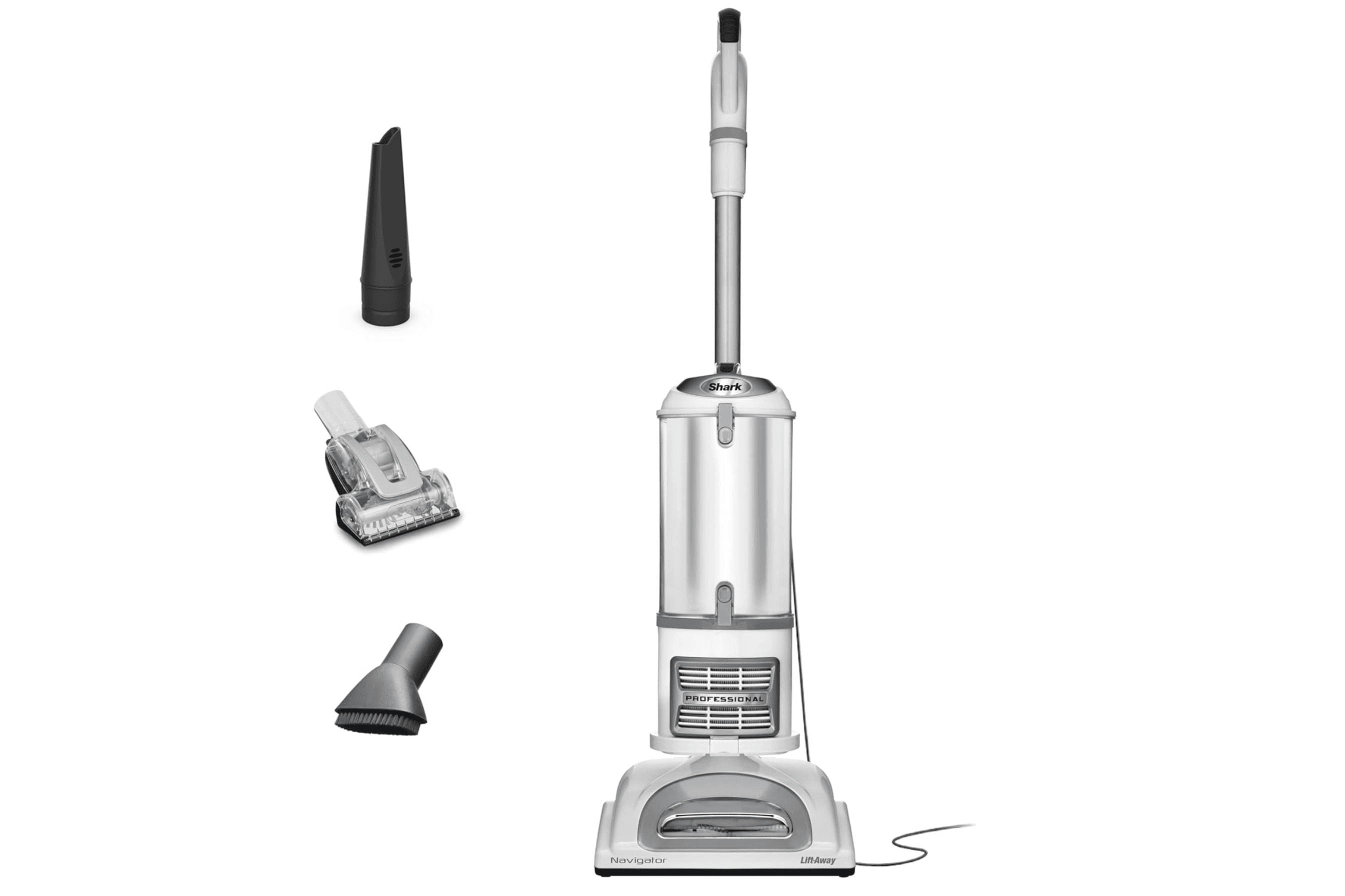
The Shark Navigator delivers the best combination of tile-safe cleaning and raw suction at a reasonable price. Its brush roll on/off switch lets you turn off the rotating bristles on tile to prevent scratches while still pulling debris into the vacuum. The Lift-Away feature detaches the canister so you can carry it up stairs or use the wand for corners and baseboards.
Key highlights
- Brush roll on/off switch protects tile surfaces from scratches
- Anti-Allergen Complete Seal with HEPA filter traps fine grout dust
- Lift-Away detachable pod for portable above-floor cleaning
- Swivel steering makes it easy to navigate around furniture
Pros
- Excellent suction on both tile and carpets
- Dusting brush and 8-inch crevice tool included
- 0.87-liter bagless dust cup
Cons
- 30-foot cord limits reach in large rooms
- Runs louder than premium canister models
- Lift-Away pod can feel a bit clunky to carry
Who it is for: Homeowners with a mix of tile and carpet who want one vacuum that does both well without spending a fortune.
Skip if
You need a completely cordless setup or have mostly wall-to-wall tile with minimal carpet.
Dyson V15 Detect - Best cordless for tile
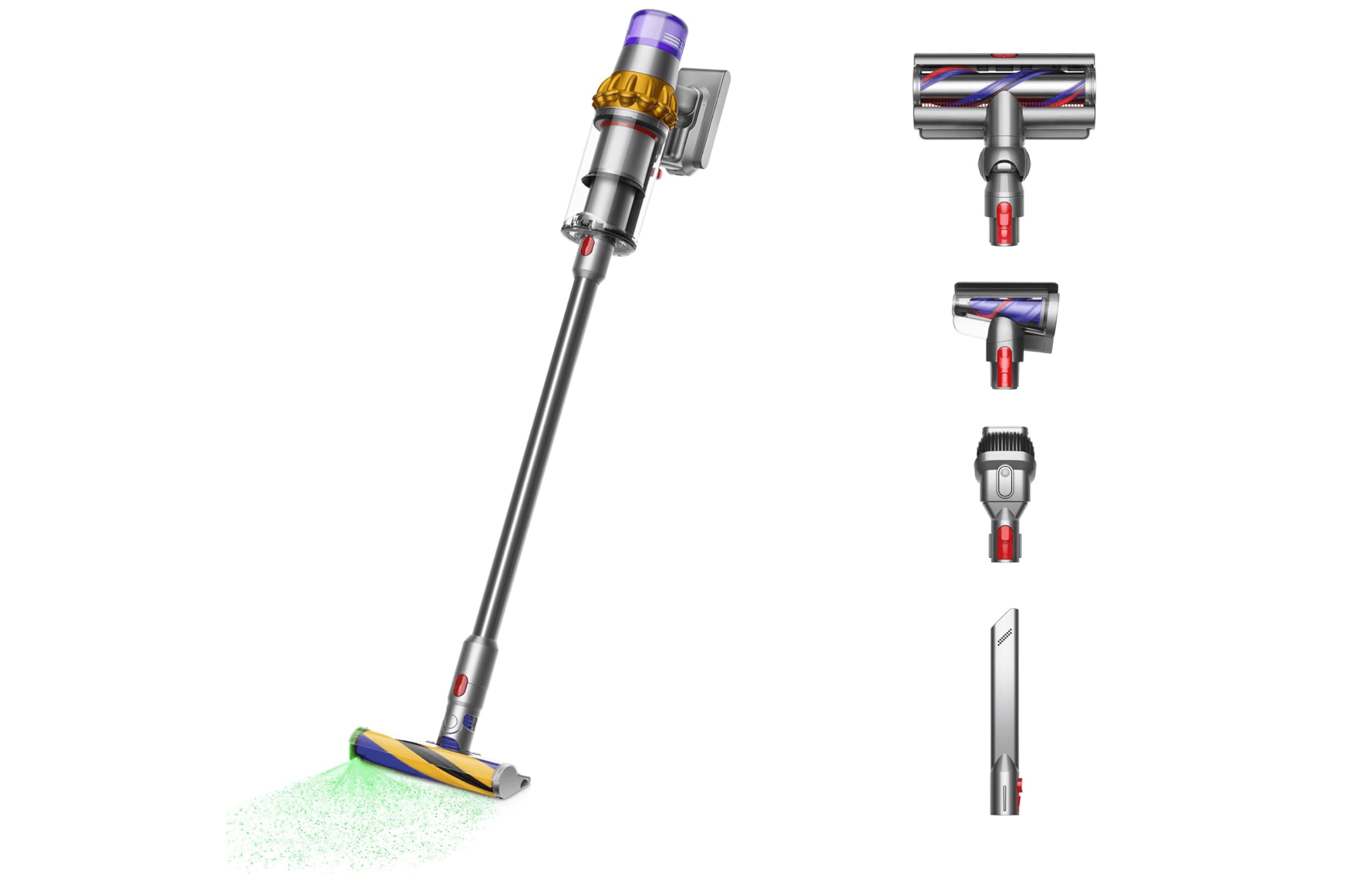
The Dyson V15 Detect uses an illuminated Fluffy Optic cleaner head to reveal dust on hard floors. With 240 air watts of suction and a dedicated soft roller, it is a strong cordless option for tile. The LCD shows particle counts and remaining runtime as you clean.
Key highlights
- Fluffy Optic cleaner head reveals hidden dust on hard floors
- 240 AW suction pulls debris from grout lines
- LCD screen shows real-time particle count
- Converts to handheld for above-floor cleaning
Pros
- Lightweight at 6.8 pounds for easy maneuvering
- Up to 60 minutes of runtime in Eco mode
- Soft roller head is designed for hard floors
Cons
- Small 0.2-gallon dustbin fills up fast on textured tile
- Boost mode only lasts about 8 minutes
- 5-hour charge time requires planning ahead
Who it is for: Anyone who wants the best cordless cleaning on tile and appreciates seeing exactly how clean their floors are.
Skip if
You have a very large home and don't want to deal with battery limitations or frequent dustbin emptying.
Bissell Featherweight 2033M - Best value
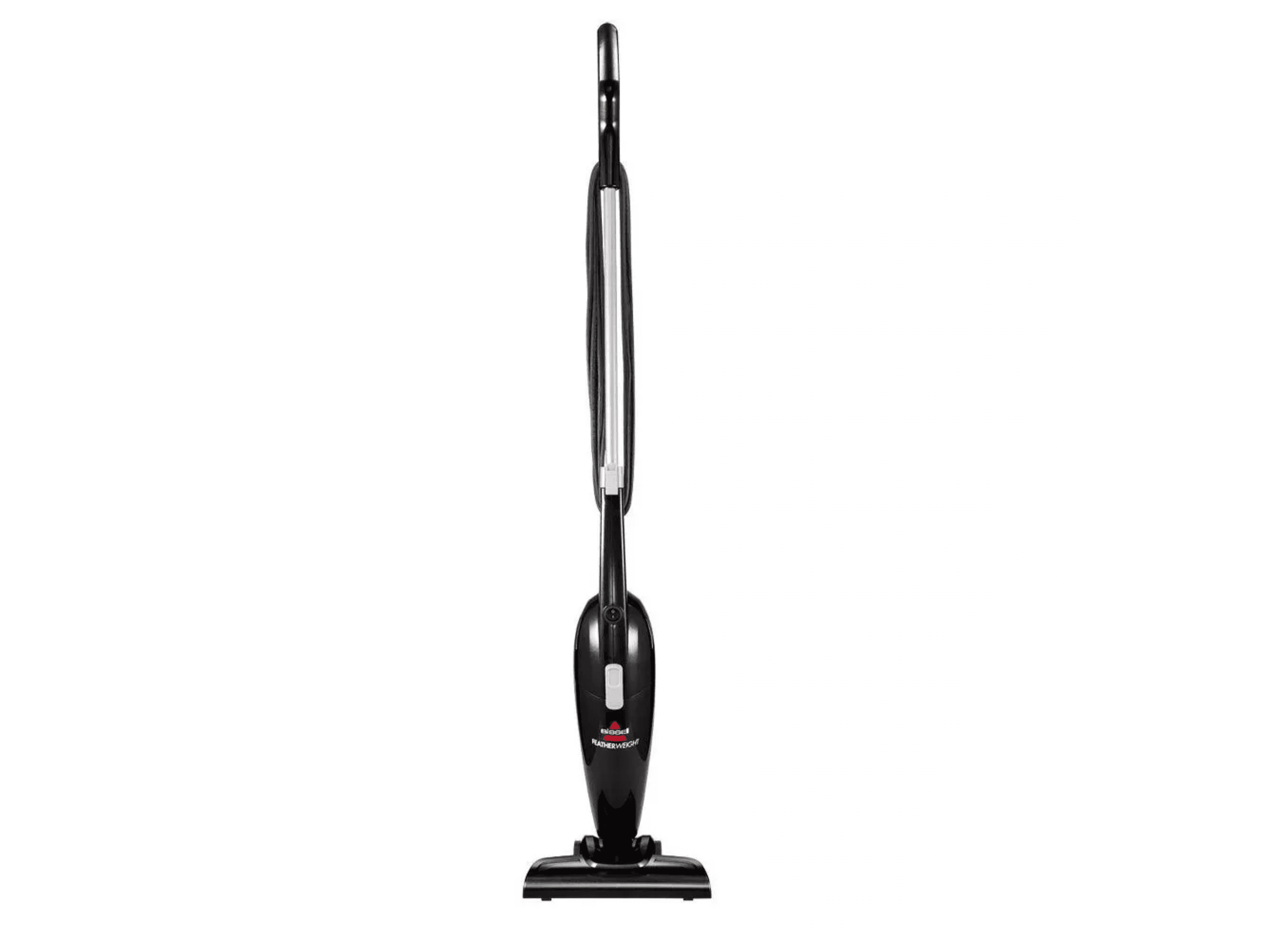
At just 2.6 pounds, the Bissell Featherweight is almost weightless. It converts from a stick vacuum to a handheld or stair vacuum with a quick switch. The 15-foot cord gives you decent range, and the 0.67-liter dirt cup is easy to empty. It won't replace a full-size vacuum for deep cleaning, but for daily touch-ups on tile floors, it gets the job done without any fuss.
Key highlights
- Ultra-lightweight at 2.6 pounds
- 3-in-1 design converts to stick, hand, or stair vacuum
- Corded for consistent power with no battery worry
- Crevice tool included for grout lines and edges
Pros
- Extremely easy to carry and maneuver
- Affordable price point
- Simple to empty and maintain
Cons
- Not designed for heavy-duty cleaning sessions
- Single power level with no suction adjustment
- Small dirt cup requires frequent emptying
Who it is for: Apartment dwellers or anyone who wants a grab-and-go vacuum for quick tile floor cleanups between deeper cleans.
Skip if
You have a large home with heavy foot traffic and need something that can handle serious daily messes.
Roborock Saros 20 Sonic - Best robot for tile
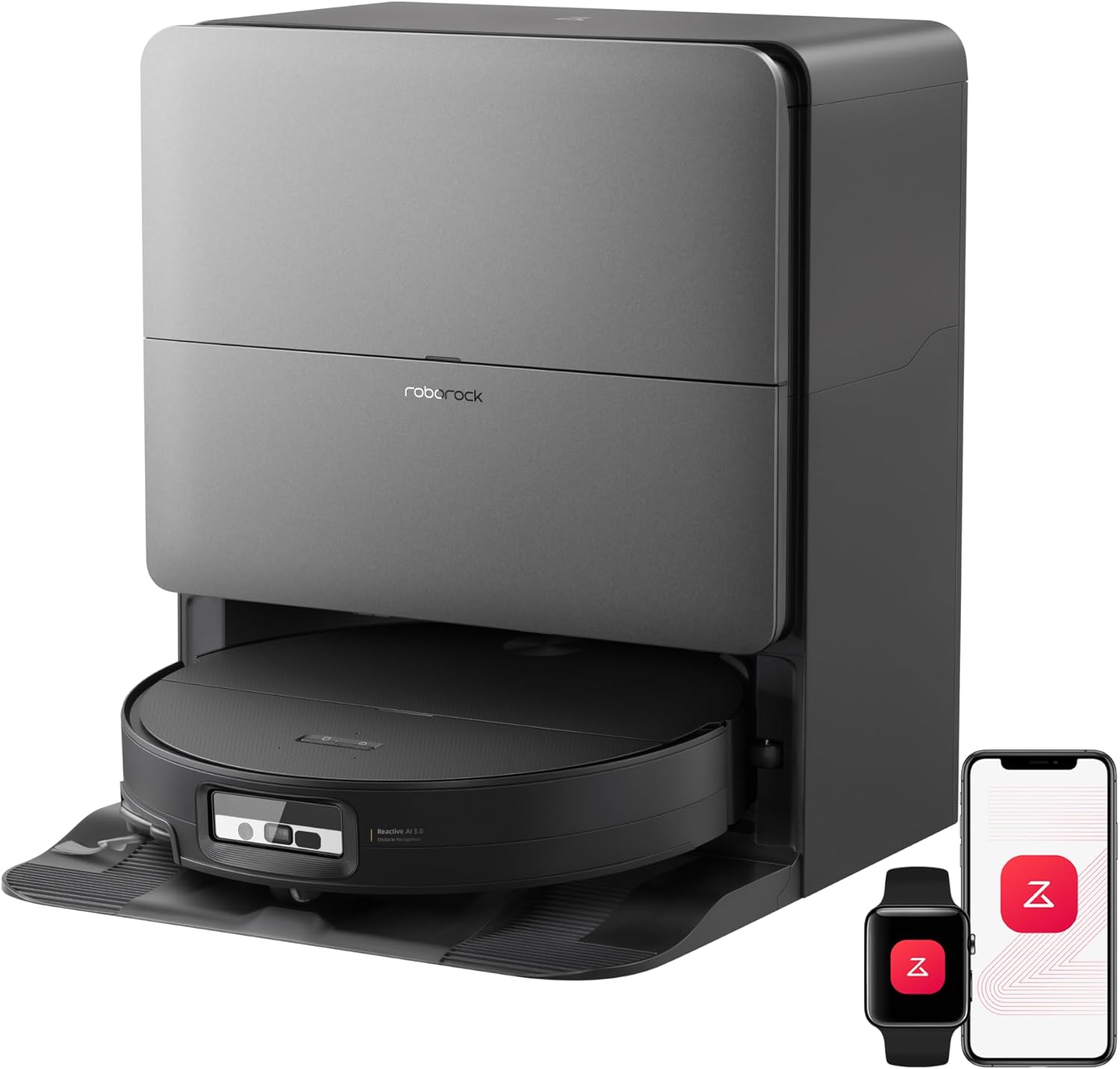
The Roborock Saros 20 Sonic combines 36,000Pa suction with VibraRise 5.0 sonic mopping for scheduled tile cleaning. Its extendable mop applies 14N of downward pressure at 4,000 vibrations per minute, while the dock washes and dries the mop automatically.
Key highlights
- 36,000Pa HyperForce suction
- VibraRise 5.0 extendable mop with 14N pressure and 4,000 vibrations per minute
- Dock washes mops with hot water and dries them with warm air
- Reactive AI 3.0 obstacle recognition and retractable navigation sensor
Pros
- Extendable mop reaches along edges
- Automatic dust emptying and detergent dispensing
- Mop detaches automatically for vacuum-only cleaning
Cons
- Premium purchase price
- Dock needs dedicated floor space
- Automatic dust emptying still uses disposable bags
Who it is for: Busy households that want scheduled vacuuming and mopping for tile floors.
Skip if
You're on a tight budget or don't want a large docking station taking up floor space.
Miele Guard L1 AllFloor - Best canister for tile
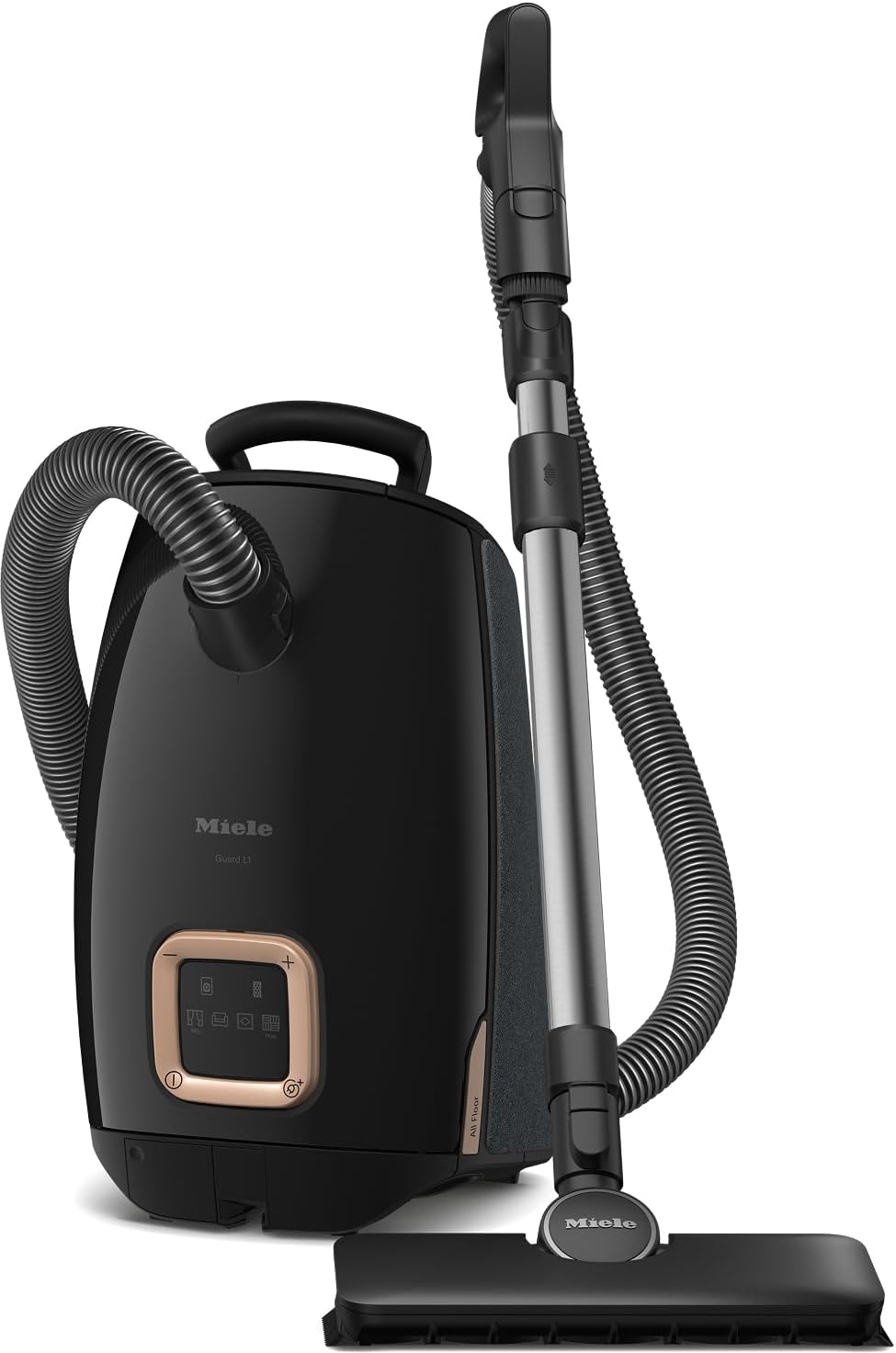
The Miele Guard L1 AllFloor pairs a 1200-watt motor with four suction modes controlled by foot switches. Its AllFloor brush handles hard floors and low-pile carpet, while DynamicDrive wheels help the canister move around the room. The included AirClean Plus filter captures dust; a HEPA filter is sold separately.
Key highlights
- Four suction modes with foot controls
- AirClean Plus filter and HyClean TU bags
- AllFloor brush and AllTeQ universal floorhead included
- 36-foot operating radius and one-touch cord rewind
Pros
- DynamicDrive caster wheels for maneuvering
- Adjustable telescopic wand and Comfort handle
- Integrated dusting brush and 2-in-1 upholstery and crevice nozzle
Cons
- Replacement bags add an ongoing cost
- HEPA filter is an optional extra
- Not compatible with Miele electric floorheads
Who it is for: Homes with tile and low-pile carpet that suit a bagged canister with adjustable suction.
Skip if
You prefer bagless convenience or need a powered floorhead for deep carpet cleaning.
Also Good
- Shark Stratos Powered Lift-Away - great for switching between carpet and tile.
- Eureka WhirlWind NEN110A - cheap canister with solid suction control.
- LEVOIT LVAC-200 - cordless stick with long runtime for quick cleanups.
How to Choose
- Brush roll control. This is the most important feature for tile. Look for a vacuum that lets you turn off the brush roll or has a soft roller head. Stiff bristles can scratch tile glazes and scatter debris instead of picking it up.
- Suction power and grout cleaning. Tile surfaces are easy to clean, but grout lines are recessed and trap dirt. You need either strong suction (200+ air watts or 5000+ Pa) to extract debris or wet cleaning to lift embedded grime.
- Corded vs. cordless. Corded vacuums give you unlimited runtime and usually stronger suction, which matters for whole-house cleaning. Cordless models offer convenience for quick daily touch-ups but come with battery limitations. Match the choice to your home size and cleaning habits.
- Filtration matters on tile. Older tile installations generate fine dust from deteriorating grout. That dust goes airborne when you vacuum. A HEPA filter with a sealed system keeps particles from escaping back into your air.
- Weight and maneuverability. Tile floors often span large areas like kitchens and bathrooms. A heavy vacuum gets tiring fast. Stick vacuums under 8 pounds are easier to handle, while uprights in the 12-to-16-pound range offer more power. Test the swivel steering if possible.
FAQ
Can a vacuum with a brush roll damage tile floors?
It can if the bristles are stiff or the brush roll runs aggressively. Look for a model with a brush roll on/off switch or a soft roller head designed specifically for hard floors.
Is it better to sweep or vacuum tile floors?
Vacuuming is better. Sweeping often just redistributes dust and fine particles. A vacuum with good suction and a soft brush roll lifts debris from both the tile surface and grout lines.
Do I need a special vacuum for tile floors?
You don't need a "tile-specific" vacuum, but you do need one with features that work well on hard surfaces. A brush roll shutoff, soft roller, or hard floor attachment makes the biggest difference.
Are robot vacuums effective on tile floors?
Yes, especially models with strong suction (5000+ Pa) and mopping capabilities. They handle daily maintenance well but may struggle with deep grout cleaning compared to a dedicated vacuum-mop combo.
How often should I vacuum tile floors?
For most homes, two to three times per week is enough to keep dust and debris from building up in grout lines. High-traffic areas like kitchen tile may need daily vacuuming.
Published April 29, 2026 Last updated September 5, 2026
Share this article
More in News
Best Cameras for Live Streaming in 2026
The Elgato Facecam MK.2 tops our list of the 8 best cameras for live streaming in 2026, tested for every budget and streaming style.
3 min read
8 Best External SSDs for Gaming in 2026
Our top external SSDs for gaming, led by the rugged Samsung T7 Shield, plus the best value, high-speed, and Xbox expansion picks for PC and console.
5 min read
8 Best Trackball Mice in 2026
The best trackball mice for 2026, tested for comfort and precision. The Logitech MX Ergo S leads our picks, with options from $38 to $110 for every budget.
3 min read
41 Best Mother's Day Tech Gifts for 2026
Our top 41 Mother's Day tech gifts for 2026, from the Apple Watch Series 11 to the Ninja CREAMi and Dyson Airwrap, with picks for every budget and mom.
5 min read

Samsung coupon codes and deals
5 min read

Best tech coupon codes and online deals
4 min read

8 Best Tablets for Note Taking in 2026
5 min read
8 Best Monitors for MacBook in 2026
4 min read

7 Best Smartphones Under $700 in 2026
3 min read
7 Best Tablets for Toddlers to Buy in 2026
3 min read
7 Best Smart Scales for 2026
4 min read
8 Best Soda Makers for 2026
4 min read