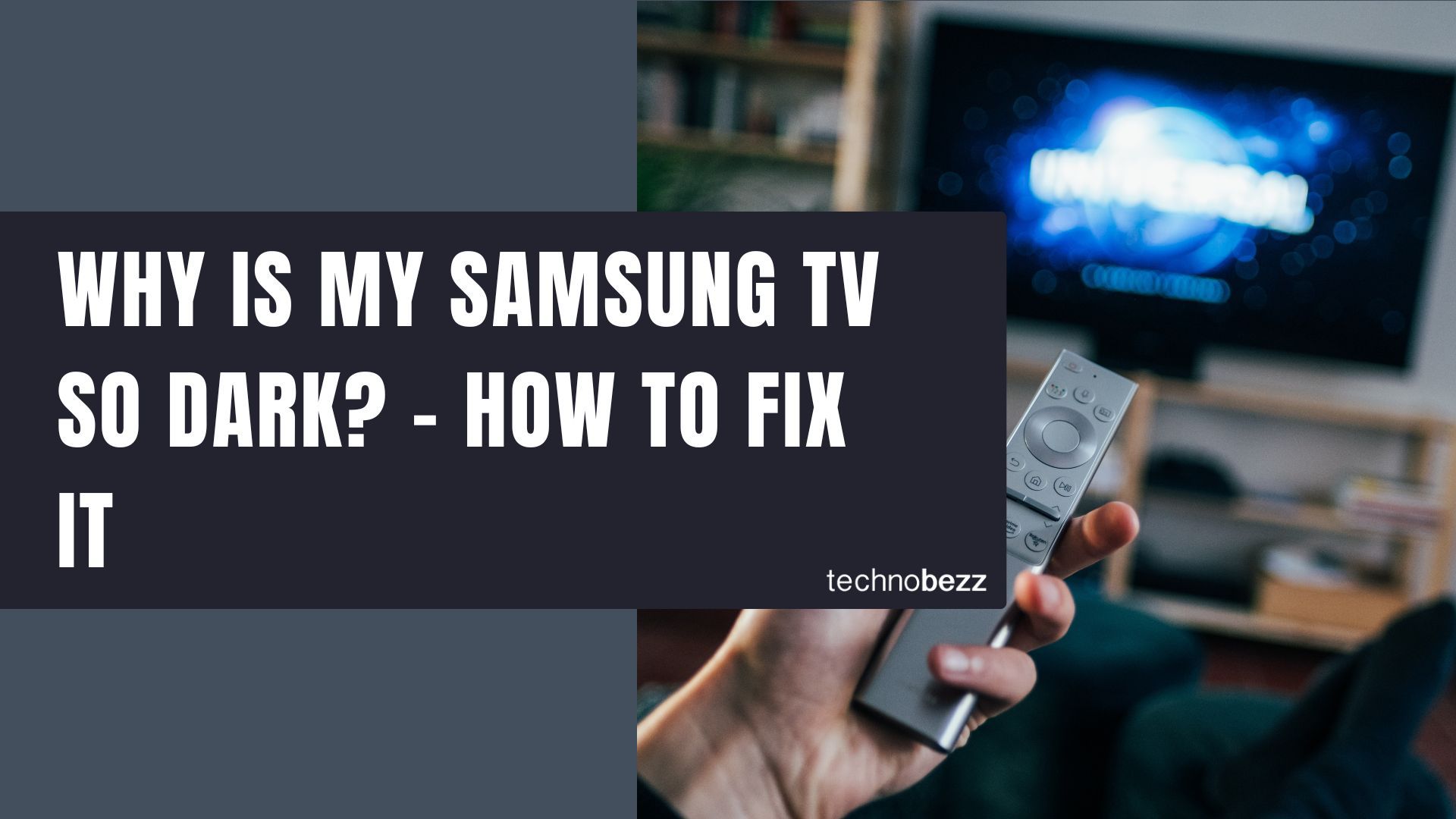
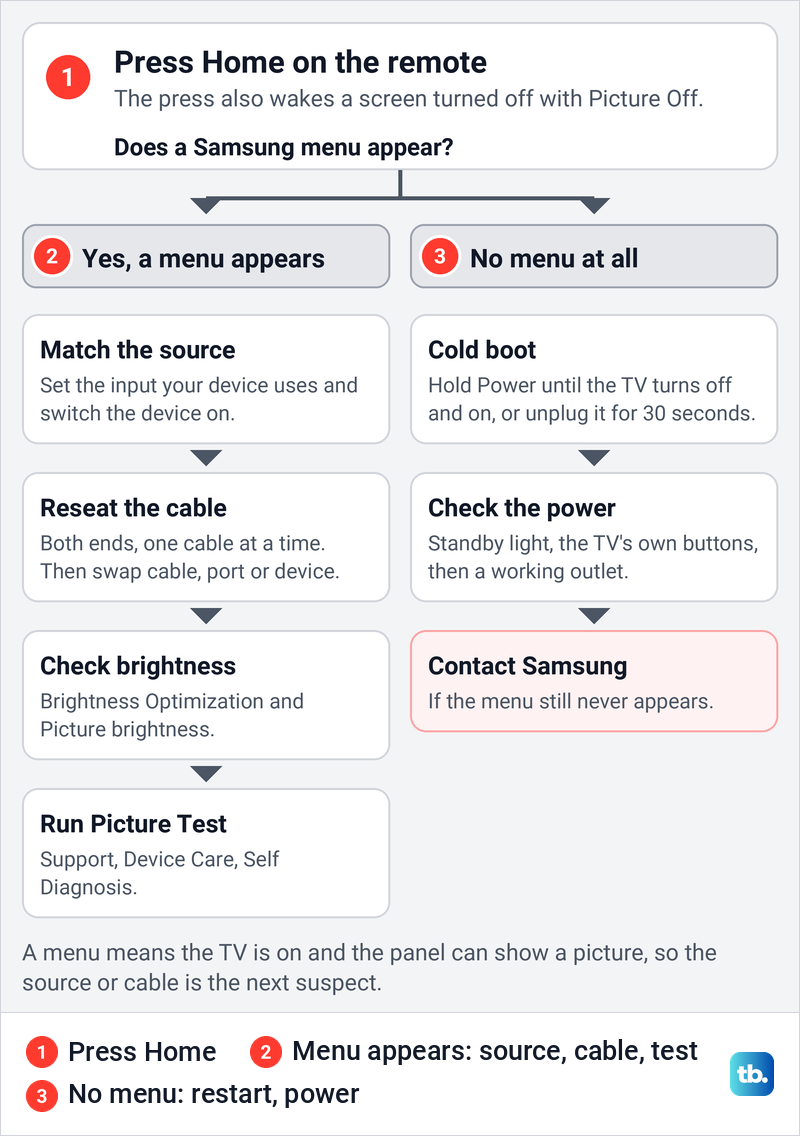
If your Samsung TV screen is black, press Home on the remote first. If a menu appears, the TV is on, so check that the source matches a device that is switched on, reseat its HDMI cable and then run Picture Test. If no menu appears, restart the TV and check its power before you contact Samsung.
That one button splits the problem in two, and it is how Samsung's own troubleshooting starts. The same press also wakes a screen that was turned off with Picture Off. A black screen with sound still playing does not tell you which part has failed, so the checks below go from the quickest and safest to the last resort.
The short version
- Menu appears after Home: the TV is on. Check the source and the device connected to it.
- Sound but no picture: pressing Home, or any button except Volume and Power, undoes Picture Off.
- Picture very dark: check Brightness Optimization and the Brightness setting under Picture.
- Menus work: run Picture Test in Support > Device Care > Self Diagnosis.
- No menu at all: hold Power for a cold boot, check the standby light and a working outlet, then contact Samsung if nothing changes.
| What you see | Check first | Then |
|---|---|---|
| Home menu appears, one input is black | The source and the device's power | Reseat both cable ends, swap the cable or port |
| Sound plays, the screen stays black | Home, which also undoes Picture Off | Cold boot, then Samsung's power checks |
| Picture is there but very dark | Brightness Optimization and Picture brightness | Run Picture Test |
| Screen goes black after a while | Sleep Timer and Auto Power Off | Set the timer to Off |
| Only one app is black | Another app or source | Restart or clear the cache of that app |
| No menu, no response | The standby light and the outlet | Contact Samsung for service |
Start with the Home button
Press Home on the Samsung remote. Samsung says that if the menu appears, the TV is powered on, but it is either on the wrong source or not receiving a signal. If the menu does not appear, Samsung says the TV may be having power issues.
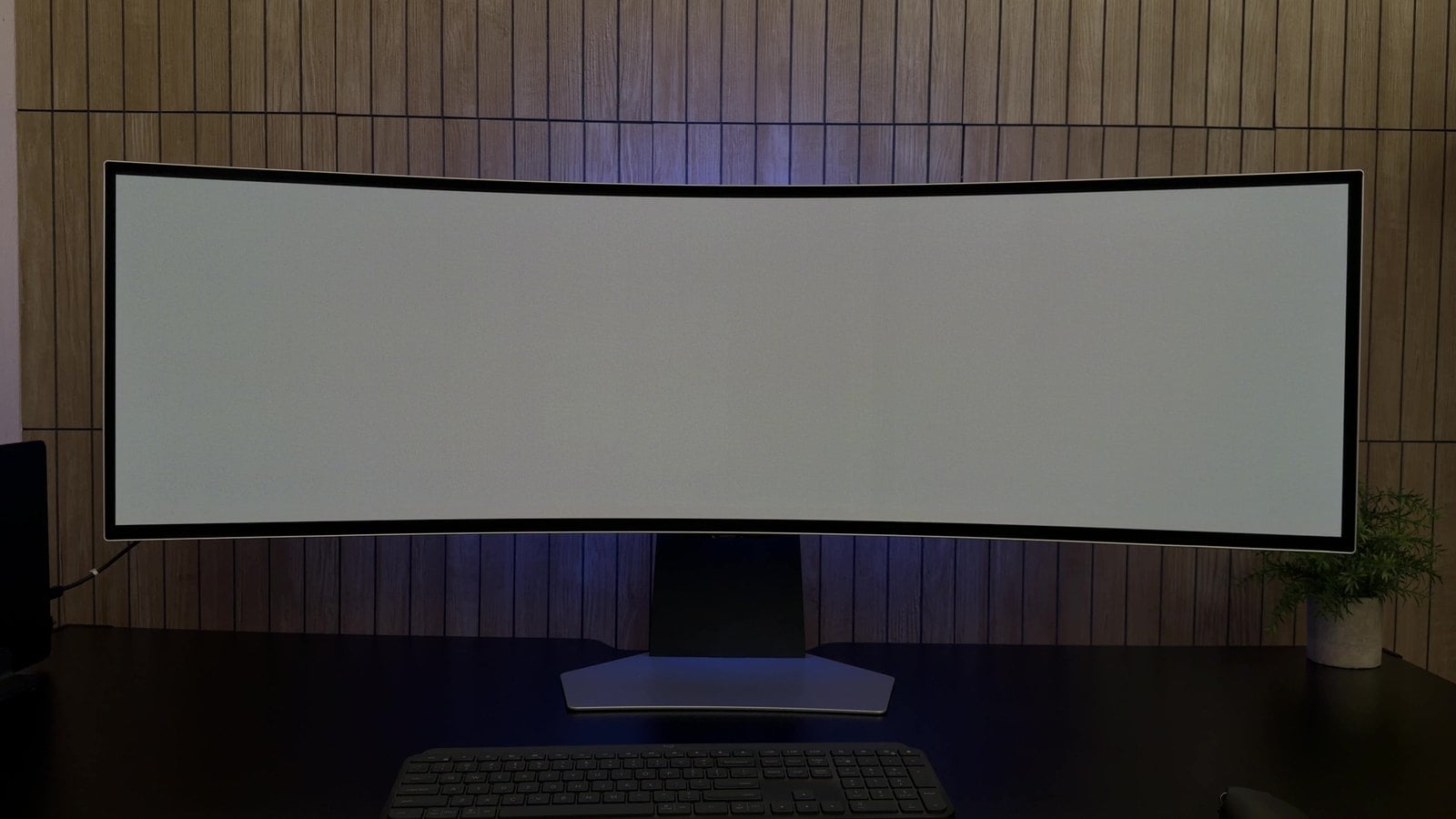
Our photos come from our Samsung Odyssey OLED G9, a smart monitor that runs the same Tizen software as Samsung's smart TVs. On its white Samsung remote, Home is the house button under the navigation ring, and the Smart Hub screen in the photo is the kind of menu Samsung means.
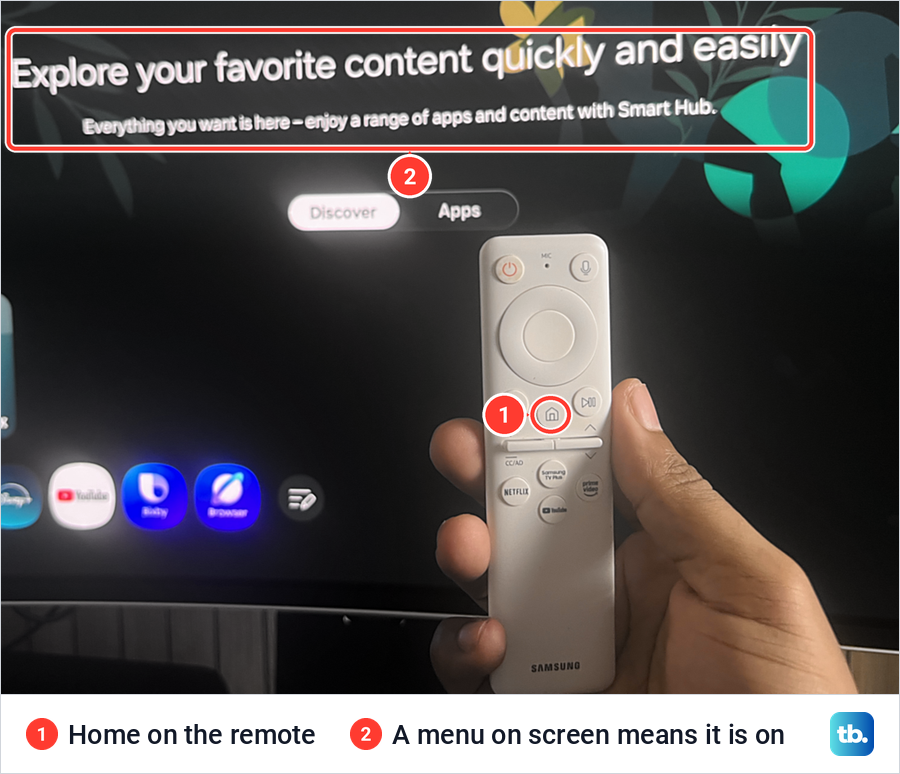
A menu tells you the TV is on and the screen can show a picture, so look at what is feeding it before you suspect the panel. It does not prove every part is healthy, which is why Picture Test comes later. If nothing appears, the path changes, and the diagram shows both sides.
Wake a screen that Picture Off turned dark
Samsung TVs can switch the picture off on purpose and keep the sound playing. Samsung describes Picture Off as a way to turn off the TV screen and provide only sound to save power. If someone turned it on, the TV looks broken while it is working exactly as asked.
The fix takes one press, and the Home press above already counts. Samsung says any button on the remote except Volume and Power turns the screen back on. On current models, Samsung lists the setting under Settings > All Settings > General & Privacy > Accessibility > Picture Off, and on TVs from before 2016 it sat in the picture settings.
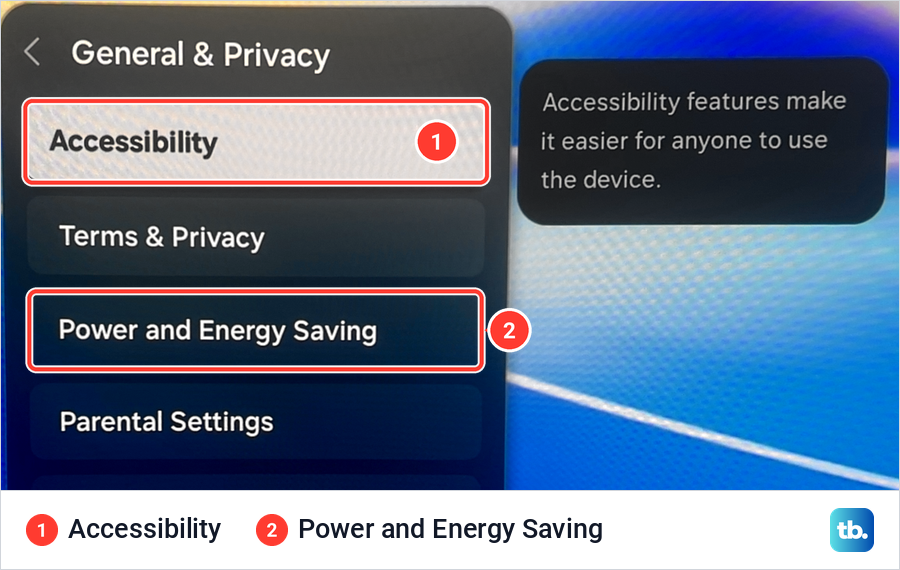
On our monitor, Accessibility is the first item in General & Privacy, two rows above Power and Energy Saving. If the picture goes dark again while sound plays, open Accessibility and look for the control Samsung names Picture Off. Picture Off cannot explain a missing menu, so if Home brings up nothing, go to the cold boot and power checks.
Check the source and the connected device
Samsung says a TV can show a black screen when it is set to a source whose device is switched off. If your cable box is on HDMI 1, set the TV to HDMI 1 and make sure the box itself is on. The same goes for a games console, a streaming stick or any other device on that input.
Open the source list from the Home menu and look for the tick. On our monitor the selected source carries a tick, and a Help tile beside it is labelled Connection Guide. On a TV, pick the HDMI input your device is plugged into.
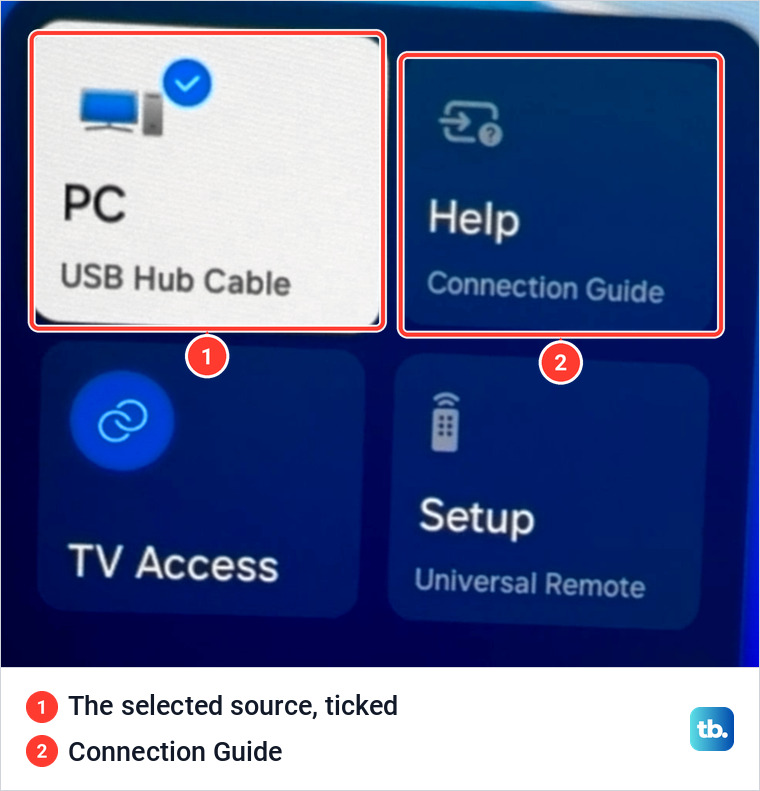
If the device you want is not the ticked one, change the HDMI input on your Samsung TV to the port printed beside its cable. If the right input is already ticked, the cable is the next thing to check.
Reseat and test the HDMI cable
If the source is right and the screen is still black, Samsung's next step is to unplug and reconnect the connections one cable at a time, from both ends of each cable. A cable that shows damage needs replacing, and Samsung says to turn the device off and back on once it is reconnected. Work through the chain in the order below, so you change one thing at a time.
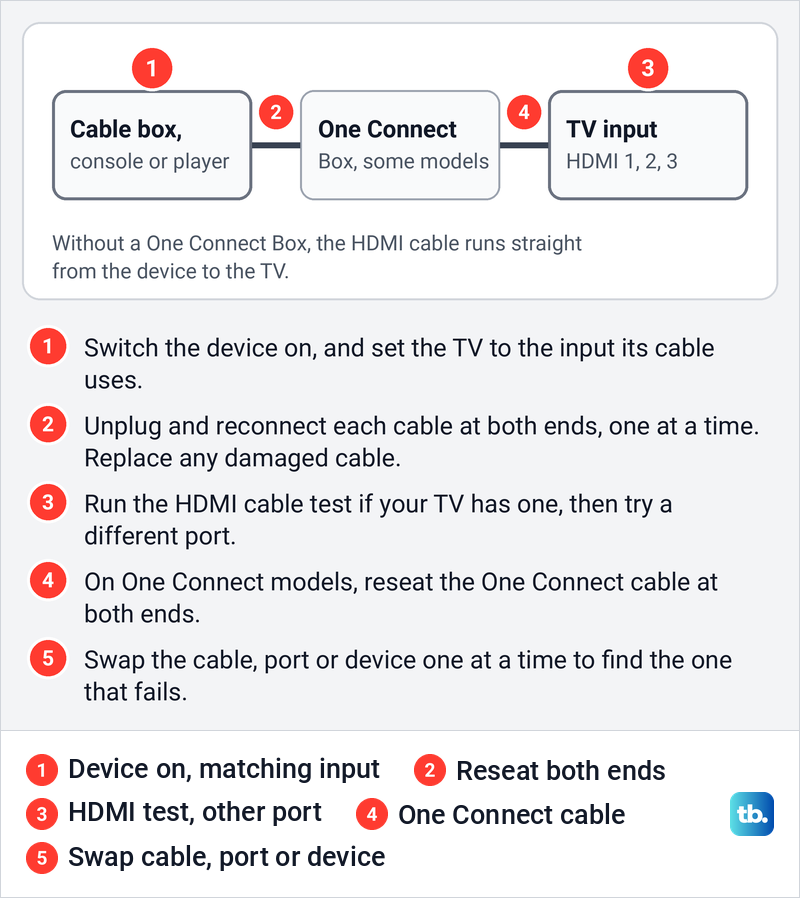
Some Samsung TVs can test the cable for you. On 2022 and later models, Samsung's path is All Settings > Support > Device Care > Self Diagnosis > HDMI Troubleshooting, where you pick the port to test. On previous models that offer the test, look under Self Diagnosis > Signal Information > HDMI Cable Test. Samsung says some models only gain the test after a software update, and older models do not have it.
On previous models, leave the TV on the HDMI input whose cable you want to test before you start. Samsung says the test is designed for cables shorter than 6 feet, or 2 meters, and may not give accurate results on longer ones. If the test reports a bad cable, Samsung says to replace it and that the TV needs no service.
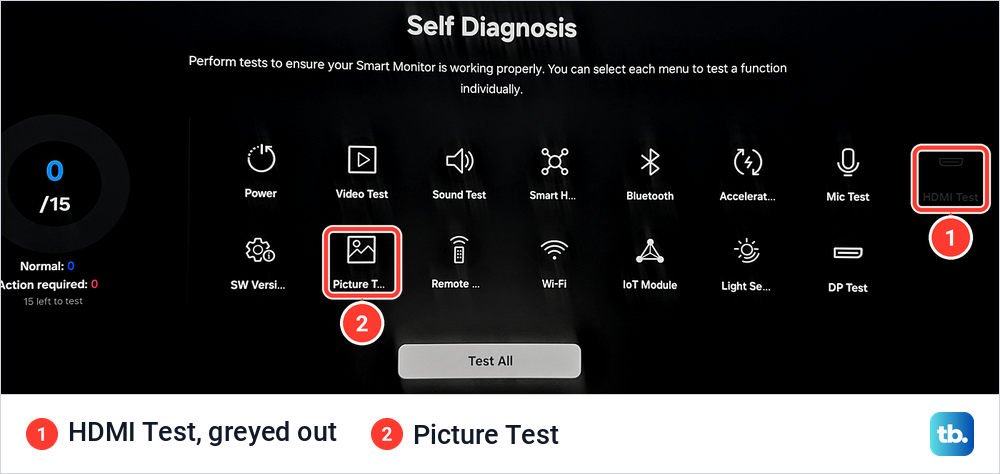
Do not worry if the test is greyed out. On our monitor, HDMI Test sat greyed out in the Self Diagnosis grid. Samsung says a greyed-out setting does not mean something is wrong, only that it is not available for the current source, setting or connections.
The last check is a different device or a different port. A picture in another setup narrows the problem to the port, cable or device you changed, so swap them back one at a time until you find the one that fails, as Samsung suggests. Our guide to Samsung TV HDMI connection problems covers the device side in more depth.
Check the One Connect Box if your TV has one
Some Samsung TVs route every cable through a separate One Connect Box, which Samsung says comes only with select models. On those sets, disconnect and firmly reconnect the One Connect cable at both ends. Samsung says a cable that is bent, broken, kinked, pinched or under a heavy object can cause problems and needs replacing if it is damaged.
Samsung's next test is to disconnect the box, by its power cord or its cable, and look at the TV. If a message or picture appears, Samsung says the box needs replacing. If the TV is on and nothing appears at all with the box disconnected, Samsung says to request service.
Fix a picture that is too dark to see
A picture that is on but very dim can pass for a black screen in a bright room. Samsung's Brightness Optimization "automatically adjusts the picture brightness based on the ambient light level," and its Minimum Brightness setting sets how far it can drop. Both live in Settings > All Settings > General & Privacy > Power and Energy Saving, where our monitor shows them too.
We switched Brightness Optimization on to see what changes. Before, the switch was off and Minimum Brightness under it was greyed out. After, the switch was on and Minimum Brightness became adjustable, set to 2 on our monitor.
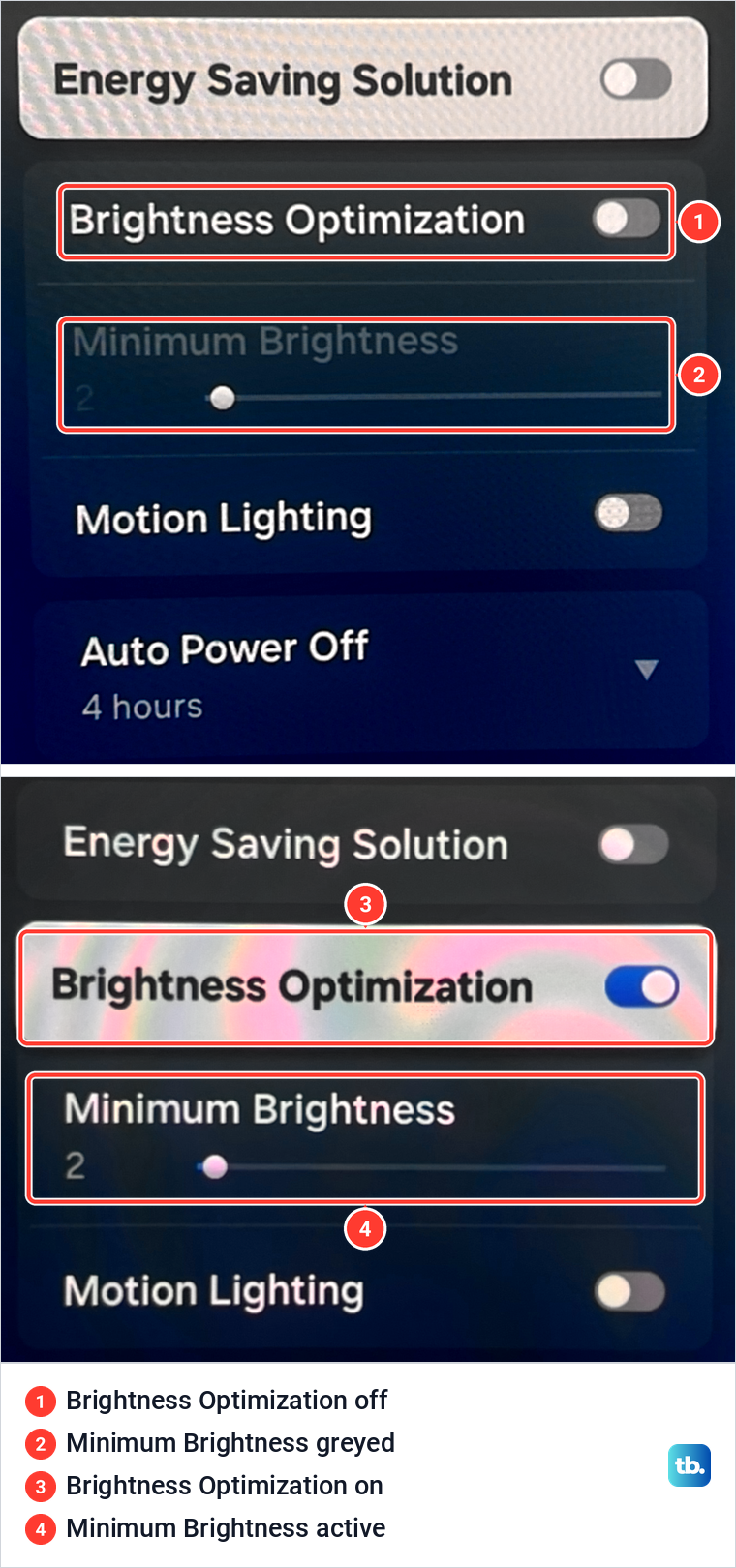
If the picture looks too dim, turn Brightness Optimization off and compare, or raise Minimum Brightness. Samsung notes that Minimum Brightness only works when it is lower than the main Brightness setting, and that these energy features are unavailable while Adaptive Picture is on.
Older TVs name these controls differently. On 2021 models, Samsung lists them under All Settings > General > Eco Solution, where Ambient Light Detection and Power Saving Mode adjust the brightness. On earlier models, look for Energy Saving or Eco Solution under General, and Samsung says to set it to Off.
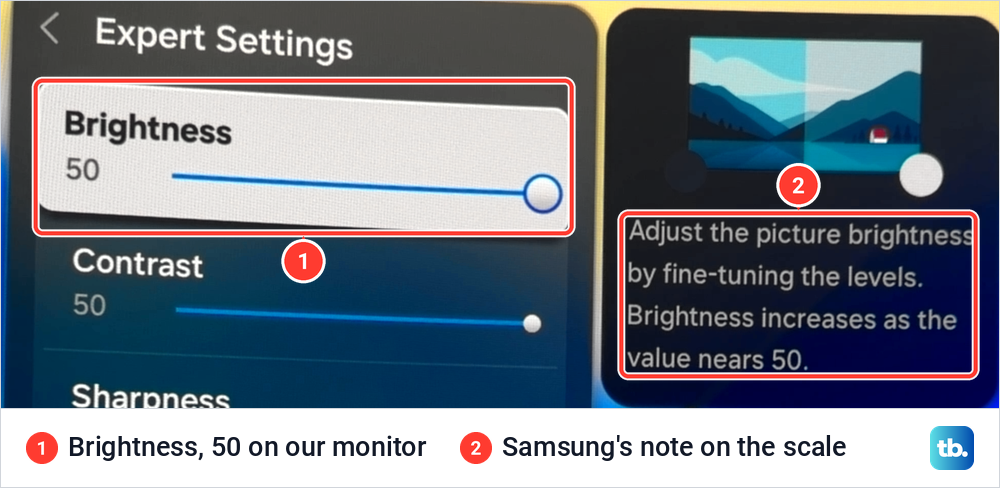
The main setting sits under Settings > All Settings > Picture > Expert Settings > Brightness. Our monitor showed it at 50, with Samsung's note that brightness increases as the value nears 50. If yours has been turned far down, raise it and look again.
If the screen goes black after a while
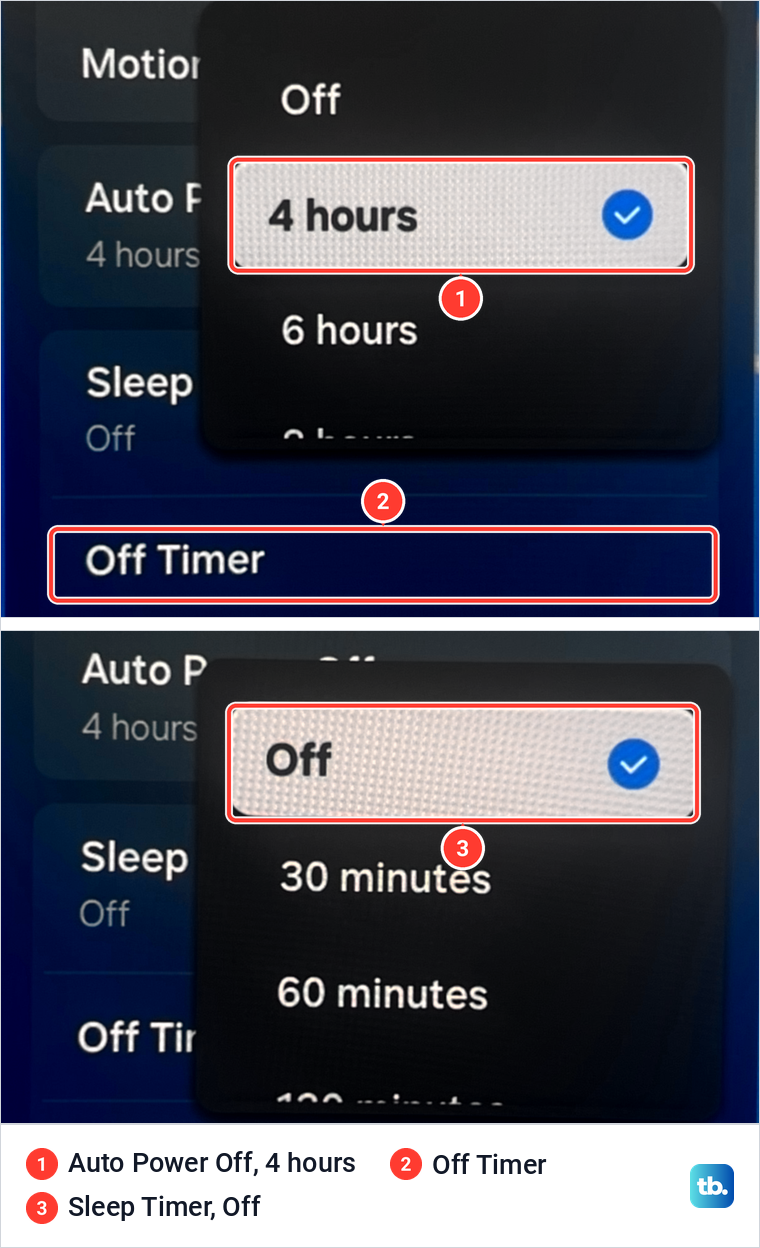
A picture that works and then disappears can be a timer doing its job. Samsung says Auto Power Off turns the TV off when its buttons and remote have not been used for a set time, and the Sleep Timer turns it off after a set period of up to 180 minutes. On recent models, both sit in Power and Energy Saving.
On our monitor, Auto Power Off included Off, 4 hours and 6 hours, with 4 hours selected. The Sleep Timer list included 30, 60 and 120 minutes and was set to Off. An Off Timer row sat just below them in Power and Energy Saving, and Samsung says it turns the TV off at a specified time, so check it too if the screen goes off at the same time each day.
If a timer matches the moment your screen goes dark, set it to Off. On TVs with Ambient Mode, Samsung's Sleep After option decides when the Ambient screen turns itself off. If the TV switches itself on and off with no timer set, follow our steps for a Samsung TV that keeps turning on and off.
Restart the TV with a cold boot
A cold boot restarts the TV completely without changing any setting. Samsung's method starts with the TV turned on: press and hold Power on the Samsung remote and keep holding it while the TV powers off and then back on. Samsung says this clears the memory cache.
Without the remote, unplug the TV's power cord with the TV on, wait 30 seconds and plug it back in. Our guide on how to restart a Samsung TV walks through both methods and what to expect while it starts. If the TV is also slow to respond, see our guide to a slow or laggy Samsung TV.
Run Picture Test to check the picture
Once you can see the menus, Picture Test shows Samsung's own test photo, so you can judge the TV's picture without any connected device. On 2022 and later models, Samsung's path is All Settings > Support > Device Care > Self Diagnosis > Picture Test. On older models, Self Diagnosis sits straight under Support.
We ran it on our monitor. A note asked us to look carefully at the screen for the next 5 seconds, Samsung's test photo played, and then the screen asked "Does the test picture look normal?" with Yes, No and Show Again. Afterwards Self Diagnosis showed Picture Test ticked, and the counter had moved from 1 to 2 of 15 tests, both normal.
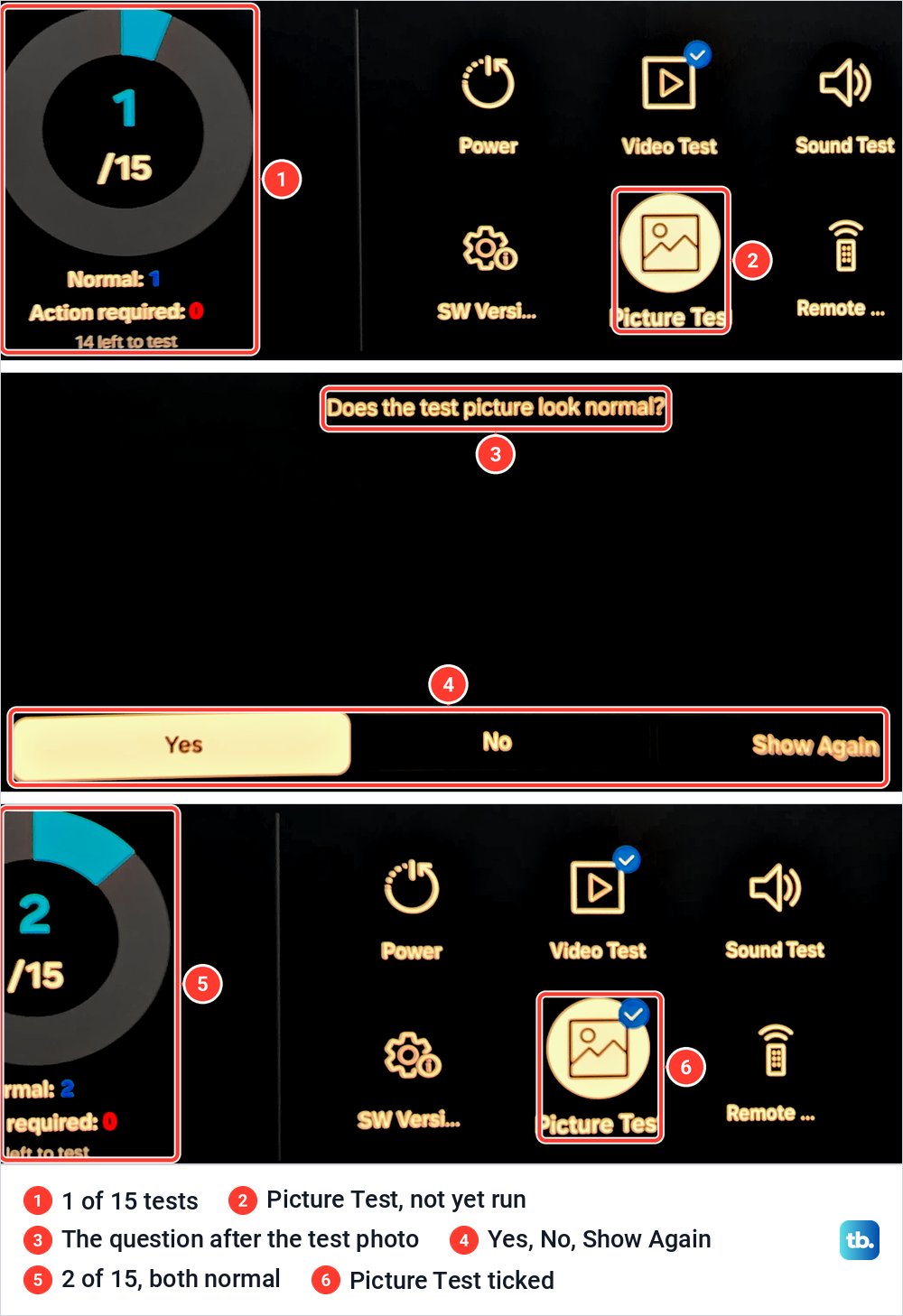
Samsung reads the result this way. If the test picture shows a flaw, such as lines or flicker, Samsung says the TV may have a problem and to contact Samsung Support. If the test picture looks normal, Samsung points you back to the cable and the connected device, so check the source, cable and device next.
If only one app shows a black screen
If Home, the menus and your other sources all show a picture, start with the affected app. First restart the affected Samsung TV app before you change any TV-wide setting.
If it stays black, clear the app cache on your Samsung TV for that one app. Netflix has its own error screens and sign-in steps, so use the guide for Netflix not working on a Samsung TV if that is the app. If the app stays black, the software update in the next section is the TV-wide step to try, because Samsung says some apps are fixed by a software update.
Update the software once the menus work
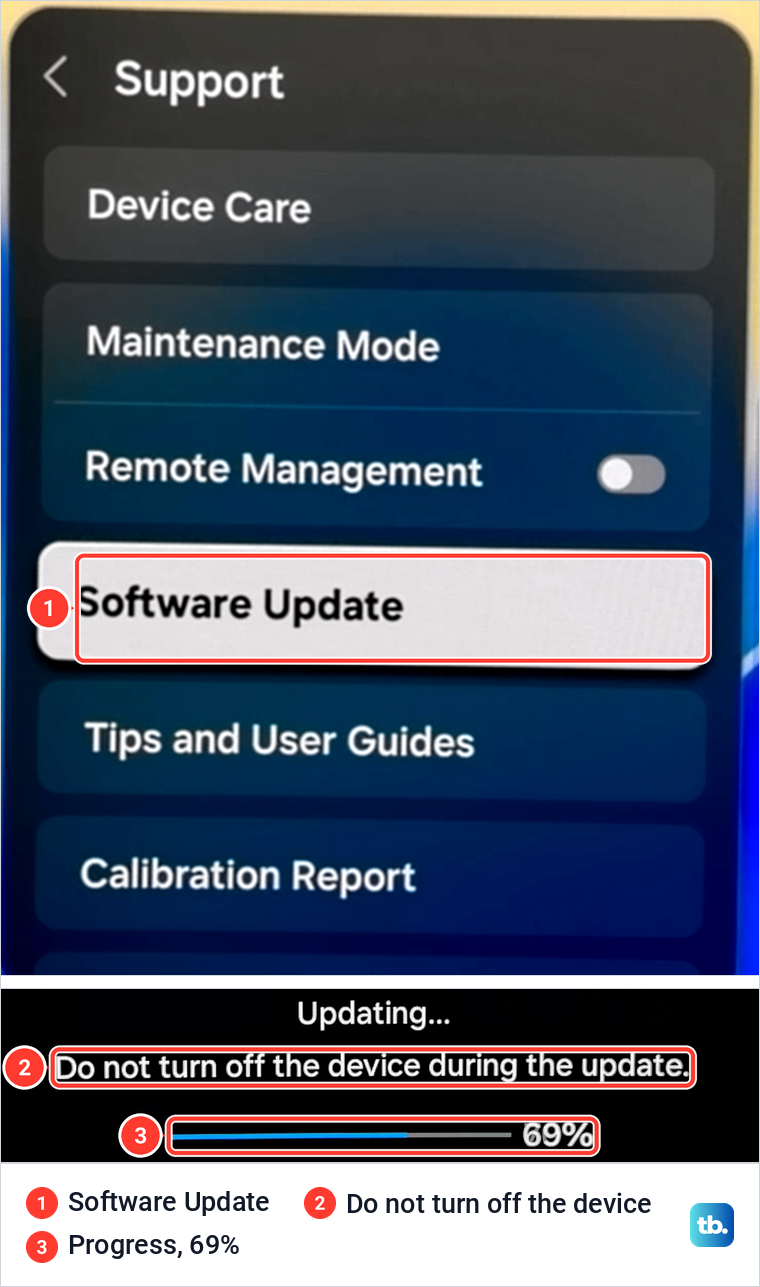
An update needs working menus, so it comes after the checks above. Samsung's path is Settings > All Settings > Support > Software Update > Update Now. Samsung says updates usually take a few minutes, that you should not turn the device off until it finishes, and that it restarts by itself when done.
Our monitor shows that warning on screen. Software Update sits in Support, and during an update the screen read "Do not turn off the device during the update" above a progress bar, here at 69%.
If Software Update is greyed out, Samsung says a streaming app is running in the background, so switch to the TV source first. Samsung also warns that picture and sound settings can return to their defaults after an update. A full reset is the last software step, and our guide explains how to factory reset a Samsung TV and what it erases.
If the menu never appears
When Home brings up nothing, even after a cold boot, Samsung treats it as a possible power problem. Its checks start with the red standby light, then the Power button on the TV itself, then 30 seconds unplugged and an outlet you know works. Our guide to a Samsung TV that will not turn on follows those checks step by step.
The light itself tells you something. Samsung says the red standby light goes off whenever the TV is on, so no light can mean the TV is on with a black screen or has no power. A lit light with no response points to the remote first.
On an LED TV, which lights its pixels from behind, Samsung's support page for Brazil describes a flashlight check. Darken the room, hold a phone light close to the screen, and look for faint shadows of a picture. Samsung says that means the TV is producing an image but the screen lighting is not working.
That check does not apply to OLED TVs, which Samsung says have self-lit pixels with no separate backlight. On an LED TV, a faint image is a clue for the technician, not a reason to open the TV. If the menu never appears after Samsung's power checks, use Samsung's Support Center to request service, or your country's Samsung support site.
Samsung asks for the TV's model code, software version and serial number when you call. If you are not sure which set you own, here is how to check the model of your Samsung TV.
How we tested this guide
Our photos come from our Samsung Odyssey OLED G9, a smart monitor that runs the same Tizen software as Samsung's smart TVs, and its white Samsung remote. On it we opened the source list, Accessibility, Power and Energy Saving, Expert Settings, the timers and Self Diagnosis, switched Brightness Optimization on, and ran Picture Test.
The Home-button check, the cable and One Connect steps, Picture Off, the cold boot, the power checks and the service advice follow Samsung's own support pages for TVs. Where Samsung's TV menus use a different name from our screen, we give Samsung's wording.
Frequently Asked Questions
Why is my Samsung TV screen black but the sound works?
The TV is on, so press Home. That press also undoes Picture Off, because any button except Volume and Power turns the screen back on. A menu means Samsung's next suspects are the source, the connected device and the cable. If nothing appears even though sound plays, try a cold boot and then Samsung's power checks.
How do I get the picture back after turning it off?
Press any button on the remote except Volume and Power. Samsung says the screen turns back on, and the setting itself is in General & Privacy > Accessibility > Picture Off.
What if the Samsung menu does not appear?
Try a cold boot, then follow Samsung's power checks: the standby light, the TV's own Power button and a working outlet. If the TV still cannot show its own menu, contact Samsung for service.
Where is Picture Test on a Samsung TV?
On 2022 and later models it is in All Settings > Support > Device Care > Self Diagnosis. On older models, Self Diagnosis is directly under Support.
Can a bad HDMI cable cause a black screen?
Yes, on the input that cable feeds. Reseat both ends, try a cable you know works, and use the TV's HDMI test if it has one. The test is meant for cables under 6 feet.
Does a flashlight test prove the backlight has failed?
No. On LED TVs a faint image under a flashlight points to a lighting fault, but it does not name the failed part. OLED TVs have no separate backlight, so the test does not apply to them.
Why does my Samsung TV screen go black after a while?
Check Sleep Timer and Auto Power Off in Power and Energy Saving, because both turn the TV off on schedule. A picture that dims rather than switching off points to Brightness Optimization instead.