When the sound cuts out on your Samsung Galaxy Tab A9+, it can really put a damper on watching videos or playing games. The issue might be with all audio or just a specific app, but it's usually something you can fix yourself. I'd start with the quick checks first, as they solve the problem more often than not.
It is worth confirming the basics with a quick online speaker test. If neither channel plays a tone, you are looking at a hardware or connection problem rather than a settings issue.
Check Your Volume and Sound Mode
First, make sure your tablet isn't just on silent. While you're playing something, press the volume up button on the side. You should see the volume slider appear on the screen. If it's all the way down, slide it up.
Next, swipe down from the top of the screen twice to open your Quick Settings panel. Look for the sound mode icon. If it says "Vibrate" or "Mute," tap it to switch it back to "Sound." This is a common one to miss.
Disconnect Any Bluetooth Devices
Your Tab A9+ might be trying to send audio to a speaker or headphones you've used before. To check, go to Settings > Connections > Bluetooth. If Bluetooth is on, you'll see a list of paired devices.
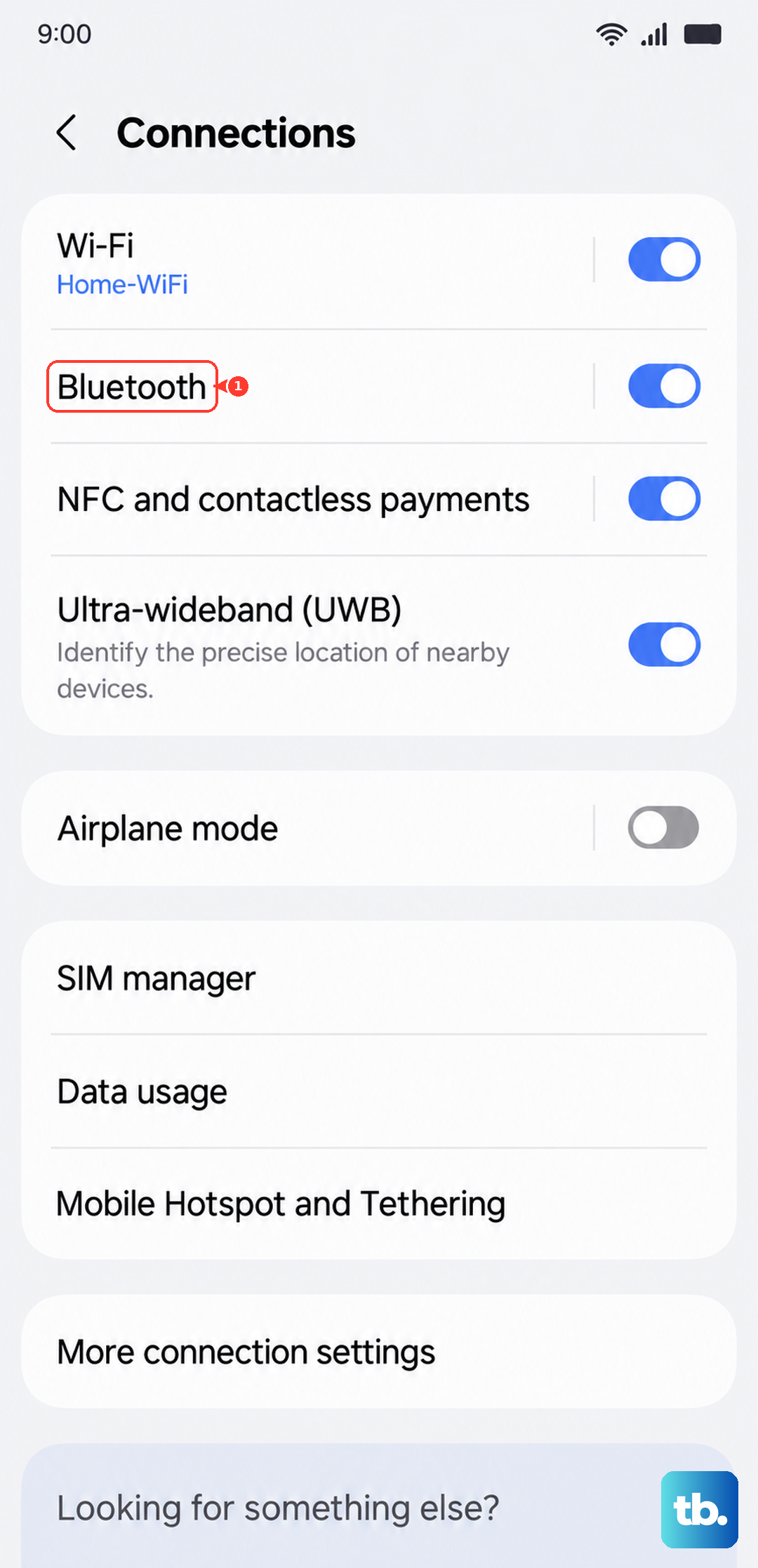
You can either tap the gear icon next to a connected device and select "Disconnect," or simply toggle the main Bluetooth switch off at the top. Once it's off, try playing your audio again through the tablet's own speakers.
Inspect the Speaker Grills
The Tab A9+ has speaker grills along the bottom edge when held in landscape mode. Over time, pocket lint or dust can get packed in there and muffle the sound. Give them a close look with a flashlight.
You can gently brush the grills with a soft, dry toothbrush or use a can of compressed air held upright for a quick blast. Avoid using anything sharp like a pin, as you could easily damage the speaker behind the grill.
Review the Separate App Sound Setting
This is a Samsung feature that can sometimes get a bit confused. It lets you route audio from one specific app to a different output, like Bluetooth, while everything else plays on the tablet. If it's set up wrong, it can seem like sound is gone.
To check, go to Settings > Sounds and vibration > Separate app sound. If this feature is turned on, toggle it off and see if your general audio returns. This has fixed it for me when only one app was silent.
Check Do Not Disturb and App Notifications
Do Not Disturb can silence everything, including media. Swipe down and check your Quick Settings for the Do Not Disturb icon (a circle with a line through it). If it's active, tap it to turn it off.
Also, some apps have their own internal sound settings. If you're only having trouble in, say, YouTube, open the app, start a video, and tap the screen to see if there's a mute icon on the video player itself. You can also check the app's notification settings in Settings > Notifications > App notifications.
Force Restart Your Tablet
A simple reboot clears out temporary glitches that can affect the audio system. For the Galaxy Tab A9+, press and hold the Volume Down button and the Power button together for about 10 seconds.
Keep holding until you see the Samsung logo appear, then let go. The tablet will finish restarting on its own. This doesn't delete any data, it just gives the software a fresh start.
Clear the System Cache
Corrupted cache files from old updates or apps can cause weird behavior, including sound issues. Clearing the cache partition is a safe next step. First, turn off your tablet completely.
Now, press and hold the Volume Up button and the Power button at the same time. When the Android Recovery screen menu appears (the blue text on a black background), let go of both buttons. Use the Volume Down button to highlight "Wipe cache partition," then press the Power button to select it. Confirm, then select "Reboot system now."
Update Your Software
Samsung releases updates that fix known bugs. Go to Settings > Software update > Download and install. Let it check for any available updates.
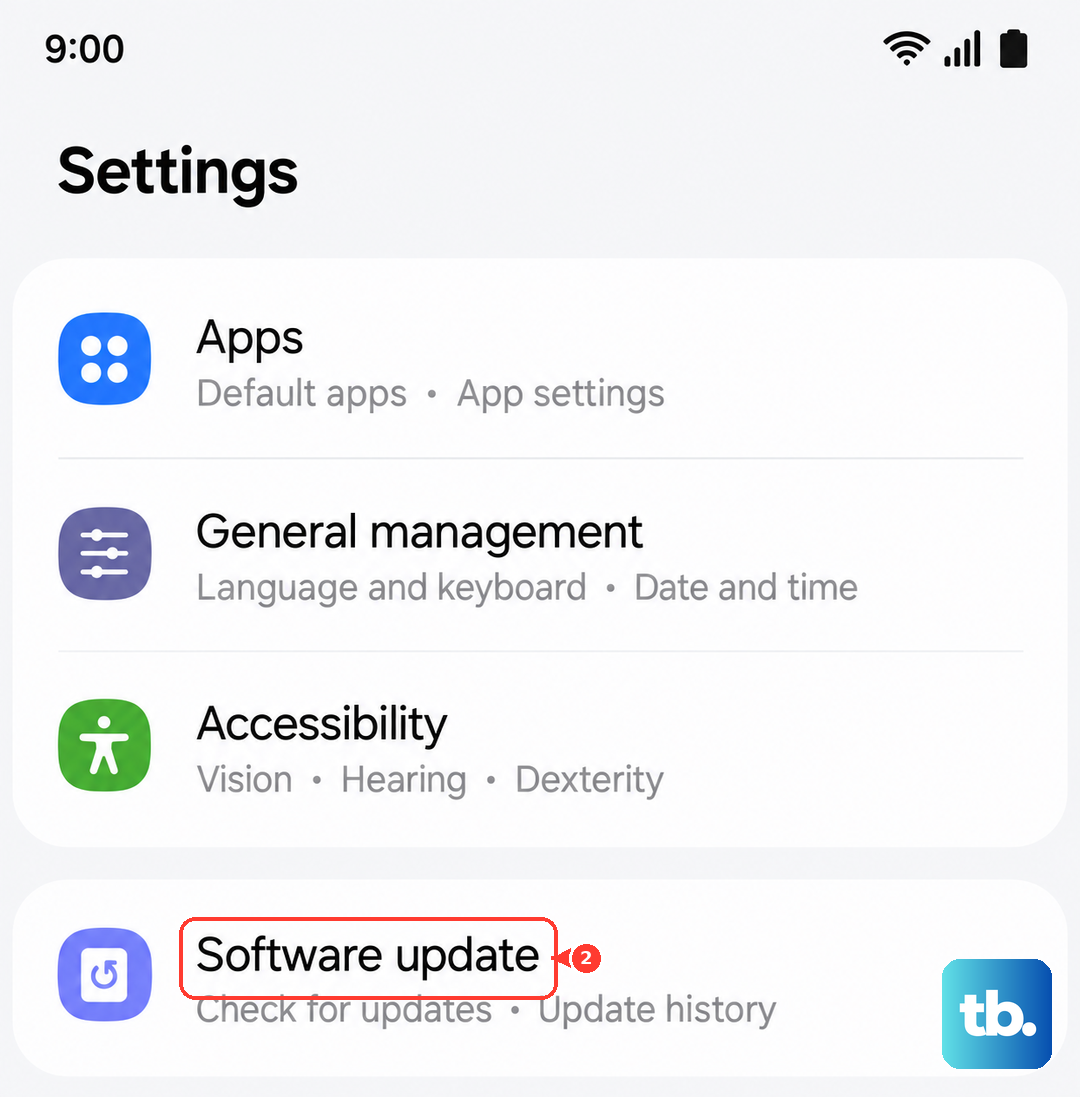
If there is one, make sure your tablet is charged above 50% and connected to Wi-Fi before you start the download and installation. An update can often resolve audio driver issues that popped up after the last patch.
Reset All Settings
If you're still having trouble, this will revert all your system settings back to factory defaults without touching your personal photos, apps, or files. It will reset things like Wi-Fi passwords, Bluetooth pairings, and display settings, so you'll have to set those up again.
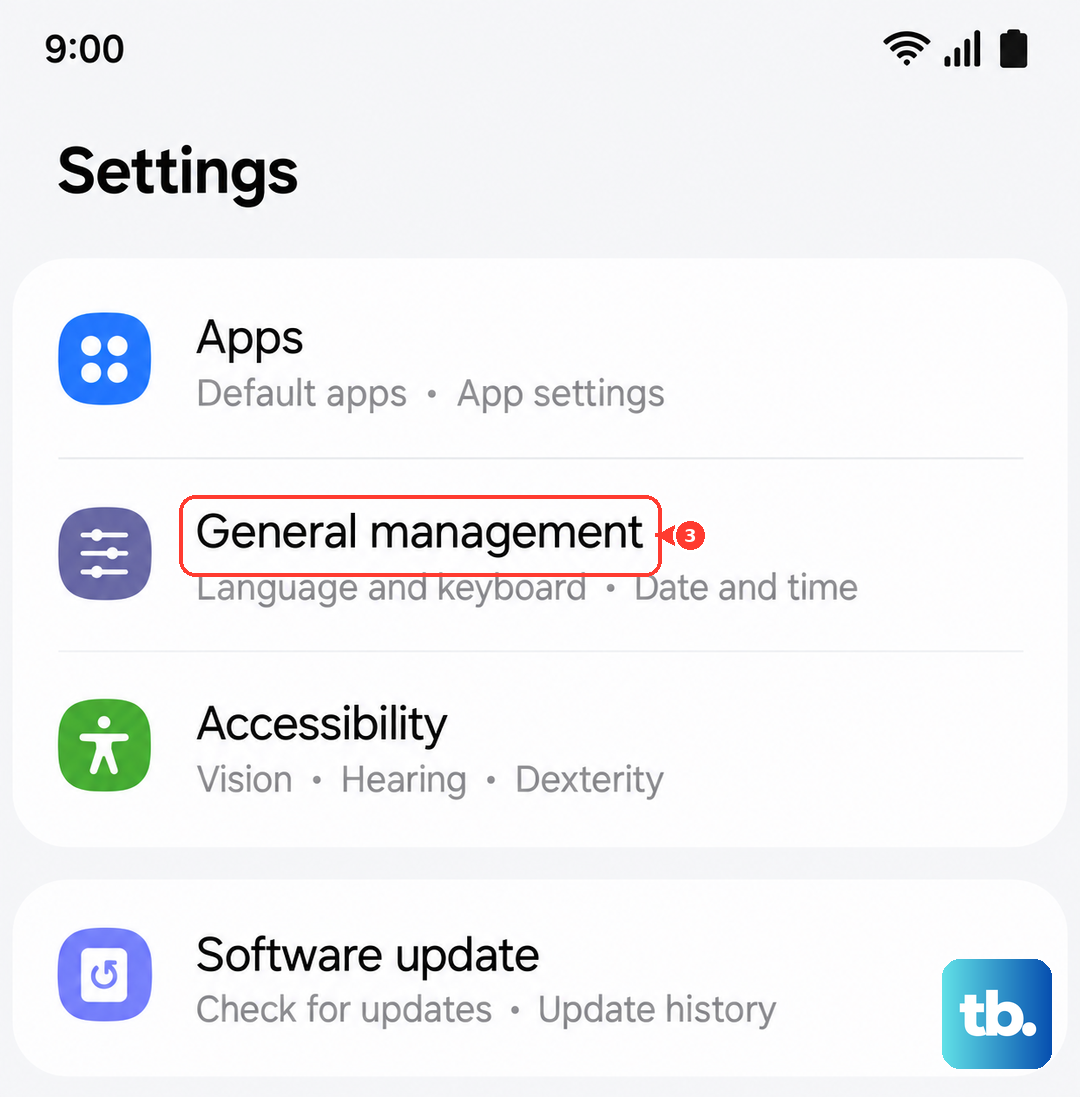
To do it, go to Settings > General management > Reset > Reset all settings. Read the prompt carefully, then tap "Reset settings" and confirm. Your tablet will restart. This is a good way to rule out a deep configuration problem.