
Missing calls on your Samsung Galaxy S26+ can be incredibly frustrating, especially when you're expecting something important. You might see the notification pop up or find a missed call log, but you never heard a sound. This usually comes down to a setting that got changed or a small software hiccup in One UI 8.5.
Check Your Sound Mode and Volume
First, look at the right side of your phone. If you see an orange strip on the power button, it means your phone is in Silent or Vibrate mode. Press and hold the power button for a second to bring up the power menu, then tap the sound icon at the bottom to cycle through Sound, Vibrate, and Silent modes. Make sure it's set to Sound.
Next, unlock your phone and press the volume up button on the side. Keep pressing until the volume slider is all the way to the top. You can also adjust this in your settings by going to Settings > Sounds and vibration and dragging the "Ringtone and notifications" slider to the right.
Turn Off Do Not Disturb and Modes
Do Not Disturb and Samsung's Modes & Routines are common culprits. Swipe down from the top of your screen twice to open the full Quick Settings panel. Look for the "Do Not Disturb" icon, which looks like a circle with a line through it. If it's highlighted, tap it to turn it off.
You should also check your Modes. Go to Settings > Modes and routines. Here, you'll see profiles like Sleep, Work, or Driving. If any are active, they might be set to silence calls. Tap on the active mode and make sure calls are allowed, or simply turn the mode off entirely to test.
Disconnect Bluetooth Accessories
If your S26+ is connected to a smartwatch, wireless earbuds like Galaxy Buds, or a car stereo, the call audio might be routing there instead of your phone's speaker. The quickest fix is to swipe down and tap the Bluetooth icon in your Quick Settings to turn it off temporarily. Then, have someone call you to test.
You can manage individual device connections by going to Settings > Connections > Bluetooth. Tap the settings icon next to a connected device and make sure "Call audio" is toggled off if you don't want calls going to that device.
Review Your Call and Block Settings
Samsung's software has several features that can silently filter calls. Go to your Phone app and tap the three-dot menu in the top right, then select Settings. Look for a section called "Block numbers" or "Call blocking and spam protection" to make sure the person trying to reach you isn't on the list.
Also, check for "Silence unknown callers" or a similar spam filter. In the Phone app settings, you might find options under "Caller ID and spam protection." If these are on, calls from numbers not in your contacts will be silenced. Turn it off to see if that's the issue.
Change Your Ringtone
Sometimes the specific sound file for your ringtone can get corrupted. Changing it forces the system to reload a fresh one. Go to Settings > Sounds and vibration > Ringtone.
Pick a different default tone, like "Over the Horizon 2026," and tap "Done." Then, immediately ask a friend to call you or use a second phone to test. If it works, you can switch back to your preferred tone afterward.
Check App-Specific Notification Settings
This problem can sometimes be isolated to your phone app. Go to Settings > Notifications > App notifications. Find and tap on "Phone" or "Samsung Phone" in the list.
Make sure notifications are turned on at the top. Then, tap on "Incoming calls" as a notification category. Ensure the sound is set correctly here and that it's not set to "Silent" with a crossed-out bell icon.
Restart Your Galaxy S26+
A simple restart clears out temporary memory and can fix minor software glitches that might be affecting the ringer. Press and hold the side key and volume down button together for about 10 seconds until you see the Samsung logo appear, then release. This is a soft reset and won't delete any of your data.
Update Your Software
Since the S26+ is new with One UI 8.5, early software bugs are a possibility. Samsung releases patches to fix these kinds of issues. Connect to Wi-Fi, then go to Settings > Software update > Download and install.
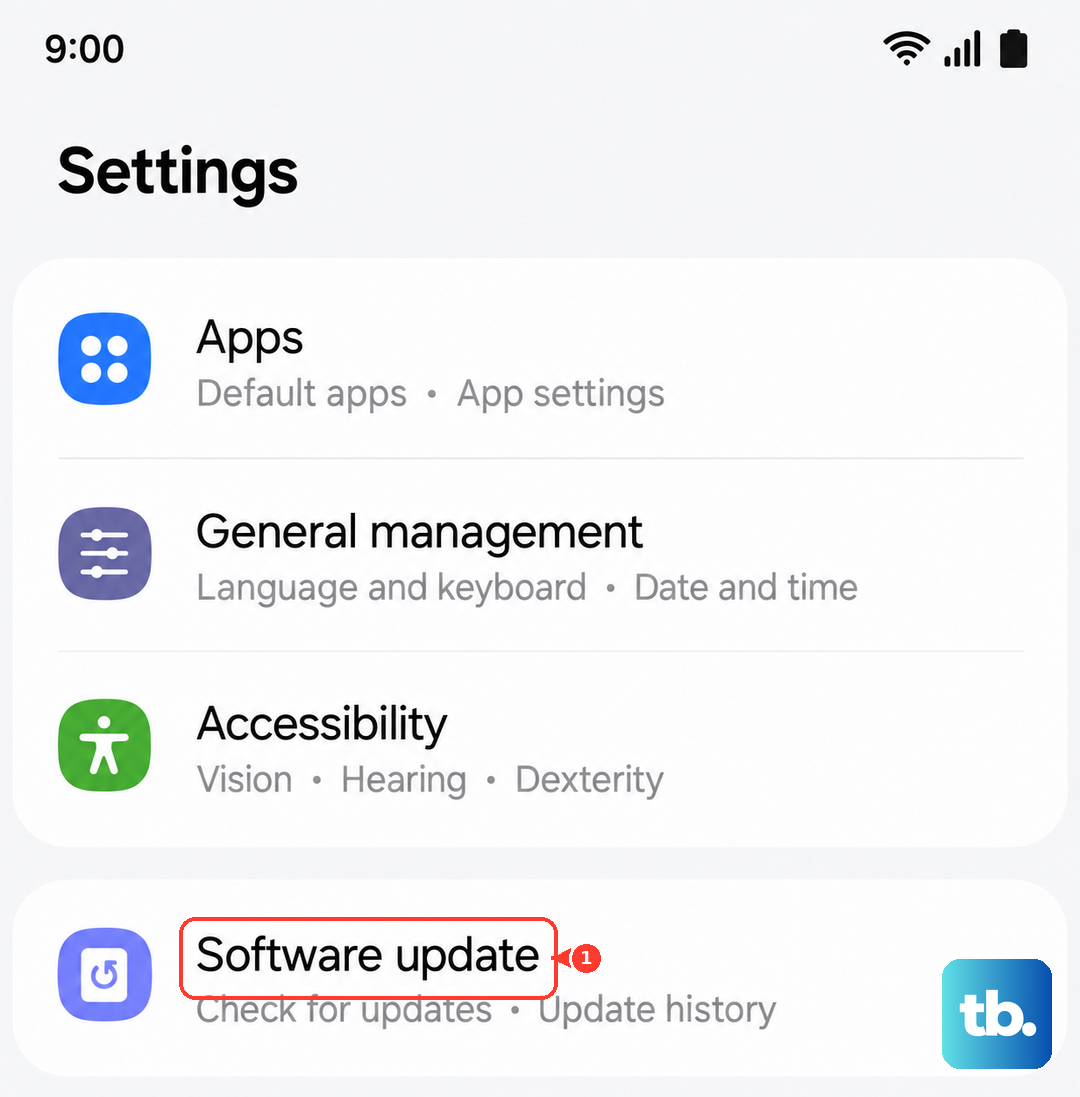
If an update is available, let it install. I've seen updates resolve notification and sound problems on other Galaxy models, so this is a worthwhile step.
Reset App Preferences
This is a lighter step than a full settings reset. It will revert all your app notification permissions, default apps, and background data restrictions back to their original states without touching your personal files. Go to Settings > Apps.
Tap the three-dot menu in the top right and select Reset app preferences. Confirm your choice. Afterward, you'll need to re-allow notifications for your apps, but it can clear up conflicts causing the silent calls.
Check for Call Forwarding
Call forwarding, if accidentally enabled, sends your calls straight to another number without ever ringing your phone. Open your Phone app and tap the three-dot menu, then go to Settings > Supplementary services or Call settings.
Look for "Call forwarding." Tap it and ensure all options, like "Always forward" or "Forward when busy," are set to "Turn off" or are not forwarding to another number.
Boot Into Safe Mode
Safe Mode temporarily disables all third-party apps you've downloaded. If your phone rings normally in Safe Mode, then a recently installed app is likely interfering. To enter Safe Mode, press and hold the side key until the power menu appears.
Then, press and hold the "Power off" option on your screen. A prompt will ask if you want to reboot to Safe Mode. Tap "Safe mode." Test a call. To exit, just restart your phone normally.
Reset All Settings
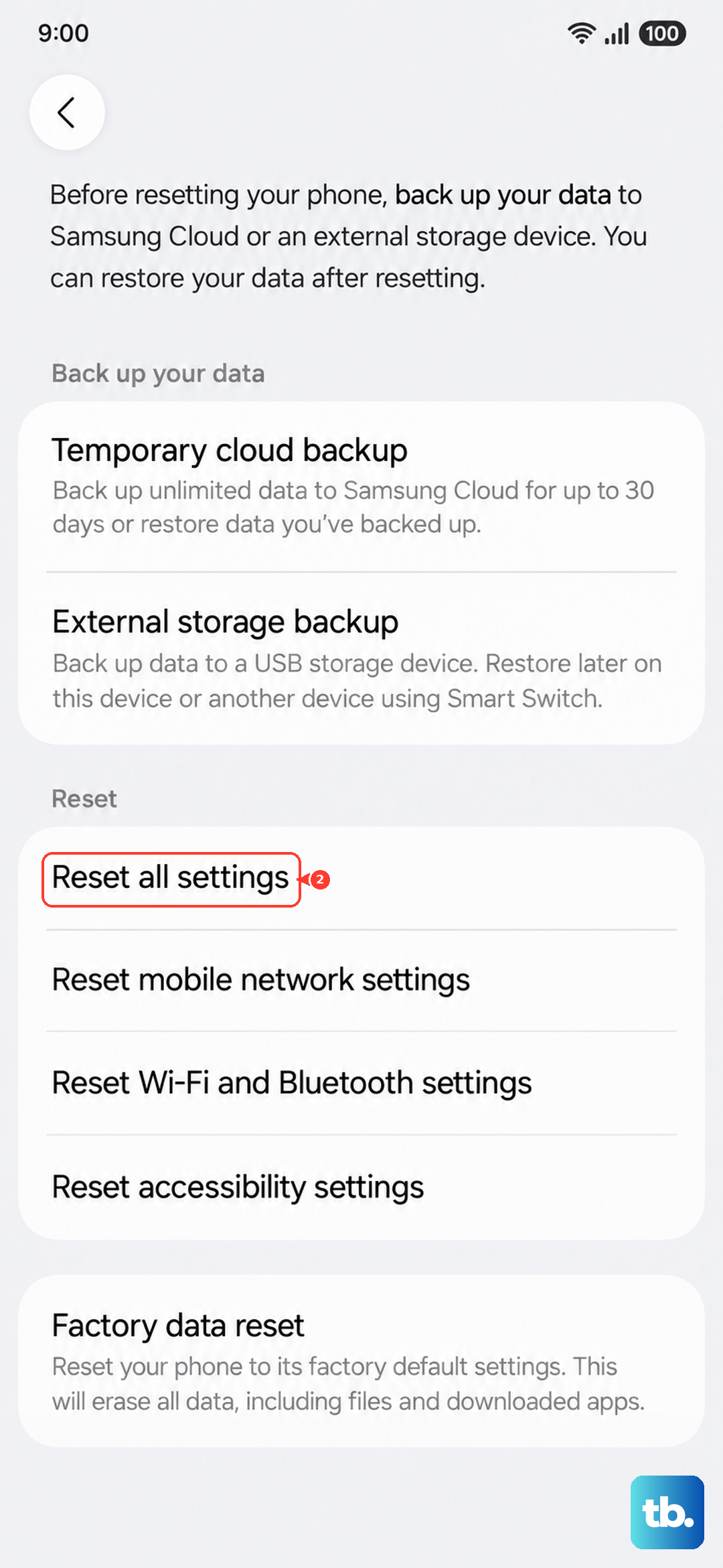
This will wipe all your personalized settings back to factory defaults, things like Wi-Fi passwords, Bluetooth pairings, and display settings, but it leaves your photos, messages, and apps intact. Go to Settings > General management > Reset.
Select Reset all settings. Enter your PIN or password if prompted and confirm. After the phone reboots, you'll need to set up your preferences again, but it often resolves persistent sound issues.
Clear the Cache Partition
This cleans out temporary system files that can sometimes become corrupted. First, power off your S26+ completely. Then, press and hold the Volume Up button and the Side key together.
Release the buttons when you see the Samsung logo. Use the volume buttons to navigate to "Wipe cache partition" and press the side key to select it. Confirm, then select "Reboot system now" when it's done.
Consider a Factory Reset
If you've tried everything else, a factory reset is the final step. This will erase all data on your phone, so it's crucial to back up everything important to Samsung Cloud or a computer first. Go to Settings > General management > Reset > Factory data reset.
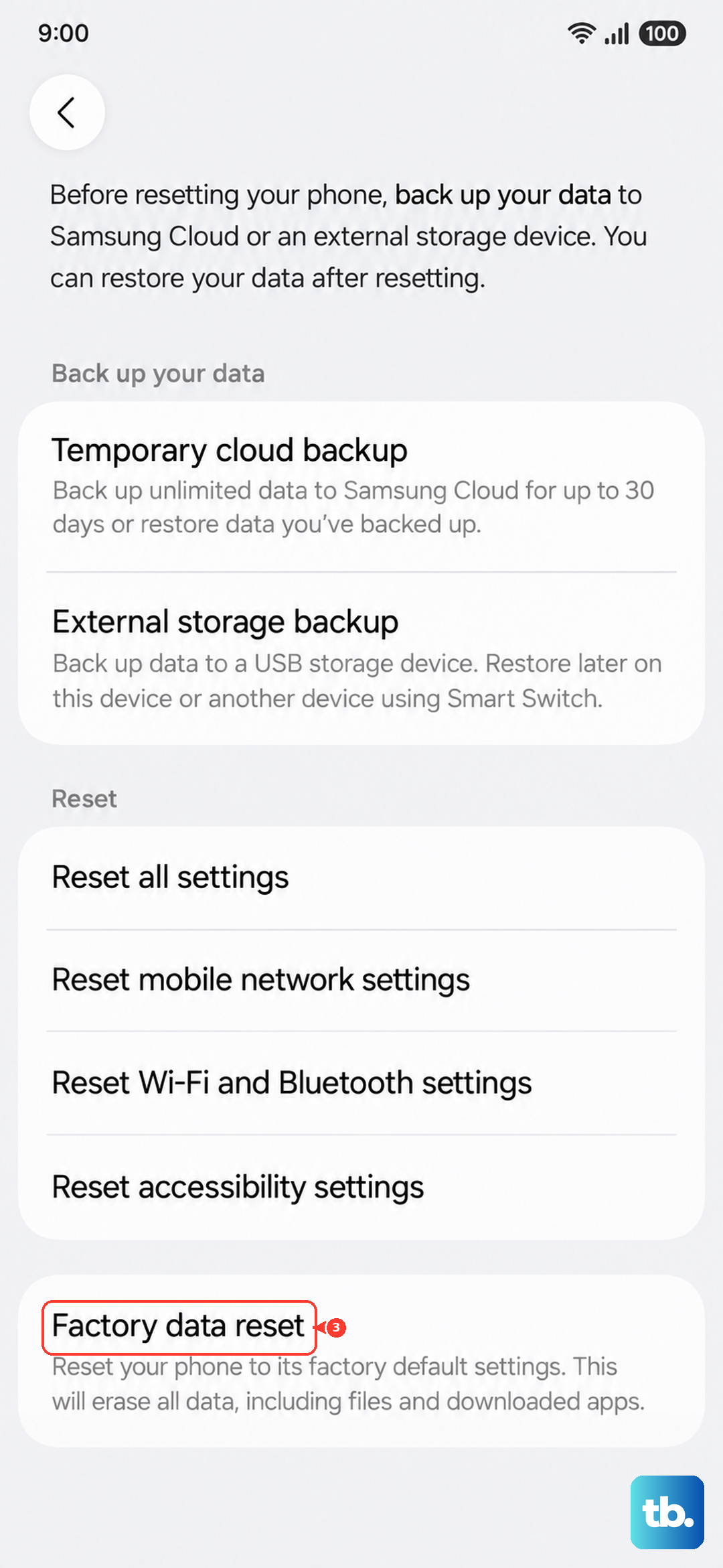
Tap "Reset" and follow the prompts. After the phone restarts, set it up as new without restoring a backup immediately. Test with a call right away to see if the core issue is resolved before you reload your apps and data.