
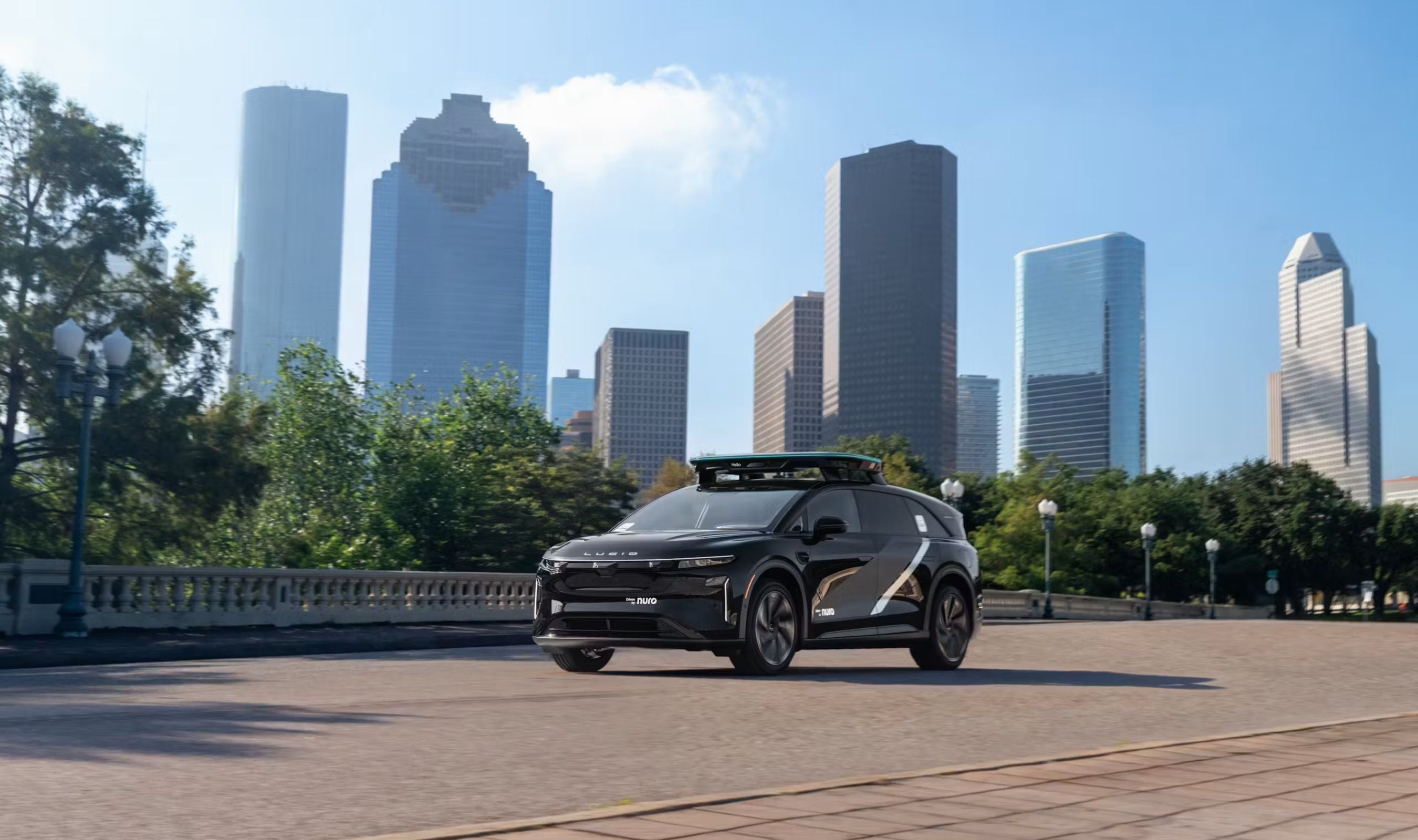
Houston is getting Uber's Lucid-powered robotaxis by mid-2027, putting the ride-hail giant on a collision course with Waymo in a second major U.S. market.
Uber, Lucid, and autonomous driving startup Nuro announced the expansion Wednesday, naming Houston as the second planned city for their robotaxi program. The service will launch exclusively through the Uber app, following a Bay Area debut later this year. The choice of Houston is strategic.
It is the fourth-largest U.S. city, and Waymo already operates commercial robotaxis there. Uber is taking the Alphabet-owned leader head-on in two cities simultaneously.
Nuro is already testing on Houston streets with safety operators behind the wheel. The company has maintained a presence in the city since 2019 and previously operated Level 4 autonomous vehicles on its public roads.
Nuro COO Andrew Chapin said Houston's size and complexity make it an ideal test for how the autonomy platform performs across different environments. The robotaxi fleet now includes nearly 100 vehicles running around the clock across California and Texas. That fleet will grow as Lucid begins building production-validation robotaxis at its Arizona factory, which will be used for safety testing and regulatory certification.
Uber has secured a 50,000-square-foot depot and charging facility in Houston to support the fleet. The site will draw more than 4 megawatts of power and house 40 fast chargers and 15 maintenance bays, with planned for early 2027.
The service will initially use Lucid Gravity SUVs equipped with Nuro's Level 4 autonomous driving platform, which includes high-resolution cameras, solid-state lidar sensors, radar, and a roof-mounted sensor halo. Future Lucid midsize EVs will join the fleet later.
Uber is designing the in-cabin experience, including rider controls and personalization features, while Nuro provides the autonomy visualization system. The Houston announcement is the latest escalation in a partnership that has grown aggressively since it was first announced in July 2025. Uber has committed to buying a minimum of 35,000 robotaxi-ready Lucid vehicles and invested $500 million in the EV maker.
The company also invested roughly $500 million in Nuro, as TechCrunch first reported in May. For Lucid, the deal is a critical lifeline. The EV maker's stock has fallen by around 60% over the past year, and it has repeatedly leaned on funding from Saudi Arabia's Public Investment Fund, including a recent $750 million injection from PIF and Uber.
For Nuro, the partnership represents a major pivot from building its own delivery robots to licensing self-driving technology to partners. The companies plan to expand the service to dozens of additional cities in the coming years.